

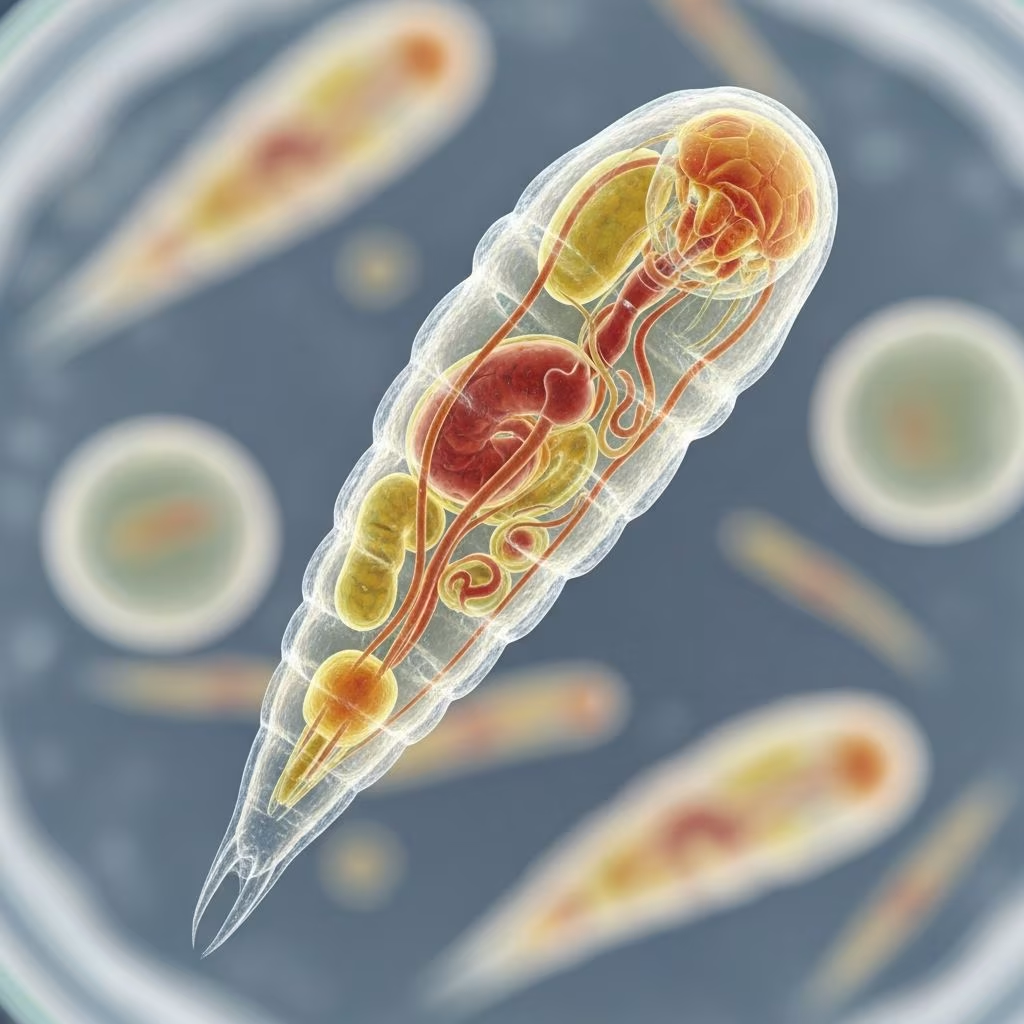
Strongyloides species, particularly Strongyloides stercoralis, represent a significant parasitic threat to small animals like dogs and cats, especially neonates. These thread-like nematodes inhabit the small intestine, leading to strongyloidiasis, which manifests primarily as gastrointestinal distress and can pose zoonotic risks to humans.
Understanding the Parasite Lifecycle
The complex lifecycle of Strongyloides enables both parasitic and free-living phases, facilitating rapid spread in environments like kennels or breeding facilities. Adult females embed in the intestinal mucosa of the host, producing eggs that hatch into rhabditiform larvae within the gut. These larvae are shed in feces, where they can either develop into free-living adults in moist soil or directly infect new hosts via skin penetration or ingestion.
In dogs and cats, direct transmission from dam to offspring occurs transmammanily during nursing, explaining the high prevalence in puppies and kittens. Larvae migrate through the lungs before reaching the intestine, with a prepatent period of 5-21 days. This cycle can perpetuate infections without external environmental contamination.
- Key lifecycle stages: Egg hatching in intestine, larval excretion, skin penetration or oral uptake, lung migration, intestinal maturation.
- Unique feature: Parthenogenetic reproduction by females, no males needed.
- Environmental resilience: Larvae survive in warm, humid conditions, amplifying risks in summer.
Symptoms and Health Impacts
Clinical disease is most evident in young or immunocompromised animals, where heavy burdens cause severe symptoms. Watery, mucoid diarrhea often streaked with blood is hallmark, accompanied by weight loss, poor growth, and dehydration despite normal appetite. Respiratory issues like cough or pneumonia arise from larval migration.
In neonates, infections mimic other enteric pathogens, delaying diagnosis. Adult pets may remain asymptomatic carriers, shedding larvae intermittently. Zoonotic strains from primates have induced fatal bronchopneumonia and skin lesions in dogs.
| Age Group | Common Symptoms | Severity |
|---|---|---|
| Neonatal puppies/kittens | Bloody diarrhea, emaciation, respiratory distress | High |
| Adults/immunocompromised | Mild diarrhea, weight loss, skin irritation | Moderate |
| Healthy adults | Often none | Low |
Untreated cases lead to malabsorption, stunted development, and secondary bacterial infections.
Accurate Diagnosis Methods
Detecting Strongyloides requires fresh fecal samples due to rapid larval hatching. Standard flotation misses eggs, as they rarely appear; instead, larvae (300-380 µm, rhabditiform pharynx) are targeted.
The Baermann apparatus excels, using warm water to coax larvae from feces, boasting higher sensitivity than direct smears. Multiple samples (3-5 over days) boost detection to over 70%, countering intermittent shedding. PCR assays offer molecular confirmation but remain less accessible.
- Baermann technique: Gold standard; larvae migrate into water for easy identification.
- Differentiation: Strongyloides larvae have short buccal cavity vs. longer hookworm larvae.
- Advanced options: Histopathology reveals mucosal worms; endoscopy for adults.
Post-mortem, scraping intestinal mucosa uncovers 2mm females with uterine eggs.
Treatment Protocols
Anthelmintics target adults and larvae effectively, though extra-label use predominates. Ivermectin (0.2 mg/kg PO for 2 days in dogs) eradicates infections rapidly; fenbendazole (50 mg/kg/day PO for 3-5 days) suits both species, repeated after 4 weeks.
Cats respond best to fenbendazole; ivermectin risks toxicity in Collies/related breeds due to MDR1 mutation. Supportive care includes fluids, nutrition, and probiotics. Fecal checks for 6 months ensure clearance.
| Drug | Dosage (Dogs) | Dosage (Cats) | Duration |
|---|---|---|---|
| Ivermectin | 0.2 mg/kg PO | Caution/avoid | 2 days |
| Fenbendazole | 50 mg/kg PO | 50 mg/kg PO | 3-5 days, repeat |
Recrudescence occurs under immunosuppression; corticosteroids exacerbate shedding.
Prevention and Control Measures
Breeding facilities demand rigorous hygiene: daily fecal removal, dry bedding, and isolated whelping. Dams receive prophylactic deworming pre-parturition. Avoid overcrowding in humid climates.
Routine screening via Baermann for at-risk populations prevents outbreaks. Zoonotic awareness prompts hand hygiene and bare feet avoidance around infected pets. Environmental larvicides like macrocyclic lactones aid kennel management.
- Farm/kennel strategies: Rotate pastures, steam-clean enclosures.
- Pet owner tips: Monthly deworming, prompt diarrhea vet visits.
- Monitoring: Quarterly fecal tests for puppies.
Zoonotic Potential and Public Health
S. stercoralis transmits to humans via larval skin penetration, causing larva currens or hyperinfection in immunocompromised individuals. Pet-to-human spread heightens in households with infants or HIV patients. Global canine prevalence nears 6%; northern Australia reports endemicity.
Vets must notify owners: wash hands post-cleanup, cover sandboxes. Human diagnosis mirrors veterinary: fecal larvae, serology.
Research Insights and Future Directions
Studies highlight ivermectin resistance concerns, paralleling equine parasites, urging diversified treatments. PCR advancements promise point-of-care diagnostics. Vaccine trials lag, but immune modulation research offers hope.
Climate change may expand ranges, emphasizing surveillance.
Frequently Asked Questions (FAQs)
Can Strongyloides kill my puppy?
Yes, heavy infections cause fatal dehydration or pneumonia in neonates without prompt treatment.
Is Strongyloides contagious to humans?
Yes, larvae penetrate skin; high risk for immunocompromised people.
How often should I deworm for this parasite?
Puppies: every 2 weeks until 12 weeks, then monthly; adults at-risk: quarterly.
Does heartworm preventive cover Strongyloides?
No, specific protocols needed; consult vet.
Can cats get it from dogs?
Possible via shared environment; species-specific strains exist.
References
- Strongyloides sp in Small Animals — Merck Veterinary Manual. 2023. https://www.merckvetmanual.com/digestive-system/gastrointestinal-parasites-of-small-animals/strongyloides-sp-in-small-animals
- Strongyloides spp. infections of veterinary importance — Cambridge University Press. 2016-01-01. https://www.cambridge.org/core/journals/parasitology/article/strongyloides-spp-infections-of-veterinary-importance/0E052A0C75B34441289883C1A4DDBC51
- Parasitic zoonoses (Proceedings) — dvm360. 2023. https://www.dvm360.com/view/parasitic-zoonoses-proceedings
- Strongyloidiasis — CAPC. 2025-07-02. https://capcvet.org/guidelines/strongyloidiasis/
- Identification and treatment of Strongyloides stercoralis infection — Wiley Online Library. 2023-12-06. https://onlinelibrary.wiley.com/doi/10.1111/avj.13300
- Strongyloides stercoralis — University of Saskatchewan. 2023. https://wcvm.usask.ca/learnaboutparasites/parasites/strongyloides-stercoralis.php



