

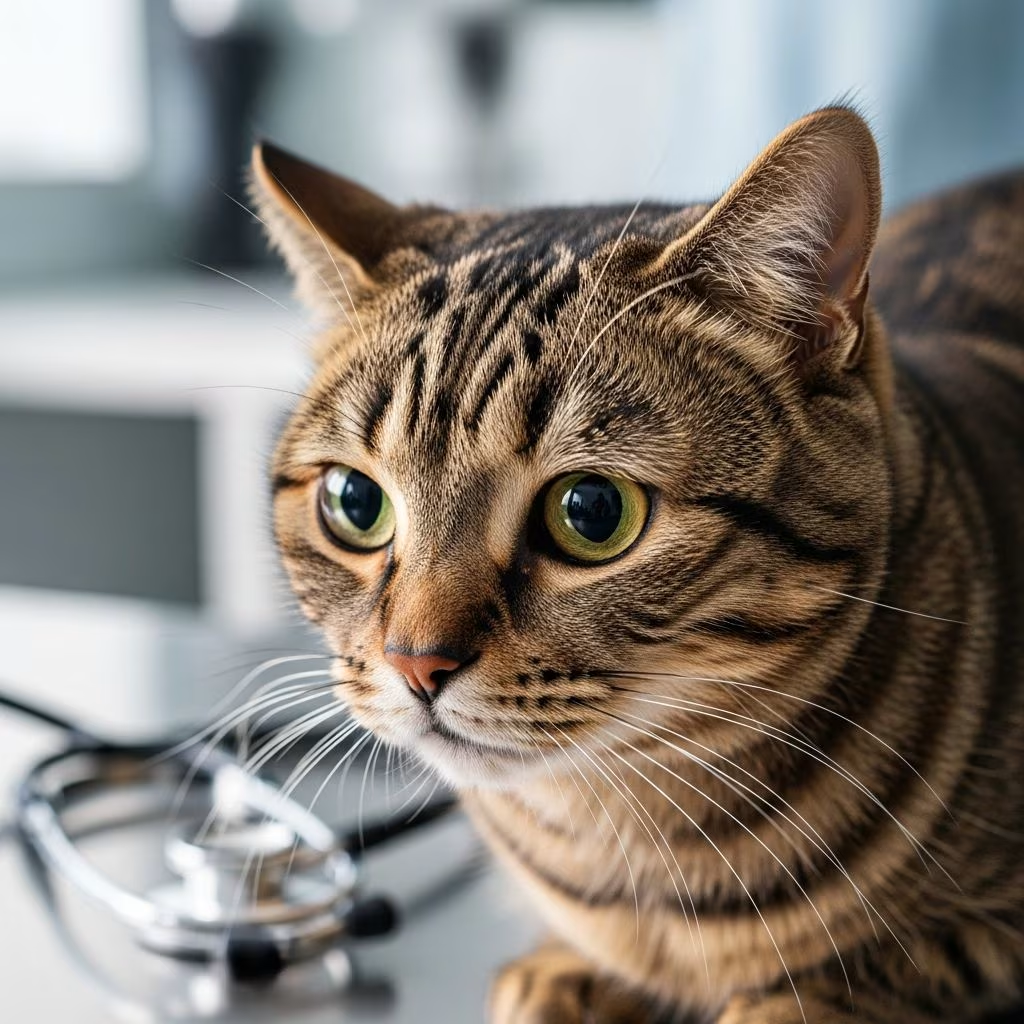
Heart murmurs in cats often raise alarm for owners, but not all are signs of serious disease. While some murmurs stem from underlying cardiac conditions like hypertrophic cardiomyopathy (HCM), others can arise temporarily from stress during veterinary exams. Understanding this distinction is crucial for assessing your cat’s health accurately.
Understanding Heart Murmurs in Felines
A heart murmur occurs when turbulent blood flow creates an audible whooshing sound during a heartbeat, detected via stethoscope. In cats, these sounds are graded from 1 to 6 based on intensity, with grade 1 being faint and grade 6 the loudest. Unlike dogs, cats frequently develop murmurs without immediate symptoms, complicating diagnosis.
Physiological murmurs, also called innocent or functional, happen in healthy hearts due to high cardiac output or excitement. Stress-induced versions are common in clinical settings, where anxiety elevates heart rate, mimicking pathology. Allowing acclimation or home rechecks often reveals their transient nature.
Can Stress Directly Cause Persistent Heart Murmurs?
Acute stress rarely produces lasting murmurs but can unmask or exacerbate them. Veterinary visits trigger sympathetic nervous system activation, raising heart rate and blood pressure, which may generate flow murmurs in otherwise normal cats. Rare cases show reversible ventricular wall thickening in young, severely stressed felines, resolving post-stress.
Chronic stress contributes indirectly by promoting oxidative damage and inflammation, potentially worsening conditions like HCM. Research links reduced antioxidant enzymes (superoxide dismutase and catalase) in HCM cats to oxidative stress, even asymptomatically, suggesting environmental stressors accelerate progression.
Primary Causes of Feline Heart Murmurs
Most murmurs trace to structural heart issues, with HCM predominant, affecting up to 1 in 7 cats. This genetic condition thickens the left ventricle, impairing relaxation and filling, often breed-linked (e.g., Maine Coon, Ragdoll via A31P mutation).
- Genetic predisposition: Mutations disrupt sarcomere proteins, causing hypertrophy.
- Secondary factors: Hypertension, hyperthyroidism, taurine deficiency, acromegaly, toxins, or lymphoma.
- Physiological: Anemia, fever, or stress-induced high output.
Oxidative stress markers, like lowered superoxide dismutase in HCM cats, indicate cellular damage from reactive oxygen species (ROS), outpacing antioxidants and contributing to muscle remodeling.
Recognizing Symptoms of Cardiac Issues
Many HCM cats remain preclinical for years, with murmurs as the sole clue. Advanced disease manifests suddenly:
| Symptom | Description | Associated Risk |
|---|---|---|
| Lethargy | Reduced activity, tiring easily | Early heart failure |
| Breathing difficulties | Rapid, open-mouth breathing, crackles | Congestive failure, pulmonary edema |
| Hind limb paralysis | Cold limbs, pain, dragging | Arterial thromboembolism (ATE) |
| Arrhythmias | Irregular pulse, fainting | Sudden death |
| Appetite loss | Weight loss, vomiting | Systemic congestion |
Stress exacerbates these; anxious cats risk decompensation from elevated oxygen demand on compromised hearts.
Diagnostic Approaches for Accurate Assessment
Veterinarians start with auscultation, noting murmur timing (systolic common in HCM). Rechecks post-sedation distinguish stress artifacts.
- Echocardiography: Gold standard; measures wall thickness (>6mm pathological), assesses function.
- Electrocardiogram (ECG): Detects arrhythmias.
- Chest X-rays: Evaluate heart size, lung fluid.
- Bloodwork: Checks taurine, thyroid, kidney function; NT-proBNP for heart stress.
- Blood pressure: Rules out hypertension.
Staging HCM from A (at-risk) to C (failure) guides prognosis.
Management Strategies for Heart Health
Treatment targets symptoms and progression:
- Medications: Beta-blockers (atenolol) slow heart rate; ACE inhibitors (benazepril) reduce afterload; anti-clotting (clopidogrel) prevent ATE; diuretics (furosemide) for fluid.
- Supportive care: Oxygen, thoracocentesis for pleural effusion; sedatives for stress.
- Diet: Taurine-rich, low-sodium; antioxidants (vitamins E/C) combat oxidative stress.
Prognosis varies: innocent murmurs need no intervention; mild HCM allows normal lifespans; advanced cases average 1-3 years post-diagnosis.
Reducing Stress to Protect Your Cat’s Heart
Minimize chronic stress via environmental enrichment:
- Provide vertical spaces, hiding spots, multiple litter boxes.
- Use pheromone diffusers (Feliway), calming treats.
- Avoid multi-cat conflicts; slow introductions.
- Regular play reduces cortisol; gentle handling builds trust.
Pet ownership lowers owner stress, potentially benefiting cats indirectly via calmer homes. Routine screenings catch issues early in breeds prone to HCM.
Preventive Measures for Long-Term Cardiac Wellness
Annual vet exams with auscultation suit low-risk cats; high-risk (breeds, age >5) warrant echoes every 1-2 years. Monitor weight, activity; track breathing rate at home (<30/min resting).
Balanced nutrition prevents deficiencies; screen for comorbidities like hyperthyroidism. Oxidative stress mitigation via antioxidant-rich diets shows promise in stabilizing HCM.
Frequently Asked Questions (FAQs)
Will my cat’s heart murmur go away on its own?
Innocent, stress-related murmurs often resolve with relaxation. Pathological ones persist, requiring monitoring.
Is HCM always fatal in cats?
No, many live normally with management; sudden death risk exists but is manageable.
How do I know if the murmur is from stress?
Vets recheck after acclimation or sedation; echocardiography confirms structure.
Can diet help with heart murmurs?
Taurine supplementation aids dilated forms; antioxidants support HCM.
Should I breed a cat with a murmur?
Avoid if HCM confirmed, especially genetic breeds.
References
- Cat Heart Stress: Uncovering a Hidden Health Threat — Stylla Care. 2023. https://styllacare.com/blogs/cat/the-hidden-stress-in-your-cats-heart
- Feline Hypertrophic Cardiomyopathy (HCM) in Cats — PetMD. 2024. https://www.petmd.com/cat/conditions/cardiovascular/feline-hypertrophic-cardiomyopathy-hcm-cats
- Cardiomyopathy (heart disease) in cats — International Cat Care. 2023. https://icatcare.org/articles/cardiomyopathy-heart-disease-in-cats
- KEEP CALM…but know about feline heart disease — Cat Care Clinic. 2022. https://catcareclinic.net/keep-calm-but-know-about-feline-heart-disease/
- Emerging Cardiovascular Risk Research: Impact of Pets on… — NIH (PMC). 2016-07-20. https://pmc.ncbi.nlm.nih.gov/articles/PMC4991891/
- Stress and Feline Health — NIH (PMC). 2022. https://pmc.ncbi.nlm.nih.gov/articles/PMC8801065/



