

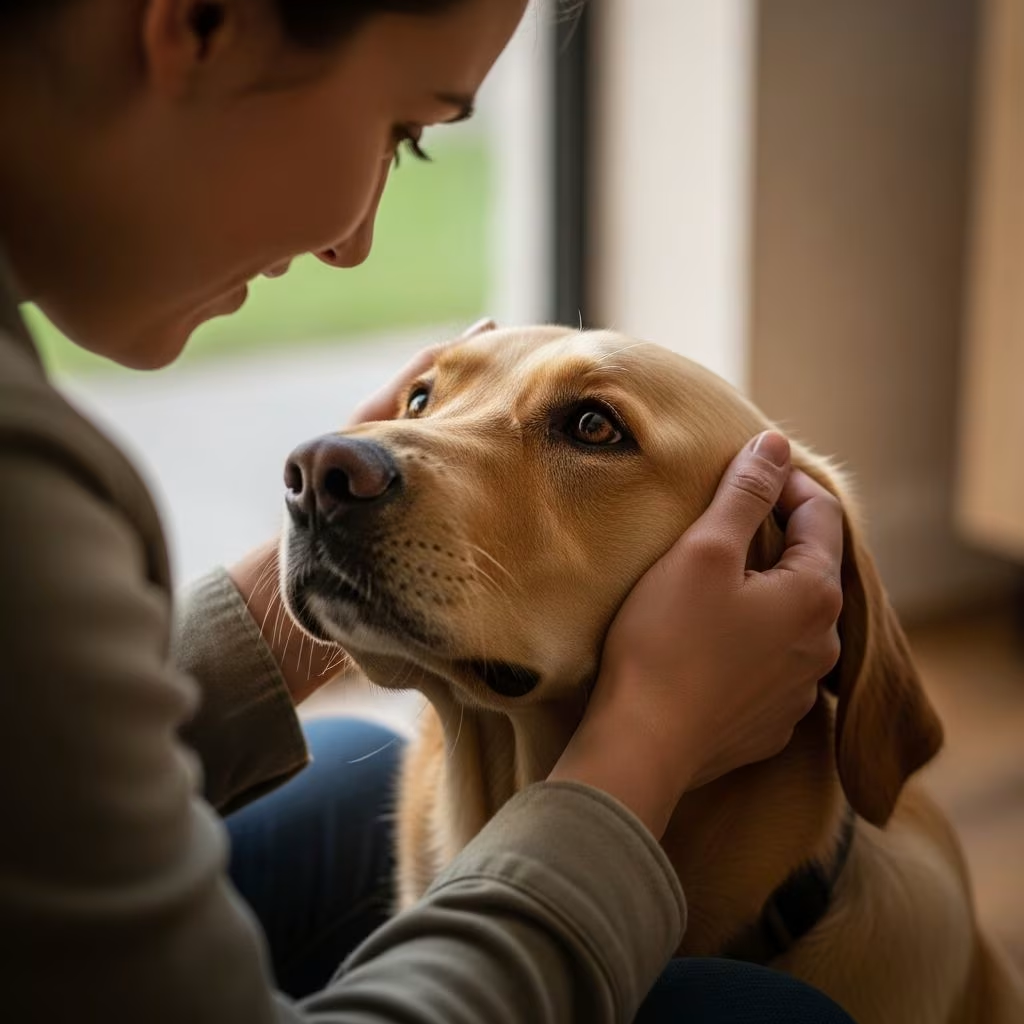
Building a profound connection with your dog transforms everyday moments into shared adventures, fostering trust and joy. This guide outlines practical, research-backed approaches to enhance your relationship through targeted training, engaging activities, and mindful interactions.
Understanding the Foundations of Canine-Human Relationships
Dogs thrive on clear communication and positive experiences with their owners. A strong bond emerges when humans respond to canine cues with empathy, creating a partnership based on mutual respect rather than dominance. Training methods emphasizing rewards over punishment align with dogs’ natural learning processes, promoting eagerness to engage and reducing stress.
Domestic dogs have evolved to seek human guidance for problem-solving, making it crucial to nurture this instinct through consistent, rewarding interactions. By prioritizing relationship-building over mere obedience, owners cultivate dogs that respond intuitively, turning commands into collaborative dialogues.
Harnessing Positive Reinforcement for Trust-Building
Positive reinforcement stands as the cornerstone of effective dog training, rewarding desired behaviors with treats, praise, or toys to encourage repetition. This method creates positive associations, making learning enjoyable and strengthening emotional ties.
- Identify specific actions like sitting or staying, then immediately deliver a reward to link the behavior with positivity.
- Use high-value treats for challenging tasks to maintain motivation and enthusiasm.
- Incorporate verbal markers such as “yes!” or a clicker to precisely timestamp good behavior, aiding comprehension.
Unlike aversive techniques, which can induce fear and erode confidence, positive approaches reduce anxiety and build a foundation of reliability. Owners report dogs becoming more attentive and affectionate after consistent application.
Mastering Clicker Training for Precise Communication
Clicker training elevates bonding by providing an unmistakable signal for correct actions, bridging the gap between human intent and canine understanding. The distinct click sound, paired repeatedly with rewards, becomes a powerful tool for marking fleeting moments of success.
Begin by charging the clicker: click and treat without commands until the dog anticipates rewards upon hearing it. Progress to simple cues like “sit,” clicking the instant the behavior occurs, followed by a treat. This clarity accelerates learning and deepens trust, as dogs feel understood and valued.
| Step | Description | Benefits |
|---|---|---|
| 1. Charge Clicker | Click and treat repeatedly | Builds association |
| 2. Add Behaviors | Click desired action + treat | Sharpens timing |
| 3. Fade Rewards | Intermittent reinforcement | Sustains long-term response |
Professional trainers note this technique fosters curiosity and eagerness, turning sessions into joyful collaborations.
The Role of Socialization in Fostering Confidence
Early and ongoing socialization exposes dogs to diverse stimuli—people, animals, environments—building adaptability and reducing fear responses. Controlled introductions to dog parks, classes, or walks create positive associations, enhancing security derived from the owner’s presence.
- Start young with puppy classes for structured exposure.
- Gradually increase complexity, always monitoring stress levels.
- Reward calm interactions to reinforce social success.
This process not only prevents behavioral issues but also solidifies the owner’s role as a safe anchor, amplifying loyalty and responsiveness.
Consistency and Patience: Pillars of Lasting Trust
Uniform rules, commands, and routines provide dogs with predictability, essential for emotional stability. Patience acknowledges individual learning paces, celebrating incremental progress to avoid frustration.
Establish household boundaries everyone follows, using identical cues across family members. Track advancements in a journal to visualize growth, reinforcing commitment. Dogs in consistent environments exhibit fewer anxiety-driven behaviors and stronger attachments.
Interactive Play and Exercise as Bonding Catalysts
Play sessions like fetch, tug-of-war, or hide-and-seek channel energy while creating shared excitement. These activities release endorphins, associating the owner with pleasure and fulfillment.
- Incorporate training elements, such as “drop it” during tug, blending fun with learning.
- Vary games to match energy levels, ensuring mental stimulation alongside physical.
- End on a high note to build anticipation for future play.
Regular exercise routines signal dependability, with dogs viewing owners as vital partners in their well-being.
Quality Time and Shared Milestones
Dedicated, distraction-free time amplifies connection. Short daily sessions focused on affection, grooming, or gentle massage convey care beyond training.
Celebrate milestones—mastering a recall or navigating a new park—with enthusiastic praise or special outings. These rituals forge memories, embedding achievements in the relationship’s fabric.
Advanced Strategies for Deeper Connections
Relationship-based training emphasizes empathy and two-way communication. Observe body language: a tucked tail signals unease, prompting adjustment. Respond to whines or barks by discerning needs, enhancing mutual respect.
Incorporate scent games or puzzle toys for cooperative problem-solving, mirroring how dogs seek human input. Professional guidance can refine these, especially for rescues with trust hurdles.
Common Pitfalls and How to Avoid Them
| Pitfall | Impact | Solution |
|---|---|---|
| Inconsistent Cues | Confusion, frustration | Standardize language |
| Over-Punishment | Fear, withdrawal | Switch to rewards |
| Rushed Sessions | Stress, poor retention | Keep short, positive |
| Neglecting Play | Boredom, pent-up energy | Daily interactive time |
FAQs
What if my dog resists training?
Assess for underlying stress; shorten sessions and increase rewards. Patience yields results.
How often should I train?
Three 5-10 minute sessions daily prevent fatigue while building habits.
Is professional help necessary?
For complex issues, yes—trainers accelerate progress and model techniques.
Can older dogs bond deeply?
Absolutely; adaptability persists lifelong with consistent, positive efforts.
What’s the quickest bonding tip?
Daily walks with praise—combines exercise, exploration, and affirmation.
Implementing these strategies cultivates a resilient partnership, where your dog views you as confidant and guide. Persistence transforms routines into profound loyalty.
References
- Positive Reinforcement in Dog Training — Sue Battel Dog Training. 2023. https://www.suebatteldogtraining.com/build-a-stronger-bond-the-power-of-positive-reinforcement
- Top 5 Dog Training Techniques — 4MyDogs. 2024. https://www.4mydogs.co/blogs/news/the-top-5-dog-training-techniques-for-building-a-strong-bond-with-your-pup
- Relationship-Based Dog Training — Dog Adventures NW. 2023. https://dogadventuresnw.com/the-power-of-relationship-based-dog-training/
- Training Strengthens Bonds — Sit Means Sit Tampa. 2024. https://sitmeanssit.com/tampa/3-unexpected-ways-training-strengthens-your-bond-with-your-dog/
- Positive Dog Training Bonds — Paws and Stripes. 2023. https://www.pawsandstripes.org/post/building-bonds-how-positive-dog-training-strengthens-your-connection-with-your-canine



