
Stray Voltage In Livestock Facilities: Comprehensive Guide 2025
Understanding and mitigating low-level electrical currents that affect animal health and farm productivity in modern housing systems.
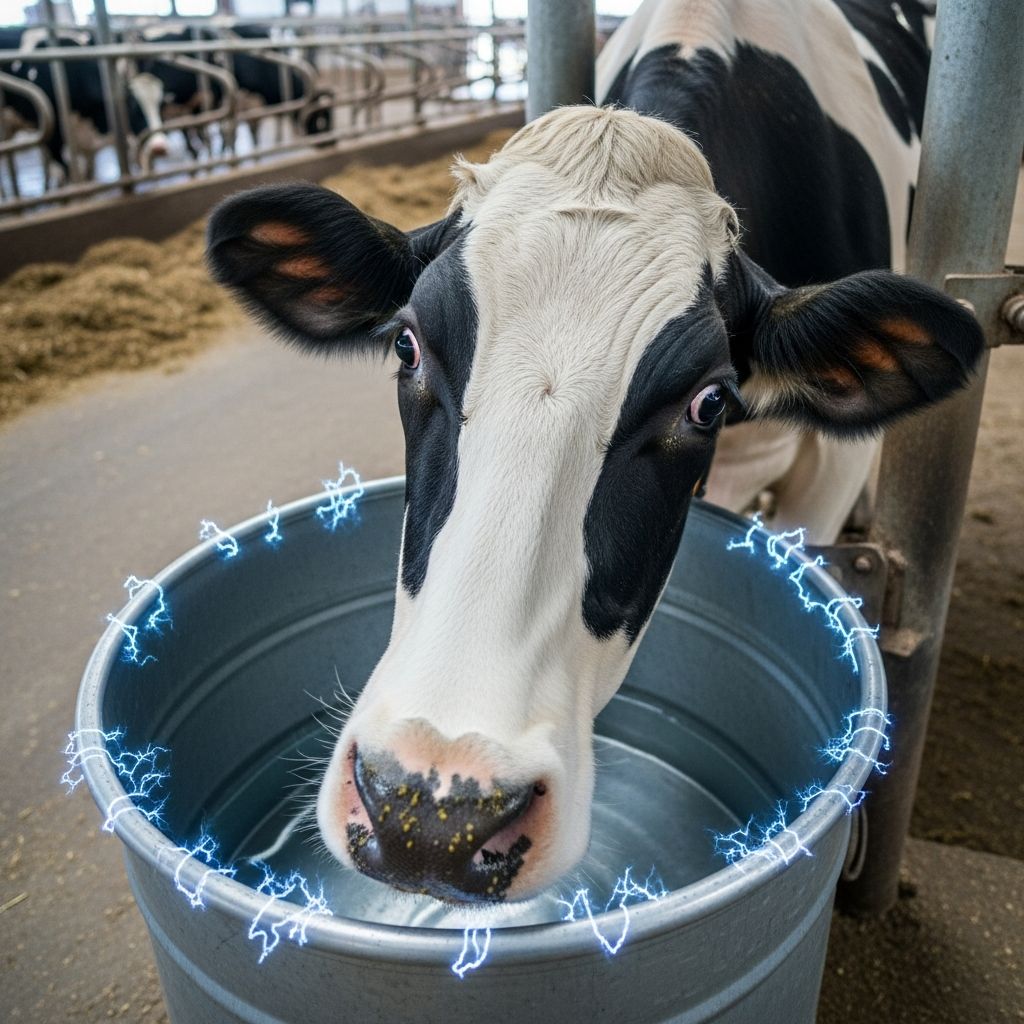
Stray voltage refers to unintended low-level electrical potentials that develop between surfaces animals contact in their daily routines, potentially causing stress and health issues in livestock.
Understanding the Nature of Stray Voltage
In agricultural environments, stray voltage emerges as a byproduct of grounded electrical systems designed for safety and reliability. These systems, essential for powering farm equipment, naturally produce small voltage differences due to current flowing through the earth via neutral and ground connections. Animals, particularly sensitive species like dairy cattle, can perceive these differences when bridging two points, such as a metal waterer and a concrete floor, leading to current flow through their bodies.
This phenomenon is universal in electrified farms but becomes problematic when levels exceed safe thresholds. Regulatory bodies, including the Public Service Commission of Wisconsin, define actionable levels at 1.0 volt AC or higher, measured across a 500-ohm resistor simulating animal contact resistance. Research from the U.S. Department of Agriculture supports that levels below 2.0 volts AC typically pose no production risks, though individual animal sensitivity varies.
Primary Causes Originating On and Off the Farm
Stray voltage arises from multiple sources, often a mix of farmstead wiring issues and utility distribution problems. On-farm contributors include equipment malfunctions and installation errors that disrupt proper grounding.
- Improper wiring practices: Failure to separate neutral and ground wires in structures allows unintended current paths.
- Poor or corroded grounding: Inadequate earth connections, exacerbated by farm conditions like high humidity, manure, and silage acids, elevate neutral-to-earth voltages.
- Unbalanced electrical loads: Uneven 120-volt distribution increases neutral current, common in high-demand dairy operations.
- Faulty equipment and connections: Undersized neutrals, dirty electrical boxes, or damaged devices create voltage drops.
- Off-farm factors: Utility grounding points and distribution currents contribute inherently, though rarely alone.
Electric fences and trainers, if poorly installed, amplify risks by introducing additional voltage sources.
Observable Effects on Livestock Health and Productivity
Livestock exhibit behavioral and physiological responses to perceptible stray voltage, with dairy cows showing heightened sensitivity due to their conductive saliva and frequent metal contacts during milking. Symptoms manifest subtly at first but can escalate, impacting farm economics.
| Symptom | Description | Potential Impact |
|---|---|---|
| Nervousness at milking | Cows fidget or kick during procedures | Reduced milk letdown, incomplete udder emptying |
| Avoidance of fixtures | Reluctance to approach waterers or feeders | Dehydration, weight loss, poor growth |
| Production declines | Unexplained drops in milk yield | Economic losses, up to significant percentages |
| Health complications | Increased mastitis, somatic cell counts | Higher vet costs, milk quality issues |
These signs mimic other issues like feed quality or equipment faults, necessitating thorough diagnostics. Elevated stress from chronic exposure can suppress immunity and growth, underscoring the need for prompt intervention.
Standardized Detection and Measurement Protocols
Accurate assessment requires specialized tools and procedures to quantify voltage at animal contact points. The gold standard involves a 500-ohm resistor in series, mimicking the lowest resistance pathway through an animal’s body, typically between front and rear hooves or mouth and feet.
- Identify contact points: Common sites include barn floors vs. stanchions, water bowls vs. stalls, or feeders vs. concrete.
- Perform touch voltage tests: Measure directly between surfaces without resistor for baseline, then with 500-ohm for standardized current simulation.
- Conduct cow contact simulations: Use probes on actual animals under supervision to capture real behaviors, though resistor method is primary.
- Monitor neutral-to-earth voltage (NEV): Check at service entrance and throughout facilities.
Professionals from utilities or certified electricians should lead investigations, as farms often qualify for free assessments. Data logging over time reveals patterns tied to load variations.
Proven Strategies for Prevention and Mitigation
Addressing stray voltage demands a systematic approach targeting root causes. Start with a comprehensive electrical audit by qualified experts adhering to the National Electrical Code.
Immediate On-Farm Fixes
- Balance 120-volt loads across phases to minimize neutral currents.
- Inspect and repair wiring: Separate neutrals from grounds, upsize conductors for loads.
- Enhance grounding: Install deep-driven rods, equipotential planes in new barns linking all metal to a common grid.
- Maintain equipment: Clean connections, replace corroded parts, ensure fence isolation.
Design Recommendations for New Facilities
Incorporate preventive features from construction:
- Equipotential flooring: Copper grid under concrete bonding all metals.
- Oversized neutrals and dedicated grounds.
- Isolated waterers and feeders on non-conductive mounts.
Collaboration with Utilities
Joint efforts with power providers investigate off-farm contributions, often resolving multi-source issues. Programs like those from Wisconsin utilities offer no-cost diagnostics and fixes.
Regulatory Guidelines and Research Insights
U.S. Department of Agriculture studies affirm that proactive management keeps voltages below 2 volts, preventing adverse effects. Wisconsin’s 1-volt threshold prompts action, balancing safety with practicality. Ongoing research refines thresholds, emphasizing cow-specific variability.
Frequently Asked Questions (FAQs)
What voltage level is safe for livestock?
Below 2.0 volts AC across 500-ohm resistor per USDA research; 1.0 volt triggers mitigation per PSC Wisconsin.
Can stray voltage affect humans?
Humans rarely sense levels affecting animals due to higher perception thresholds.
How much does mitigation cost?
Varies; many utilities provide free investigations, on-farm fixes range from minor wiring to major retrofits.
Is stray voltage only a dairy issue?
Primarily affects cows, but swine and others may show sensitivity.
Who should I contact first?
Your electric cooperative or utility for free assessment.
Long-Term Monitoring and Best Practices
Post-mitigation, install monitoring systems tracking voltages continuously. Annual inspections prevent recurrence, especially in corrosive environments. Educate staff on electrical safety to sustain improvements. By integrating these practices, farmers safeguard animal welfare, boost productivity, and ensure compliant operations.
References
- Stray Voltage – Alliant Energy — Alliant Energy. 2024. https://www.alliantenergy.com/safety/farm-safety/stray-voltage
- Electricity & Livestock – Todd-Wadena Electric Cooperative — Todd-Wadena Electric Cooperative. 2024. https://toddwadena.coop/educational/electricity-livestock/
- Stray Voltage – Agralite Electric Cooperative — Agralite Electric Cooperative. 2024. https://www.agralite.coop/stray-voltage
- Stray Voltage | Maquoketa Valley Electric Cooperative — Maquoketa Valley Electric Cooperative. 2024. https://mvec.coop/stray-voltage
- Is Stray Voltage on Your Farm | Wisconsin Public Service — Wisconsin Public Service. 2024. https://www.wisconsinpublicservice.com/partners/agriculture/stray-voltage/on-farm
- Stray Voltage PDF — American Transmission Company LLC. 2024-08. https://www.atcllc.com/wp-content/uploads/Stray-voltage-8.2024.pdf
Similar Articles








Read full bio of medha deb


