

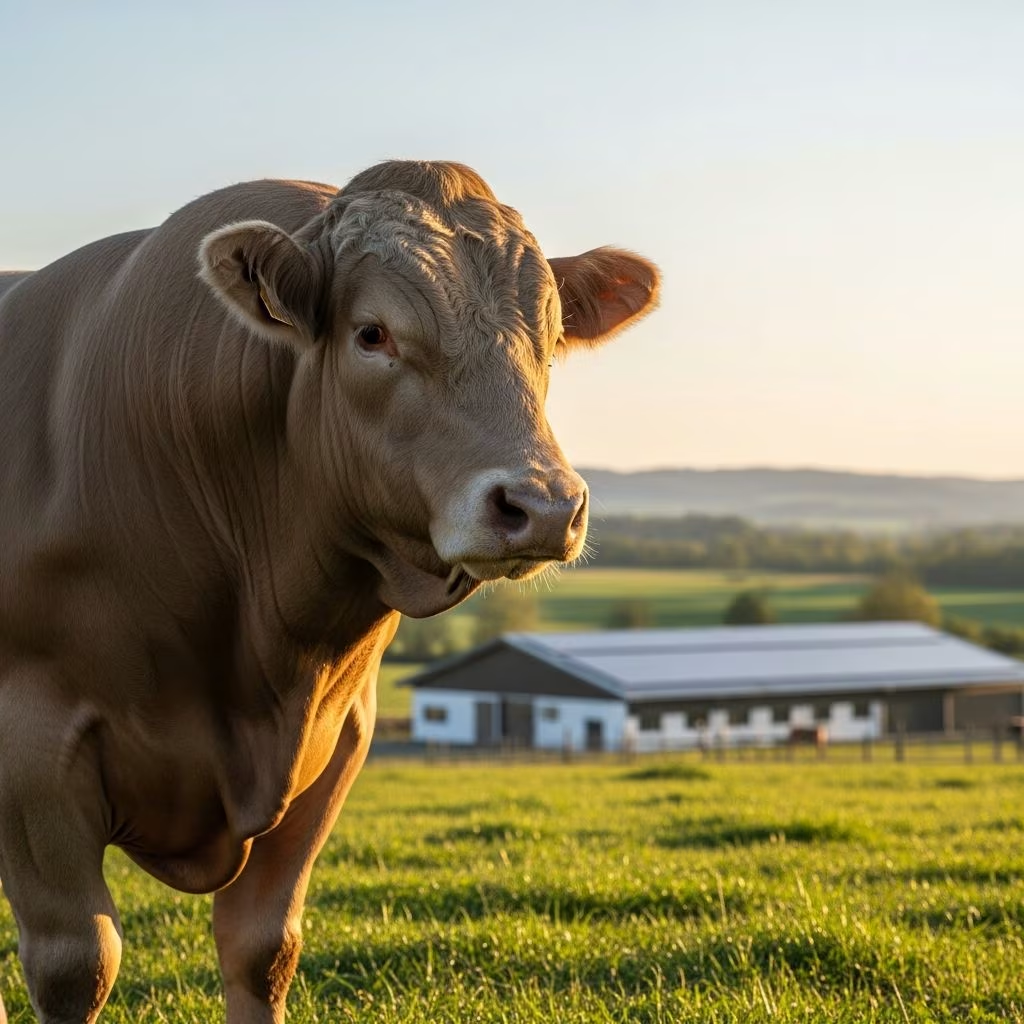
Successful cattle operations depend fundamentally on implementing well-designed breeding programs that balance productivity, animal health, and economic viability. A comprehensive breeding strategy requires understanding genetic principles, establishing clear breeding objectives, and selecting appropriate tools and technologies to achieve desired outcomes. This approach enables producers to systematically improve herd performance across multiple traits while maintaining genetic diversity and long-term herd sustainability.
Defining Breeding Objectives and Selection Criteria
The foundation of any effective breeding program begins with clearly articulating what traits require improvement and how different characteristics rank in relative importance. Producers must identify economically relevant traits specific to their production system, market targets, and operating environment. This involves determining whether primary focus should emphasize milk production, meat yield, reproductive efficiency, disease resistance, or maternal characteristics.
For beef cattle operations, selection criteria typically include growth rate, frame size, muscle development, and calving ease. Dairy producers prioritize milk volume, composition, udder health, and longevity. Recommendations for replacement heifers incorporate 205-day adjusted weaning weights, frame scores, muscle evaluations, and body condition assessments. Record-keeping systems tracking these measurements provide the objective data necessary for making informed genetic decisions.
Beyond production traits, modern breeding programs increasingly emphasize genetic diversity for disease resistance and environmental adaptation. Selecting breeding stock based on health status, physical conformation, and specific characteristics that improve disease resistance and productive lifespan ensures herd sustainability beyond single-generation productivity.
Genetic Evaluation and Breeding Value Assessment
Modern breeding programs rely on sophisticated genetic evaluation systems that estimate breeding value using multiple data sources. These evaluations integrate phenotypic measurements from individual animals, pedigree information, and increasingly, genomic markers to predict the genetic merit of potential breeding stock.
Selection based on estimated breeding value maximizes genetic improvement rates across desired traits. Performance testing programs document comprehensive records including weaning weights, mature cow weights, muscle scores, body condition scores, and hip heights to objectively measure and evaluate cattle performance. These standardized measurements enable accurate comparisons across animals within and between herds.
Estimated Breeding Values (EBVs) and financial indexes provide consistent, relevant information for both bulls and cows, enabling producers to make selection decisions aligned with production goals and market conditions. Incorporating genetic marker information alongside traditional performance data improves selection accuracy and allows identification of superior genetics earlier in an animal’s life.
Breeding System Selection and Mating Strategies
Producers can choose from several breeding system approaches, each offering distinct advantages and management requirements. The selection of appropriate breeding system depends on herd size, available resources, market objectives, and genetic goals.
Straight Breeding Programs
Straight breeding programs represent the simplest option for herd management, where animals of the same breed are mated together. Although less complex operationally, successful straight breeding still requires rigorous bull selection to manage growth, calving ease, maternal traits, and other economically important characteristics. This system maintains purebred status, which may command market premiums for certain breed types, particularly for feeder steers in established market channels. Herds remain self-replacing without requiring external genetics purchases.
Crossbreeding Systems
Crossbreeding capitalizes on genetic differences between breeds to produce offspring suited to defined markets or environmental conditions. Complementarity between breeds can be achieved through various approaches including two-breed, three-breed, or rotational systems.
Two-breed crossing systems involve mating cows of breed A to sires of breed B, with resulting heifers mated back to sire breed A. This approach produces offspring that benefit from heterosis, yielding productivity increases in both growth and maternal traits. Calf weight weaned per cow joined increases by 5 to 10 percent in two-breed systems, with even greater improvements in three-breed rotational systems reaching up to 20 percent.
In rotational systems, each breed contributes genetic material equally across generations, ensuring continued heterosis benefits. Terminal crossing systems utilize a specialized third-breed sire on first-cross females, with all progeny marketed rather than retained for breeding. This represents the most productive system when first-cross females from appropriate breed combinations maximize herd output potential.
Modern Reproductive Technologies
Advancements in reproductive technology have fundamentally transformed cattle breeding, enabling more rapid genetic improvement and more efficient use of superior genetics. Technology selection depends on production objectives, herd size, financial resources, and management capacity.
Artificial Insemination
Artificial insemination enables a genetically superior male to produce substantially more highly productive offspring than natural service breeding. This technology allows access to superior genetics from geographically remote or otherwise unavailable bulls, enhancing genetic diversity, regulating disease spread, and optimizing genetic resources across larger populations.
Timed artificial insemination (TAI), which combines estrus synchronization with scheduled insemination of all females in a group, has gained increasing attention from both seedstock and commercial producers. However, implementation requires specialized staff expertise, proper semen management protocols, and precise timing of insemination relative to female estrus cycles.
Embryo Transfer Technology
Embryo transfer enables genetically superior females to produce multiple offspring more efficiently than natural reproduction. This technology harvests fertilized embryos from donor cows and implants them into recipient animals, accelerating genetic improvement and increasing reproductive rates. Systems incorporating multiple ovulation and embryo transfer enhance the breeding contribution of valuable females beyond their natural reproductive capacity.
Additional Reproductive Innovations
Sexed semen technology processes semen to increase likelihood of producing either male or female offspring, enabling targeted breeding for desired gender and enhancing herd productivity. Genomic selection utilizes DNA markers to predict genetic merit accurately, improving selection accuracy while reducing generation intervals and increasing overall genetic gain rates.
Data Management and Performance Tracking
Record-keeping proves essential to understanding current reproductive rates, identifying management problems, tracking genetic progress, and establishing targets to guide future breeding decisions. Comprehensive records document performance measurements, health status, reproductive events, and production outcomes across herd members over time.
Detailed documentation enables producers to evaluate herd productivity objectively, identify animals deserving retention or culling, and track cumulative genetic improvement across generations. Records reveal reproductive efficiency, identify health challenges affecting breeding performance, and provide data necessary for estimating breeding values and implementing selection decisions.
| Technology | Primary Function | Key Advantages | Implementation Considerations |
|---|---|---|---|
| Artificial Insemination (AI) | Introduction of semen into female reproductive tract | Access superior genetics; enhance genetic diversity; regulate disease spread | Requires specialized staff; precise estrus timing; semen management protocols |
| Embryo Transfer (ET) | Harvesting and implanting fertilized embryos | Maximize offspring from superior females; accelerate genetic improvement; increase reproductive output | High capital investment; requires trained personnel; recipient cow management |
| Genomic Selection | DNA marker analysis for genetic merit prediction | Improved selection accuracy; reduced generation interval; faster genetic gain | Testing costs; requires genomic database; integration with traditional data |
| Sexed Semen | Gender-specific semen for targeted breeding | Control offspring gender; enhance herd productivity; economic efficiency | Reduced conception rates; higher costs; specialized handling requirements |
| Precision Feeding | Technology-tailored individual ration management | Enhanced production; optimized feed efficiency; cost savings; improved health | Automation investment; monitoring technology; data integration systems |
| Automated Milking Systems | Robotic on-demand milk collection | Increased milking frequency; improved yield and quality; reduced labor costs | High initial investment; facility modifications; equipment maintenance expertise |
Balancing Genetic Gain with Inbreeding Management
While maximizing genetic improvement represents a primary breeding program objective, producers must simultaneously manage rates of genetic change to avoid detrimental inbreeding accumulation. Careful selection and mating decisions based on genetic evaluation help maintain appropriate genetic diversity within breeding populations.
Selection of multiple superior sires rather than repeated use of single individuals helps prevent rapid inbreeding. Maintaining detailed pedigree records enables calculation of inbreeding coefficients and informed mating decisions that achieve genetic objectives while preserving population diversity. Rotational breeding systems naturally reduce inbreeding risks by systematically introducing genetics from multiple breed sources.
Building Sustainable, Profitable Breeding Programs
Effective breeding programs integrate scientific genetic principles with practical management, creating sustainable systems that improve productivity while maintaining herd health and longevity. Success requires combining genetic knowledge with careful observation, ethical practices prioritizing animal welfare, and strategic investments in technologies matching operation scale and resources.
Producers selecting breeding stock should evaluate health status, physical conformation, and heritable traits promoting disease resistance and extended productive lives. Investment in genetic improvement justifies higher expenditure on superior breeding stock, generating returns through enhanced offspring performance across multiple generations. Regular evaluation of breeding program effectiveness against established objectives enables timely adjustments and optimization of breeding decisions over time.
Frequently Asked Questions
What traits should I prioritize in my breeding program?
Selection priorities depend on your specific production system and market targets. Beef producers typically emphasize growth rate, frame size, muscle development, and calving ease. Dairy producers focus on milk volume and composition, udder health, and longevity. Consider including traits enhancing disease resistance and environmental adaptation regardless of production type.
How can I implement artificial insemination in my operation?
Begin by consulting with reproductive specialists and artificial insemination technicians. Develop protocols for estrus detection or synchronization, ensure proper semen storage and handling, and train staff in insemination techniques. Many producers start with timed artificial insemination programs coordinating estrus synchronization with scheduled breeding.
What records should I maintain for breeding decisions?
Document weaning weights, mature animal weights, body condition scores, muscle scores, reproductive events, health status, and production measurements. Include pedigree information and breeding dates. These comprehensive records enable accurate genetic evaluation and informed selection decisions.
How do crossbreeding systems compare to straight breeding?
Crossbreeding systems produce offspring benefiting from heterosis, with calf weaning weight per cow joined typically increasing 5-20% depending on breed combination and system design. Straight breeding maintains purebred status attracting market premiums for certain breeds but requires vigilant bull selection and provides no heterosis advantage.
When should I consider genomic testing?
Genomic testing proves particularly valuable for young animals before traditional performance data becomes available, allowing earlier selection decisions. It benefits seedstock operations making high-value selection decisions and operations implementing rotational or crossbreeding systems requiring rapid breed identification.
References
- Breeding & Genetic Selection — University of Arkansas Division of Agriculture. https://www.uaex.uada.edu/farm-ranch/animals-forages/beef-cattle/breeding-genetic-selection.aspx
- Introduction to Animal Breeding Programs — WoolWise. https://www.woolwise.com/wp-content/uploads/2017/07/Gene-422-522-07-T-01.pdf
- Beef Cattle Breeding Systems — NSW Department of Primary Industries. https://www.dpi.nsw.gov.au/__data/assets/pdf_file/0005/1333490/Beef-cattle-breeding-systems.pdf
- Beef Cattle: Breeding and Reproduction — University of Tennessee Agricultural Extension. https://utbeef.tennessee.edu/beef-cattle-breeding-and-reproduction/
- Modern Reproductive Technologies for Cattle Breeding — International Service for the Acquisition of Agri-biotech Applications (ISAAA). https://www.isaaa.org/blog/entry/default.asp?BlogDate=3%2F1%2F2023
- Breeding Cow Management — Beef Cattle Research Council. https://www.beefresearch.ca/topics/breeding-cows/
- Top Strategies for Successful Dairy Cattle Breeding — The Bullvine. https://www.thebullvine.com/news/top-strategies-for-successful-dairy-cattle-breeding-expert-tips-and-insights/



