

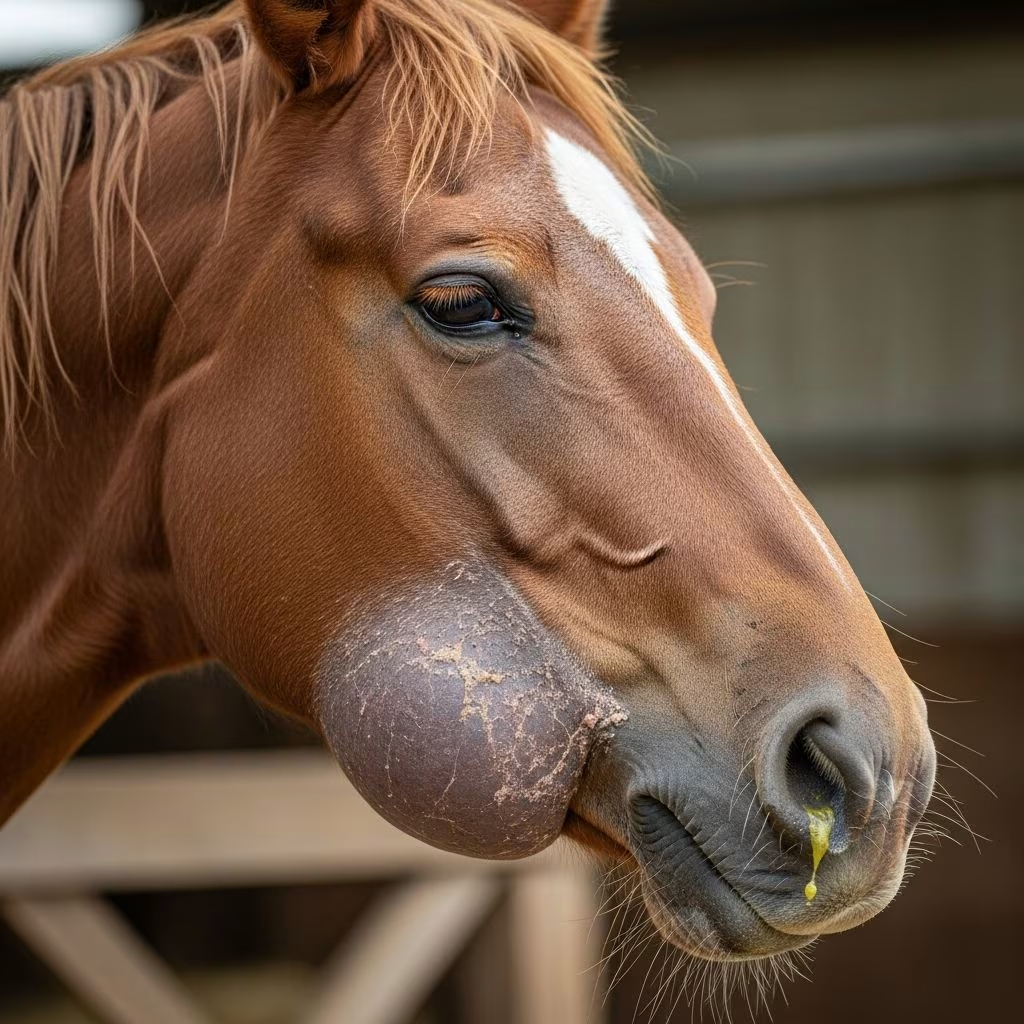
Strangles, caused by the bacterium Streptococcus equi, represents one of the most prevalent and infectious respiratory conditions in horses worldwide. This upper respiratory tract infection primarily targets the lymph nodes beneath the jaw and throat, leading to painful swelling and abscess formation. Young horses under five years old face the highest risk, though all ages can succumb if exposed. Understanding this disease’s dynamics is crucial for horse owners, enabling swift intervention to curb outbreaks on farms or stables.
Understanding the Cause and Transmission Pathways
The pathogen S. equi thrives in the moist environments of a horse’s nasopharynx and guttural pouches. Transmission occurs rapidly through direct contact with infected nasal secretions, pus from ruptured abscesses, or contaminated fomites like shared buckets, brushes, and tack. Aerosolized droplets from coughing also spread the bacteria over short distances in enclosed spaces. Infected horses shed the organism profusely for up to three weeks, even before symptoms manifest, making early detection challenging.
Carriers play a pivotal role in perpetuating outbreaks. Approximately 10% of recovered horses harbor S. equi in their guttural pouches for months or years without showing signs. These silent shedders release bacteria intermittently, reigniting infections in naive herds. Endoscopy often reveals “chondroids”—hardened pus masses—in these pouches, confirming carrier status.
Recognizing Early and Classic Symptoms
Incubation spans 3 to 14 days post-exposure. Initial signs include a sharp fever exceeding 101.5°F (38.6°C), often climbing to 107°F (42°C), accompanied by depression and reluctance to eat. Horses appear dull, with drooping heads and minimal movement.
As the disease advances, submandibular lymph nodes (under the jaw) and retropharyngeal nodes (behind the throatlatch) enlarge dramatically, forming hot, painful abscesses. Thick, yellow-green nasal discharge streams from both nostrils. Affected horses struggle to swallow, producing a distinctive “strangling” sound—hence the name—and may extend their necks to breathe. Abscesses typically rupture after 7 to 14 days, draining copious pus and providing relief.
- Fever: Persistent high temperature as the first indicator.
- Nasal discharge: Mucopurulent and bilateral.
- Lymph node swelling: Firm, tender enlargements progressing to abscesses.
- Anorexia and lethargy: Reduced appetite and energy.
- Respiratory distress: In severe cases, airway obstruction from massive swelling.
Not all cases follow this textbook pattern. Some horses develop “catarrhal strangles,” featuring mild nasal discharge and fever without abscesses, while others remain inapparent carriers.
Rare but Serious Complications
While most horses recover within three to four weeks, complications arise in 10-20% of cases, demanding aggressive veterinary care. “Bastard strangles” involves abscesses migrating to distant sites like the abdomen, lungs, brain, or mammary glands, triggered by bacterial spread via bloodstream.
Purpura hemorrhagica, an immune-mediated vasculitis, manifests as limb edema, facial swelling, and mucosal petechiae. It stems from hypersensitivity to bacterial antigens post-recovery or after vaccination in recently exposed horses. Quarter Horses risk immune-mediated myopathy, causing muscle weakness.
Guttural pouch empyema leads to chondroid formation, fostering chronic carriage. Rarely, laryngeal paralysis or secondary pneumonia occurs, necessitating tracheostomy in extremis.
| Complication | Description | Treatment Needs |
|---|---|---|
| Bastard Strangles | Internal abscesses | Antibiotics, drainage |
| Purpura Hemorrhagica | Vascular inflammation, edema | Anti-inflammatories, supportive care |
| Guttural Pouch Empyema | Pus accumulation, chondroids | Endoscopy, lavage |
| Myopathy (Quarter Horses) | Muscle disease | Immunosuppressants |
Diagnostic Approaches for Confirmation
Veterinarians confirm strangles via culture of nasal swabs, abscess aspirates, or guttural pouch lavages, though S. equi grows slowly. PCR testing detects bacterial DNA rapidly from swabs, ideal for carriers. Endoscopy visualizes guttural pouch pathology. Serology assesses exposure but cannot differentiate current infection from past immunity. Testing in-contact horses uncovers subclinical cases.
Treatment Strategies: Supportive Care First
Counterintuitively, antibiotics are often avoided in uncomplicated cases. They halt abscess maturation, prolong shedding, and impair immunity development, raising reinfection risk. Instead, prioritize isolation, soft bedding, and soaked feeds to ease swallowing. NSAIDs like flunixin meglumine control fever and pain, boosting appetite.
Hot fomentations promote drainage. For complications—high fever pre-abscess, respiratory compromise, or distant infections—penicillin or ceftiofur is indicated, alongside IV fluids and monitoring. Severe airway obstruction may require tracheostomy.
Chronic carriers undergo guttural pouch endoscopy with lavage using acetylcysteine to dissolve chondroids, sometimes needing surgical removal.
- Quarantine affected and exposed horses for 4-6 weeks post-recovery.
- Feed low-protein, high-roughage diets to avoid exacerbating bacterial virulence.
- Monitor daily for fever and lymph node changes.
Prevention: Vaccination, Biosecurity, and Management
Immunity post-infection lasts 1-2 years in 75% of horses, but 20-25% suffer reinfections. Vaccines (intranasal or intramuscular) reduce severity and shedding but do not prevent entirely; avoid in recently exposed or convalescent horses due to purpura risk.
Biosecurity is paramount:
- Quarantine newcomers for 3 weeks with PCR testing.
- Disinfect with phenolics or bleach; steam-clean tack.
- Minimize horse density and ventilation in barns.
- Screen for carriers via endoscopy in outbreak-prone farms.
Foals gain passive protection from colostrum if dams are immune or vaccinated.
Frequently Asked Questions (FAQs)
What is the incubation period for strangles?
Typically 3-14 days after exposure.
Can strangles be fatal?
Rarely, due to airway obstruction or complications like bastard strangles.
Is vaccination 100% effective against strangles?
No, it lessens severity but does not guarantee prevention.
How long should I quarantine a horse with strangles?
At least 4 weeks after abscess drainage, with negative PCR tests.
Can humans catch strangles from horses?
No, S. equi is equine-specific.
Long-Term Herd Health Considerations
Outbreaks devastate operations, incurring quarantine costs and lost training time. Routine surveillance, including annual guttural pouch exams for high-risk horses, prevents recurrences. Integrating vaccination into protocols for weanlings and travelers, alongside stringent hygiene, minimizes incidence. Owners should collaborate with vets for tailored biosecurity plans, ensuring herd resilience against this perennial threat.
By fostering awareness and proactive measures, equine enthusiasts can mitigate strangles’ impact, preserving the vitality of their equine partners.
References
- Equine Strangles: Management and Prevention — University of Florida Large Animal Hospital. 2025-05-09. https://largeanimal.vethospitals.ufl.edu/2025/05/09/equine-strangles-management-and-prevention/
- Understanding Strangles in Horses — Southeast Houston Equine. N/A. https://www.sehtx.com/understanding-strangles-in-horses/
- Strangles Disease in Horses: Symptoms, Treatment & How… — Mad Barn. N/A. https://madbarn.com/strangles-in-horses/
- Equine Strangles — Michigan State University College of Veterinary Medicine. N/A. https://cvm.msu.edu/hospital/services/equine-services/for-owners/equine-strangles
- Streptococcus equi Infections in Horses: Guidelines for Treatment… — PMC (NCBI). 2018. https://pmc.ncbi.nlm.nih.gov/articles/PMC5867011/
- 7 Facts About Strangles You Need to Know — Tufts University Cummings School of Veterinary Medicine. N/A. https://vet.tufts.edu/news-events/news/7-facts-about-strangles-you-need-know



