

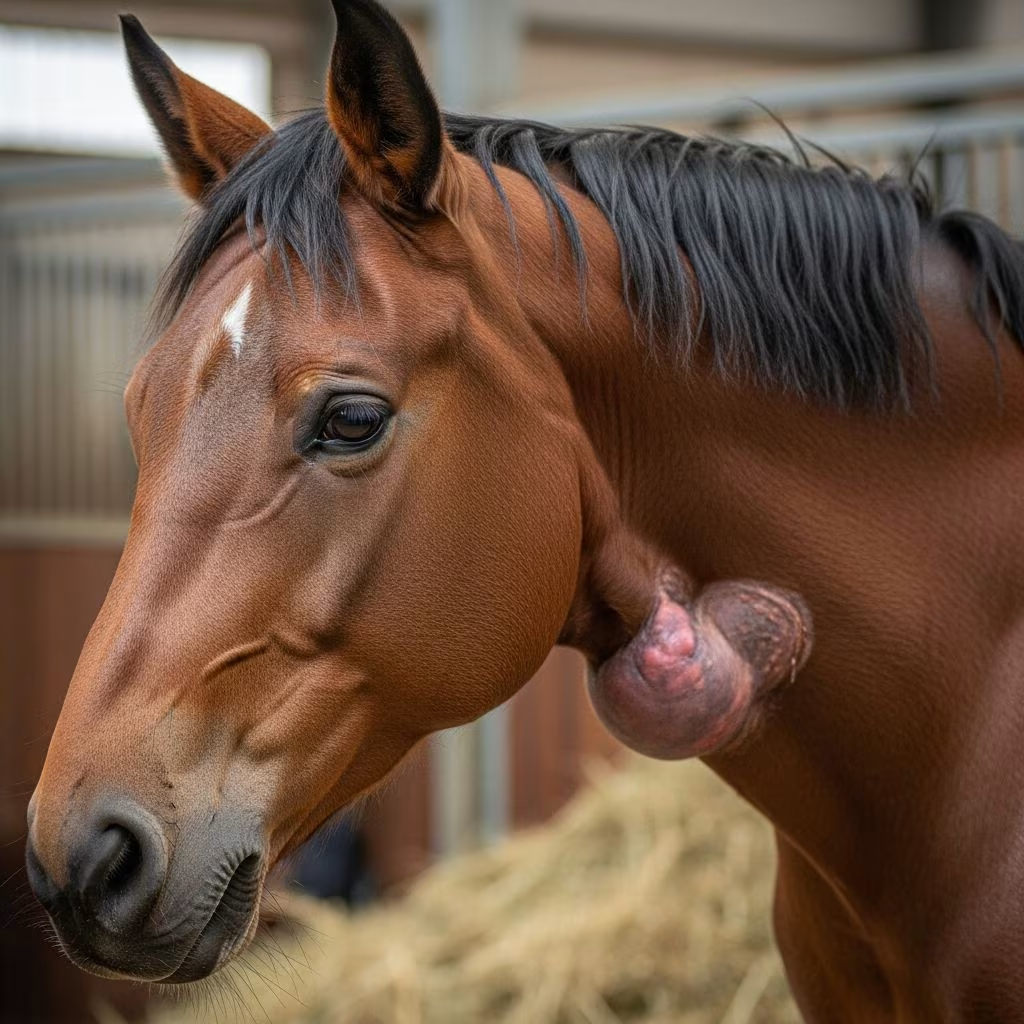
Strangles, caused by the bacterium Streptococcus equi subspecies equi, represents one of the most prevalent infectious diseases affecting horses worldwide. This upper respiratory infection targets the lymph nodes, particularly those in the head and neck region, leading to painful abscesses and significant health challenges. Young horses under five years old are especially vulnerable, though all ages can be affected. Understanding this condition is crucial for horse owners, trainers, and veterinarians to implement timely interventions and prevent outbreaks.
Understanding the Cause and Transmission of Strangles
The pathogen S. equi is highly adapted to horses, spreading primarily through direct contact with infected nasal secretions, pus from ruptured abscesses, or contaminated equipment. The bacteria can survive in the environment for weeks, hitching rides on shared water troughs, feed buckets, brushes, and even human clothing or hands. Aerosol transmission over short distances also occurs during coughing or sneezing.
Infection begins when bacteria enter the mucous membranes of the nose or pharynx. They multiply rapidly, evading the immune system initially by forming biofilms. Within 3 to 14 days, clinical signs emerge. Notably, up to 10% of recovered horses become asymptomatic carriers, harboring bacteria in their guttural pouches—large air-filled sacs connected to the Eustachian tube. These carriers shed S. equi intermittently for months or years, serving as silent sources of outbreaks.
- Primary transmission routes: Direct nose-to-nose contact, shared tack, and contaminated environments.
- Environmental persistence: Bacteria viable on dry surfaces for up to 40 days.
- Carrier role: Guttural pouch infections lead to chondroids (pus concretions) that perpetuate spread.
Recognizing Early Symptoms and Progression
Strangles typically announces itself with a sudden spike in body temperature, often exceeding 101.5°F (38.6°C) and reaching up to 107.6°F (42°C) in severe cases. Affected horses appear depressed, reluctant to eat, and stand with an extended neck to ease breathing and swallowing.
Within 24 to 48 hours of fever onset, thick, yellow-green nasal discharge develops bilaterally. Submandibular lymph nodes—located under the jaw—enlarge dramatically, becoming firm and painful. These nodes may abscess, rupture, and drain pus, releasing infectious material. Horses with retropharyngeal lymph node involvement show more severe signs: inspiratory stridor (noisy breathing), dysphagia (difficulty swallowing), and a characteristic ‘strangled’ appearance that gave the disease its name.
| Stage | Key Symptoms | Duration |
|---|---|---|
| Incubation | Fever, lethargy | 3-14 days post-exposure |
| Clinical | Nasal discharge, lymph node swelling, depression | 1-3 weeks |
| Resolution | Abscess drainage, gradual recovery | 2-4 weeks |
Not all cases follow the classic pattern. Some horses experience mild or subclinical infections, while ‘bastard strangles’ sees abscesses form in distant sites like the abdomen or lungs.
Serious Complications and When to Worry
While most horses (over 90%) recover fully within 3-4 weeks, complications can be life-threatening. Metastatic or bastard strangles involves bacterial spread to internal lymph nodes or organs, causing multi-organ abscesses. Purpura hemorrhagica, an immune-mediated vasculitis, leads to edema in limbs and face, petechial hemorrhages on mucous membranes, and potentially fatal colic.
Rarely, myositis (muscle inflammation, especially in Quarter Horses) or guttural pouch empyema occurs. Respiratory obstruction from massive lymph node enlargement may necessitate emergency tracheostomy. Mortality is low (less than 10%), but complications prolong recovery and increase costs.
- Purpura hemorrhagica: Swelling, hemorrhages due to immune complex deposition.
- Bastard strangles: Internal abscesses mimicking other diseases.
- Guttural pouch issues: Chondroids formation in carriers.
Diagnosis: Confirming Strangles in Your Horse
Veterinary diagnosis combines clinical signs with laboratory confirmation. Culture or PCR testing of pus from abscesses, nasopharyngeal swabs, or guttural pouch lavages detects S. equi DNA with high sensitivity. Endoscopy visualizes pharyngeal inflammation, enlarged nodes, or chondroids in carriers.
Serology via ELISA measures antibody levels, aiding carrier detection but less useful acutely due to rapid seroconversion. Differential diagnoses include equine influenza, viral rhinopneumonitis, or abscesses from other bacteria.
Treatment Strategies: Supportive Care First
Counterintuitively, uncomplicated strangles responds best to supportive care, not antibiotics. Antimicrobials can disrupt abscess maturation, prolonging shedding and immunity. Isolate the horse immediately in a clean, dust-free stall 10-25 meters from others, using dedicated equipment.
Provide soft, soaked feeds at ground level to ease swallowing. Apply warm compresses to lymph nodes twice daily to promote drainage. NSAIDs like flunixin meglumine or phenylbutazone control fever, pain, and inflammation, improving appetite.
Antibiotics (e.g., procaine penicillin at 22,000 IU/kg IM q12h) are reserved for complications: dyspnea, severe dysphagia, prolonged fever (>5 days), or neonates. In outbreaks, early treatment of febrile horses prevents full disease. Facilitate abscess lancing once fluctuant, followed by flushing.
For carriers, endoscopy-guided lavage removes chondroids, often with penicillin infusion. Intensive cases may require IV fluids, tracheostomy, or supportive ventilation.
Vaccination: Benefits, Risks, and Best Practices
Intramuscular (IM) and intranasal vaccines reduce disease severity but do not prevent infection entirely. Intranasal versions offer superior mucosal immunity. Administer only to healthy horses without fever or exposure history—recent infection or high antibodies risk purpura hemorrhagica.
Vaccinate naive horses before high-risk events like shows. Boost annually or per label, under veterinary supervision to avoid injection-site abscesses. Natural immunity post-recovery lasts 1-2 years in 75% of horses.
Prevention: Biosecurity as the Cornerstone
Outbreak prevention hinges on strict biosecurity. Quarantine new arrivals for 3 weeks, monitoring temperature daily. Disinfect with bleach (1:32 dilution), chlorhexidine, or accelerated hydrogen peroxide solutions—S. equi resists many disinfectants.
Screen for carriers via guttural pouch endoscopy and PCR, especially on recurrent farms. Limit commingling at events; use disposable equipment. Maintain separate facilities for in-contact horses.
- Daily temperature checks: Flag fevers >101°F.
- Quarantine protocols: 3 weeks minimum.
- Cleaning: Remove organic matter first, then apply virucides.
Frequently Asked Questions (FAQs)
What is the incubation period for strangles?
Typically 3-14 days after exposure, starting with fever.
Can strangles be fatal?
Rarely; mortality <10%, mainly from complications like airway obstruction.
Should I use antibiotics on my horse with strangles?
Only for severe cases; supportive care is preferred for uncomplicated infections.
How long is a horse contagious with strangles?
Up to 3 weeks post-abscess rupture; carriers shed intermittently for months.
Is there a cure for carrier horses?
Endoscopic lavage and antibiotics can clear most, but success varies.
Long-Term Management and Herd Health
Post-recovery, monitor for 4 weeks before resuming work. Recovered horses gain robust immunity but test negative via PCR before group reintegration. Farms with history should adopt sentinel programs: Monitor sentinel horses for early detection.
Integrate vaccination judiciously with biosecurity. Collaborate with vets for tailored protocols, especially in breeding or show operations. Economic impacts include quarantine downtime, treatment costs (up to $5,000/case), and lost performance.
Research advances PCR diagnostics and novel vaccines targeting M-protein, promising better control. Stay informed via veterinary associations.
References
- Equine Strangles: Management and Prevention — University of Florida Large Animal Hospital. 2025-05-09. https://largeanimal.vethospitals.ufl.edu/2025/05/09/equine-strangles-management-and-prevention/
- Strangles in Horses — Merck Veterinary Manual. Accessed 2026. https://www.merckvetmanual.com/respiratory-system/respiratory-diseases-of-horses/strangles-in-horses
- Strangles in Horses — MSD Veterinary Manual. Accessed 2026. https://www.msdvetmanual.com/respiratory-system/respiratory-diseases-of-horses/strangles-in-horses
- Strangles Disease in Horses: Symptoms, Treatment & How to Prevent — Mad Barn. Accessed 2026. https://madbarn.com/strangles-in-horses/
- Streptococcus equi Infections in Horses: Guidelines for Treatment — PMC (NCBI). 2018-03-14. https://pmc.ncbi.nlm.nih.gov/articles/PMC5867011/



