

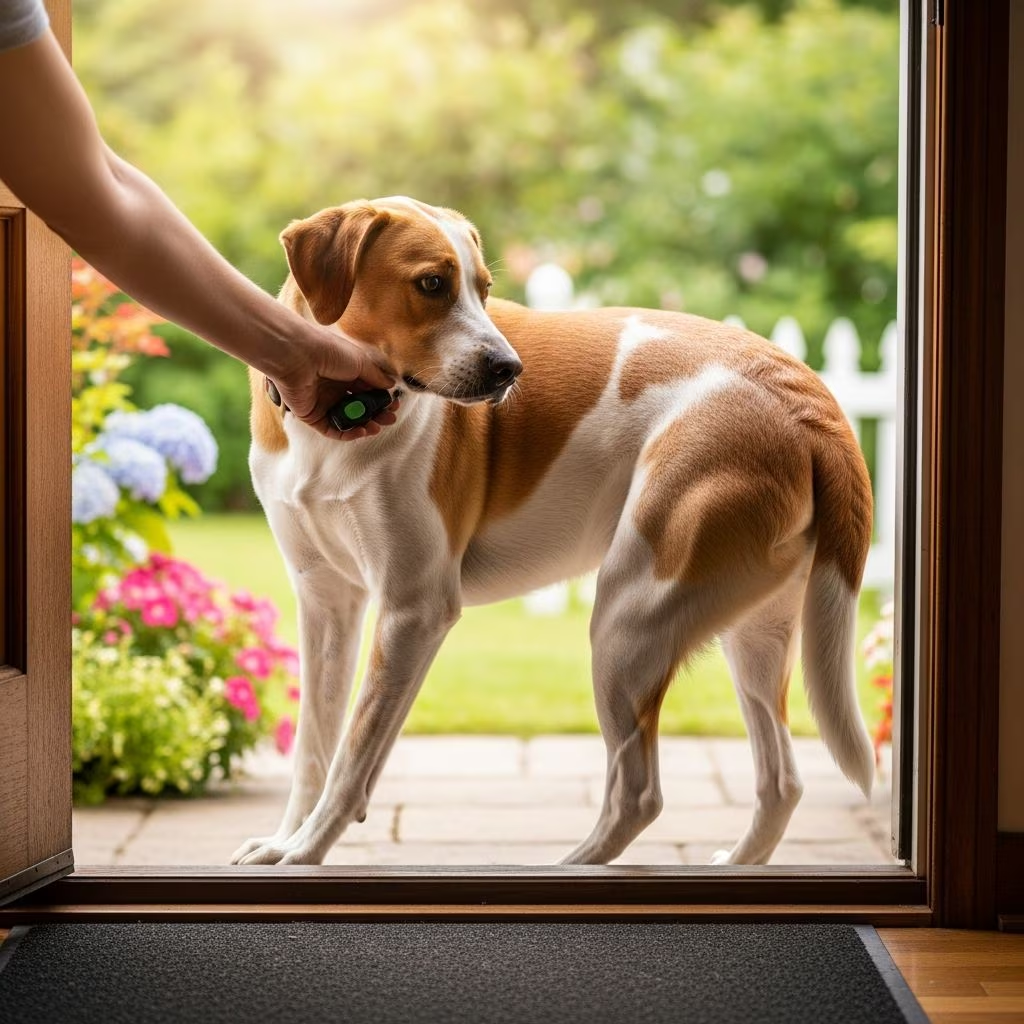
Door bolting, where dogs impulsively rush out open doors, poses serious safety risks like traffic accidents or getting lost. Effective prevention combines immediate management tactics with structured training to build impulse control and calm behaviors around thresholds.
Understanding Why Dogs Bolt Through Doors
Dogs often dash through doors due to high excitement from anticipating outdoor adventures, poor impulse control especially in young or energetic breeds, and past reinforcements where escaping led to rewarding experiences like chasing wildlife. Without clear boundaries, doors become high-stakes opportunities for self-rewarding behavior.
Common triggers include doorbells, visitors, or routine exits, amplifying arousal. Breeds with high prey drive or herding instincts may be more prone, but any dog can develop this habit if not addressed early. Recognizing these roots allows targeted interventions rather than punishment, which can worsen anxiety.
Essential Safety Measures to Prevent Escapes
Prioritize prevention to avoid rehearsals of bolting, as each success strengthens the behavior. Install physical barriers like baby gates or exercise pens to block door access, ensuring household members always secure the dog behind them before opening doors.
For outdoor containment, create airlock zones with self-closing gates or woven wire fencing around entry points, trapping escapees in a safe enclosure. Keep leashes handy by doors for immediate control during training or unexpected openings. Crate training offers another layer, conditioning dogs to retreat to a positive space on cues like doorbells.
- Use pet gates with walk-through doors for strong bolters.
- Lock doors when unsupervised to counter knob-turning skills.
- Employ exercise pens for larger areas or multiple dogs.
Building Foundational Calmness Routines
Establish predictable pre-door protocols to reduce frenzy. Teach dogs to automatically station on a mat or designated spot upon approach, rewarding only calm states before any door movement. This leverages positive reinforcement, associating stillness with access.
Start in low-distraction areas: Approach door, cue sit or down, treat heavily, then briefly open and close without release. Gradually add duration and distractions. Consistency across family members is crucial—chaotic behavior resets progress.
| Step | Action | Reward |
|---|---|---|
| 1. Approach | Dog stations calmly | High-value treat |
| 2. Touch handle | Dog remains settled | Praise + treat |
| 3. Open slightly | No forward movement | Jackpot reward |
| 4. Release | “Okay” cue | Exit permission |
Training Impulse Control at Thresholds
Desensitize dogs to door stimuli through repeated calm exposures. Practice approaching doors on leash, rewarding sits or downs without cues initially to build default responses. Progress to family members simulating visitors by ringing bells unpredictably.
Introduce a “wait” cue: Pause at threshold until released, never opening if the dog crowds. Use environmental cues like door sight to trigger auto-sits, feeding kibble for spontaneous sits across contexts to boost frequency. For advanced proofing, add guests or toys outside.
Differential reinforcement of incompatible behaviors (DRI) excels here—train mat targeting where all paws contact a nearby rug on door cues, physically preventing dashes. Click and treat progression from closed to fully open doors with distractions.
Handling Bolts: Immediate Response Strategies
If a dash occurs, avoid chasing, as it fuels the game. Instead, run opposite with high-value treats yelling “Let’s go!” to redirect. Toss treats away from the door to reinforce distance as rewarding.
Post-incident, reset with management and resume training calmly. Never punish returns, as it discourages coming back. Focus on prevention to minimize these moments.
Boosting Exercise and Mental Enrichment
Tired dogs dash less. Ramp up physical outlets like fetch, runs, or agility, paired with mental puzzles like shaping games for problem-solvers. Provide legal exploration via scent walks or nosework to satisfy instincts without self-initiated escapes.
Aim for age-appropriate daily activity: Puppies need frequent short bursts, adults 30-60 minutes structured exercise. Combine with obedience for dual benefits.
Proofing for Real-World Reliability
Generalize training across doors, people, and scenarios. Practice with distractions like squeaky toys or passing pets outside. Involve all household members for consistency, fading treats to verbal praise over time.
Long-term success means dogs default to waiting, viewing doors as predictors of rewards only through compliance. Monitor progress weekly, adjusting for regressions.
Common Pitfalls and Fixes
- Inconsistent enforcement: Train everyone on protocols.
- Insufficient rewards: Use top treats for high-motivation doors.
- Rushing phases: Build slowly to avoid frustration.
- Ignoring exercise: Pair training with activity spikes.
FAQs
What if my dog is a strong bolter already?
Double down on management first—gates and leashes—while training incompatible behaviors like mat stays. Patience yields results.
How long until my dog stops darting?
Weeks to months with daily 10-minute sessions. Consistency accelerates progress.
Does breed matter?
High-energy breeds need more exercise, but all respond to positive methods.
Can puppies learn this?
Yes, start early for prevention, using play-based rewards.
What about multi-dog homes?
Train individually, use pens to separate during sessions.
References
- How to Handle Door Dashing: Before, During & After — Freak on a Leash Dog Training. 2023. https://freakonaleashdogtraining.com/how-to-handle-door-dashing-before-during-after/
- Door Darting Management — Whole Dog Journal. 2023. https://www.whole-dog-journal.com/behavior/door-darting-management/
- How to Prevent Door-Dashing — Karen Pryor Clicker Training. 2023. https://clickertraining.com/how-to-prevent-door-dashing/
- How to Curb Open Door Darting — AKC Reunite. 2023. https://www.akcreunite.org/curb-open-door-darting/
- Preventing Door-Dashing — Bright Spot Dog Training. 2023. https://www.kathysdao.com/articles/preventing-door-dashing/
- Escape! What to do about doggy door darters — Operation Kindness. 2023. https://support.operationkindness.org/site/DocServer/Confidence_Building_for_Shy_Dogs.pdf?docID=221



