

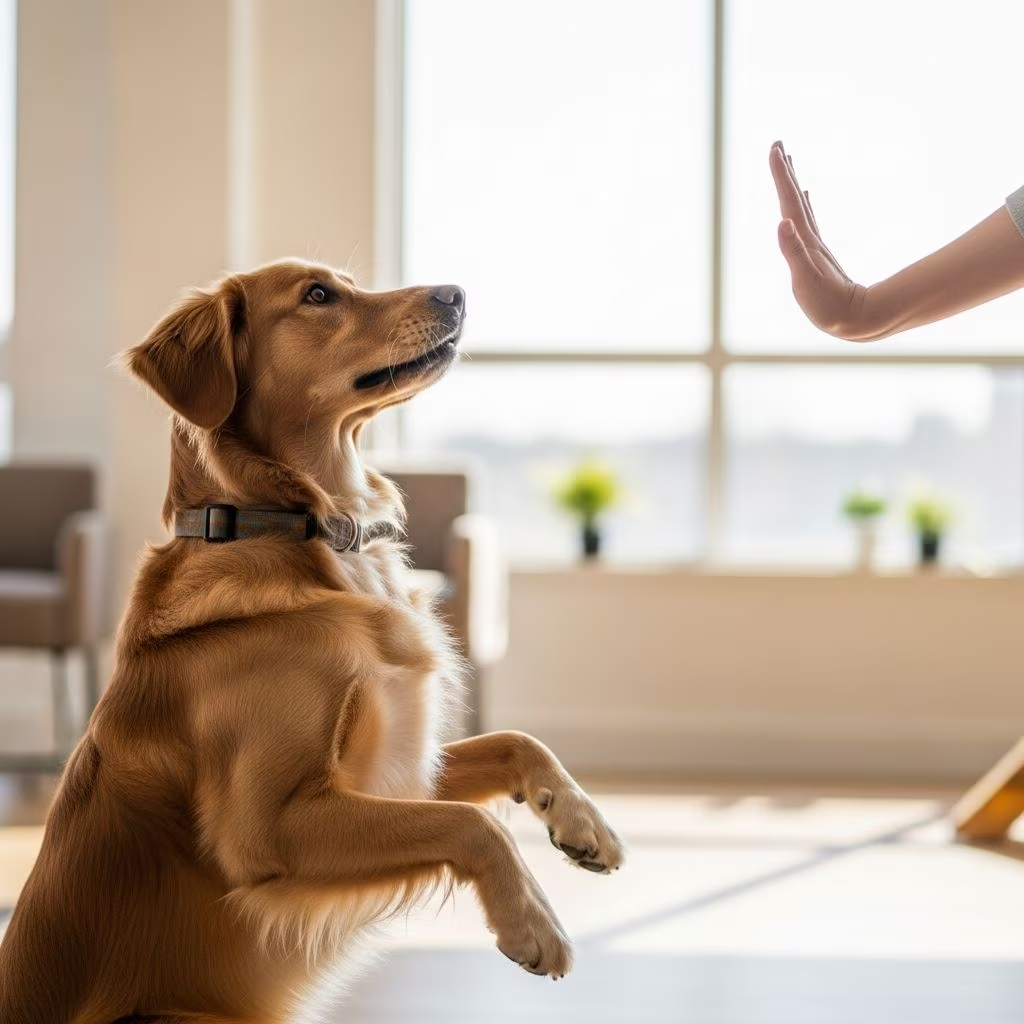
Dogs jumping up on people is a widespread issue that stems from natural instincts but can lead to scratched skin, torn clothes, and awkward social situations. This behavior often arises from excitement, attention-seeking, or even underlying stress, making it essential to address through consistent training and environmental adjustments. By understanding the motivations behind it and applying targeted strategies, owners can teach their dogs more appropriate ways to interact.
Understanding Why Dogs Jump on People
At its core, jumping is a canine communication method inherited from puppyhood, where pups nudge their mothers for food or attention by pawing upward. In adult dogs, this persists as a greeting ritual, especially with familiar faces. However, several emotional and learned factors drive it in domestic settings.
- Excitement bursts: High-energy dogs leap to express joy upon seeing owners or guests, often accompanied by wagging tails and playful bouncing.
- Attention reinforcement: If jumping results in petting, talking, or eye contact—even negative—it becomes a rewarded habit.
- Frustration redirection: Leash-restrained dogs may jump at handlers when unable to reach desired objects like other animals.
- Stress or anxiety signals: Insecure dogs might jump to seek reassurance or displace unease around strangers.
Recognizing these triggers allows for precise interventions rather than generic scolding, which can exacerbate anxiety-driven jumping.
Core Principles for Changing the Behavior
Effective training hinges on two pillars: eliminating rewards for jumping and proactively teaching alternatives. Dogs learn through consequences, so consistency across all household members and visitors is non-negotiable. Avoid physical punishment, as it risks increasing fear-based responses or escalating arousal.
| Principle | Why It Works | Example Application |
|---|---|---|
| Remove Reinforcement | Breaks the reward cycle | Turn away silently when paws lift |
| Positive Alternatives | Redirects energy productively | Reward sitting with treats |
| Management First | Prevents practice of bad habits | Use leashes or barriers initially |
| Consistency | Ensures clear expectations | Everyone follows the same rules |
Step-by-Step Training Plan for Home Greetings
Begin in low-distraction environments to build success, gradually increasing challenges. Aim for short, daily sessions of 5-10 minutes.
- Teach a rock-solid sit: With your dog calm, lure into a sit using a treat held above their nose. Mark with “yes” and reward immediately. Practice until they sit on verbal cue alone.
- Practice ignoring jumps: As you enter a room, stand still if they jump—no talking, no touching. Wait for four paws on the floor, then cue sit and reward lavishly.
- Add movement: Walk toward them; if jumping starts, pivot away. Return only when calm. Progress to tossing treats on the ground to redirect focus downward (scatter technique).
- Incorporate excitement: Simulate arrivals by stepping out and back in repeatedly. Reward calm behavior before any interaction occurs.
Pro tip: Use high-value rewards like small bits of chicken or cheese during early stages to compete with jumping’s thrill.
Managing Jumps on Visitors and Strangers
Visitors often unwittingly reinforce jumping by laughing or pushing away. Prepare in advance for seamless control.
- Brief guests: Instruct them to ignore the dog completely until invited to engage.
- Leash protocol: Keep your dog on a short lead near the door, cueing sit as people enter.
- Diversion tools: Have toys or puzzle feeders ready to occupy them in another room initially.
- For outdoor encounters: Use a long line for control, rewarding focus on you with treats while maintaining distance from passersby.
If anxiety fuels jumps at strangers, desensitize gradually: Reward calm observation from afar, slowly closing the gap over weeks.
Addressing Emotional Root Causes
Handling Excitement-Driven Jumping
Energetic breeds like Labs or Border Collies channel enthusiasm upward. Counter this by tiring them mentally and physically beforehand—try scent games or obedience drills before guests arrive. Teach “place” to a mat for greetings, rewarding prolonged stays.
Tackling Anxiety and Stress
Dogs with tucked tails or lip-licking alongside jumps need confidence-building. Establish routines with predictable schedules for exercise, meals, and rest. Enrichment like frozen Kongs post-walks helps decompress. Consult a vet to rule out pain mimicking behavioral issues.
Breaking Reinforced Habits
Long-standing patterns require patience; persistence pays off as extinction bursts (temporary worsening) fade. Track progress in a journal to stay motivated.
Advanced Techniques for Stubborn Cases
For persistent jumpers, layer in these methods:
- Threshold training: Practice door drills where the dog must sit before anyone crosses the threshold.
- Impulse control games: “Wait” for food bowls, leashes, or toys builds self-regulation.
- Professional help: If progress stalls, seek certified trainers using force-free methods.
Remember, puppies under 6 months may outgrow mild jumping with guidance, but early intervention prevents entrenchment.
Common Mistakes to Avoid
Well-intentioned errors can prolong the problem:
- Kneeling to their level, inviting more jumps.
- Inconsistent responses among family members.
- Reprimanding verbally, which provides attention.
- Expecting instant results without prevention strategies.
FAQs
Why does my puppy jump more after training starts?
This extinction burst occurs as rewards dry up; stay consistent, and it subsides within days.
Is a shock collar effective for jumping?
No—aversives can heighten fear and aggression. Positive methods yield durable, happy outcomes.
How long until my dog stops jumping entirely?
Typically 2-4 weeks with daily practice, varying by age, breed, and history.
What if my dog jumps when alone with me?
Treat it identically: Ignore and reward calm. Boredom may contribute, so amp up daily stimulation.
Can older dogs learn not to jump?
Absolutely—dogs of all ages respond to clear, consistent guidance.
Long-Term Success Strategies
Sustain gains by generalizing training across contexts: parks, friends’ homes, vet visits. Maintain routines balancing activity and rest to prevent over-arousal. Celebrate milestones, like scratch-free guest visits, to reinforce your efforts. With time, your dog will offer polite sits instead of leaps, enhancing safety and enjoyment for everyone.
References
- My dog jumps up at visitors, how can I stop him? — Goddard Veterinary Group. 2023-05-15. https://www.goddardvetgroup.co.uk/blog/my-dog-jumps-up-at-visitors-how-can-i-stop-him/
- How to stop your dog jumping up at people — Dogs Trust. 2024-02-10. https://www.dogstrust.org.uk/dog-advice/training/unwanted-behaviours/jumping-up-training
- Jumping Up — Dog Partners. 2023-08-22. https://www.dogpartners.ca/jumping_up
- Behavior Problems – Jumping — Positively.com. 2024-01-05. https://positively.com/dog-training/article/behavior-problems-jumping
- Dog Behavior Problems – Greeting Behavior – Jumping Up — VCA Animal Hospitals. 2023-11-18. https://vcahospitals.com/know-your-pet/dog-behavior-problems-greeting-behavior-jumping-up
- Teach Your Dog To Stop Jumping Up In 4 Simple Steps! — McCann Dog Training (YouTube). 2022-07-12. https://www.youtube.com/watch?v=7P1DgDED23o
- Dog Jumping (and how to stop it) — Patriot Dog Training. 2024-03-01. https://patriotdogtraining.com/stop-dog-jumping/



