

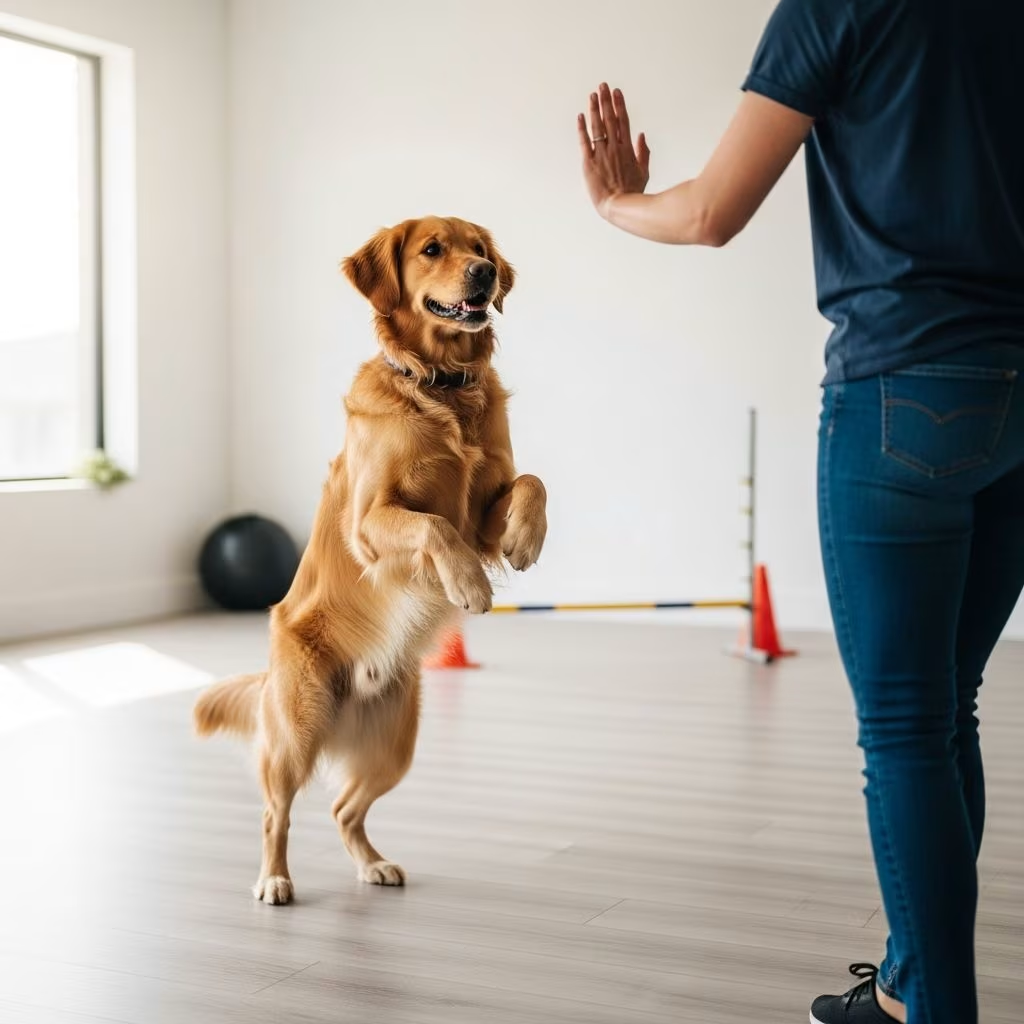
Dogs often jump up on people out of excitement, seeking attention, or due to underlying stress, but this behavior can be unsafe and embarrassing. This comprehensive guide provides positive, force-free strategies to teach your dog polite greetings, drawing from expert veterinary and behavioral insights.
Understanding the Root Causes of Dog Jumping
Recognizing why your dog jumps is the first step to effective training. Most jumping stems from natural canine instincts combined with learned responses from human interactions.
- Excitement-driven jumps: Puppies and energetic dogs leap to greet familiar faces, mimicking how they greeted littermates with paws on backs.
- Attention-seeking: If jumping results in petting, talking, or play—even scolding—it reinforces the habit.
- Frustration or stress: Leashed dogs may jump when unable to reach something desirable, like another animal, redirecting pent-up energy.
- Anxiety or fear: Insecure dogs jump to create distance or release tension during overwhelming encounters.
Less commonly, medical issues like pain can contribute; consult a vet if jumping is sudden or accompanied by limping.
Why Punishment Fails and Positive Methods Succeed
Traditional knee-lifts or yells often backfire, increasing confusion, fear, or aggression. Dogs interpret any reaction as attention, perpetuating the cycle.
Positive reinforcement, endorsed by organizations like Dogs Trust and VCA Animal Hospitals, focuses on rewarding calm alternatives. This builds trust, reduces stress, and yields lasting results without harm.
| Method | Pros | Cons |
|---|---|---|
| Punishment (yelling, pushing) | Quick initial suppression | Causes fear, aggression; ignores root cause |
| Positive Reinforcement (treats, praise for sitting) | Builds confidence; long-term fix | Requires consistency and patience |
Essential Preparation Before Training Begins
Set your dog up for success with these foundational steps.
- Master basic cues: Ensure your dog knows “sit” reliably in low-distraction settings using treats.
- Gather tools: High-value treats, a leash, toys, and a clicker for precise marking of good behavior.
- Build a routine: Provide daily exercise (30-60 minutes walks) and mental stimulation like puzzle toys to lower baseline arousal.
- Enlist helpers: Practice with calm family members or friends who follow protocols.
Consistency across all household members is crucial—mixed signals undermine progress.
Step-by-Step Training for Home Greetings
Train in controlled sessions of 5-10 minutes, 3-5 times daily.
Technique 1: The Ignore-and-Redirect Method
Withdraw attention completely when jumping occurs, then reward four paws on the floor.
- Stand still, arms crossed, avoid eye contact or speech.
- Wait for voluntary calm (sitting or standing); immediately praise and treat.
- Progress to asking for a “sit” before entry.
This extinguishes jumping by removing reinforcement while teaching patience.
Technique 2: Scatter Treats for Impulse Control
Redirect energy downward with this fun entry ritual, ideal for high-drive dogs.
- As you approach the door, toss 10-20 small treats on the floor saying “find it.”
- Only greet once all treats are eaten and dog is calm.
- Fade treats over time, replacing with verbal praise.
A YouTube trainer demonstrates this yielding quick results in under a week with leashed practice.
Technique 3: Leash Management for Reliability
Use a 6-foot leash indoors to prevent jumping and guide to success.
- Clip leash before guests arrive.
- Step on it if jumping starts, keeping front feet just off ground—no pulling.
- Cue “sit” and reward heavily while guest ignores dog.
Handling Visitors and Strangers
Jumping at guests spikes embarrassment; proactive management is key.
- Pre-arrival prep: Exercise dog beforehand and place in a crate or separate room with a stuffed Kong.
- Guest protocol: Instruct visitors to turn away, ignore until dog sits. Reward via you, not them.
- Threshold training: Practice door drills: knock, dog sits, guest enters calmly.
For ongoing issues, tether dog to furniture at a distance where they can’t reach but can see guests.
Outdoor Jumping Prevention on Walks
Leash control prevents rehearsing bad habits.
- Maintain distance: Create space from passersby; reward focus on you with treats.
- Long-line practice: In open areas, allow exploration but recall before jumping occurs.
- Engagement games: Use “look at me” cues or toys to keep attention during encounters.
Never force interactions; let dog choose to greet only when calm.
Addressing Emotional and Confidence Issues
If jumping persists despite management, underlying emotions may be at play.
For Anxious or Fearful Dogs
Build confidence gradually.
- Observe triggers (strangers, crowds) and maintain safe distance.
- Reward calm observation from afar, slowly closing gap over weeks.
- Incorporate desensitization: pair distant triggers with high-value rewards.
For Overstimulated Dogs
Prevent overload with routine.
- Schedule rest periods post-exercise; use sniffing walks to de-arouse.
- Teach “settle” on a mat with chews for downtime.
Professional help from a certified trainer is advised if fear-aggression signs appear.
Age-Specific Strategies
Puppies (under 6 months) respond fastest to prevention; adults may need habit-breaking.
| Age Group | Best Approach | Timeline |
|---|---|---|
| Puppies | Prevent + reward sits from day 1 | 1-2 weeks |
| Adults | Management + intensive sessions | 2-4 weeks |
| Seniors | Gentle redirects; check health | Variable |
Common Mistakes and How to Avoid Them
- Inconsistent responses: Everyone must ignore jumping equally.
- Rewarding accidentally: No petting until all four paws down.
- Skipping exercise: Tired dogs jump less—aim for 1-2 hours daily activity.
- Impatience: Progress takes 100% consistency; track with a journal.
Advanced Tips for Lasting Success
- Teach “off” cue: Lure paws down with treat, then reward.
- Integrate into recall training for off-leash reliability.
- Use apps for session reminders and progress logging.
Frequently Asked Questions (FAQs)
Will my dog ever jump again after training?
With maintenance, relapses are rare. Refresh cues monthly.
What if my dog is too big/strong?
Leash management and head halters provide control safely.
Can treats create dependency?
Fade them gradually to verbal/life rewards like walks.
Is professional training necessary?
Not always, but certified positive trainers accelerate results for tough cases.
How long until I see results?
Most dogs improve in 1-3 weeks with daily practice.
References
- My dog jumps up at visitors, how can I stop him? — Goddard Veterinary Group. 2023. https://www.goddardvetgroup.co.uk/blog/my-dog-jumps-up-at-visitors-how-can-i-stop-him/
- How to stop your dog jumping up at people — Dogs Trust. 2024. https://www.dogstrust.org.uk/dog-advice/training/unwanted-behaviours/jumping-up-training
- Jumping – Positively.com — Positively.com. 2023. https://positively.com/dog-training/article/behavior-problems-jumping
- Dog Behavior Problems – Greeting Behavior (Jumping Up) — VCA Animal Hospitals. 2024. https://vcahospitals.com/know-your-pet/dog-behavior-problems-greeting-behavior-jumping-up
- Teach Your Dog To Stop Jumping Up In 4 Simple Steps! — McCann Dog Training (YouTube). 2023. https://www.youtube.com/watch?v=7P1DgDED23o
- Dog Jumping (and how to stop it) — Patriot Dog Training. 2024. https://patriotdogtraining.com/stop-dog-jumping/



