

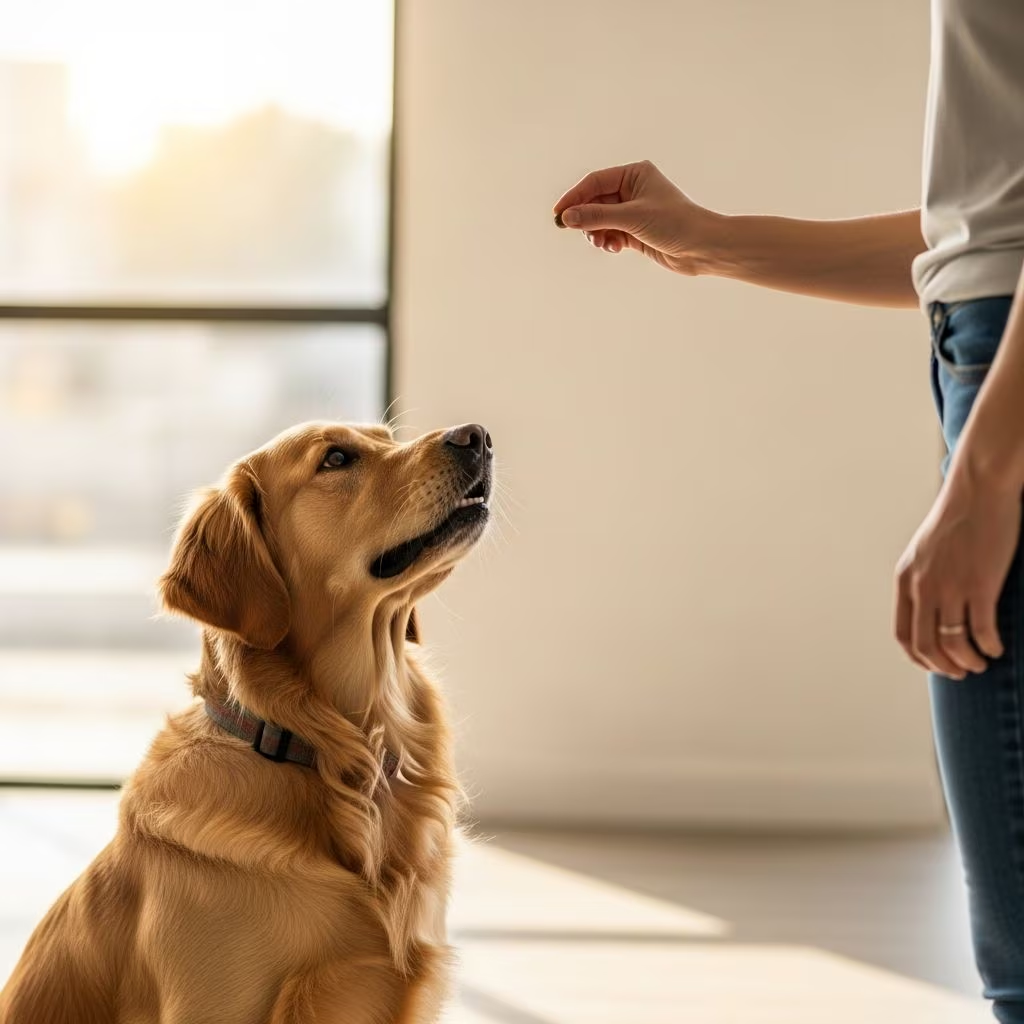
Dogs often jump up on people during greetings due to excitement or a desire for attention, but this behavior can be corrected with consistent, positive training methods. By understanding the root causes and applying structured techniques, owners can teach their dogs to keep all four paws on the floor.
Understanding the Roots of Jumping Behavior
Jumping is a common issue stemming from a dog’s natural instincts and learned responses. Puppies naturally jump to reach their mother’s face for interaction, and this carries over into adult behavior if reinforced. Excitement upon seeing owners or guests triggers this, as dogs seek eye contact or physical closeness similar to how they greet other dogs.
Attention plays a key role: even pushing a dog away or scolding can feel like play or interaction, inadvertently rewarding the jump. Without clear boundaries, dogs view jumping as an effective way to engage humans, especially when owners respond with pets or words upon returning home.
- Instinctual drive: Mimics puppy-mother interactions for attention.
- Learned reinforcement: Any human response, positive or negative, perpetuates it.
- Excitement factor: Peaks during arrivals, releases, or playtime.
Recognizing these triggers allows owners to intervene proactively, preventing escalation into habitual rudeness that could endanger children or visitors.
Prevention Strategies for Puppies and Adults
Early intervention is crucial, particularly with puppies. Never encourage jumping by lifting them or allowing it during play. Instead, from day one, reward calm behavior with treats and praise when they sit or stand politely.
For adult dogs, assess daily routines. Excitement builds when dogs associate door openings with greetings. Teach them that calm states earn rewards, not frenzy. Physical and mental exercise reduces pent-up energy; aim for daily walks, fetch sessions, or puzzle toys to tire them constructively.
| Age Group | Prevention Tip | Expected Outcome |
|---|---|---|
| Puppies (under 6 months) | Ignore jumps; reward sits immediately | Forms habit of polite greetings early |
| Adults | Increase exercise; use leashes during greetings | Reduces overall excitement levels |
| All ages | Practice with family members daily | Consistency builds reliability |
Structure home life with rules like eating in one spot or staying on a designated mat, reinforcing leadership and self-control.
Core Training Techniques That Work
Effective training relies on positive reinforcement, ignoring unwanted actions, and redirecting to alternatives like sitting. Consistency across all household members is non-negotiable for success.
The Ignore and Reward Method
Turn away completely—no eye contact, talking, or touching—when your dog jumps. Fold arms, look up, and wait for all paws to hit the floor. Instantly praise and treat the calm moment. This teaches that jumping yields nothing, while politeness brings rewards.
- Approach your dog calmly.
- If jumping starts, pivot and withdraw attention.
- At four-on-the-floor, say “good” and offer a treat.
- Repeat 5-10 times per session, multiple times daily.
Progress to simulated greetings: step out and back in, practicing until automatic.
Disruption Tools for Quick Interruptions
For dogs needing a gentle startle, use humane noisemakers like shaker cans or ultrasonic devices. Shake as jumping begins, then command “sit” and reward compliance. Pair with a leash: step on it to prevent launch, rewarding stillness.
Advanced users may employ head halters for precise control during practice, ensuring no pain but clear guidance.
Treat Scattering Technique
Before jumping can occur, toss high-value treats on the ground. This redirects focus downward, associating greetings with floor-level rewards. Speed is key: anticipate and act preemptively. If jumping happens, the greeter walks away, withholding treats until calm.
Combine methods for best results, tracking progress in a journal to note improvements weekly.
Handling Challenges During Real-Life Scenarios
Guests amplify jumping, so prepare with leashed practice. Have visitors ignore the dog until seated, then reward. For high-energy dogs, pre-exercise before company arrives.
Common pitfalls include inconsistent responses or rewarding accidentally. If mouthing accompanies jumps, address it separately by freezing motion and resuming only when gentle.
- With visitors: Leash and station on a mat.
- Multiple dogs: Train individually first.
- Persistent cases: Consult professionals for tailored plans.
Mental enrichment like Kongs stuffed with food keeps dogs occupied during arrivals, reducing impulse.
Advanced Tips for Lasting Results
Build leadership through boundaries: command sits before meals, doors, or pets. Teach “place” on a bed or mat, using stays to practice distance control. This fosters respect and impulse regulation.
Monitor body language: excited dogs pant, whine, or circle—interrupt early. Sessions should be short (5-10 minutes) and fun, ending on successes.
Consistency transforms excitement into composure, creating a safer, happier home.
FAQs: Common Questions Answered
Why does my dog only jump on some people?
Dogs target those who react most—pets, laughs, or pushes. Train universally to eliminate selectivity.
How long until my dog stops jumping?
Most see changes in 1-2 weeks with daily practice; full reliability takes 4-6 weeks.
Is it okay to knee my dog when jumping?
No—risks injury and increases fear. Use positive methods for humane, effective results.
What if my puppy jumps during play?
Pause play until calm; resume only with four paws down to link fun with manners.
Can older dogs learn not to jump?
Yes, with patience. Focus on high motivation and short sessions.
Long-Term Maintenance and Enrichment
Sustain gains with ongoing reinforcement. Enroll in obedience classes for socialization and polish. Provide outlets like agility or scent work to channel energy positively.
Track metrics: jumps per greeting week one vs. week four. Adjust as needed, celebrating milestones with extra playtime.
Holistic care includes balanced nutrition, vet checkups, and stress reduction—happy dogs behave better.
References
- Dog Behavior Problems — Greeting Behavior — Jumping Up — Humane Society of Missouri (HSMO). 2013 (updated material). https://hsmo.org/portfolio-item/dog-behavior-problems-greeting-behavior-jumping-up/
- How to Stop Your Dog from Jumping — Bark Busters. Recent (no specific date; training standards timeless). https://www.barkbusters.com/dog-training/southwest-orlando/how-to-stop-your-dog-from-jumping
- How to Reduce Jumping — Wisconsin Humane Society. Recent (behavior guidelines). https://www.wihumane.org/behavior/ask-the-experts/dogs/jumping
- How to Stop Your Dog From Jumping Up on People — American Kennel Club (AKC). Recent (expert advice). https://www.akc.org/expert-advice/training/how-to-stop-your-dog-from-jumping-up-on-people/
- Helping a Dog with a Jumping Problem — Dog Gone Problems. Recent (behavior expert). https://www.doggoneproblems.com/honey-stop-jumping/



