

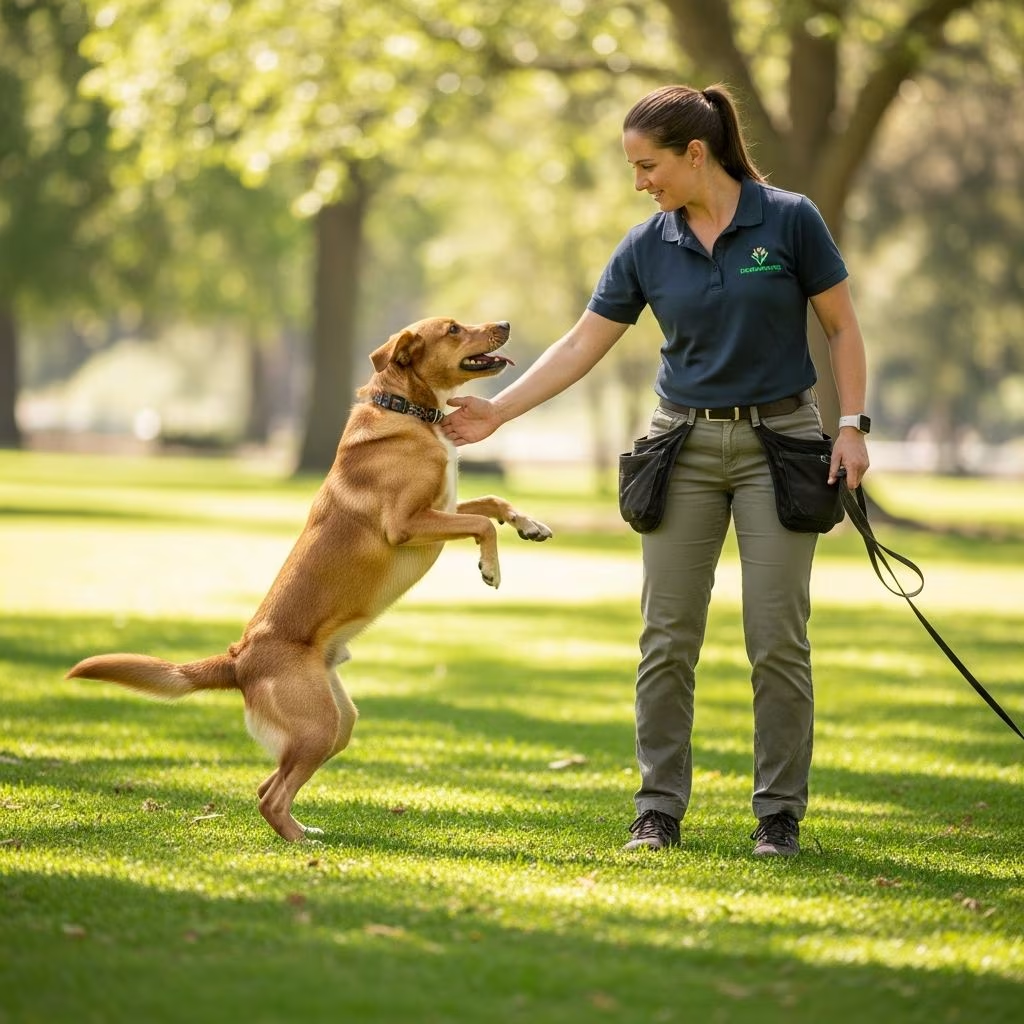
Dogs often jump up on people during greetings due to excitement, attention-seeking, or natural social instincts, but this behavior can be corrected through consistent training and management. Effective methods focus on rewarding calm behavior, ignoring unwanted actions, and establishing clear leadership to achieve lasting change.
Understanding the Root Causes of Dog Jumping
Jumping is a common canine greeting ritual rooted in a dog’s evolutionary drive to connect at eye level, especially since most dogs are shorter than humans. Social dogs use this to express joy upon seeing familiar faces, while others may jump from anxiety, overstimulation, or playfulness. High-energy breeds like Border Collies, German Shepherds, or Labrador Retrievers are particularly prone due to their need for outlets.
Attention plays a central role: even negative responses like pushing or yelling reinforce the behavior because any interaction rewards the dog. Inconsistent family reactions create a ‘variable ratio of reinforcement,’ strengthening the habit over time. Puppies learn it early from play, and without intervention, it persists into adulthood, potentially causing injury or discomfort to guests.
Core Principles for Success in Training
Changing jumping requires removing rewards for the behavior while reinforcing alternatives. Consistency across all household members and visitors is essential—mixed signals prolong the issue. Combine positive reinforcement with clear boundaries, physical exercise, and mental stimulation for holistic results. Patience yields quick progress; many dogs learn in days with daily 15-30 minute sessions.
Foundational Technique: The Four-on-the-Floor Method
This cornerstone approach teaches dogs that attention comes only when all paws remain grounded. Start in low-distraction settings: stand calmly, and as your dog approaches without jumping, immediately deliver a high-value treat (pea-sized pieces of chicken or hot dogs) to their lower jaw or the floor.
- Anticipate jumps by holding treats low; raising your hand encourages leaping.
- If jumping occurs, cross arms, turn away, and withhold all interaction—no talking, eye contact, or touching.
- Resume rewards the instant four paws hit the floor, building an automatic calm greeting response.
Practice 5-10 repetitions daily. Progress to leashed greetings by stepping on the leash midpoint, allowing standing room but preventing jumps.
Alternative Behaviors: Sit and Stay for Greetings
Replace jumping with incompatible actions like sitting. Teach ‘sit’ as highly rewarding: use treats, play, or petting for compliance during interactions. Chain cues—’sit-stay’—to create polite protocols.
Advanced: Introduce ‘place’ training with a bed or board. Command your dog to station there during arrivals, reinforcing with praise. This builds impulse control and separation tolerance, often mastered in 1-2 days.
| Method | Steps | Best For |
|---|---|---|
| Four-on-the-Floor | Ignore jumps; reward ground paws | Daily greetings |
| Sit for Greetings | Cue sit; treat compliance | Visitors |
| Place Training | Send to bed; stay command | High-excitement scenarios |
Managing Excitement with Guests and Strangers
Prepare for company by crating, gating, or leashing your dog with an enrichment toy like a stuffed Kong to redirect energy. Instruct guests: no attention until calm. As they approach, reward sitting from a distance.
For walks, step on the leash before strangers near, maintaining slack-free control. Toss ground treats if arousal builds, keeping focus low. Consistency from all encounters solidifies learning.
Building Leadership and Boundaries
Dogs respect structured environments. Establish yourself as leader by setting routines: feed in one spot at set times, enforce ‘place’ during couch time, and lead walks without pulling. Command instead of permitting free access; this dynamic shift reduces boundary-testing like jumping.
Daily leadership exercises include down-stays while you move rooms, fostering respect and calm. High-drive dogs benefit from off-leash obedience drills for deeper compliance.
Exercise and Enrichment: Preventing Jumps at the Source
Under-exercised dogs jump from pent-up energy. Provide 30-60 minutes daily of fetch, runs, or agility, plus mental puzzles like treat-dispensing toys. Pre-guest sessions tire them out, making calm easier.
For intense breeds, add 15-30 minutes mental work beyond physical activity—scent games or obedience chains prevent relapse.
Common Mistakes and How to Avoid Them
- Inconsistency: Ensure family alignment; variable rewards entrench habits.
- Physical Corrections: Kneeling or pushing often excites more; ignore instead.
- Rushing Progress: Skip distractions until basics stick; build gradually.
- Ignoring Exercise: Training alone fails without outlets.
If jumps persist, assess rewards: is petting sneaking in? Restart basics with management.
Quick Wins and Bonus Tips
For 10-minute fixes: Leash and ignore jumps, rewarding downs repeatedly until extinction. Use ‘off’ cues paired with turns. Enroll in manners classes for structured practice.
Track progress: Week 1 focuses on family; Week 2 adds guests. Most see 80% improvement in 7-14 days with diligence.
Frequently Asked Questions (FAQs)
Why does my puppy jump more than my adult dog?
Puppies explore boundaries; lack maturity amplifies excitement. Early training prevents lifelong issues.
What if my dog jumps on visitors despite training?
Reinforce management: crate pre-arrival, leash rewards. Coach guests on ignoring.
Can high-energy breeds ever stop completely?
Yes, with daily outlets and leadership—obedience levels rival service dogs.
Is physical punishment effective?
No; it heightens arousal. Positive methods yield reliable, happy results.
How long until results?
2-4 corrections per session build habits; full reliability in 1-2 weeks.
This guide equips you with tools for a jump-free home. Implement daily for transformed greetings.
References
- Why Your Dog Jumps… and How To Stop It NOW! — NOVA Canine Academy (YouTube). 2023. https://www.youtube.com/watch?v=xYc1s8bdAV8
- How to Reduce Jumping — Wisconsin Humane Society. 2024-01-15. https://www.wihumane.org/behavior/ask-the-experts/dogs/jumping
- Dog Behavior Problems – Greeting Behavior – Jumping Up — VCA Animal Hospitals. 2025-06-10. https://vcahospitals.com/know-your-pet/dog-behavior-problems-greeting-behavior-jumping-up
- How to Stop Your Dog From Jumping Up on People — American Kennel Club (AKC). 2024-11-20. https://www.akc.org/expert-advice/training/how-to-stop-your-dog-from-jumping-up-on-people/
- You’re Not a Bad Pet Parent If Your Dog Jumps on People — PetMD. 2025-03-05. https://www.petmd.com/dog/training/youre-not-bad-pet-parent-if-your-dog-jumps-people
- Stop Dog Jumping — Jeff Millman Dog Training, LLC. 2024. https://www.jeffmillman.com/index.php/training-topics/dog-obedience/stop-dog-jumping
- An Easy Way to Teach Dogs to Stop Jumping on People — Dog Gone Problems. 2023-09-12. https://www.doggoneproblems.com/moody-stop-jumping-on-people/



