

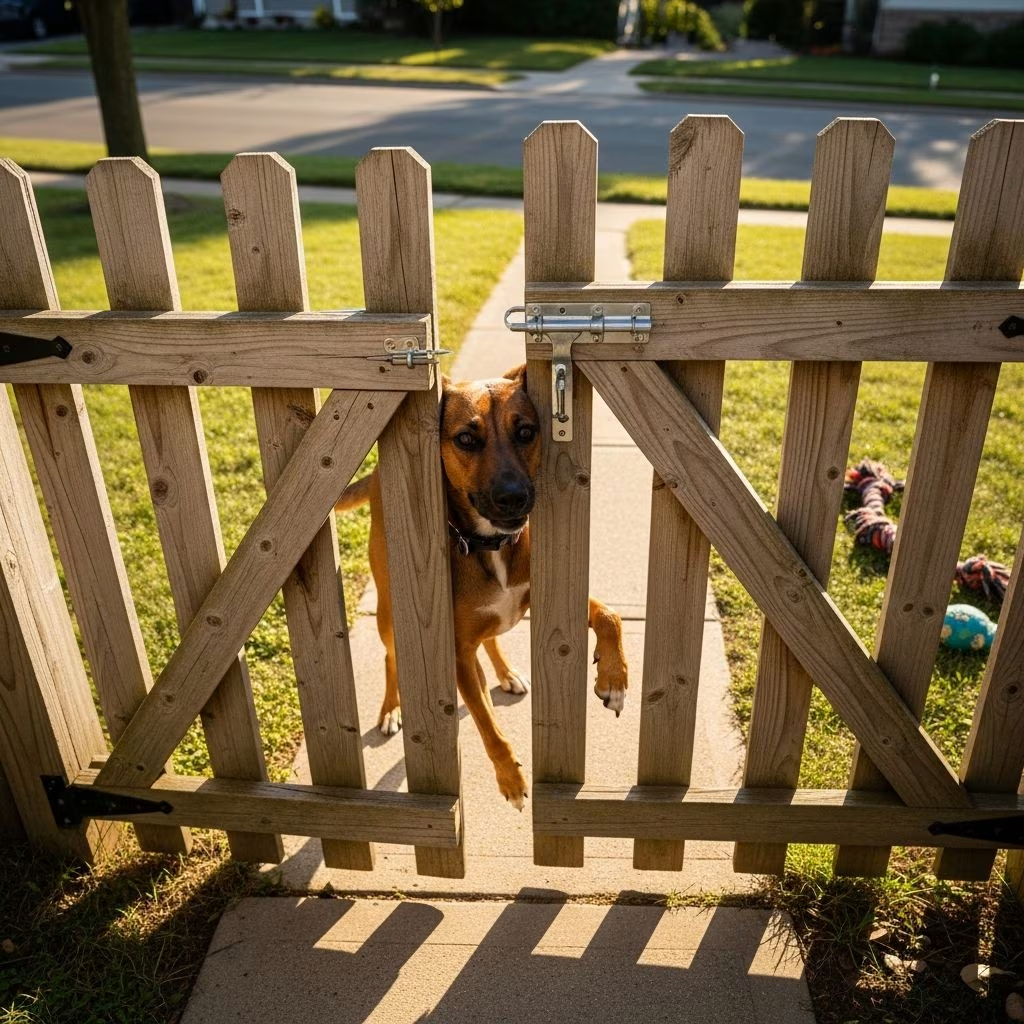
Dogs escaping their yards or homes poses serious risks, including traffic accidents, getting lost, or encounters with wildlife. Understanding the root causes and applying targeted prevention methods can eliminate this behavior effectively. This guide explores physical reinforcements, behavioral training, and technological aids to create a secure environment for your canine companion.
Understanding Why Dogs Attempt to Escape
Dogs bolt from yards or dash through doors due to various motivations. High energy levels in breeds like Border Collies or Huskies often drive them to seek adventure beyond boundaries. Boredom prompts exploration, especially if exercise is insufficient. Reproductive urges in unneutered dogs lead to frantic searches for mates, while fear from thunderstorms or fireworks causes panic-induced flights. Separation anxiety manifests as destructive escapes when owners leave, and curiosity simply draws some dogs to investigate neighborhood scents or sounds.
Observing patterns helps pinpoint triggers. Note if escapes coincide with your departure, visitors arriving, or specific times of day. Addressing the underlying need—more playtime, spaying/neutering, or anxiety relief—reduces escape incentives alongside physical deterrents.
Fortifying Your Yard Against Physical Escapes
Physical barriers form the foundation of escape prevention. Assess your fence for vulnerabilities like gaps, weak latches, or climbable features.
Countering Jumpers and Climbers
For athletic dogs that leap or scale fences, height alone isn’t enough; clever extensions discourage attempts. Install inward-angled toppers using chicken wire or PVC pipes bent at 45 degrees, creating an overhang that makes gripping impossible. These L-shaped or lean-in additions extend 1-2 feet horizontally from the top, forcing dogs to confront an unstable barrier mid-climb.
- Coyote Rollers: Rotating PVC tubes mounted on top prevent pawholds, allowing dogs to touch but not gain traction.
- Fence Extensions: Add 2-3 feet of lightweight mesh at the top, slanting inward to deter without full replacement costs.
- Corner Reinforcements: Extra netting over fence corners blocks common breakout spots.
Remove aids like stacked furniture, trees, or ramps near boundaries that boost jumping reach.
Stopping Diggers Under Fences
Persistent diggers undermine perimeters, creating tunnels. Bury chicken wire or hardware cloth 12-24 inches deep along the entire fence line, flaring it outward into the yard. This creates an underground skirt that collapses digging efforts.
- Concrete footings poured 18 inches deep provide permanent barriers for heavy diggers.
- Heavy rocks, railroad ties, or pavers laid against the fence base inside the yard discourage starting digs.
- Gardening mesh buried 1-2 feet inward blocks shallow escapes.
Fill existing holes with compacted soil or rocks, then monitor for new attempts.
Securing Gates and Entry Points
Gates are prime escape routes due to latch manipulation or human error. Use heavy-duty padlocks, carabiners, or spring-loaded clips on all latches. Post signs reminding family and visitors: “Clip the gate closed!”
Install double-gate airlocks: a secondary fenced vestibule requires closing one gate before opening the next, trapping potential escapees. Retractable or extra-tall baby gates work for smaller yards.
Indoor Escape Prevention: Home Safety Essentials
Dogs don’t just flee yards; many dash from homes. Secure interiors to match outdoor efforts.
- Door Dashers: Block doorways with tall exercise pens or baby gates forming airlocks. Train by opening the door, crossing the barrier, and rewarding calm stays with treats.
- Window and Screen Risks: Close all windows, especially upper levels, and repair chewed screens. Move furniture away from sills to prevent jumping launches.
- Smart Locks: Key-only deadbolts prevent knob-turning dogs or accidental opens by kids/guests.
Supervise unsupervised time, using crates or dog-proofed rooms when away.
Training Techniques for Reliable Recall and Boundaries
Training instills self-control, reducing escape reliance. Start in low-distraction areas, progressing to real-world tests.
Mastering Recall Commands
A rock-solid “come” command halts escapes before they start. Use high-value rewards like chicken or toys.
- Practice on a 15-foot longline in enclosed spaces.
- Call enthusiastically, reward immediately upon return.
- Gradually increase distance and distractions, fading the leash.
Avoid calling for punishment; always make coming joyful.
Boundary and Impulse Control Training
Teach thresholds with flags marking yard limits. Walk the perimeter on-leash, rewarding stays inside. Impulse games like “wait” at doors build patience: hold treats above noses until released.
Decompression walks on longlines in safe areas satisfy exploration urges, decreasing home breakout needs.
Technology and Tools for Ultimate Security
Modern tech supplements barriers and training.
| Tool | Best For | Key Features |
|---|---|---|
| GPS Trackers (e.g., Fi Collar) | Recovery post-escape | Real-time location, LTE-M network, lost dog light, escape alerts |
| Virtual GPS Fences (e.g., SpotOn) | Boundary enforcement | Tone/vibration/static cues, app monitoring, no wires needed |
| Inflatable Collars/Puppy Bumpers | Small gap squeezers | Prevents slipping under/through fences |
Microchip all dogs and update collar tags with current contacts for finders.
Addressing Root Causes for Long-Term Success
Enrich environments to curb escape drivers. Provide puzzle toys, scent games, and 30-60 minutes daily exercise. Spay/neuter reduces hormonal roaming. For anxiety, consult vets for calming aids or behaviorists.
Consistency across household members ensures rules stick. Track progress with a journal noting escape attempts and interventions.
Common Escape Scenarios and Quick Fixes
| Scenario | Quick Fix | Long-Term Solution |
|---|---|---|
| Digging under fence | Fill holes with rocks | Bury wire skirt |
| Jumping over | Remove nearby objects | Add inward extension |
| Gate unlatching | Add carabiner clip | Install padlock + sign |
| Door dashing | Baby gate barrier | Recall + impulse training |
Frequently Asked Questions (FAQs)
How high should my fence be to contain a dog?
Minimum 5-6 feet for most breeds; add extensions for jumpers. Breeds like Greyhounds need taller or specialized barriers.
Will neutering stop my dog from escaping?
It reduces roaming urges but doesn’t address boredom or fear; combine with training.
What if my dog is already microchipped?
Update registration annually and pair with GPS for active tracking.
Can training alone prevent escapes?
Strong training works for mild cases but pair with physical barriers for reliability.
Are GPS fences safe for all dogs?
Yes, with proper training; start with positive tones before corrections.
References
- How to Help Prevent Your Dog From Escaping the Yard — American Kennel Club. 2023-05-15. https://www.akc.org/expert-advice/home-living/how-to-keep-a-dog-from-escaping-the-yard/
- How to Stop Dogs From Escaping — Best Friends Animal Society. 2024-02-10. https://bestfriends.org/pet-care-resources/how-stop-dogs-escaping
- Escape Prevention Tips: How to Help Prevent Your Dog from Getting Out — East Bay SPCA. 2024-05-01. https://eastbayspca.org/wp-content/uploads/2024/05/Escape-Prevention-Tips_Canine.pdf
- Behavior Challenges: Escaping Yards and Door Dashing — San Diego Humane Society. 2023-11-20. https://sdhumane.org/resources/behavior-challenges-escape-behavior/
- Dog Escaping the Yard — SPCA Cincinnati. 2022-08-12. https://www.spcacincinnati.org/media/documents/10Dog%20Escaping%20the%20Yard.pdf



