
Stop Dog Chasing Cats: Proven Training Guide
Master effective techniques to end your dog's cat-chasing habit and foster peaceful multi-pet harmony at home.
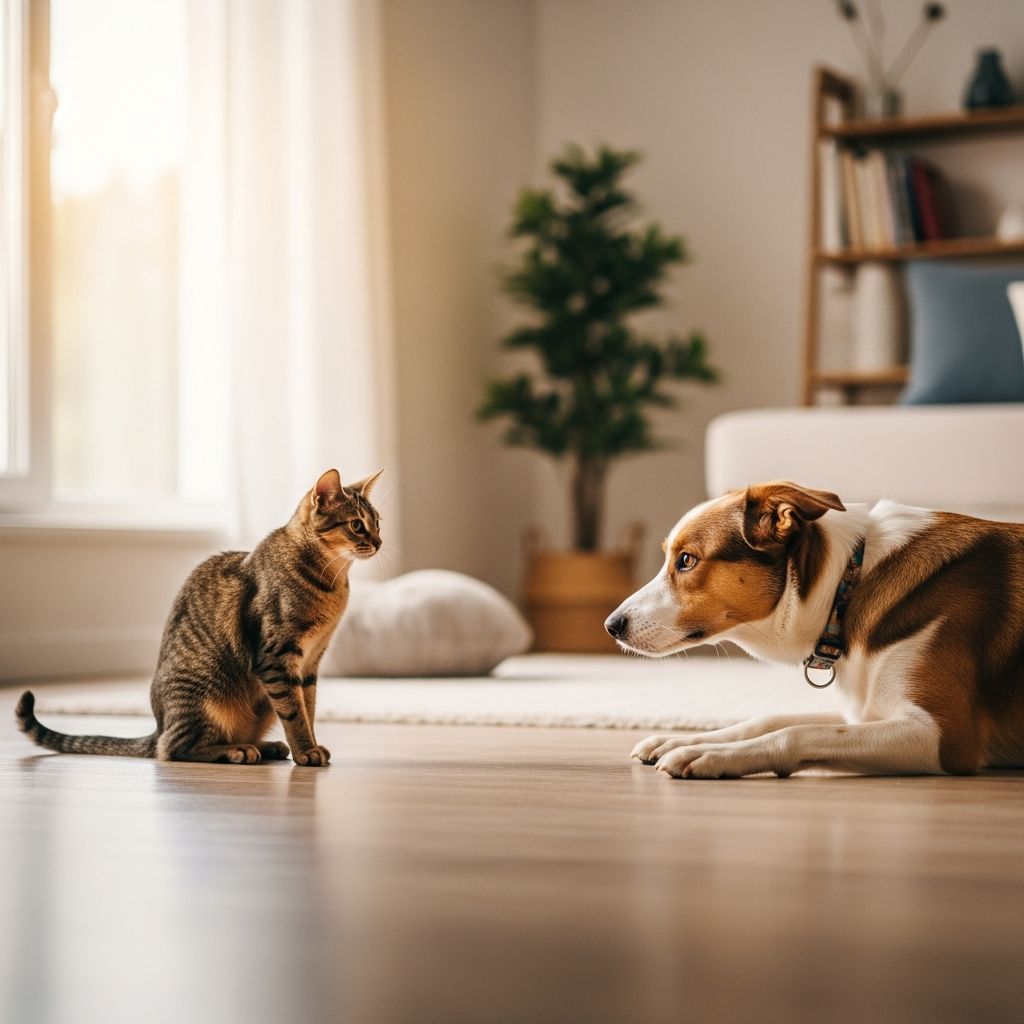
In multi-pet households, a dog’s instinct to chase cats can create chaos and stress. This behavior stems from predatory drives, high energy, or lack of self-control, but it can be addressed through structured training. By combining management strategies, impulse control exercises, and positive reinforcement, owners can reprogram their dog’s responses for safe coexistence.
Understanding Why Dogs Chase Cats
Dogs often chase cats due to their natural prey drive, where quick movements trigger an automatic pursuit response. High-energy breeds like herding or terrier types are particularly prone, as are under-exercised dogs seeking stimulation. Without intervention, this habit reinforces itself, making cats anxious and homes tense.
Key triggers include:
- Rapid cat movements, mimicking prey.
- Lack of mental or physical outlets, leading to boredom-fueled antics.
- Weak self-control, where impulses override obedience.
- Poor leadership or inconsistent rules in the home.
Recognizing these roots allows targeted training, preventing escalation to aggression.
Essential Management Techniques First
Before diving into training, implement strict management to prevent rehearsals of bad behavior. This sets the stage for success by avoiding reinforcement of chasing.
Use physical barriers like baby gates or crates to separate pets initially. Keep your dog leashed indoors during introductions, ensuring supervision at all times. Provide cats with elevated safe zones—tall cat trees or shelves—where dogs can’t reach, building feline confidence.
| Management Tool | Purpose | Tips for Use |
|---|---|---|
| Leashes & Long Lines | Control movement | Practice in low-distraction areas first; use for drag training. |
| Baby Gates | Visual separation | Allow sniffing through gaps gradually. |
| Cat Safe Havens | Reduce cat stress | Multiple per room; equip with toys and beds. |
| Exercise Routines | Drain excess energy | Daily 30-60 min walks plus mental games. |
These steps aren’t permanent fixes but crucial bridges to training, minimizing incidents while building foundations.
Building Rock-Solid Self-Control
Self-control is the cornerstone of stopping chase behavior. Dogs must learn to inhibit impulses even amid high temptation. Start with basic exercises away from cats, progressing to real scenarios.
Impulse Control Games:
- Wait at Doors: Dog sits calmly before exits; reward only perfect waits.
- Leave It Command: Place treats on floor, cover if needed; reward disinterest.
- Stay Drills: Hold positions amid distractions like toys or sounds.
Practice daily for 5-10 minutes. Use a marker word like “yes” followed by high-value rewards (e.g., chicken bits) for compliance. Consistency teaches that restraint pays off.
Advance to “positive interrupter” cues: Say a cheerful word (e.g., “let’s go”) when dog fixates on movement, rewarding glances back. This interrupts stare-chase cycles early.
Counter-Conditioning: Rewire the Chase Response
Counter-conditioning pairs the sight of a cat with positive outcomes, overriding predatory urges. Leash your dog and have the cat enter calmly.
- At first notice of cat, feed continuous tiny treats (boiled meat works best).
- Maintain feeding while cat is visible and moving; stop if cat hides.
- Keep sessions short (1-2 minutes); end on success.
Repeat 3-5 times daily. Over weeks, the cat becomes a cue for treats, not chase targets. Combine with desensitization by starting at distance, closing gaps as tolerance grows.
For stubborn cases, use functional rewards: Toss toys away from the cat to redirect energy positively.
Mastering Recall in Tempting Situations
A rock-solid recall turns potential chases into obedience wins. Train a “happy recall” voice—enthusiastic, non-punitive—to call dog off pursuits.
Steps for Proofing Recall:
- Practice in boring rooms with low distractions.
- Graduate to outdoor or multi-pet settings on long lines.
- Never use recall to end fun; keep it 100% rewarding.
If dog lunges, use gentle leash pressure plus cue; praise lavishly on return. Avoid yelling, as stress amplifies arousal.
Commands for Redirection and Leadership
Basic obedience forms the leadership dogs crave. Teach without food lures to avoid transactional mindsets—use praise and play.
Core Commands:
- Sit/Stay: Holds dog in place during cat approaches.
- Leave It: Breaks fixation; cue before tension builds.
- Place: Send to bed/mat, ignoring cats from afar.
Establish pack leadership through calm consistency: Eat first, control resources, enforce rules fairly. Dogs thrive under clear guidance.
Gradual Integration and Monitoring Progress
Once basics click, supervise off-leash interactions briefly. Reward calm cohabitation; intervene early with cues.
Track via journal:
- Session date and duration.
- Dog’s reactions (stare? Chase attempt? Ignore?).
- Success rate and adjustments.
Increase freedom incrementally. If regressions occur, revert to management. Patience yields permanent change, often in 4-8 weeks.
Boosting Success with Exercise and Enrichment
Tired dogs chase less. Mandate daily outlets:
| Activity | Duration | Benefits |
|---|---|---|
| Brisk Walks | 45 min | Physical drain, scent exploration. |
| Fetch/Puzzle Toys | 20 min | Mental fatigue, impulse practice. |
| Swims/Obedience Drills | 30 min | Low-impact cardio, command reinforcement. |
Ensure cats have toys to avoid provoking dogs. Balanced lives reduce behavioral outlets.
Common Pitfalls and Fixes
Avoid these errors:
- Inconsistent Rules: Everyone in household must enforce equally.
- Treat Dependency: Fade rewards gradually for intrinsic control.
- Rushing Integration: Hasty freedom invites failure; build slowly.
- Punishment: Scolding heightens stress; use positives only.
If progress stalls, consult certified trainers.
FAQs
What if my dog chases aggressively?
Use professional behaviorists; management is priority while assessing risk.
How long until results?
4-12 weeks with daily practice; varies by dog age and drive.
Works for puppies too?
Yes, prevention is ideal—start early with control foundations.
What treats best?
High-value like chicken or cheese, tiny pieces to avoid overfeeding.
Outdoor cats an issue?
Proof commands on leashes in yards; generalize to real-world distractions.
Maintain vigilance post-training; reinforce periodically. Peaceful dog-cat homes are achievable with dedication.
References
- The Honest, In-Depth Guide to Stopping Your Dog Chasing Cats — Best Mate Dog Training. 2023. https://www.bestmatedogtraining.co.nz/dog-chasing-cat
- Train Your Dog to Stop Chasing Cats — Whole Dog Journal. 2023. https://www.whole-dog-journal.com/behavior/train-your-dog-to-stop-chasing-cats/
- Preventing Dogs Chasing Cats — Homeward Bound Golden Retriever Rescue. 2013-05. https://homewardboundgoldens.org/wp-content/uploads/2013/05/Preventing-Dogs-Chasing-Cats.pdf
- How to Stop Your Dog from Chasing Your Cat — Always Faithful Dog Training. 2023. https://www.alwaysfaithfuldogs.com/how-to-stop-your-dog-from-chasing-your-cat
- How to Train Your Dog to Stop Chasing Animals (Step-By-Step) — Happy Hounds Dog Training (YouTube). 2023. https://www.youtube.com/watch?v=tXURX0apmS8
- Houston’s Cat Chasing / Aggression Dog Training — Beyond The Dog Training. 2023. https://beyondthedogtraining.com/houston/cat-chasing-aggression-dog-training/
Similar Articles








Read full bio of medha deb


