

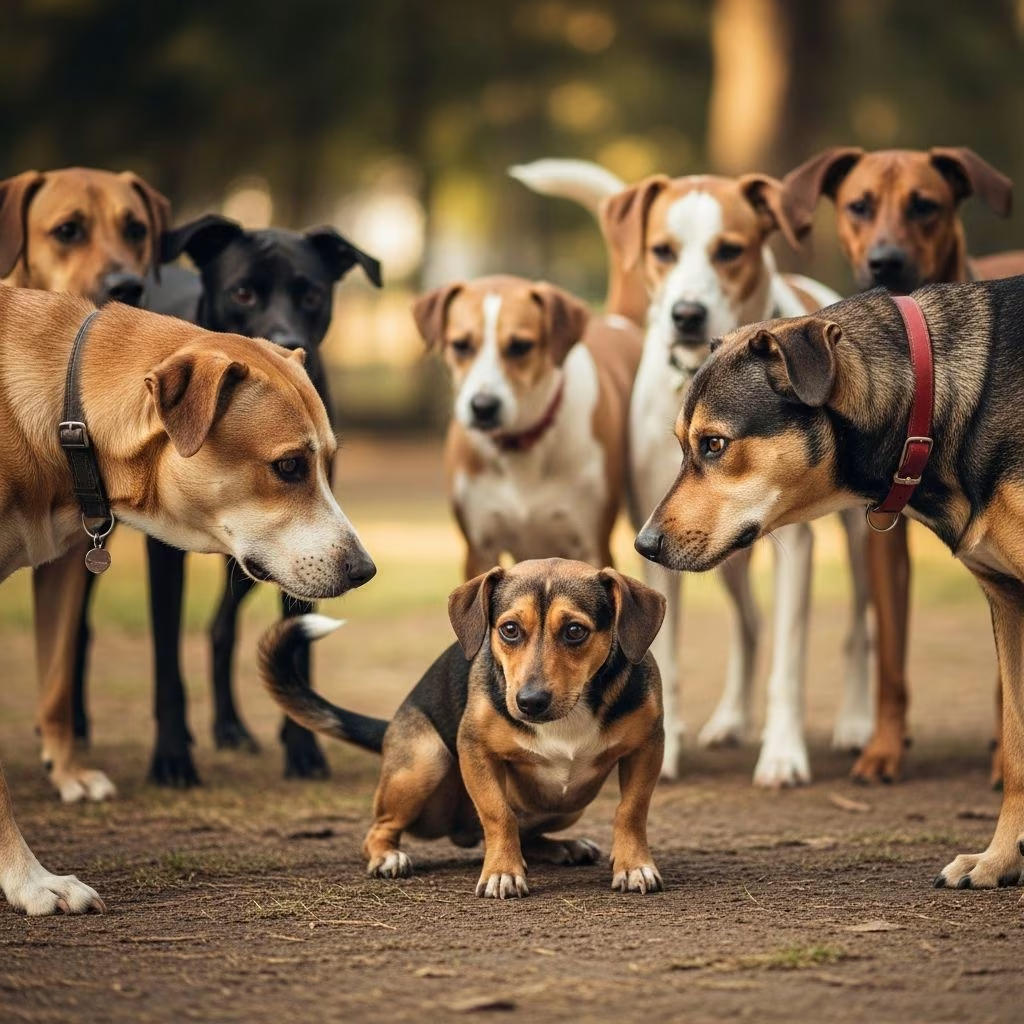
Dog bullying involves one dog repeatedly dominating or harassing another through rough play, resource guarding, or intimidation, often stemming from inadequate early experiences or unmet needs. Addressing it promptly through observation, training, and environmental adjustments can foster positive social dynamics and reduce risks of injury or fearfulness in targeted dogs.
Recognizing Bullying Patterns in Canine Interactions
Distinguishing normal play from bullying requires attention to consistency and intensity. Healthy dog play features balanced exchanges where both participants take turns mounting, chasing, or pinning, with relaxed body language like play bows and occasional pauses. Bullying, however, shows one dog consistently imposing actions without reciprocation, leading to the other dog’s stress signals such as tucked tail, lip licking, yawning, or attempts to flee.
Owners often notice bullying at dog parks, during walks, or in multi-dog homes. Key indicators include:
- Persistent chasing of a single dog that shows disinterest or fear.
- Repeated mounting or standing over another dog without invitation.
- Snarling, stiff posture, or resource snapping when others approach toys or food.
- Exclusion tactics, like blocking access to play areas or owners.
Tracking these over multiple encounters reveals patterns. For instance, if your dog targets smaller or timid breeds repeatedly, it signals a problem beyond roughhousing. Early detection prevents escalation to bites or fights, protecting all involved animals’ well-being.
Unpacking the Root Causes of Bullying Tendencies
Bullying behaviors rarely arise in isolation; they reflect underlying issues in a dog’s development or daily life. A primary culprit is insufficient socialization during the critical 2-18 week window, when puppies learn canine social cues and body language interpretation. Dogs missing this exposure may default to forceful interactions, misreading others’ signals and asserting control aggressively.
Other triggers include:
- Fear and insecurity: Anxious dogs bully to create distance or claim resources, perceiving newcomers as threats.
- Pent-up energy or boredom: Under-exercised dogs channel frustration into overpowering play, mimicking a hyperactive outburst.
- Opportunistic targeting: Bullies exploit hesitant dogs, reinforcing their dominance through appeasement responses.
- Past trauma: Abused dogs may lash out defensively, repeating learned survival tactics.
Genetic factors play a role too; some breeds lean toward assertive traits, but environment shapes whether these become problematic. Understanding these drivers shifts focus from punishment to tailored solutions, addressing the ‘why’ for lasting change.
Immediate Steps to Interrupt Bullying Episodes
When bullying unfolds, swift, calm intervention halts reinforcement of the behavior. Avoid yelling or physical corrections, which can heighten arousal. Instead, employ negative punishment: remove the ‘fun’ element prompting the action.
Practical tactics include:
- Leash recall: Call your dog to you with a cheerful tone and high-value treat, then relocate to a neutral spot for a brief timeout.
- No-reward markers (NRMs): Use a neutral sound like ‘uh-oh’ followed by walking away, denying further play.
- Physical separation: Step between dogs non-aggressively or use a barrier if needed, praising calm compliance.
Timing is crucial—interrupt within seconds of the onset to link the behavior with its consequence. Consistency across handlers reinforces the lesson: bullying ends good times. Post-intervention, assess the setting; crowded parks may overstimulate, warranting quieter alternatives.
Building a Prevention Framework Through Socialization
Prevention outperforms correction, especially via structured socialization. For puppies, introduce diverse dogs, people, and environments positively during formative weeks, using treats to pair novelty with joy. Older dogs benefit from gradual, controlled exposures, potentially with professional guidance.
Core socialization strategies:
- Enroll in puppy classes emphasizing off-leash play under supervision.
- Arrange playdates with known, compatible dogs of varying sizes and energies.
- Expose to urban stimuli like traffic or crowds at low intensity, rewarding relaxation.
Combine with basic obedience—’sit,’ ‘stay,’ ‘come’—on leash around distractions. Reliable recall allows preemptive management, preventing bullying opportunities.
Training Techniques Centered on Positive Reinforcement
Positive reinforcement builds polite interactions by rewarding desired alternatives to bullying. Ignore unwanted actions; amplify good ones with treats, toys, or praise. This extinguishes bullying without confrontation, as unrewarded behaviors fade.
| Behavior Issue | Reinforcement Goal | Example Reward |
|---|---|---|
| Rough mounting | Calm greeting | Jackpot treat for sitting politely |
| Resource guarding | Voluntary trade | Better toy for dropping item |
| Chasing targets | Focus on handler | Praise and play tug upon recall |
Session structure: Short, frequent drills in low-distraction areas, progressing to real-world scenarios. For stubborn cases, consult certified trainers using force-free methods to customize plans.
Exercise and Enrichment to Curb Frustration-Driven Bullying
Inadequate outlets for physical and mental energy fuel bullying as displaced aggression. Dogs need 30-60 minutes daily of breed-appropriate activity—walks, fetch, agility—to dissipate drive constructively.
Enhance with:
- Puzzle toys dispensing kibble to engage cognition.
- Sniffari walks prioritizing scent exploration over speed.
- Interactive games teaching impulse control, like ‘wait’ for toys.
A tired, stimulated dog defaults to rest, not domination. Track exercise logs to correlate with behavior improvements.
Navigating Multi-Dog Households and Group Settings
In shared spaces, hierarchies form naturally but shouldn’t devolve into chronic bullying. Feed separately, provide individual crates, and rotate play to avoid fatigue-induced flare-ups. Supervise 100% initially, intervening on imbalances.
For dog parks or daycare:
- Visit off-peak for fewer dogs.
- Opt for one-on-one or small-group play matching energy levels.
- Leave at first tension signs, avoiding forced socialization.
Resource management prevents guarding: Scatter meals, rotate toys, claim personal items calmly.
When to Seek Professional Behavior Intervention
If DIY efforts fail or aggression intensifies (growling, biting), engage a veterinary behaviorist or certified applied animal behaviorist. They diagnose medical contributors like pain and design desensitization/counter-conditioning protocols, gradually rebuilding tolerance.
Red flags warranting pros:
- Blood draws or injury.
- Fear-aggression hybrids.
- Failure after 4-6 weeks consistent training.
Professionals ensure safety, accelerating progress safely.
FAQs on Managing Dog Bullying
Is dog bullying the same as aggression?
No—bullying often starts as play but persists unidirectionally; true aggression involves intent to harm, signaled by intense threats.
Can all dogs be rehabilitated from bullying?
Most yes, with early intervention; severe cases may need lifelong management.
How long until training shows results?
2-8 weeks with daily consistency; track via interaction videos.
Does neutering stop bullying?
It reduces some hormone-driven elements but doesn’t address learned behaviors alone.
What if my dog is bullied by others?
Protect via supervision, muzzle training for safety, and confidence-building exercises.
References
- The Impact of Bullying in Dogs: How to Spot and Prevent It — Vet Playas. 2023. https://vetplayas.com/the-impact-of-bullying-in-dogs-how-to-spot-and-prevent-it/
- Is Your Dog Bullying Other Dogs? Here’s What To Do — Chewy.com. 2023. https://www.chewy.com/education/dog/training-and-behavior/dog-bullying
- How to React to a Dog’s Bully Behavior — Whole Dog Journal. 2023. https://www.whole-dog-journal.com/behavior/how-to-react-to-a-dogs-bully-behavior/
- Help with Canine Behavior Challenges — PAWS Chicago. 2023. https://www.pawschicago.org/news-resources/all-about-dogs/understanding-dog-behavior/help-with-canine-behavior-challenges



