

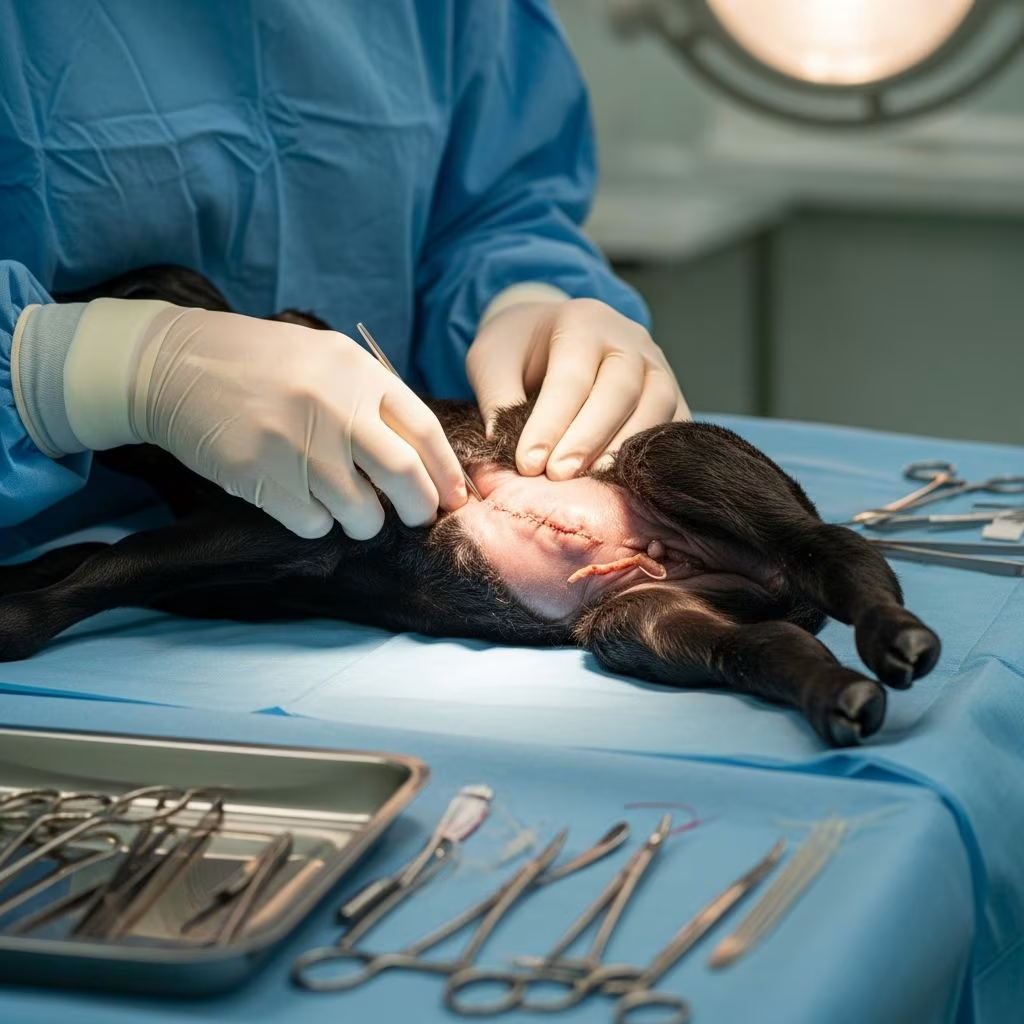
Congenital anomalies of the stomach represent a group of structural and functional abnormalities present at birth that can significantly impair digestion and overall health in animals. These conditions arise during embryonic development and may stem from genetic predispositions, environmental influences, or a combination of both. While some defects are compatible with life through medical or surgical intervention, others prove fatal without prompt care. Understanding these disorders is crucial for veterinarians, breeders, and pet owners to enable early detection and management.
Developmental Origins of Gastric Anomalies
The stomach forms early in fetal life from the foregut endoderm, undergoing complex folding, rotation, and vascularization processes. Disruptions at critical stages can lead to malformations such as incomplete fusion, abnormal muscle development, or vascular encroachments. In dogs and cats, these issues often manifest as obstructions at the gastric outlet, while in ruminants like calves, atresias or duplications occur more frequently. Genetic factors play a prominent role in predisposed breeds, with autosomal recessive patterns documented in several cases.
Environmental contributors, including maternal nutritional deficits, toxin exposure, or infections during gestation, exacerbate risks. For instance, brachycephalic dog breeds face heightened susceptibility due to craniofacial influences on gastrointestinal folding. Early prenatal imaging in research settings reveals that many anomalies cluster with other systemic defects, suggesting multifactorial etiologies.
Common Types of Stomach Anomalies Across Species
Gastric birth defects vary by species but share themes of obstruction, dilation, or malpositioning. Below is an overview of prevalent forms.
Pyloric Stenosis and Hypertrophy in Small Animals
Pyloric stenosis, characterized by narrowing of the pyloric sphincter, is a leading congenital issue in dogs, particularly brachycephalic types like Bulldogs and Boston Terriers. This muscular hypertrophy impedes food passage from the stomach to the duodenum, causing postprandial vomiting, dehydration, and failure to thrive. Symptoms typically emerge within weeks of birth, with affected puppies regurgitating undigested meals hours after eating.
In cats, similar hypertrophy occurs but less frequently, often linked to Siamese lineage. Diagnosis involves radiography showing a narrowed pylorus and ultrasound confirming thickened muscular walls. Surgical pyloroplasty or myotomy offers high success rates, though postoperative reflux remains a concern.
Gastric Dilatation and Vascular Constraints
Certain vascular anomalies, such as persistent right aortic arch derivatives, indirectly affect the stomach by compressing adjacent structures, leading to proximal gastric dilation. While primarily esophageal, these can cause secondary gastric atony in young dogs of breeds like German Shepherds. Direct gastric vascular entrapments are rarer but documented in imaging studies of abdominal congenital vascular issues.
Atresia and Duplications in Livestock
In calves and foals, gastric atresia—complete blockage of the pyloric or abomasal outlet—presents immediately after birth with colic, bloating, and absence of meconium. These autosomal recessive conditions in breeds like Jersey cattle necessitate euthanasia due to inoperability. Gastric duplications, fluid-filled cysts mimicking the stomach, cause similar obstructive signs and are surgically resectable in select cases.
Breed Predispositions and Genetic Insights
Selective breeding has amplified risks in specific lines. A table summarizes key associations:
| Species/Breed | Anomaly Type | Inheritance Pattern |
|---|---|---|
| Dogs: Boxers, Bulldogs, Boston Terriers | Pyloric stenosis | Polygenic, breed-linked |
| Dogs: Great Danes, Irish Setters | Secondary gastric dilation (vascular rings) | Not strictly inherited |
| Calves: Swedish Highland, Jersey | Abomasal atresia | Autosomal recessive |
| Cats: Siamese | Megaesophagus with gastric involvement | Familial |
Genome-wide studies in German Shepherds for related pancreatic issues hint at major histocompatibility complex involvement, potentially overlapping with gastric defects. Breeders should screen sires and dams from high-risk lines.
Clinical Presentation and Diagnostic Approaches
Neonates with stomach anomalies exhibit non-specific signs: persistent vomiting, abdominal distension, lethargy, and poor weight gain. In ruminants, tenesmus and lack of fecal output signal atresia. Advanced cases show electrolyte imbalances and aspiration pneumonia from regurgitation.
- Physical Exam: Palpate for fluid-filled stomach or pyloric mass.
- Imaging: Contrast radiographs delineate obstructions; ultrasound assesses wall thickness.
- Endoscopy: Visualizes mucosal anomalies or diverticula.
- Biopsy: Rules out inflammatory mimics in chronic cases.
Differential diagnoses include esophageal disorders like megaesophagus or vascular ring anomalies, which coexist in 20-30% of cases.
Treatment Strategies and Prognosis
Management hinges on defect severity and animal value. Medical approaches—fluid therapy, prokinetics, and dietary texturing—support mild cases but rarely suffice alone.
Surgical Interventions
Pyloromyotomy (Fredet-Ramstedt procedure) effectively relieves stenosis in dogs, with 85-95% survival post-op. In livestock, exploratory laparotomy confirms atresia, often leading to humane euthanasia. Fistula repairs in associated rectovaginal defects improve outcomes in female puppies.
Post-surgical care includes gastroprotectants, antibiotics, and gradual feed reintroduction to prevent ileus.
Supportive Care in Inoperable Cases
For hereditary lethal defects, palliative nutrition via esophagostomy tubes extends life briefly, prioritizing welfare.
Prognosis varies: excellent for surgically corrected pyloric stenosis (>90% long-term success); guarded for duplications due to recurrence risks.
Prevention Through Breeding and Prenatal Care
Avoiding matings between carriers in known pedigrees curbs incidence. Maternal vaccination, folate supplementation, and toxin-free environments mitigate sporadic cases. Routine neonatal exams in litters facilitate early intervention.
Associated Systemic Malformations
Stomach defects seldom occur isolately. Body stalk anomalies in canine fetuses link gastric issues to spinal, limb, and abdominal wall defects, underscoring embryologic interconnectedness. Renal or cardiac anomalies compound morbidity, demanding holistic evaluations.
FAQs on Animal Stomach Birth Defects
What causes congenital stomach problems in puppies?
Primarily genetic in predisposed breeds, with contributions from maternal factors like infections or nutrition.
Can pyloric stenosis be treated without surgery?
Medications may alleviate mild symptoms temporarily, but surgery is standard for resolution.
Are these defects common in kittens?
Less so than in dogs, but Siamese cats show familial tendencies.
What is the outlook for calves with gastric atresia?
Poor; surgical correction is rarely feasible.
How do I know if my pet has a stomach anomaly?
Consult a vet for vomiting, distension, or growth failure; imaging confirms.
Research Frontiers and Future Directions
Advances in genomic sequencing promise carrier detection tests for at-risk breeds. Comparative studies across species, like BSA in dogs, enhance understanding of human analogs. Imaging innovations, including CT angiography, refine preoperative planning.
References
- Complex Body Wall Closure Defects in Seven Dog Fetuses — PubMed/NCBI. 2024. https://pubmed.ncbi.nlm.nih.gov/40723492/
- Congenital and Inherited Disorders of the Digestive System of Dogs — MSD Veterinary Manual. 2023-10-15. https://www.msdvetmanual.com/dog-owners/digestive-disorders-of-dogs/congenital-and-inherited-disorders-of-the-digestive-system-of-dogs
- Congenital and Inherited Anomalies of the Small and Large Intestines in Animals — Merck Veterinary Manual. 2023-10-15. https://www.merckvetmanual.com/digestive-system/congenital-and-inherited-anomalies-involving-the-digestive-system/congenital-and-inherited-anomalies-of-the-small-and-large-intestines-in-animals
- Congenital and Inherited Disorders of the Digestive System in Cats — Merck Veterinary Manual. 2023-10-15. https://www.merckvetmanual.com/cat-owners/digestive-disorders-of-cats/congenital-and-inherited-disorders-of-the-digestive-system-in-cats
- Congenital Malformations in Ruminants and its Surgical Management — Veterinary World. 2010-03-01. https://www.veterinaryworld.org/Vol.3/March/Congenital%20Malformations%20in%20ruminants%20and%20its%20surgical%20management.pdf
- Imaging of Abdominal Congenital Vascular Anomalies in Dogs and Cats — RAD Magazine. 2022. https://www.radmagazine.com/scientific-article/imaging-of-abdominal-congenital-vascular-anomalies-in-dogs-and-cats/



