

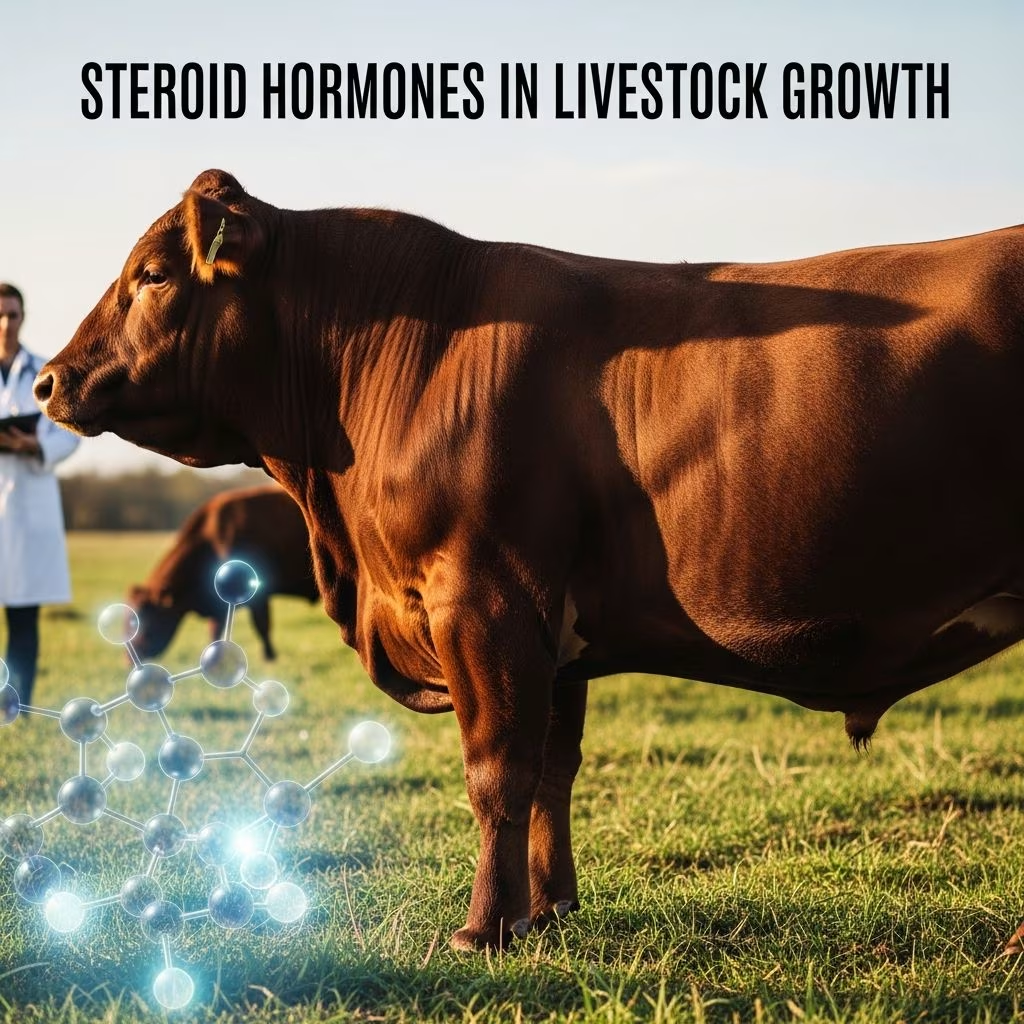
Steroid hormones play a pivotal role in modern livestock production, particularly in enhancing growth rates and feed efficiency in beef cattle and sheep. Approved by regulatory bodies like the FDA since the 1950s, these compounds—both natural and synthetic—help animals convert feed into muscle more effectively, leading to leaner carcasses and higher yields. This practice supports sustainable farming by reducing resource use per unit of meat produced.
Historical Development and Regulatory Approval
The use of steroid hormones in animals traces back to the mid-20th century when early compounds like diethylstilbestrol were tested. Today, the FDA oversees a range of approved implants for beef cattle and sheep, ensuring safety for human consumption and animal welfare. These implants carry zero-day withdrawal periods, meaning meat is safe immediately after treatment, as residues remain below established safe limits determined through rigorous toxicological studies. No approvals exist for dairy cows, veal calves, pigs, or poultry, limiting application to specific sectors.
Regulatory scrutiny involves proving efficacy, safety in edible tissues, and environmental non-impact. Labels provide precise usage instructions, and most products are over-the-counter for producers. In contrast, the European Union banned hormonal growth promotants in 1981 via Directive 81/602/EEC, citing health concerns despite differing scientific views.
Types of Steroid Hormones: Natural vs. Synthetic
Steroid hormones fall into natural (endogenous) and synthetic categories, each mimicking or supplementing the body’s own regulators of growth and reproduction.
Natural Hormones
- Estradiol (Estrogen): Boosts nitrogen retention, increasing growth by 5-30% in steers, lean meat by 1-3%, and feed efficiency by 5-10%. Effective in steers, heifers, and veal calves.
- Progesterone: Often combined with estradiol in implants for steers and heifers, supporting balanced anabolic effects.
- Testosterone: Produced naturally in bulls, contributing to 8-12% faster growth and leaner carcasses compared to steers. Rarely used alone due to delivery challenges but potent at 1-5 ng/mL concentrations.
These hormones occur naturally in humans and animals, so added amounts from implants are negligible compared to baseline levels in untreated meat or human production.
Synthetic Hormones
- Trenbolone Acetate (TBA): Androgenic, often paired with estradiol (1:5 or 1:10 ratios), enhancing daily gains by 20-30% in feedlot cattle on high-energy diets.
- Zeranol: Estrogenic mimic, approved for similar growth promotion.
- Melengestrol Acetate (MGA): Progestogenic, fed orally; benefits heifers in combinations but may reduce gains in small pens.
Synthetics undergo extensive lab testing to confirm residues in tissues like muscle and fat stay below safe thresholds. Six total hormones are FDA-approved: three natural and three synthetic.
Mechanisms of Action in Growth Promotion
Steroids influence protein synthesis, reduce fat deposition, and improve nutrient partitioning. In bulls, testicular steroids like testosterone and estradiol drive superior performance; castration removes this edge, which implants restore. Estrogens suppress gonadotropins (LH/FSH), reducing aggression in bulls while maintaining anabolic benefits, potentially leading to hormonal castration effects with repeated use.
In ruminants, estradiol is particularly anabolic. Implants release steadily, with silastic forms lasting 200-400 days. Combinations like estrogen-androgen yield optimal results on high-energy feeds, while pasture responses are 10-15%. Sheep show parallel 10-15% daily gain improvements on concentrates.
| Animal/Diet | Implant Type | Avg. Daily Gain Increase | Feed Efficiency Improvement |
|---|---|---|---|
| Feedlot Cattle (High-Energy) | Estradiol + TBA | 20-30% | 10-20% |
| Pasture Cattle | Estrogen Alone | 10-15% | 5-10% |
| Sheep (Concentrate) | Various Steroids | 10-15% | Similar to Cattle |
| Bulls (Estrogen-Treated) | Estrogens | 2-10% | Variable |
Data synthesized from studies; responses vary by genetics, nutrition, and implant timing. Reimplanting after 70-100 days maximizes benefits as efficacy wanes.
Administration Methods and Best Practices
Implants are subcutaneous pellets inserted in the ear’s backside, dissolving slowly without removal. Ears are discarded at slaughter. Timing targets suckling, growing, or finishing phases.
- Steers/Heifers: Estradiol + progesterone or TBA.
- Heifers: Add MGA for synergy in large pens.
- Bulls: Estrogens for manageability.
Producers monitor for optimal intake; low-forage limits responses.
Safety for Human Consumption and Residue Levels
FDA sets safe limits based on no-effect levels from studies. Natural hormone additions are dwarfed by endogenous amounts. Synthetics’ toxicology confirms low residues: e.g., estradiol glucoside levels in tissues are minimal. EU concerns persist, but US data affirm safety.
Environmental and Animal Welfare Considerations
Livestock excrete steroids naturally; implants add minimally. No evidence of environmental harm from approved use. Behaviorally, treatments reduce bull aggression. Leaner carcasses improve meat quality.
Benefits to Producers and Sustainability
Implants cut feed needs per kg protein, boosting profitability. Farmers gain more meat per animal, reducing land/feed demands.
Global Perspectives and Controversies
US/Canada approve; EU bans for precaution. Ongoing debates weigh science vs. policy.
Future Directions in Hormone Use
Research explores longer-acting implants and alternatives like rbST for dairy. Precision farming may optimize usage.
Frequently Asked Questions (FAQs)
Are hormone implants safe for human consumption?
Yes, FDA confirms zero withdrawal and residues below safe limits.
Which animals can receive steroid implants?
Beef cattle and sheep only; not dairy, pigs, or poultry.
What are the main benefits?
10-30% faster growth, better feed efficiency, leaner meat.
Do implants affect animal behavior?
Can reduce aggression in bulls.
Why is use banned in the EU?
1981 directive on hormonal growth promoters.
References
- Steroid Hormone Implants Used for Growth in Food-Producing Animals — FDA. 2023-05-30. https://www.fda.gov/animal-veterinary/product-safety-information/steroid-hormone-implants-used-growth-food-producing-animals
- How Farmers Fatten up Their Cattle With Hormones — Business Insider. 2016-04-28. https://www.businessinsider.com/farmers-fatten-cattle-hormone-implants-2016-4
- Use of Steroid Hormones in Animals — Merck Veterinary Manual. 2023. https://www.merckvetmanual.com/pharmacology/growth-promotants-and-production-enhancers/use-of-steroid-hormones-in-animals
- Hormones – Beef Research — National Cattlemen’s Beef Association. 2023. https://www.beefresearch.org/resources/beef-sustainability/fact-sheets/hormones
- The Use of Hormones in Animal Production — FAO. 1998. https://www.fao.org/4/x6533e/x6533e01.htm
- Rangeland Grazing as a Source of Steroid Hormones — University of Washington. 2007. https://faculty.washington.edu/koloj/wordpress/wp-content/uploads/2017/08/Kolodziej-2007-EST.pdf
- Hormones in Meat — European Commission. 2023-11-15. https://food.ec.europa.eu/food-safety/chemical-safety/hormones-meat_en



