

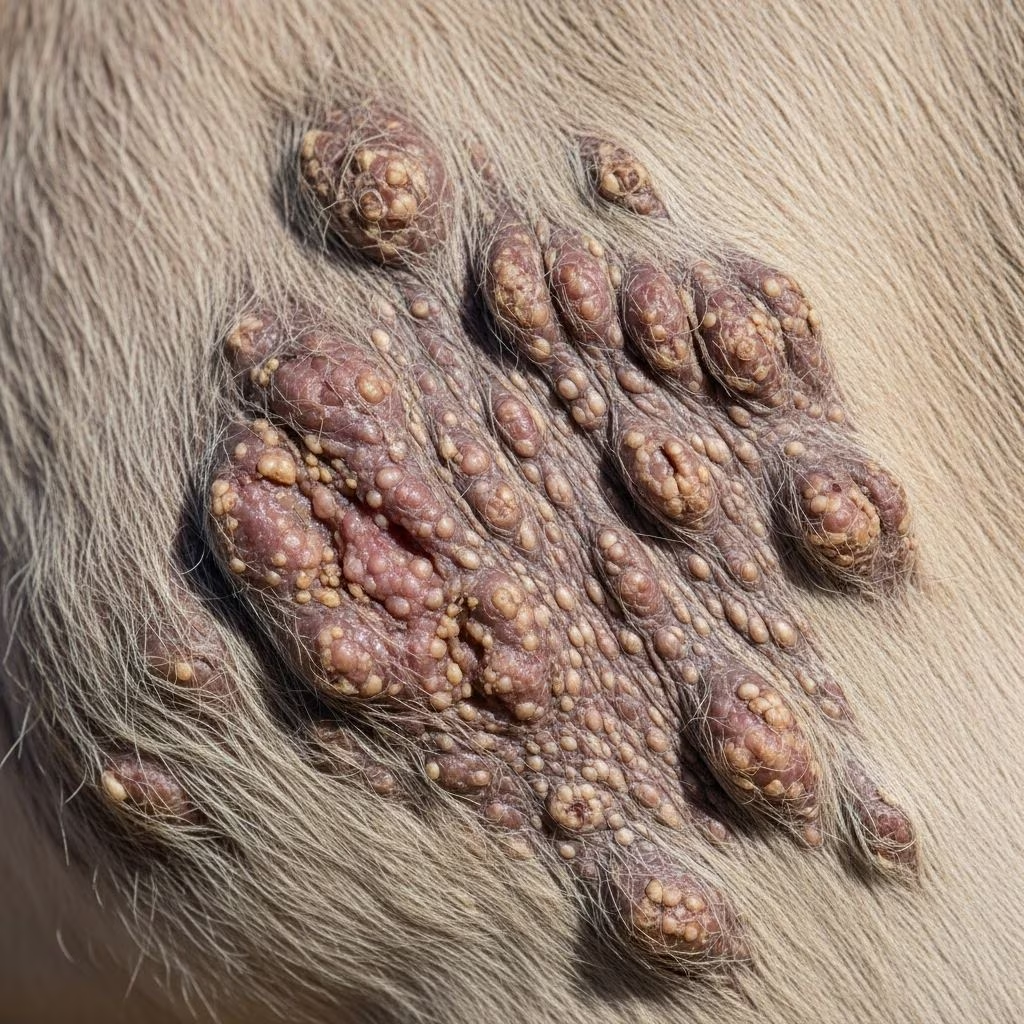
Stephanofilariasis represents a significant dermatological challenge in cattle, primarily driven by the nematode Stephanofilaria stilesi. This condition manifests as chronic skin lesions, often along the ventral midline, and is transmitted via intermediate hosts like horn flies. Affecting herds in various regions, it leads to discomfort, reduced productivity, and potential secondary infections. This article delves into the biology, clinical presentation, diagnostic approaches, management strategies, and preventive measures to equip farmers and veterinarians with essential knowledge.
Biological Foundations of the Parasite
The parasite responsible, Stephanofilaria stilesi, belongs to the family Stephanofilariidae within the superfamily Filarioidea. Adult worms reside in cyst-like formations at the base of hair follicles, particularly in the skin’s dermal layers. Females release first-stage larvae (L1) that remain in the host’s skin until ingested by feeding flies. Within the fly, these larvae develop into infective third-stage larvae (L3) over 2-3 weeks, ready to infect new cattle during subsequent blood meals.
This indirect life cycle underscores the parasite’s dependence on vectors such as Haematobia irritans (horn fly) in North America or Haematobia exigua (buffalo fly) in regions like Australia. The worms’ location in follicles and sebaceous glands disrupts normal skin architecture, provoking inflammatory responses that characterize the disease.
Geographical Spread and Host Susceptibility
S. stilesi predominantly affects cattle in North America, including the United States, Canada, and parts of Russia. Related species infest cattle and buffalo in Asia, with varying lesion sites. In the U.S., rangeland and irrigated pastures favor horn fly proliferation, heightening risk. Lesions typically emerge in cattle over one year old, with no strong breed predisposition but increased severity in environments supporting high fly densities.
While primarily a bovine issue, stephanofilariasis has been documented in exotic hosts like pigs, rhinoceros, giraffes, and hippopotamuses, where lesions can be more aggressive. Seasonal peaks align with fly activity, often worsening in summer or early fall, though signs persist year-round.
Recognizing Clinical Manifestations
Skin changes are the hallmark, starting as papules and progressing to crusts, ulcers, alopecia, and hyperkeratosis. Lesions favor the ventral abdominal midline from sternum to umbilicus, measuring 5×4 cm to 36×10 cm, appearing as single patches or multiple ovoid areas. Affected skin becomes hairless, raised, dry, thickened, and may weep serum or develop scabs.
- Primary sites: Ventral midline, flanks, udder, teats, neck, face, ears, withers, and rarely dewclaws or scrotum.
- Symptom progression: Initial pruritus leads to self-trauma; non-seasonal but exacerbated by flies.
- Severity indicators: Moderate cases show lichenification; severe ones feature ulceration, furunculosis, and bacterial overgrowth.
Cattle exhibit variable itching, biting, licking, and occasional bleeding from necrotic areas. Productivity impacts include weight loss and hide damage, devaluing pelts.
Pathophysiological Mechanisms
Histologically, lesions reveal eosinophilic and neutrophilic perivascular dermatitis, folliculitis, furunculosis, and epidermal hyperplasia with rete pegs, spongiosis, and intracellular edema. Superficial crusts contain neutrophils, eosinophils, bacteria, and orthokeratotic/parakeratotic hyperkeratosis. Adult nematodes appear in 60% of cases within follicles, ducts, crusts, or furuncles, 1-2 mm below the epidermis.
L1 larvae, encased in vitelline membranes, trigger perivascular inflammation in the superficial dermis. Dermal edema, fibrosis, and vascular congestion compound damage. Secondary invaders exacerbate pathology, mimicking bacterial pyoderma.
| Lesion Feature | Gross Appearance | Histological Findings |
|---|---|---|
| Ventral Midline Patch | Crusted, alopecic, 5-36 cm | Ulcerative dermatitis, nematode sections |
| Hyperkeratosis | Thickened, scaly skin | Epidermal hyperplasia, parakeratosis |
| Folliculitis | Papules, pustules | Eosinophilic inflammation, larvae |
Diagnostic Strategies
Diagnosis combines clinical suspicion with confirmatory tests. Lesions’ location and fly history suggest stephanofilariasis; differentials include ringworm, warts, dermatophilosis, and fly-bite irritation.
- Skin scraping: Reveals larvae in Romanowsky-stained imprints.
- Biopsy: Fixed in formalin; histology identifies nematodes in 60% of ventral midline samples.
- Deep scrapings/biopsy preferred: For adults in follicles.
Unusual sites like dewclaws require vigilant scraping, as in Tamil Nadu cases.
Treatment Protocols and Outcomes
Macrocyclic lactones like ivermectin are frontline, dosed at 1 ml/50 kg subcutaneously weekly for 5 weeks, alongside antibiotics (e.g., streptopenicillin 5g IM daily) for secondary infections. Lesions regress during therapy but may relapse without fly control.
- Supportive care: Fly repellents, antiseptics, healing sprays.
- Success rates: High with repeated dosing; monitor for 20+ days.
Non-healing wounds with hemorrhagic exudates confirm responsiveness.
Prevention and Control Measures
Target fly populations: ear tags, pour-ons, environmental management reduce transmission. Pasture rotation limits exposure. Early lesion detection prevents spread.
| Strategy | Implementation | Expected Impact |
|---|---|---|
| Fly Control | Insecticide ear tags, sprays | Reduces L3 transmission |
| Herd Monitoring | Weekly skin checks | Early intervention |
| Parasiticide Rotation | Ivermectin schedules | Prevents resistance |
Economic and Welfare Implications
Hide blemishes lower market value; pruritus affects feeding/growth. In rangelands, prevalence ties to fly seasons, impacting dairy/beef production. Proactive management enhances welfare and profitability.
Frequently Asked Questions (FAQs)
What causes stephanofilariasis in cattle?
It is caused by Stephanofilaria stilesi nematodes transmitted by horn or buffalo flies.
Where do lesions typically appear?
Primarily along the ventral midline, but also flanks, udder, neck, and rarely dewclaws.
How is it diagnosed?
Via skin scrapings for larvae or biopsies revealing nematodes and inflammation.
What is the best treatment?
Ivermectin injections weekly for 5 weeks, plus antibiotics and fly control.
Can it be prevented?
Yes, through rigorous fly management and routine herd inspections.
Is it seasonal?
Signs are year-round but worsen with peak fly activity in summer/fall.
References
- Stephanofilaria stilesi – Learn About Parasites — Western College of Veterinary Medicine, University of Saskatchewan. Accessed 2026. https://wcvm.usask.ca/learnaboutparasites/parasites/stephanofilaria-stilesi.php
- Stephanofilariasis – Veterinary Handbook — Veterinary Handbook. Accessed 2026. https://www.veterinaryhandbook.com.au/Diseases.aspx?diseasenameid=258
- Stephanofilaria stilesi dermatitis in cattle — PMC (PubMed Central). 2023-08-01. https://pmc.ncbi.nlm.nih.gov/articles/PMC10422776/
- Clinical features, diagnosis and treatment of unusual case of stephanofilariasis — Tamil Nadu Veterinary and Animal Sciences University. Accessed 2026. https://krishikosh.egranth.ac.in/server/api/core/bitstreams/11fed5cd-2247-4e95-992d-0e644576047b/content
- Stephanofilariasis in beef cattle — SciELO Brazil. Accessed 2026. https://www.scielo.br/j/abmvz/a/4VBNpXRLb87VyyWtK8mGTVf/?lang=en



