

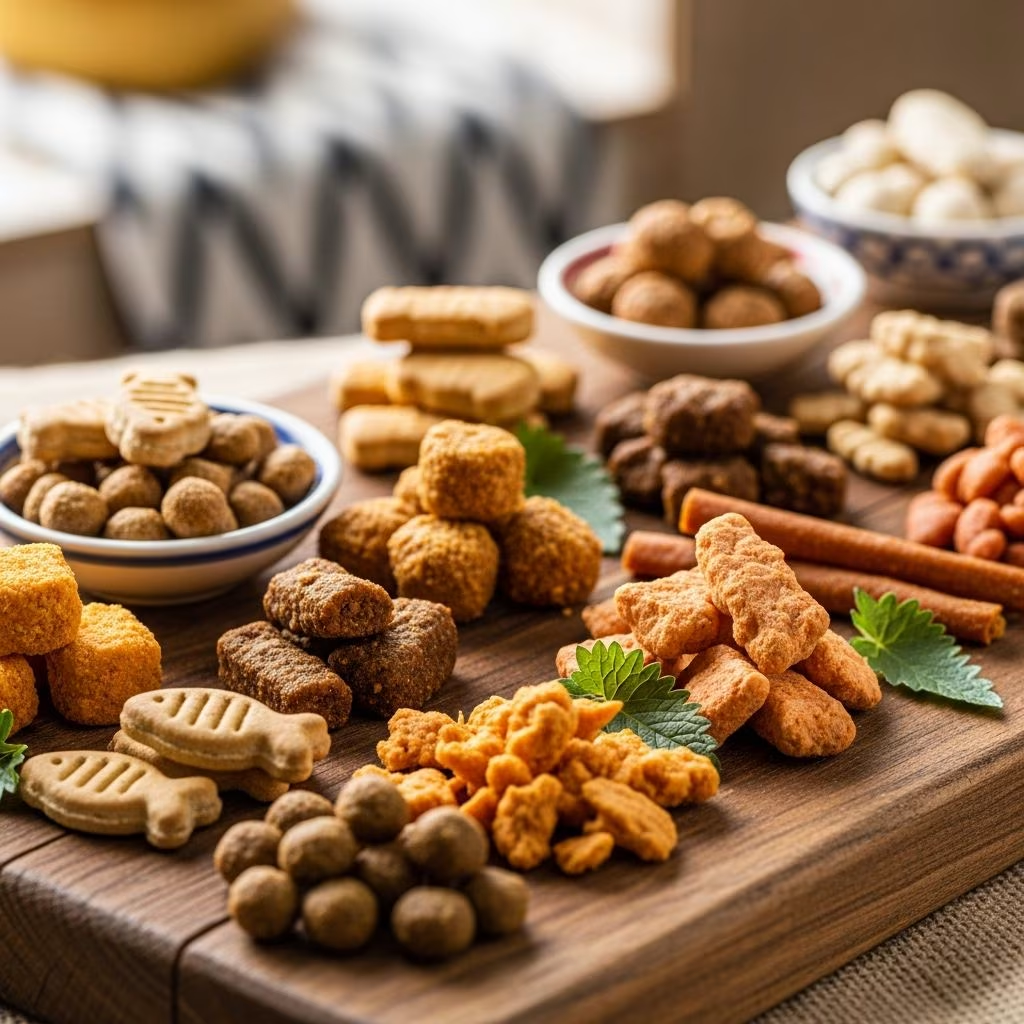
6 Ways to Step Up Your Cat Treats Game
Treat time with your feline companion can be so much more than simply handing over a snack. By transforming your approach to treats, you can create enriching moments that strengthen your bond, encourage natural hunting instincts, and keep your cat mentally stimulated. Whether your cat is a picky eater or an enthusiastic treat enthusiast, these expert-backed strategies will help you maximize the benefits of treat time and elevate your cat’s overall well-being.
Understanding Your Cat’s Treat Preferences
Before diving into advanced treat strategies, it’s essential to understand what makes treats appealing to your cat. According to Wendy Kelly, an applied animal behaviorist and owner of Pet Peeves Animal Training Inc., the key is selecting treats that appeal to both your cat’s sense of smell and texture preferences. “From the perspective of your cat, some treats may smell good but lack the right texture,” Kelly explains. “Some treats are crunchy outside and soft inside, some are soft throughout and some are simply crunchy.”
Your cat’s individual preferences matter significantly when choosing the right treats. Not all cats respond to the same options, and what excites one feline may leave another completely unimpressed. This is why experimenting with different varieties is so important for discovering what truly captures your cat’s interest.
1. Explore Different Treat Varieties and Textures
One of the most straightforward ways to enhance treat time is by offering your cat a diverse selection of options. Variety helps prevent boredom and allows you to identify your cat’s favorite treats. The market offers numerous treat types, each with unique characteristics that may appeal to different cats.
For crunchy treats, Greenies Salmon Flavor Dental Treats provide a satisfying texture alongside dental health benefits. If your cat prefers softer options, Fancy Feast Purely Natural Treats offer flaky meat morsels that are gentle on the mouth. For cats that enjoy the best of both worlds, Temptations Tasty Chicken Flavor treats feature a crunchy outer shell combined with a soft, meaty center.
When introducing multiple treat options, observe your cat’s reactions carefully. If your cat seems overwhelmed or begins gobbling them all down at once, reduce the number of choices and test just a few at a time. Use the process of elimination to narrow down her favorites, then reserve the treats she can’t wait to eat for your most engaging interactive play sessions.
2. Use Smelly Treats for Enrichment and Play
Not every cat will eat every treat offered, and that’s perfectly acceptable. According to Liv Hagen, behavior modification and rehabilitation manager at the Animal Humane Society in St. Paul, Minnesota, treats serve purposes beyond simple consumption. “Treats can still be a fun and novel object for a cat, even if they don’t want to eat them,” Hagen explains. “The different smells can be very enriching for your cat, and she might prefer to playfully push the treat around or rub her head on it instead of eating it.”
This approach taps into your cat’s natural curiosity and sensory exploration. The novel scents and textures of different treats provide mental stimulation and environmental enrichment. Rather than viewing uneaten treats as a waste, consider them valuable enrichment tools that encourage your cat’s natural behaviors and keep her engaged with her environment.
3. Give the Treat of Playing Together
Sometimes, what your cat truly desires during treat time is not the treat itself, but your attention and companionship. Some cats value interactive play with their humans more than any physical treat could offer. This presents a wonderful opportunity to strengthen your bond while providing essential mental and physical stimulation.
Try tossing small treats across the floor for your cat to chase and pounce on. This interactive approach transforms treat time into a game that ignites your cat’s natural hunting instincts. The act of chasing, stalking, and catching small objects mimics the predatory behaviors that cats are hardwired to perform. By combining treats with interactive play, you’re providing both nutritional rewards and psychological enrichment.
This method works particularly well for cats that seem less interested in stationary treats but perk up when something moves across their visual field. The combination of movement, the thrill of the hunt, and the reward of obtaining a treat creates an engaging experience that keeps your cat entertained and exercised.
4. Coax Your Cat Through an Agility Course with Treats
Transform treat time into a physical activity session by using treats as motivation for an agility course. According to Pam Johnson-Bennett, a cat behavior expert and founder of the International Association of Animal Behavior Consultants’ cat division, this approach can reinvigorate playtime and encourage exercise. Start with something simple, such as using treats to coax your cat through a paper bag tunnel or a hoop.
As your cat becomes more comfortable with basic obstacles, you can gradually increase the complexity of the course. This progressive approach builds confidence and prevents frustration while keeping your cat mentally engaged. The combination of physical exercise and mental challenges provides comprehensive enrichment that supports your cat’s overall health and well-being.
Enhance the agility experience by using particularly enticing treats like Feline Natural Lamb Healthy Bites freeze-dried cat treats. The strong aroma and appealing taste of premium treats can motivate your cat to complete the course with enthusiasm. Remember that “cats like items that are challenging to catch,” as Kelly notes. “A challenge that simulates hunting prey is just downright fun for your cat.”
5. Add Excitement with Interactive Toys and Enrichment
If your treat time routine has become predictable, it’s time to refresh it with interactive elements. Adding novelty and challenge to treat dispensing can reignite your cat’s enthusiasm and engagement. Interactive cat toys that randomly dispense treats keep your cat actively engaged and mentally stimulated.
The KONG Active treat dispenser, for example, is a cat treat ball designed to keep your cat on the run as she bats it around to retrieve the treats inside. This type of toy combines treat rewards with physical activity, promoting exercise while providing mental enrichment. As your cat pursues the moving toy, her natural hunting instincts are activated, and she receives treats intermittently throughout the play session.
If playtime has become monotonous, consider breaking out additional enrichment tools alongside treats. Laser beams and other toys that simulate prey movement can add excitement to treat time. Johnson-Bennett suggests: “If playtime has become hum-drum, then it’s time to re-evaluate your toy selection and maybe break out a little catnip to liven things up.” The combination of treats, interactive toys, and novel play objects creates a dynamic treat experience that prevents boredom.
6. Make Treat Time Interactive and Unpredictable
Predictability, while comforting in some contexts, can lead to boredom during treat time. By introducing an element of unpredictability and interactivity, you keep your cat engaged and excited about treat sessions. Interactive treat dispensers that randomly release treats create an element of surprise and uncertainty that captivates cats.
Rather than simply placing treats in a bowl or handing them directly to your cat, try varying your approach. Sometimes toss treats for your cat to chase, sometimes hide them in interactive toys, sometimes use them as motivation for agility activities, and sometimes simply offer them during interactive play sessions. This rotation of treat delivery methods prevents your cat from predicting exactly what will happen during treat time, maintaining her interest and enthusiasm.
The unpredictability factor taps into your cat’s natural desire for environmental novelty and mental stimulation. Cats that experience varied treat delivery methods are more engaged, more mentally stimulated, and often more bonded to their human companions than those who receive treats in monotonous fashion.
Balancing Treat Time with Healthy Nutrition
While enhancing treat time is important, maintaining proper nutrition remains paramount. Remember that treats should comprise no more than 10% of your cat’s daily caloric intake. When focusing on interactive treat play and enrichment, ensure you’re not inadvertently overfeeding your feline friend.
Consider lower-calorie treat options when incorporating treats into extended play sessions. Freeze-dried treats and single-ingredient options often provide satisfying taste and texture with fewer calories than processed alternatives. This approach allows you to maximize treat time engagement while maintaining your cat’s healthy weight and nutritional balance.
Frequently Asked Questions
Q: How often should I offer treats to my cat?
A: Treats should be offered in moderation, making up no more than 10% of your cat’s daily caloric intake. The frequency depends on your cat’s individual calorie needs and diet, but daily treat sessions combined with interactive play are generally beneficial for mental stimulation and bonding.
Q: What should I do if my cat refuses treats?
A: Not all cats are food-motivated, and that’s completely normal. If your cat refuses edible treats, focus on the other benefits: use treats as novel objects for sensory enrichment, combine them with interactive play, or explore whether your cat is more motivated by attention and interactive play than food rewards.
Q: Can I use treat time to train my cat?
A: Absolutely. Treats paired with interactive play and agility activities can be used to encourage desired behaviors, reinforce training, and strengthen your bond. Using treats as motivation makes training more engaging and effective for most cats.
Q: Which treats are best for picky eaters?
A: Picky cats often respond best to premium, high-quality treats with strong aromas. Freeze-dried treats, single-ingredient options, and treats with pronounced flavors are typically more appealing. Experiment with different textures and flavors to discover your picky cat’s preferences.
Q: How can I make treat time more interactive?
A: Use treat-dispensing toys, toss treats for your cat to chase, create simple agility courses using treats as motivation, combine treats with interactive toys, and vary your treat delivery methods to maintain unpredictability and engagement.
References
- Improving Treat Time: 6 Ways to Step Up Your Cat Treats Game — Chewy Education. 2024. https://www.chewy.com/education/cat/food-and-nutrition/improving-treat-time-6-ways-to-step-up-your-cat-treats-game
- Do Cats Get Bored? — Chewy Education. 2024. https://www.chewy.com/education/cat/training-and-behavior/do-cats-get-bored
- In-Hospital Enrichment: Reducing Stress and Building Bonds — American Animal Hospital Association. 2023. https://www.aaha.org/trends-magazine/publications/in-hospital-enrichment-reducing-stress-and-building-bonds/
- The Benefits of a Wet Food Diet for Your Cat — Chewy Education. 2024. https://www.chewy.com/education/cat/food-and-nutrition/the-benefits-of-a-wet-food-diet-for-your-cat
- Top Three Vet-Recommended Tips for Feeding Your Indoor Cat — Chewy Education. 2024. https://www.chewy.com/education/cat/food-and-nutrition/feeding-house-cat-right-way
- Obese Cat: Signs, Causes, and How To Help Your Cat — Chewy Education. 2024. https://www.chewy.com/education/cat/health-and-wellness/obese-cat



