

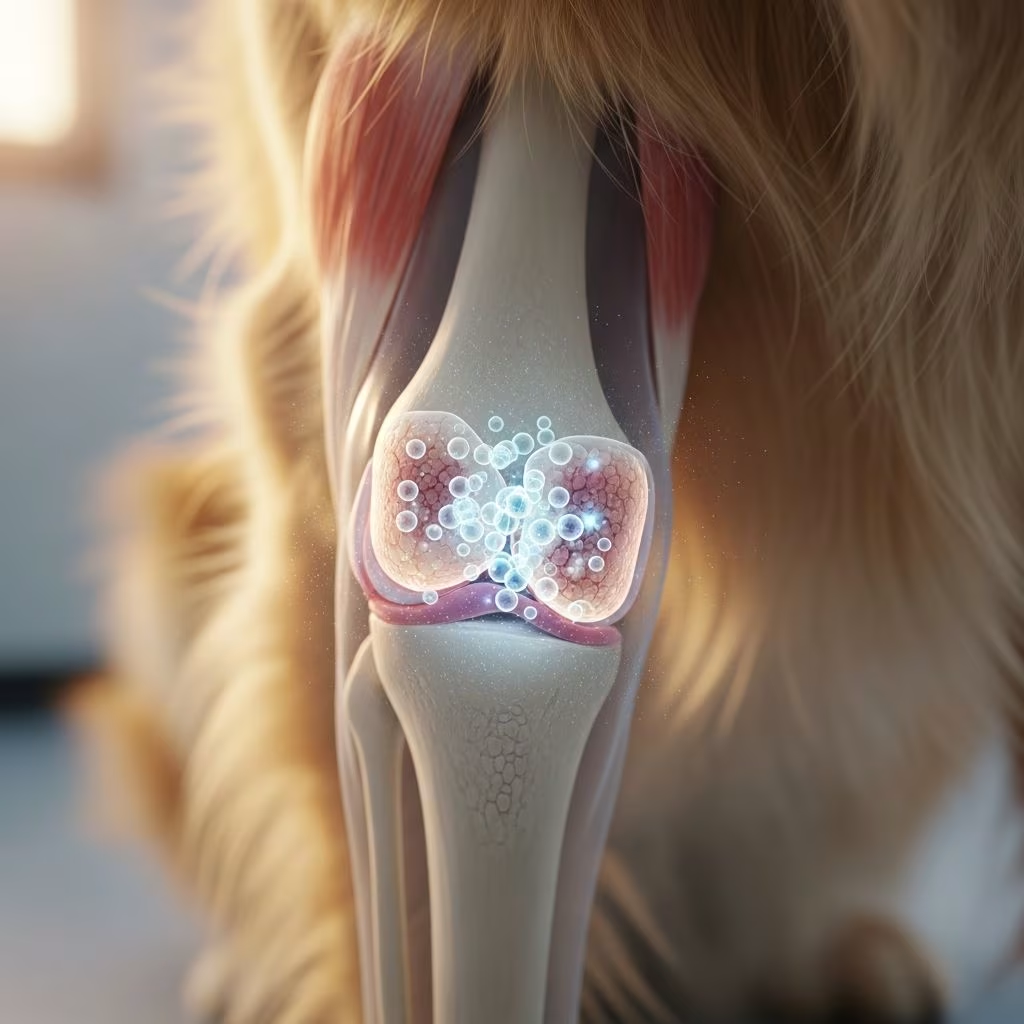
Canine osteoarthritis (OA) affects millions of dogs, causing chronic pain, stiffness, and reduced mobility that diminish their quality of life. Stem cell therapy, a form of regenerative medicine, harnesses the body’s own cells to repair damaged joint tissue, reduce inflammation, and alleviate symptoms. This innovative treatment has shown promising results in clinical studies, offering a minimally invasive alternative or complement to traditional pain management.
What is Canine Osteoarthritis?
Osteoarthritis is a degenerative joint disease common in dogs, particularly in large breeds like Labrador Retrievers, Golden Retrievers, and German Shepherds, which are predisposed due to genetics, rapid growth, and joint stress. It involves the breakdown of cartilage, leading to bone-on-bone friction, inflammation, and pain. Symptoms include lameness, reluctance to rise, stiffness after rest, and reduced activity levels. While not curable, early intervention can slow progression and improve comfort.
Risk factors include age, obesity, hip dysplasia, elbow dysplasia, and repetitive injuries. Breeds such as Golden Retrievers (9 cases), Labrador Retrievers (16 cases), and German Shepherds (8 cases) represented 60% of OA patients in one long-term study, highlighting breed vulnerability. Without treatment, OA leads to chronic pain and muscle atrophy, severely impacting a dog’s daily life.
Understanding Stem Cell Therapy
Stem cell therapy uses mesenchymal stem cells (MSCs), undifferentiated cells capable of differentiating into cartilage, bone, and other tissues while modulating inflammation. In veterinary medicine, MSCs are primarily sourced from adipose (fat) tissue or bone marrow, making them autologous (patient’s own) or allogeneic (donor-derived). These cells promote tissue regeneration, reduce pro-inflammatory cytokines, and secrete growth factors that aid joint repair.
Unlike pharmaceuticals that merely mask pain, stem cells address underlying issues like cartilage degradation and synovial inflammation. Research indicates MSCs improve lameness, joint range of motion (ROM), and pain scores in dogs with naturally occurring OA. A review of 11 studies on autologous adipose-derived MSCs (AD-MSCs) confirmed significant improvements in mobility and pain reduction without major side effects.
How Does Stem Cell Therapy Work for Dogs?
Stem cells exert therapeutic effects through several mechanisms:
- Paracrine signaling: MSCs release anti-inflammatory factors and exosomes that suppress immune responses and promote healing.
- Tissue regeneration: They differentiate into chondrocytes (cartilage cells) or stimulate resident cells to repair damaged matrix.
- Immunomodulation: Reducing chronic inflammation in the joint synovium, which is key in OA progression.
Intravenous (IV) or intra-articular (IA) administration targets affected joints directly. IA injections deliver cells precisely to the site, yielding better outcomes than IV in comparative studies. One pilot study using adipose-derived stem cells in elbow OA dogs reported reduced lameness, pain, and improved function post-injection.
The Stem Cell Therapy Process for Dogs
The procedure is outpatient and completed in one day:
- Harvesting: Fat tissue is collected via minimally invasive liposuction under sedation, typically from the abdomen.
- Processing: Cells are isolated, cultured if needed, and concentrated into a therapeutic dose.
- Injection: MSCs are injected IA into affected joints using ultrasound guidance for accuracy. Dogs recover quickly and go home the same day.
- Follow-up: Improvements may appear in 2-4 weeks, with some dogs needing 1-3 sessions based on severity.
Costs range from $2,500-$5,000 per treatment, varying by clinic and cell source. Allogeneic MSCs from surgical waste (e.g., ovariectomies) offer scalability without repeated harvests.
Benefits of Stem Cell Therapy for Canine OA
Clinical data supports substantial benefits:
- 83% of treated dogs showed improved or sustained lameness reduction in a long-term follow-up.
- Significant gains in lameness scores, pain reduction, and ROM up to 4 years post-single IA injection.
- Enhanced mobility, allowing dogs to run, climb stairs, and play without discomfort.
- Slows disease progression by addressing root causes, not just symptoms.
| Study | Key Outcome | Duration |
|---|---|---|
| Autologous AD-MSCs (11 studies review) | Improved lameness, pain, mobility | Up to 12 months |
| Allogeneic MSCs long-term | 83% lameness improvement | Multi-year follow-up |
| IA vs IV administration | IA superior for ROM and pain | 6-12 months |
Owners report dogs resuming normal activities, with breeds like Labs showing marked vitality.
Safety and Side Effects
Stem cell therapy is safe, with low complication rates. In a study of 147 dogs, only two minor local inflammations (<1 week) occurred; no tumors or increased cancer risk. Autologous cells eliminate rejection risks, while allogeneic showed no adverse long-term effects. VCA Hospitals notes minimal risks compared to surgery. Veterinarians monitor for rare injection-site swelling, resolved with rest. No deaths linked to therapy; 16/147 dogs died from unrelated causes (4 cancer, 12 others), matching general canine mortality.
Who is a Good Candidate?
Ideal candidates include dogs with mild-to-moderate OA confirmed via radiographs, those unresponsive to NSAIDs, or post-surgical cases. Not suitable for advanced end-stage OA with severe bone changes or systemic illness. Consult a vet for gait analysis, imaging, and health screening. Large breeds with hip/elbow dysplasia benefit most.
Combining with Other Treatments
Best outcomes arise from multimodal therapy:
- Weight management to reduce joint load.
- Physical therapy, hydrotherapy for muscle support.
- Supplements like glucosamine, omega-3s.
- Adequate pain meds initially.
Stem cells enhance these by regenerating tissue, creating synergy.
Cost and Availability
Treatment is available at specialized clinics, with FDA-approved trials expanding access (e.g., Cornell University for musculoskeletal issues). Costs reflect lab processing; insurance may cover partially. Availability grows as regenerative vet medicine advances.
Future of Stem Cell Therapy in Veterinary Medicine
Ongoing research, including FDA trials, explores MSCs for ligament injuries, neurological conditions, and more. Allogeneic banks promise off-the-shelf treatments. Long-term studies affirm safety and efficacy, positioning stem cells as a cornerstone for OA management.
Frequently Asked Questions (FAQs)
Q: Is stem cell therapy a cure for dog arthritis?
A: No, it manages symptoms and slows progression by regenerating tissue, but does not fully cure OA.
Q: How long do results last?
A: Improvements can persist 1-4 years; repeat doses may be needed for severe cases.
Q: Are there risks involved?
A: Minimal; rare short-term inflammation, no long-term adverse effects reported.
Q: Which dogs benefit most?
A: Those with early-stage OA in hips, elbows; large breeds like Labs and Shepherds.
Q: How much does it cost?
A: Typically $2,500-$5,000 per treatment, depending on protocol.
References
- Can Stem Cell Therapy Help Dogs with Arthritis? An Overview — Simon Veterinary Surgical. 2023. https://www.simonvetsurgical.com/news/can-stem-cell-therapy-help-dogs-with-arthritis-an-overview
- A Regenerative Approach to Canine Osteoarthritis Using Allogeneic, Adipose-Derived Mesenchymal Stem Cells. Safety Results of a Long-Term Follow-Up — Éva Kriston-Pál et al., Stem CellX Limited. 2020-08-19. https://pmc.ncbi.nlm.nih.gov/articles/PMC7438407/
- Review: Mesenchymal Stem Cell Therapy in Canine Osteoarthritis Research — Frontiers in Veterinary Science. 2021. https://www.frontiersin.org/journals/veterinary-science/articles/10.3389/fvets.2021.668881/full
- Stem Cell Therapy — VCA Animal Hospitals. Accessed 2026. https://vcahospitals.com/know-your-pet/stem-cell-therapy
- FDA approves Cornell stem cell trial for dogs and horses — Cornell University College of Veterinary Medicine. 2024-06-11. https://www.vet.cornell.edu/about-us/news/20240611/fda-approves-cornell-stem-cell-trial-dogs-and-horses



