

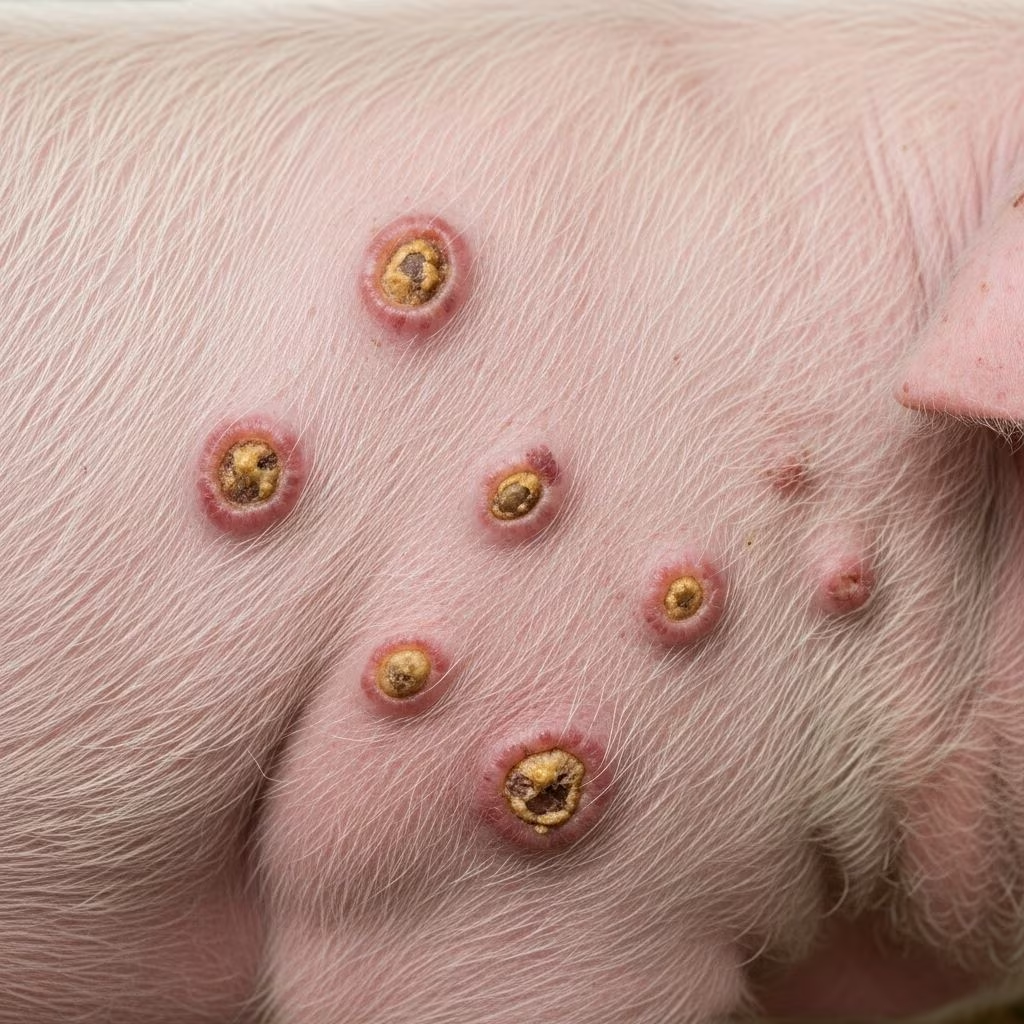
Bacterial skin infections represent a significant health concern in commercial pig operations, particularly affecting animals in their earliest weeks of life. One of the most prevalent conditions encountered in swine veterinary medicine is a generalized dermatological disease caused by pathogenic staphylococcal organisms. This condition manifests as widespread pustular eruptions accompanied by systemic signs of illness, making early recognition and intervention critical for herd health management and production outcomes.
Understanding the Disease Scope and Epidemiological Patterns
This staphylococcal dermatitis represents a common health challenge across swine-producing regions globally. The disease predominantly affects young animals, with particular vulnerability in piglets ranging from five to sixty days of age. The rapid onset of clinical manifestations distinguishes this condition from more insidious skin disorders, with morbidity rates potentially ranging from ten to ninety percent depending on herd management practices and environmental conditions.
The disease presentation varies significantly based on the production stage of affected animals. Nursing piglets typically experience the acute form of the disease, often spreading among littermates through close contact. In contrast, newly weaned pigs more frequently develop a chronic variant characterized by localized lesions and slower progression. Epidemiological investigation suggests that modern management practices, particularly elevated stocking densities and earlier weaning protocols, may have contributed to increased disease incidence in contemporary operations.
Microbial Etiology and Pathogenic Mechanisms
The causative agent of this dermatological disease is Staphylococcus hyicus, a gram-positive coccal bacterium that normally inhabits the skin surface of pigs. The transformation of this commensal organism from harmless colonizer to pathogenic invader depends on several cofactors, most notably disruption of skin integrity. Abrasions and lacerations on facial regions, extremities, and body surfaces create portals of entry for bacterial invasion.
Once established, the bacterium produces exfoliative toxins that fundamentally alter the structural integrity of the epidermis. These toxins specifically target the adhesive properties of keratinocytes within the stratum granulosum and stratum spinosum, facilitating bacterial spread through the dermal layers. Additionally, staphylococcal metabolites cause hepatic and renal damage through systemic absorption of bacterial products, contributing to the severity of clinical disease and potential mortality in untreated cases.
Routes of Transmission and Risk Factors
Understanding transmission pathways is essential for implementing effective biosecurity and management protocols. Suckling piglets typically acquire infection from their dams, either through contact with sows harboring vaginal infections at parturition or through subsequent contact with contaminated farrowing environments. This maternal-to-offspring transmission pattern explains the clustering of affected animals within individual litters.
A secondary surge in disease incidence occurs following the weaning transition, when piglets from different litters are commingled in group housing. This mixing creates opportunities for cross-infection, with documented morbidity rates reaching eighty percent in susceptible cohorts. Environmental factors substantially influence disease development and spread. High stocking densities increase the frequency of traumatic skin injuries from competitive interactions, while poor ventilation creates humid conditions favorable to bacterial proliferation. Abrasive flooring materials, particularly newly installed concrete surfaces, directly inflict skin damage that facilitates bacterial invasion.
Clinical Presentation and Lesion Progression
The clinical manifestation of this dermatological condition follows a characteristic sequence of signs and lesion development. Initial observations typically include behavioral changes, with affected piglets displaying listlessness and reduced appetite. Concurrent with these systemic signs, skin erythema becomes visible, initially concentrated on the facial regions, including areas surrounding the eyes, nose, lips, and ears.
As the condition progresses, distinctive lesion morphology develops. Small, reddish-brown macules appear at initial sites of bacterial invasion and begin to exude serous fluid and sebaceous material. These lesions enlarge and assume vesicular or pustular configurations, eventually involving extensive body surface areas including the flanks, ventral abdomen, and areas between the limbs. The affected skin undergoes progressive thickening, wrinkling, and desquamation, ultimately assuming a characteristic brown, greasy appearance from which the colloquial disease designation derives.
Body temperature changes provide additional clinical information. Early disease stages may be accompanied by fever, but as the condition advances, body temperature often normalizes despite systemic illness, indicating the transition from acute inflammatory response to systemic toxemia.
Diagnostic Approaches and Confirmation Methods
Diagnosis of this staphylococcal infection relies on integration of clinical observations with laboratory confirmation. The distinctive clinical presentation—rapid onset, widespread nonpruritic pustules, absence of fever in later stages, and characteristic lesion distribution—frequently permits presumptive diagnosis based on clinical examination alone.
However, confirmation through bacterial culture significantly improves treatment outcomes. Samples obtained from pustular lesions, processed through standard microbiological techniques, yield Staphylococcus hyicus isolation. Critically, antimicrobial susceptibility testing should accompany bacterial identification, as widespread resistance patterns have emerged in many pig-producing regions. Beta-lactam antibiotics, historically the standard therapeutic choice, demonstrate substantial resistance in contemporary isolates, necessitating evidence-based selection of alternative antimicrobial agents.
Treatment Strategies and Therapeutic Considerations
Topical Management Approaches
Daily application of antiseptic agents to affected skin surfaces represents the cornerstone of therapy for this condition. Chlorhexidine solution at a 0.05% concentration, applied by whole-body spraying, effectively controls bacterial proliferation and promotes lesion healing. Alternative antiseptic formulations include diluted povidone-iodine solutions, typically prepared at a 1:50 dilution of 10% stock solutions. These topical interventions remain the primary therapeutic modality for many producers and demonstrate efficacy when implemented consistently during early disease stages.
Systemic Antimicrobial Administration
Severe cases necessitate parenteral antimicrobial therapy administered at elevated dosages for seven to ten days, initiated as early as possible following diagnosis. Historically, penicillin G formulations represented the standard choice, but contemporary resistance patterns now limit their utility in many operations. Trimethoprim-sulfonamide combinations demonstrate superior susceptibility profiles among current isolates and represent reasonable alternatives when culture results are unavailable.
Supportive Care and Fluid Management
Dehydration represents a significant pathological consequence of this dermatological disease, resulting from increased transepidermal water loss through damaged skin and reduced fluid intake associated with anorexia. Severely affected piglets benefit from oral administration of electrolyte solutions to maintain hydration status and support organ function.
Outbreak Management and Prevention Protocols
When disease outbreaks occur, management extends beyond treatment of clinically affected animals. Both symptomatic pigs and in-contact animals at risk for infection should undergo antiseptic spraying to reduce bacterial transmission and prevent establishment of new infections. In severe outbreak scenarios, prophylactic antimicrobial administration to exposed but asymptomatic animals may be justified to prevent rapid disease progression through susceptible populations.
Long-term outbreak management benefits from identification of specific environmental and management factors contributing to disease development. Implementation of long-acting antimicrobial injections two to three days preceding anticipated disease onset provides prophylactic protection in predictable situations. In herds experiencing recurrent disease cycles affecting both suckling and newly weaned piglets, autogenous vaccine development using isolates from affected animals has demonstrated success. Vaccination protocols typically involve dual immunization of breeding females four and two weeks prior to farrowing to enhance colostral antibody transfer.
Environmental and Management Modifications
Reducing disease incidence requires attention to multiple management variables. Minimizing skin trauma through careful facility design—utilizing non-abrasive flooring materials and avoiding sharp edges or protrusions—diminishes the microbial entry points essential for disease initiation. Optimization of stocking density relative to facility capacity and animal size reduces competitive injury and associated skin disruption. Maintenance of appropriate environmental conditions, including adequate ventilation to minimize humidity and bedding management to reduce contamination, creates conditions less favorable to bacterial proliferation.
Sanitation protocols targeting farrowing facilities and weaning accommodations should emphasize elimination of organic material that harbors viable organisms. These management modifications, when combined with thoughtful antimicrobial stewardship and early intervention protocols, substantially reduce disease incidence and severity.
Prognosis and Long-Term Consequences
Treatment outcomes depend substantially on disease severity at intervention initiation and animal age at presentation. Suckling piglets represent the most severely affected cohort, with potential mortality reaching ninety percent in untreated cases. Weaned piglets generally experience lower mortality but may sustain permanent growth deficits as a vestige of systemic illness. Advanced lesions with extensive systemic involvement respond poorly to intervention regardless of therapeutic intensity.
Beyond mortality, economic consequences extend to compromised growth performance and reduced feed efficiency during recovery periods. Animals successfully treated often display persistently lower average daily gain compared to unaffected cohorts, reducing ultimate market value and extending time to market weight.
Integration with Broader Herd Health Strategy
Managing this staphylococcal dermatitis effectively requires integration with comprehensive herd health programming. Vaccination strategy, antimicrobial stewardship, environmental management, and early detection protocols must function synergistically to minimize disease impact. Collaboration with swine veterinarians experienced in dermatological diagnosis and antimicrobial selection ensures treatment approaches align with current susceptibility data and practice guidelines, optimizing therapeutic outcomes while minimizing antimicrobial resistance development.
References
- Exudative Epidermitis in Pigs – Integumentary System — Merck Veterinary Manual. https://www.merckvetmanual.com/integumentary-system/exudative-epidermitis/exudative-epidermitis-in-pigs
- An investigation of exudative epidermitis (greasy pig disease) and antimicrobial resistance of Staphylococcus hyicus and Staphylococcus aureus in Ontario — PMC/NIH. https://pmc.ncbi.nlm.nih.gov/articles/PMC3552588/
- Exudative epidermitis or Greasy Pig disease — University of Minnesota Open Textbooks. https://open.lib.umn.edu/swinedisease/chapter/exudative-epidermitis-or-greasy-pig-disease/
- Greasy pig disease (Exudative epidermitis) – The Pig Site — The Pig Site. https://www.thepigsite.com/disease-guide/greasy-pig-disease-exudative-epidermitis



