
Stallion Breeding Fitness Assessment: Complete Checklist
Comprehensive guide to evaluating stallion reproductive health for optimal breeding success and herd fertility.
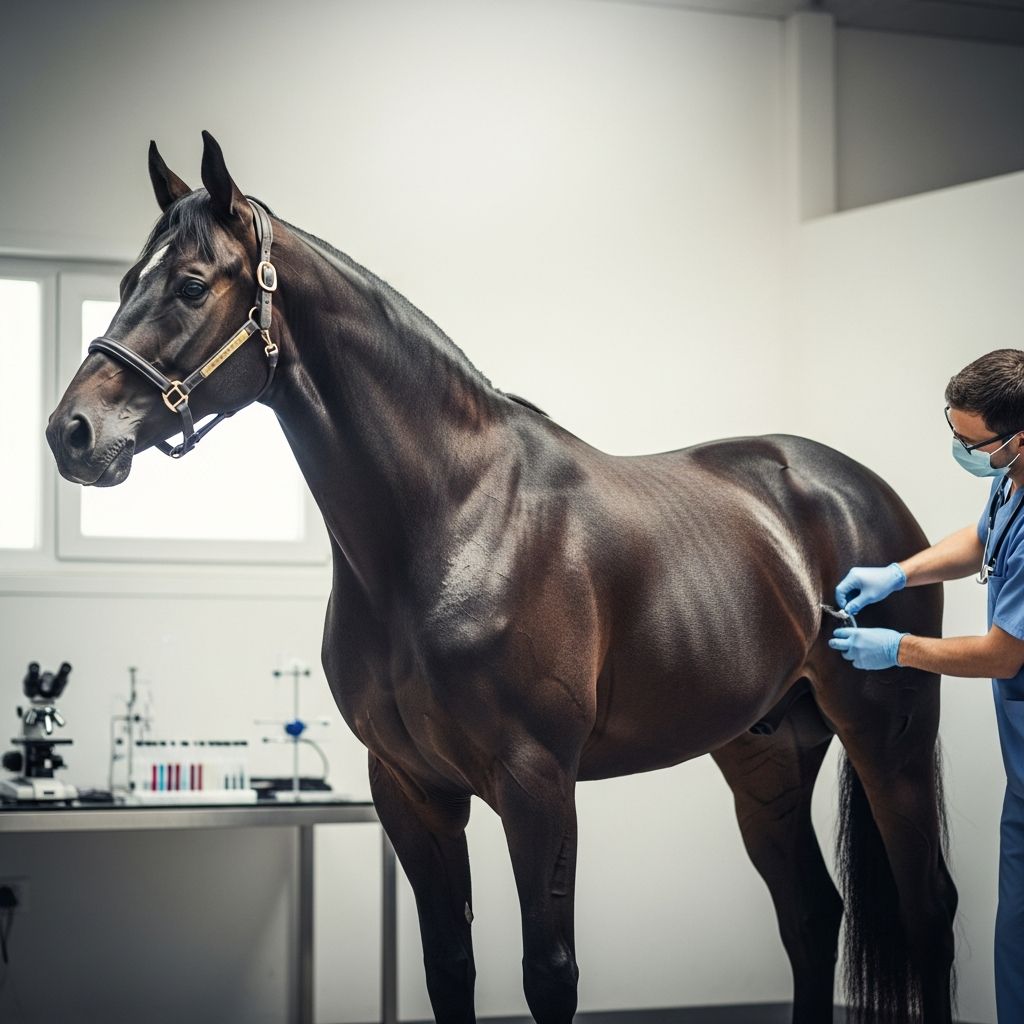
A stallion breeding fitness assessment, commonly known as a breeding soundness examination (BSE), is a vital veterinary procedure that determines a horse’s capability to sire healthy offspring effectively. This evaluation combines physical checks, behavioral observations, and laboratory analysis to classify stallions as suitable or unsuitable for breeding programs.
Importance of Routine Stallion Evaluations
Conducting a BSE helps breeders avoid financial losses from poor fertility rates and ensures genetic quality in future generations. Stallions passing this exam typically achieve over 80% pregnancy rates when managed properly, serving 50 mares naturally or 120 via artificial insemination. Early detection of issues like infections or anatomical defects prevents disease transmission and supports informed decisions on stallion use.
These assessments are particularly crucial before breeding seasons, after purchases, or when fertility declines, allowing timely interventions to boost reproductive success.
Optimal Timing for BSE Procedures
Schedule BSEs strategically to align with breeding cycles. Perform them 3-6 months post-retirement from racing, as anabolic steroids can temporarily impair semen quality. Young stallions entering service, those with suspected subfertility, or high-value purchases benefit most from pre-season exams.
- Pre-breeding season: Confirms readiness and estimates mare capacity.
- Post-purchase: Verifies value and health for new owners.
- Fertility concerns: Diagnoses drops in conception rates.
- virgin stallions: Predicts initial performance potential.
Comprehensive Preparation Steps
Preparation begins with accurate documentation to ensure reliable results. Veterinarians record identification details like name, age, breed, microchip, tattoos, and photos for future reference.
Review health records, including vaccinations (especially Equine Arteritis Virus), past illnesses, and medications. Breeding history covers prior seasons’ mare numbers, types (maiden, barren, foaling), conception rates, and methods (natural, AI with fresh, cooled, or frozen semen).
General Physical Health Inspection
The exam starts with a full-body evaluation assessing body condition, gait, and soundness. Lameness, back issues, or neurological problems can hinder mating. Genetic defects like parrot mouth or cataracts disqualify stallions, as do vision loss or penile dysfunction.
Check for systemic diseases affecting fertility, such as infections or nutritional deficiencies. A healthy stallion exhibits good muscle tone, no scars impacting movement, and normal vital signs.
Detailed Reproductive System Review
External Genitalia Examination
Inspect the penis and prepuce for injuries, tumors, or infections like equine viral arteritis or bacterial conditions. Palpate for symmetry, tone, and abnormalities during extension.
Scrotal and Testicular Analysis
Both testicles must be descended, equal-sized (typically 6-12 cm long), firm, and freely mobile. Measure for consistency; softness suggests degeneration, while hardness indicates fibrosis. Rotations over 180 degrees signal potential torsion emergencies.
| Parameter | Normal Range | Concerning Findings |
|---|---|---|
| Testicle Length | 6-12 cm | <5 cm or asymmetry |
| Shape | Oval, smooth | Irregular, swollen |
| Mobility | Free in scrotum | Fixed or rotated |
| Firmness | Turgid, resilient | Soft or hard |
Internal Structures via Ultrasound
Transrectal or transscrotal ultrasound visualizes epididymis, prostate, and vesicular glands for inflammation, cysts, or stones. These tools detect subtle issues invisible externally.
Libido and Mating Capability Test
Observe the stallion’s sexual drive and mounting ability using a jump mare or teaser. Satisfactory stallions show prompt erection, mounting, and thrusting without hesitation.
Deficiencies in libido may stem from pain, hormonal imbalances, or psychological factors. Repeated failures classify as unsatisfactory.
Semen Collection Techniques
Collect semen via artificial vagina (AV) mimicking natural conditions, preferred for accurate evaluation. Ground collection or electroejaculation serves alternatives for low-libido cases.
Ensure sterility; analyze immediately for viability. Multiple collections (2-3) average results for reliability.
Semen Quality Metrics and Standards
Evaluate volume (30-100 mL), concentration (>2 billion sperm/mL), total count (>10 billion), motility (>35% progressive), and morphology (>60% normal).
| Semen Parameter | Satisfactory | Questionable | Unsatisfactory |
|---|---|---|---|
| Volume (mL) | >30 | 10-30 | <10 |
| Concentration (billion/mL) | >2 | 1-2 | <1 |
| Total Sperm (#) | >10B | 5-10B | <5B |
| Progressive Motility (%) | >35 | 20-35 | <20 |
| Normal Morphology (%) | >60 | 40-60 | <40 |
Phase-contrast microscopy assesses motility; staining reveals defects like detached heads or coiled tails. Bacterial cultures screen for pathogens.
Classification Criteria for Breeding Prospects
Veterinarians categorize based on holistic results:
- Satisfactory: Meets all thresholds; expected >80% pregnancy rate.
- Questionable: Marginal semen or minor issues; retest recommended.
- Unsatisfactory: Major defects; breeding discouraged.
Balance strengths against weaknesses, like strong semen offsetting mild libido issues.
Common Reproductive Disorders Detected
BSEs identify conditions like orchitis, epididymitis, uroliths, or venereal diseases. Testicular degeneration from age or heat reduces output. Varicocele or inguinal hernias impair function.
Enhancing Fertility Post-Examination
For questionable stallions, adjust nutrition, reduce stress, or treat infections. Semen extenders improve AI success. Regular monitoring tracks improvements.
Frequently Asked Questions
How often should a stallion undergo BSE?
Annually before breeding, or after health changes.
Can young stallions pass BSE?
Yes, but collect multiple samples for accuracy.
What if semen motility is low?
Investigate heat exposure, infections, or age.
Is ultrasound always necessary?
Recommended for thorough internal checks.
How does BSE differ for AI stallions?
Emphasizes shipping semen quality.
Conclusion
Investing in BSEs safeguards breeding programs, promoting efficient reproduction and superior foal quality. Collaborate with equine specialists for best outcomes.
References
- Breeding Soundness Exams for Stallions: [7-Step Guide] — Mad Barn. 2023. https://madbarn.com/breeding-soundness-exams-for-stallions/
- Evaluation of the stallion for breeding soundness — PubMed (Journal of Reproduction and Fertility Supplement). 1992-07. https://pubmed.ncbi.nlm.nih.gov/1576547/
- Breeding Soundness Examination & Reproductive Anatomy — University of Kentucky (uknowledge.uky.edu). 1980. https://uknowledge.uky.edu/cgi/viewcontent.cgi?article=1018&context=anr_reports
- Understanding Breeding Soundness Exams for Stallions — The Horse. 2012-02. https://thehorse.com/117246/understanding-breeding-soundness-exams-for-stallions/
- Breeding Soundness Examination of Stallions — Merck Veterinary Manual. 2023. https://www.merckvetmanual.com/management-and-nutrition/breeding-soundness-examination-of-the-male/breeding-soundness-examination-of-stallions
Similar Articles








Read full bio of medha deb


