

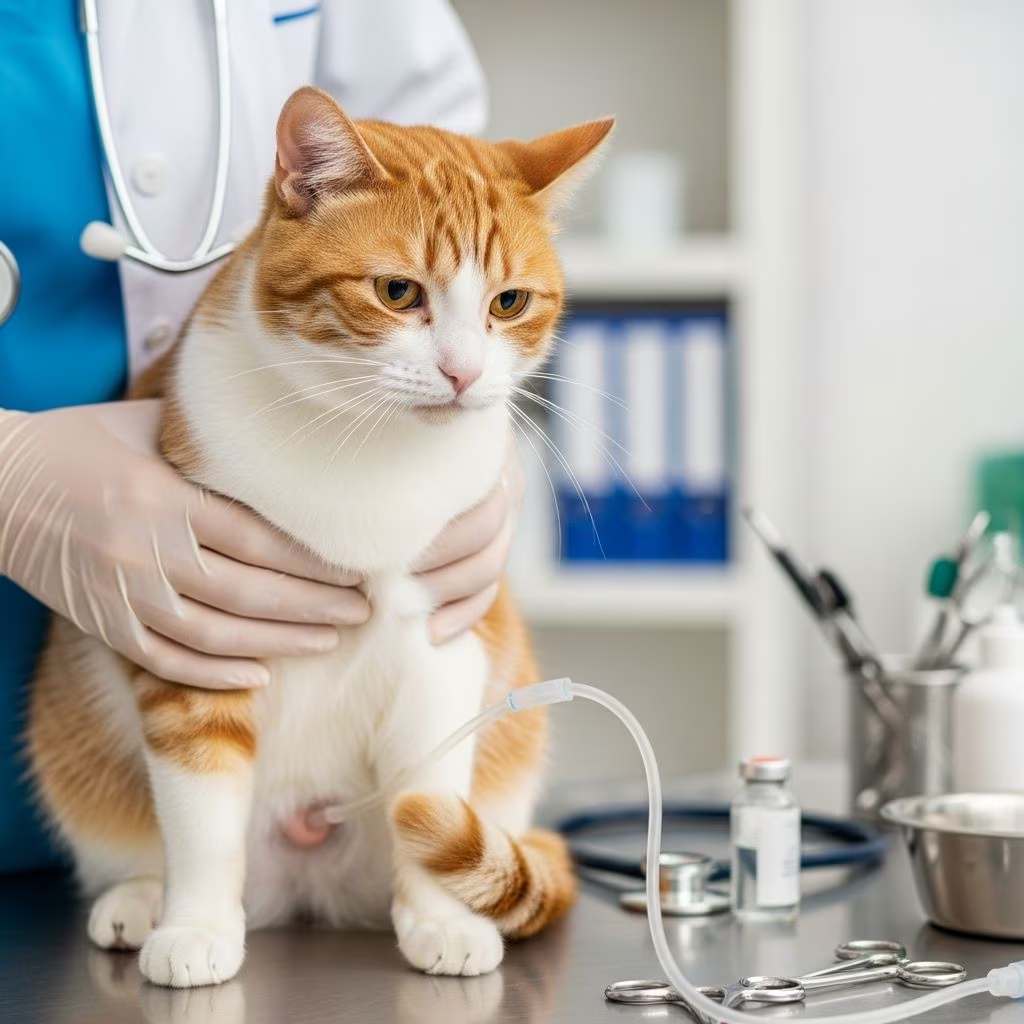
Stages of Urinary Blockage in Cats: A Complete Guide
Urinary blockage in cats is one of the most serious and potentially life-threatening emergencies affecting feline health. Unlike urinary tract infections that may resolve on their own, a urinary blockage can be fatal within hours if left untreated. Understanding the stages of urinary blockage, from initial warning signs to full obstruction, can help you recognize this emergency and seek immediate veterinary care. This comprehensive guide will walk you through each stage of urinary blockage, helping you understand what’s happening in your cat’s body and why prompt action is essential.
What Is Urinary Blockage in Cats?
Urinary blockage, also known as urethral obstruction, occurs when the urethra—the tube that carries urine from the bladder out of the body—becomes completely or partially blocked. This condition most commonly affects male cats because their urethra is longer and narrower than females. When a blockage occurs, urine cannot pass out of the bladder, causing a dangerous buildup of toxins and electrolytes in the bloodstream. Without treatment, this can lead to kidney failure, heart complications, and death within 48 to 72 hours.
Stage 1: Early Warning Signs
The first stage of urinary blockage often begins subtly, and many cat owners mistake these early signs for a simple urinary tract infection. Recognizing these warning signs is crucial because early intervention can prevent the condition from progressing to a life-threatening emergency.
Common early warning signs include:
- Frequent trips to the litter box: Your cat may visit the box more often than usual, often producing only small amounts of urine or sometimes none at all.
- Straining to urinate: You may notice your cat assuming the urination posture but struggling or taking longer than normal to produce urine.
- Vocalizing during urination: Your cat may cry, meow, or yowl while trying to urinate, indicating discomfort or pain.
- Excessive licking of the genital area: Cats often lick the area around their genitals more frequently when experiencing urinary discomfort.
- Urinating outside the litter box: Some cats may urinate in unusual places like the bathtub, sink, or on tile floors, perhaps because these surfaces feel cooler or more comfortable.
- Restlessness or behavioral changes: Your cat may seem agitated, unable to settle, or demonstrate anxiety.
At this stage, the blockage may still be partial, allowing some urine to pass, but the warning signs indicate that something is wrong with your cat’s urinary system. Many owners delay veterinary care at this point, hoping the symptoms will resolve on their own or assuming it’s just a UTI that will improve naturally.
Stage 2: Progression and Worsening Symptoms
As the blockage becomes more severe, the symptoms intensify and additional signs emerge. During this stage, the blockage may be becoming more complete, and urine is backing up into the bladder and kidneys.
Symptoms during this progressive stage include:
- Increased straining with minimal to no urine output: Despite repeated attempts to urinate, your cat may produce little or nothing.
- Visible discomfort and pain: Your cat’s vocalizations may become more intense, and they may seem to be in obvious distress.
- Blood in the urine: You may notice blood or blood-tinged urine in the litter box or on your cat’s fur.
- Loss of appetite: Your cat may refuse food or show decreased interest in eating.
- Vomiting: Nausea and vomiting can occur as toxins begin accumulating in the bloodstream.
- Hiding or lethargy: Your cat may withdraw from normal activities and seem unusually tired or depressed.
- Abdominal pain: Your cat may show signs of abdominal discomfort, such as a hunched posture or sensitivity when touched on the abdomen.
This stage is where many cats finally receive veterinary attention, often when their owners recognize that something is seriously wrong. The difference in how severe symptoms are at this point compared to stage one underscores the importance of not waiting to seek care.
Stage 3: Critical Emergency Stage
The third stage represents a true medical emergency. At this point, the blockage is typically complete, and the cat’s body is experiencing dangerous physiological changes. Without immediate emergency treatment, the cat can deteriorate rapidly and die.
Critical emergency symptoms include:
- Complete inability to urinate: No urine is being produced at all.
- Severe dehydration: The cat may have dry gums and mouth, and skin that doesn’t bounce back when gently pulled.
- Lethargy or collapse: The cat is extremely weak and may be unresponsive or semi-conscious.
- Severe vomiting and refusal to eat: The cat may retch repeatedly and show no interest in food or water.
- Difficulty breathing: In severe cases, breathing may become labored due to electrolyte imbalances affecting the heart and lungs.
- Cold extremities: The cat’s paws or ears may feel cold due to poor circulation.
- Seizures or muscle tremors: In the most severe cases, dangerous potassium levels can cause neurological symptoms.
At this stage, every minute counts. A cat in stage three requires immediate emergency veterinary treatment to have any chance of survival.
Understanding the Causes of Urinary Blockage
Urinary blockage in cats can result from several different causes, and understanding these can help with prevention and long-term management:
- Urethral plugs: These are composed of protein, mucus, and crystals and are the most common cause of blockage in male cats.
- Bladder stones (uroliths): Small mineral deposits can form in the bladder and migrate to the urethra, causing an obstruction.
- Severe inflammation: Feline idiopathic cystitis (FIC), where the bladder becomes inflamed without a clear infectious cause, can lead to swelling that blocks urine flow.
- Urethral spasms or swelling: The muscles surrounding the urethra may spasm or the tissue may swell, narrowing the passage.
- Dehydration: Cats who don’t drink enough water produce more concentrated urine, which is more likely to form crystals and plugs.
- Stress-related inflammation: Stress can trigger or worsen inflammation in the urinary tract.
- Obesity and sedentary lifestyle: Overweight cats with minimal activity have higher blockage risk.
- Diet: Foods high in certain minerals, particularly magnesium and phosphorus, can promote crystal formation.
Diagnosis of Urinary Blockage
When you bring your cat to the veterinarian with suspected urinary blockage, the vet will perform several diagnostic procedures to confirm the condition and assess its severity.
Physical examination: Your vet will palpate (feel) your cat’s abdomen. In a blocked cat, the bladder will typically feel firm, enlarged, and painful to the touch.
Diagnostic tests may include:
- Urinalysis: A sample of urine is analyzed to check for crystals, blood, infection, or other abnormalities.
- Blood work: A complete blood panel assesses kidney function, electrolyte levels (especially potassium), and overall organ health. Elevated potassium levels are particularly concerning because they can affect the heart.
- X-rays: Radiographs can reveal bladder stones or other structural problems.
- Ultrasound: Ultrasound imaging provides detailed views of the bladder and urethra and can identify stones or abnormalities.
These diagnostic tools help your veterinarian understand not just that a blockage exists, but why it occurred and how to best treat it.
Emergency Treatment Protocol
Treatment for urinary blockage is a multi-step emergency process designed to relieve the obstruction, stabilize the cat’s body, and prevent complications.
Immediate stabilization: When a blocked cat arrives at the emergency clinic, the first priority is stabilization. This includes placing an intravenous catheter to deliver fluids and medications. Pain relief is provided immediately to reduce your cat’s suffering. The veterinarian will assess the severity of electrolyte imbalances and begin correcting these dangerous conditions.
Sedation and catheterization: Your cat will be sedated or placed under general anesthesia. A urinary catheter—a sterile, flexible tube—is carefully passed through the urethra into the bladder. The catheter is then used to flush sterile saline solution through the blockage, gently pushing it back into the bladder where it can be addressed. Once the blockage is cleared, urine can flow freely.
Catheter placement: The urinary catheter is typically left in place for three to five days to allow the urethra to heal, reduce swelling, and prevent another blockage from forming immediately. The catheter is sutured in place to keep it secure during this critical recovery period.
Hospitalization and supportive care: Most blocked cats require hospitalization for two to three days minimum, often longer depending on the severity of their condition. During hospitalization, your cat receives:
- IV fluid therapy to flush toxins from the kidneys and restore hydration
- Pain medications to ensure comfort
- Muscle relaxants to help the urethra relax
- Anti-inflammatory medications to reduce swelling
- Antibiotics if infection is present or to prevent secondary infection
- Continuous monitoring of heart rate, blood pressure, and kidney function
In some cases, cats with severely elevated potassium levels may receive specific medications like calcium gluconate or insulin with glucose to protect the heart and lower potassium levels quickly.
Surgical Intervention
While most urinary blockages are successfully managed with catheterization and medical treatment, some cats may require surgery. Surgical options include:
Cystotomy: This procedure opens the bladder to remove bladder stones or debris that contributed to the blockage.
Perineal urethrostomy (PU): For male cats with recurrent blockages or those that cannot be managed medically, a perineal urethrostomy may be recommended. This specialized reconstructive surgery widens and shortens the urethra, creating an opening similar to that of a female cat. This significantly reduces the risk of future blockages, though it doesn’t prevent all urinary tract disease.
Recovery and Post-Treatment Management
Once your cat has been successfully unblocked and stabilized, recovery begins. Most cats are discharged after three to five days of hospitalization, once they are urinating normally on their own and blood work has normalized.
Post-hospital care includes:
- Oral pain medications for one to two weeks
- Muscle relaxants to keep the urethra relaxed (usually for up to two weeks)
- Antibiotics if infection was present
- A prescription diet designed to prevent crystal formation and support bladder health by altering urine pH
- Monitoring for any signs of another blockage during the critical first 12-24 hours after catheter removal
It’s crucial to understand that cats who have experienced one blockage are at significantly higher risk of experiencing another, with many recurrences happening within the first 6-12 months.
Long-Term Prevention Strategies
Preventing future blockages is critical for cats who have already experienced one. Several evidence-based strategies can help reduce recurrence risk:
- Feed a prescription urinary diet: A veterinary-formulated diet designed to reduce crystal formation and support bladder health is usually recommended for life.
- Increase water intake: Encourage your cat to drink more water by providing water fountains, offering wet food, or adding water to meals. Increased water intake dilutes urine and reduces crystal formation.
- Maintain a healthy weight: Obesity increases blockage risk. Work with your vet on a weight management plan if needed.
- Promote daily activity: Regular playtime and exercise improve overall health and support urinary tract function.
- Minimize stress: Maintain consistent routines, provide enrichment activities, and create a calm home environment. Consider stress-reducing pheromone diffusers like Feliway.
- Ensure clean, accessible litter boxes: Provide at least one litter box per cat plus one extra. Keep boxes clean and in easily accessible locations.
- Regular veterinary check-ups: Schedule follow-up appointments to monitor your cat’s urinary health and adjust treatment as needed.
Frequently Asked Questions (FAQs)
Q: How quickly can a cat die from urinary blockage?
A: A completely blocked cat can deteriorate within 12-24 hours and can die within 48-72 hours without treatment. This is why immediate emergency veterinary care is essential.
Q: Is urinary blockage more common in male or female cats?
A: Urinary blockage is significantly more common in male cats because of their narrower, longer urethra. Female cats rarely experience complete urinary obstruction.
Q: Can I treat urinary blockage at home?
A: No. Urinary blockage is a medical emergency that requires immediate professional veterinary treatment. Home remedies or waiting will result in your cat’s death.
Q: What is the survival rate for cats with urinary blockage?
A: With prompt emergency treatment, the survival rate is good. However, prognosis depends on how quickly treatment is received and the severity of electrolyte imbalances and kidney damage.
Q: Will my cat have another blockage after the first one?
A: Cats who experience one blockage are at higher risk for recurrence, with many experiencing another blockage within 6-12 months. Long-term preventive care significantly reduces but doesn’t eliminate recurrence risk.
References
- Urinary Blockage in Cats: Signs & Emergency Treatment — Litter-Robot Blog. 2024. https://www.litter-robot.com/blog/cat-urinary-blockage/
- Urinary Tract Blockage in Cats — PetMD. 2024. https://www.petmd.com/cat/conditions/urinary/urinary-tract-blockage-cats
- Emergency Alert: Recognizing and Treating Urinary Blockages in Cats — Columbia Pike Animal Hospital. 2024. https://www.columbiapikeanimalh.com/services/cats/blog/emergency-alert-recognizing-and-treating-urinary-blockages-cats
- Understanding Urinary Blockages in Male Cats — Cobb Veterinary Services. 2024. https://cobb.vet/understanding-urinary-blockages-in-male-cats/
- Dealing with Male Cat Urinary Blockages — Hill’s Pet Nutrition. 2024. https://www.hillspet.com/cat-care/healthcare/male-cat-urinary-blockage
- Feline Lower Urinary Tract Disease (FLUTD) — American Veterinary Medical Association (AVMA). 2024. https://www.avma.org/resources-tools/pet-owners/petcare/feline-lower-urinary-tract-disease
- Urinary Obstruction in Male Cats — American College of Veterinary Surgeons (ACVS). 2024. https://www.acvs.org/small-animal/urinary-obstruction-in-male-cats/



