

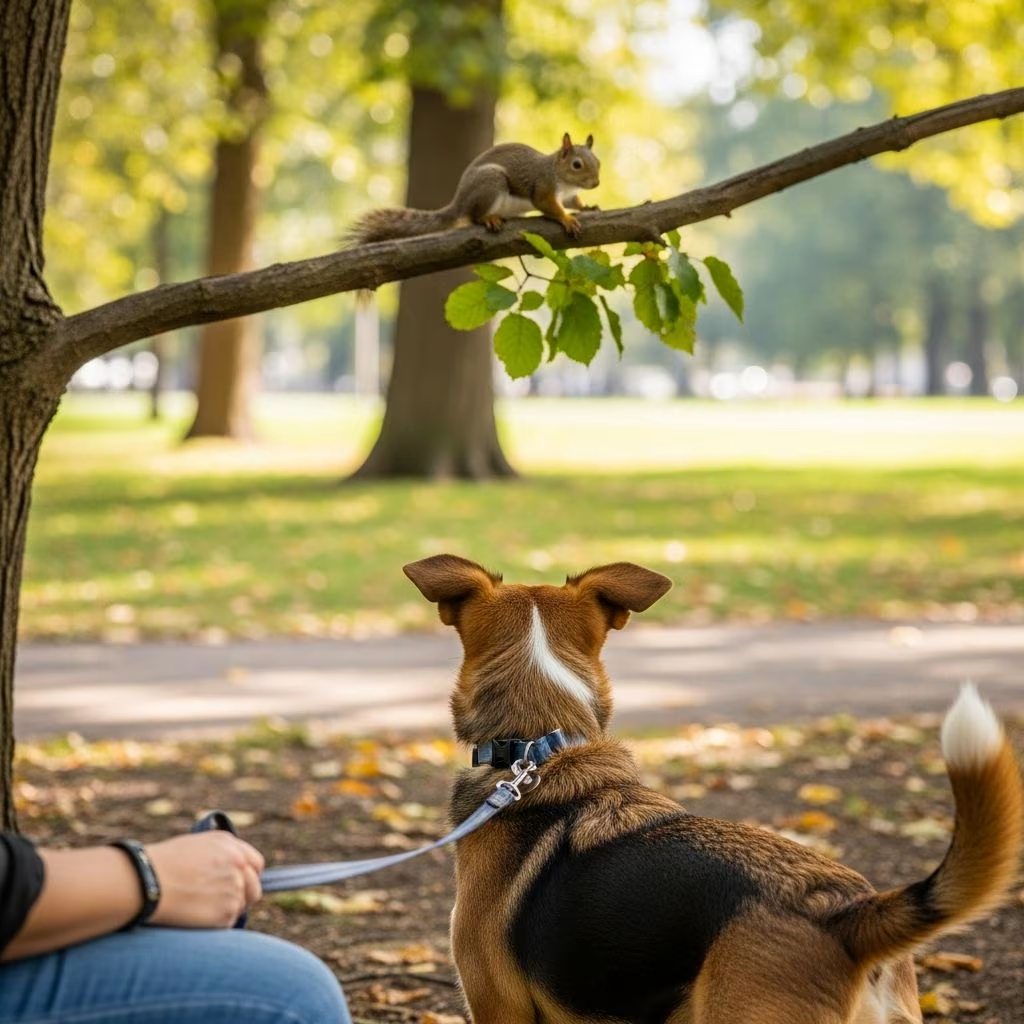
Ask a Trainer: What Can I Do About My Squirrel‑Obsessed Dog?
If your dog slams to the end of the leash, barks wildly, or completely tunes you out the moment a squirrel appears, you are not alone. Many otherwise well-mannered dogs seem to “lose their minds” around fast-moving wildlife because chasing is part of their natural prey drive, an instinct inherited from their wolf ancestors. With the right mix of management, training, and enrichment, you can dramatically improve your dog’s behavior without expecting them to stop noticing squirrels altogether.
This guide explains why dogs are so drawn to squirrels, what makes some dogs more intense than others, and step-by-step strategies to keep everyone safe and make your walks calmer and more enjoyable.
Why Are Dogs So Obsessed With Squirrels?
To change squirrel-chasing behavior, it helps to understand where it comes from. Chasing is not your dog being “naughty” or “stubborn”—it is an instinctive response to movement.
The Root: Prey Drive and Instinct
Prey drive is a sequence of instinctive behaviors—such as searching, stalking, chasing, and grabbing—that helped canids survive in the wild by catching food. Even though modern dogs are fed from bowls, many still show parts of this sequence when they see small, fast animals like squirrels or rabbits.
- Motion triggers the chase: Rapid movement, especially running away, strongly activates predatory instincts in many dogs.
- Self-rewarding behavior: Even if the dog never catches the squirrel, the act of chasing can feel exciting and reinforcing on its own.
- Hard to “turn off” mid-chase: Once the dog is in full pursuit mode, it becomes very difficult to get their attention.
Because this drive is rooted in genetics and evolution, your goal is not to erase it but to manage and redirect it in safe, appropriate ways.
Breed and Individual Differences
Some dogs are far more sensitive to squirrels than others. Selective breeding has strengthened prey-related behaviors in many breeds.
- Hounds and terriers: Many scent hounds and terriers were bred specifically to track and pursue small game, so a darting squirrel is exactly the kind of stimulus that excites them.
- Sporting and gundogs: Retrievers, spaniels, and pointers often have heightened interest in birds and small mammals.
- Herding breeds: Border Collies, Australian Shepherds, and similar breeds may fixate on fast movement and respond with intense staring, crouching, or chasing.
- Individual variation: Even within a breed, some dogs show mild curiosity while others become single-minded “squirrel hunters.”
Knowing your dog’s background helps set realistic expectations. A retired hunting dog, for example, will typically need more management and training practice than a toy companion breed with low prey drive.
Why Squirrels Are Especially Triggering
Among all the wildlife your dog might see, squirrels are uniquely exciting:
- They move quickly and unpredictably—running, pausing, and darting up trees.
- They often appear suddenly at close range in parks, yards, and sidewalks.
- They climb trees, which leaves some dogs barking and leaping at the trunk in frustration.
This combination of fast motion, surprise, and inaccessibility makes squirrels a near-perfect trigger for a dog with strong chase instincts.
Is My Dog’s Squirrel Obsession a Problem?
Interest in wildlife is normal, but it becomes a concern when it affects safety, welfare, or quality of life—for you, your dog, or local animals.
| Behavior | Usually Normal | Potentially Problematic |
|---|---|---|
| Looking at squirrels | Turns to watch, ears perked, maybe one or two barks | Freezes, stares intensely, cannot respond to name or cues |
| On-leash behavior | Mild pulling, can be redirected with treats or cues | Explosive lunging, barking, spinning, dragging handler |
| Off-leash behavior | Looks, then returns when called | Bolts after squirrels, ignores recall, runs out of sight |
| Daily life | Notices backyard squirrels but settles again easily | Spends long periods patrolling windows, can’t relax, vocalizes often |
Signs that it is time to seek help or change your routine include:
- Near misses with traffic or bikes when your dog lunges unexpectedly.
- Frequent falls or injuries to the handler from leash pulling.
- Escaping yards or slipping harnesses to chase squirrels.
- Injuries to wildlife or repeated close calls.
Safety First: Management Strategies
Before you focus on training new skills, you need management—practical steps that prevent dangerous rehearsals of the chasing behavior. The more often your dog practices lunging and chasing, the stronger that habit becomes.
Leash, Harness, and Equipment Choices
- Use a secure harness or collar: Choose well-fitted gear that your dog cannot slip out of when they lunge. Many trainers prefer a properly fitted front-clip harness for better control.
- Avoid retractable leashes: They encourage constant pulling and offer less control if your dog suddenly runs after a squirrel.
- Choose leash length wisely: A standard 1.8–2 m (6–7 ft) leash usually provides enough freedom without compromising safety.
Route Planning and Environment Management
Until your training is more solid, set your dog up for success by adjusting when and where you walk.
- Avoid squirrel hotspots: If your neighborhood park is full of squirrels at certain times, walk in quieter areas or at times when wildlife is less active.
- Use distance to your advantage: Most dogs can think more clearly when triggers are farther away; cross the street or turn around if a squirrel appears close ahead.
- Secure your yard: Check fences and gates so an excited dog cannot escape during a chase.
Preventing Rehearsal of the Chase
Every successful chase makes the behavior more rewarding and likely to occur again. Management tools include:
- Keeping your dog on-leash in areas with lots of squirrels, unless you have a very reliable recall in fenced spaces.
- Blocking access to squirrel-viewing “watch posts” (like certain windows) if your dog spends hours fixating and barking.
- Providing alternative activities at times when squirrels are especially active.
Training Skills to Help Your Dog Around Squirrels
Management keeps everyone safe in the short term, but training teaches your dog what to do instead of lunging and barking. Evidence-based dog training uses positive reinforcement—rewarding desired behavior—to change what your dog chooses to do.
Core Skills to Teach
- Name response: When you say their name, your dog quickly turns to look at you.
- Reinforced eye contact: Your dog learns that looking at you, not the squirrel, makes good things happen.
- Loose-leash walking: Your dog moves with you without constant pulling, making it easier to handle surprises.
- Emergency U-turn: A cue like “Let’s go!” that means turn away with your handler and move in the opposite direction.
“Look at That” Game (LAT)
A popular protocol, often called the “Look at That” game, helps dogs learn to calmly notice triggers and then orient back to their handler for a reward.
- Start at a distance where your dog can see a squirrel but is still able to take treats and respond to cues.
- When your dog glances at the squirrel, quietly mark the moment (with “yes” or a click) and immediately feed a high-value treat.
- With repetition, your dog begins to look at the squirrel briefly and then quickly turn back to you, anticipating the reward.
- Gradually, over many sessions, move a little closer as long as your dog remains able to eat, focus, and respond.
By pairing the sight of squirrels with calm behavior and tasty rewards, you change your dog’s emotional response and build a new habit: see squirrel → look at human, instead of see squirrel → chase.
Reinforcing Alternative Behaviors
To truly replace lunging and barking, reinforce specific alternative behaviors in the presence of squirrels:
- Automatic check-ins: Reward your dog whenever they voluntarily look back at you instead of staring at wildlife.
- Stationing: Teach your dog to go to a mat or to your side and stay there when they spot a squirrel (useful in yards or parks).
- Sniffing and foraging: Scatter a handful of treats on the ground as a cue to disengage and sniff; scent work has been shown to promote relaxation in dogs.
Consistency and Realistic Expectations
Changing a deeply rewarding behavior like chasing takes time and consistency. Short, frequent sessions are more effective than occasional long ones. For dogs with very strong prey drive, the goal may not be total indifference to squirrels but rather:
- Being able to walk past at a safe distance with manageable interest.
- Recovering quickly after spotting a squirrel.
- Responding to key cues like name, U-turn, or “leave it” most of the time.
Enrichment: Healthy Outlets for the Chase Drive
Because prey drive is a natural part of many dogs’ behavioral repertoire, offering safe outlets can reduce frustration and improve overall behavior.
Games That Channel Chasing Safely
- Fetch and frisbee: Throwing balls or discs in a fenced area lets your dog run and chase moving objects safely.
- Flirt pole: A flirt pole (a toy on a string attached to a pole) allows controlled chase games where you can start and stop the action.
- Fast-paced tug games: For dogs who enjoy it, tugging offers intense movement and engagement without involving wildlife.
Sniffing, Foraging, and Scent Work
Sniffing is not just fun; it is mentally enriching and calming for dogs. Research suggests that allowing dogs to engage in scent-focused activities can increase behavioral signs of positive welfare.
- Snuffle mats and food puzzles: Encourage your dog to “hunt” for kibble or treats with their nose.
- Scatter feeding outdoors: Toss treats in the grass and let your dog search for them.
- Introductory scent work: Simple nosework games, like finding hidden treats or toys, can satisfy hunting instincts in a controlled way.
Mental Exercise and Training Games
- Short training sessions that teach tricks or obedience cues.
- Interactive toys that require problem-solving to access food.
- Calm chewing options (appropriate chews, stuffed food toys) to help your dog relax after walks.
When to Involve a Professional
If your dog’s squirrel obsession feels overwhelming, or if safety is at risk, professional help is a wise choice. Organizations such as the American Veterinary Society of Animal Behavior (AVSAB) and the American College of Veterinary Behaviorists (ACVB) recommend humane, reward-based methods for behavior modification.
Signs You Should Seek Help
- Your dog’s lunging and barking are intense and difficult to control.
- You feel anxious about every walk or avoid going out at certain times.
- Your dog has injured you, themselves, or wildlife during a chase.
- Your dog seems unable to relax at home because they are constantly on “squirrel patrol.”
Who Can Help?
- Certified professional trainers: Look for credentials from reputable bodies (for example, CCPDT or equivalent) and trainers who use positive reinforcement methods.
- Veterinary behaviorists: For severe cases or when anxiety and compulsive behaviors are involved, a board-certified veterinary behaviorist can assess whether medication plus behavior modification is appropriate.
- Your regular veterinarian: Can check for medical issues that might worsen behavior (pain, sensory changes, etc.) and provide referrals.
Frequently Asked Questions (FAQs)
Q: Is it cruel to stop my dog from chasing squirrels?
No. Preventing dangerous chases protects your dog and local wildlife. You are not taking away all fun; you are redirecting that instinct into safer activities like fetch, flirt-pole games, and scent work.
Q: Can I ever trust my squirrel-obsessed dog off-leash?
That depends on your dog, your training, and the environment. Many dogs with strong prey drive are safest on-leash or in securely fenced areas. Even well-trained dogs can ignore recall when a squirrel suddenly bolts past, so evaluate risks realistically.
Q: How long will it take to see improvement?
You may notice small changes (like quicker check-ins) within a few weeks of consistent, well-timed practice. More significant improvements—such as calmly passing squirrels at moderate distances—typically require months of patient training and careful management.
Q: Are certain breeds impossible to train around squirrels?
No breed is untrainable, but some individuals will always have stronger instincts and need more management. Hounds, terriers, and some herding dogs often require extra caution and practice. The aim is progress, not perfection.
Q: Do aversive tools (like shock collars) work better for squirrel chasing?
Shock and other aversive methods can suppress behavior in the moment but are associated with increased risks of fear, anxiety, and aggression, and are not recommended by major veterinary behavior organizations. Reward-based training is safer for welfare and can be highly effective when applied consistently.
References
- The Truth Behind A Dog’s Squirrel-Chasing Obsession — GreaterGood. 2023-08-10. https://greatergood.com/blogs/news/dogs-chase-squirrels
- Position Statement on Humane Dog Training — American Veterinary Society of Animal Behavior (AVSAB). 2021-08-28. https://avsab.org/wp-content/uploads/2021/01/Humane-Dog-Training-Position-Statement-download.pdf
- Teaching My Hound NOT To Hunt — Pet Professional Guild, BARKS Magazine Blog. 2017-06-01. https://www.petprofessionalguild.com/barks/barks-magazine-blog/teaching-my-hound-not-to-hunt-2/
- Let Me Sniff! Nosework and Dog Welfare — Horowitz, A., & Hecht, J., Barnard College Dog Cognition Lab summary referencing welfare research on sniffing. 2016-05-01. https://dogcognition.com/let-me-sniff-nosework-and-dog-welfare/
- Dogs and Squirrels: The Thrill of the Chase — Holiday Barn Pet Resorts. 2019-09-10. https://holidaybarn.com/blog/dogs-and-squirrels-the-thrill-of-the-chase/



