

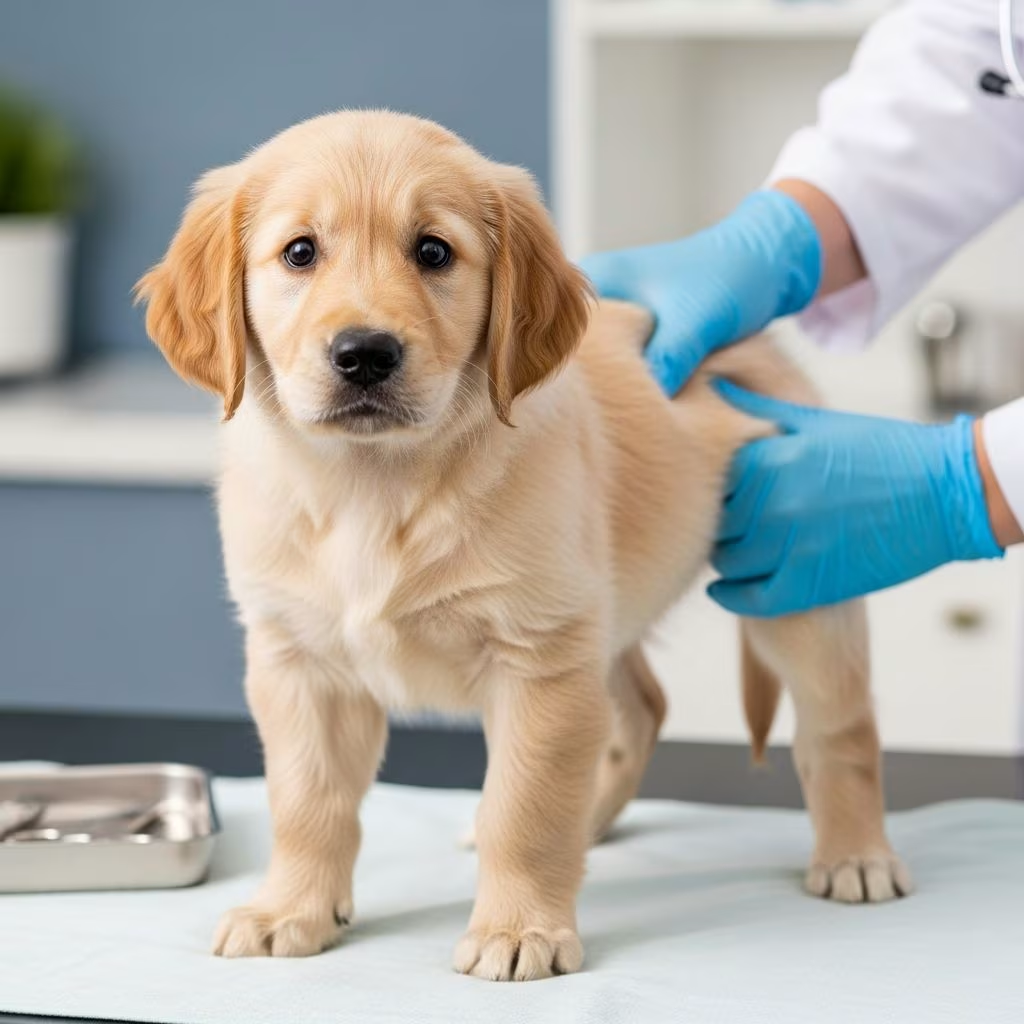
Canine hip dysplasia is a common developmental condition affecting the hip joints, leading to pain, mobility issues, and arthritis over time. Early detection through observation of behavioral changes and professional diagnostics can significantly improve a dog’s quality of life.
Understanding the Basics of Canine Hip Dysplasia
The hip joint in dogs functions as a ball-and-socket mechanism, where the femoral head fits into the acetabulum of the pelvis. In hip dysplasia, this fit is imperfect due to uneven growth during puppyhood, causing joint laxity. This looseness progresses to osteoarthritis as the body attempts to stabilize the joint, resulting in cartilage wear, bone spurs, and inflammation.
While some dogs show no early symptoms, the condition often manifests as subtle hind-end weakness that worsens with age. Large and giant breeds like German Shepherds, Labrador Retrievers, and Great Danes are predisposed, but any dog can be affected. Genetic factors play a primary role, compounded by rapid growth, obesity, and overexertion in puppies.
Common Symptoms Owners Should Watch For
Recognizing hip dysplasia starts with noticing changes in your dog’s movement and behavior. Symptoms can appear as early as a few months old or later in life, varying by severity.
- Stiffness after rest: Dogs struggle to rise from lying or sitting positions, often appearing wobbly.
- Limping or lameness: Intermittent or chronic hind leg limping, especially after exercise, without prior injury.
- Bunny hopping gait: Both back legs move together when running or climbing stairs, indicating compensation for pain.
- Reduced activity levels: Reluctance to jump, play, climb stairs, or go on walks; dogs may seem depressed or tire quickly.
- Muscle loss and swaying: Atrophied thigh muscles, swaying hips while walking, or shifting weight to front legs.
- Joint grating or pain: Audible clicking or reluctance to be touched on hips during petting.
These signs may fluctuate with weather, exercise, or inflammation levels. Puppies might bunny hop playfully at first, masking the issue until arthritis sets in.
Risk Factors and Breed Predispositions
Hip dysplasia stems from multifactorial causes, primarily genetics. Puppies inheriting loose hips from parents develop laxity by 8-12 weeks, with degeneration accelerating by 5 months. Environmental influences like excessive calorie intake leading to obesity, slippery floors, or steep stairs during growth exacerbate the problem.
| Breed Group | High-Risk Breeds | Prevalence Notes |
|---|---|---|
| Large Breeds | German Shepherd, Labrador Retriever | Common in working and sporting dogs due to size and activity. |
| Giant Breeds | Great Dane, Saint Bernard | Rapid growth increases joint stress. |
| Medium Breeds | Bulldog, Cocker Spaniel | Less common but notable in brachycephalic types. |
Neutering before full skeletal maturity may slightly elevate risk in some breeds, though evidence varies.
Diagnostic Approaches for Accurate Assessment
Veterinarians diagnose hip dysplasia through a combination of history, physical exams, and imaging. A thorough review of symptoms, breed, and parentage health guides initial suspicion.
Physical Examination Techniques
Key palpation tests include:
- Ortolani sign: Under sedation, the vet flexes the hip, pushes the femoral head out, then abducts the leg. A ‘clunk’ indicates laxity.
- Bardens’ test: For puppies under 6 months; measures femoral displacement in lateral recumbency.
Exams check for pain, reduced motion, grinding, and muscle atrophy. Blood work may reveal inflammation.
Imaging and Screening Methods
X-rays under anesthesia are gold standard, revealing laxity, shallow acetabula, or arthritis. Common protocols:
- OFA grading: Post-2 years; scores excellent to severe, though preliminary for pups.
- PennHIP: Measures distraction index for laxity prediction anytime after 4 months.
- Cornell method: Kneeling position images subluxation, correlating with palpation.
Early screening in at-risk pups allows timely intervention before irreversible damage.
Management and Treatment Strategies
Treatment focuses on pain relief, joint stabilization, and slowing progression. Mild cases respond to conservative care; severe ones may need surgery.
- Weight control and exercise: Low-impact activities like swimming maintain muscle without stress.
- Medications: NSAIDs for inflammation, joint supplements (glucosamine, omega-3s) for cartilage support.
- Physical therapy: Hydrotherapy, massage, and controlled exercises rebuild strength.
- Surgical options: Juvenile pubic symphysiodesis (under 6 months), triple pelvic osteotomy (5-10 months), or total hip replacement for adults.
Many dogs live comfortably with multimodal management, though advanced OA limits full recovery.
Prevention Tips for Breeders and Owners
Proactive steps reduce incidence. Breeders should screen parents via OFA/PennHIP, selecting for tight hips. Owners of growing pups should:
- Feed puppy diets to moderate growth rates, avoiding free-feeding.
- Provide joint-friendly environments: carpeted floors, ramps for cars/beds.
- Limit high-impact play until 18 months; prioritize leashed walks and swimming.
- Screen at-risk pups early for interventions like juvenile surgery.
Genetic testing is emerging but not fully reliable yet.
Frequently Asked Questions (FAQs)
Can small dogs get hip dysplasia?
Yes, though rarer than in large breeds, small dogs like Pugs can develop it due to genetics or injury.
Is hip dysplasia painful for dogs?
Early laxity may be painless, but progressing arthritis causes significant discomfort, varying by individual.
How much does hip replacement surgery cost?
Costs range widely by location and clinic; consult your vet for estimates, often $3,500-$7,000 per hip.
Can diet alone prevent hip dysplasia?
Diet supports prevention by controlling weight and growth, but genetics are primary; combine with screening.
At what age should I X-ray my puppy’s hips?
For at-risk breeds, as early as 4 months with PennHIP; definitive OFA at 2 years.
Long-Term Prognosis and Quality of Life
With early intervention, most dogs maintain good mobility into senior years. Untreated cases lead to chronic pain and euthanasia in severe instances. Regular vet check-ups, tailored exercise, and prompt treatment adjustments ensure optimal outcomes. Owners play a crucial role by monitoring subtle changes and committing to lifelong management.
References
- Canine Hip Dysplasia (CHD) — Cornell University College of Veterinary Medicine. 2023. https://www.vet.cornell.edu/departments-centers-and-institutes/riney-canine-health-center/canine-health-topics/canine-hip-dysplasia-chd
- Hip Dysplasia in Dogs — Blue Cross. 2024. https://www.bluecross.org.uk/advice/dog/health-and-injuries/hip-dysplasia-in-dogs
- Hip Dysplasia in Dogs — VCA Animal Hospitals. 2024. https://vcahospitals.com/know-your-pet/hip-dysplasia-in-dogs
- Hip Dysplasia in Dogs: Signs, Treatment, Surgery — PetMD. 2024. https://www.petmd.com/dog/conditions/musculoskeletal/hip-dysplasia-dogs
- Hip Dysplasia in Dogs: Signs, Symptoms, Treatment — American Kennel Club. 2024. https://www.akc.org/expert-advice/health/hip-dysplasia-in-dogs/
- Diagnosis, prevention, and management of canine hip dysplasia — PMC (National Library of Medicine). 2018-08-01. https://pmc.ncbi.nlm.nih.gov/articles/PMC6070021/



