

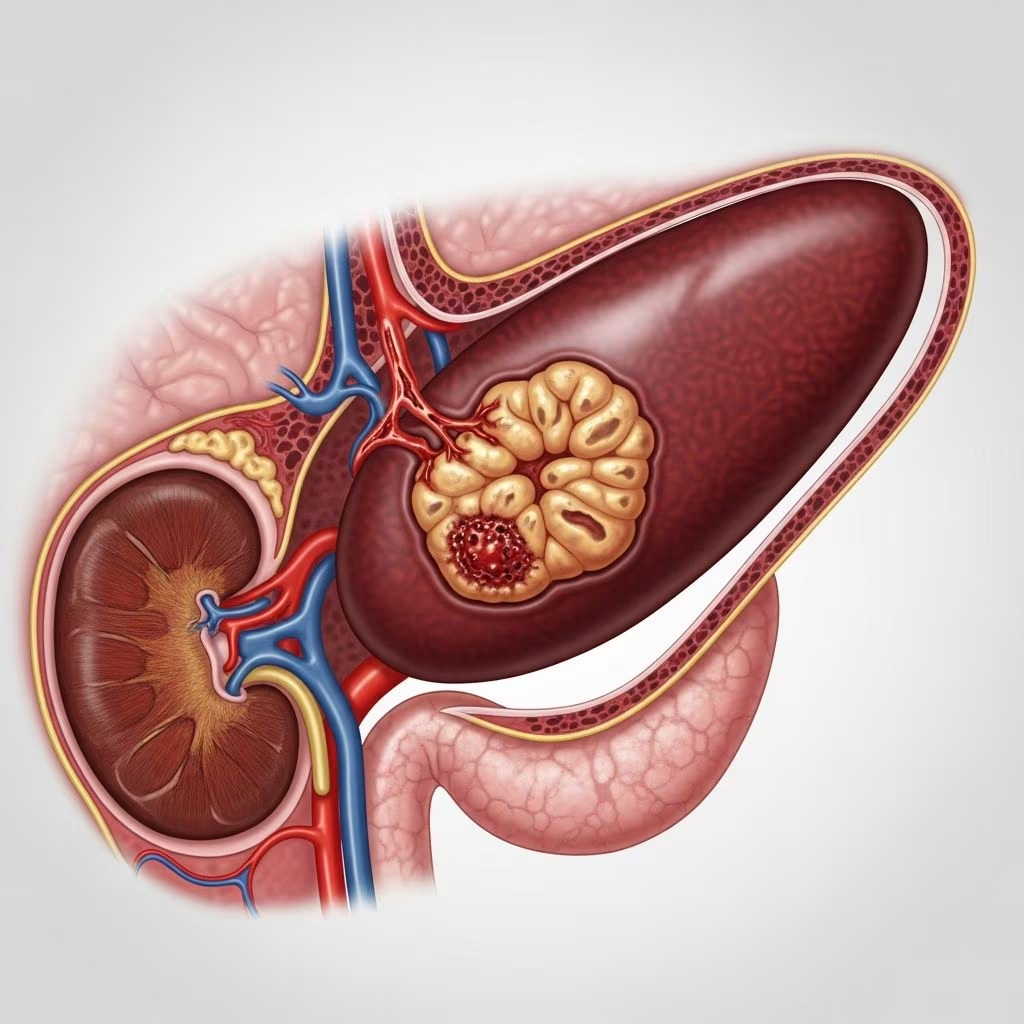
Spleen tumors in dogs, particularly hemangiosarcoma, represent a common and often aggressive form of cancer affecting the spleen, which can lead to life-threatening internal bleeding upon rupture. These tumors frequently occur in middle-aged to older dogs, with breeds like German Shepherds, Golden Retrievers, and Labrador Retrievers at higher risk, presenting suddenly with symptoms such as weakness, collapse, pale gums, and abdominal distension.
What is the spleen and its function?
The spleen is a vital organ located in the upper left abdomen, near the stomach, functioning as a blood filter that removes old or damaged red blood cells, stores blood cells for emergencies, and supports the immune system by producing white blood cells and antibodies. In dogs, it plays a key role in maintaining blood volume during hemorrhage and fighting infections, though dogs can survive without it post-splenectomy with some adaptations.
Despite its importance, the spleen’s functions are somewhat redundant; the liver and bone marrow can compensate after removal, but dogs without a spleen may be more susceptible to certain infections and require lifelong monitoring.
Types of spleen tumors in dogs
Splenic tumors in dogs are classified as benign or malignant. Benign masses, such as hematomas or hyperplastic nodules, account for about one-third of cases and are often curable with surgery. Malignant tumors, primarily hemangiosarcoma (HSA), comprise two-thirds and are highly aggressive, originating from blood vessel cells and prone to rapid metastasis to the liver, lungs, and heart.
- Benign tumors: Hematomas (blood-filled cysts) or nodular hyperplasia; non-cancerous growths that may rupture but do not spread.
- Malignant tumors: Hemangiosarcoma (most common, 50-65% of splenic malignancies), angiosarcoma, fibrosarcoma, or mast cell tumors; HSA is noted for its vascular nature leading to bleeding.
Distinguishing between benign and malignant requires surgical removal and biopsy, as imaging alone cannot reliably differentiate them.
Symptoms of spleen tumors in dogs
Symptoms often arise from tumor rupture causing hemoabdomen (blood accumulation in the abdomen), presenting as acute emergencies. Early non-specific signs include lethargy, weakness, decreased appetite, weight loss, vomiting, and exercise intolerance. Rupture leads to sudden collapse, pale mucous membranes, rapid heart rate, cold limbs, abdominal enlargement, and potentially death if untreated.
- Lethargy or weakness
- Decreased appetite and weight loss
- Sudden collapse or fainting
- Pale gums and tachycardia
- Abdominal distension or bloating
- Cold extremities and heart arrhythmias
- Discolored urine, jaundice, or fever in some cases
These signs mimic other conditions like gastric dilatation-volvulus (GDV), making prompt veterinary evaluation essential.
Causes and risk factors
The exact causes of spleen tumors remain unclear, with no strong links to environmental toxins or diet established. Genetic predisposition plays a role, with higher incidence in large breeds: German Shepherds, Golden Retrievers, Labradors, Boxers, and English Setters. Middle-aged to senior dogs (8-10 years) are most affected, with males slightly overrepresented.
Hemangiosarcoma arises from endothelial cells lining blood vessels, potentially triggered by chronic inflammation or hyperplasia, though evidence is limited.
Diagnosis of spleen tumors
Diagnosis begins with history and physical exam revealing abdominal masses, pale gums, or shock. Bloodwork shows regenerative anemia, elevated white cells, and possible coagulopathies. Imaging includes:
- Abdominal radiographs: Detect masses or abnormal spleen position.
- Ultrasound: Confirms masses, rupture, bleeding, or metastasis; differentiates fluid from solid.
- Chest X-rays: Check for lung metastasis.
- Coagulation tests and CBC/chemistry panels.
Definitive diagnosis requires biopsy post-surgery, as pre-op cytology is unreliable for malignancy.
Treatment options
Emergency stabilization with IV fluids, plasma expanders, or blood transfusions precedes surgery. Splenectomy (complete spleen removal) is the cornerstone, often curative for benign masses and palliative for malignant ones. Partial splenectomy is rare to preserve function.
Surgical procedure: Under general anesthesia, an abdominal incision allows spleen removal using hemostatic staples. The abdomen is explored for metastasis. Post-op, patients receive pain meds, antibiotics, and monitoring.
For hemangiosarcoma, adjuvant chemotherapy (e.g., doxorubicin/Adriamycin every 2-3 weeks for 4-5 treatments) extends survival, with minimal side effects in dogs.
| Treatment | Indication | Expected Outcome |
|---|---|---|
| Splenectomy alone | Benign or unknown masses | Curative for benign; 1-3 months for HSA |
| Splenectomy + Chemo | Malignant, no gross metastasis | 4-9 months median survival; 10-15% at 1 year |
| Palliative care | Advanced metastasis, poor health | Comfort-focused, short survival |
Ongoing trials explore novel therapies like oral maintenance drugs.
Prognosis for spleen tumors
Prognosis hinges on histopathology: benign tumors yield excellent outcomes post-splenectomy. Hemangiosarcoma has guarded prognosis; surgery alone offers 1-3 months, with chemo up to 4-7 months median, influenced by rupture status, metastasis, tumor grade, and age. Early detection improves odds, but most succumb to metastatic bleeding.
- Benign: >90% long-term survival
- HSA stage I (confined to spleen): 9+ months with chemo
- HSA with metastasis: <6 months
Life after splenectomy
Dogs adapt well without a spleen, with the liver assuming filtration duties. Vaccinations against bacteria (e.g., Salmonella, Leptospira) and antibiotics may be recommended for infection-prone dogs. Owners monitor for bleeding tendencies, provide soft diets initially, and restrict exercise for 2 weeks post-op.
Long-term: Annual bloodwork, heartworm prevention, and prompt care for illnesses. Most resume normal activity and quality of life.
Prevention and early detection
No proven prevention exists, but regular vet check-ups for at-risk breeds enable early palpation-detected masses. Home monitoring for lethargy or pale gums prompts quick action. Research into genetic screening and vaccines is ongoing.
Frequently Asked Questions (FAQs)
What are the first signs of a spleen tumor in dogs?
Sudden weakness, collapse, pale gums, and abdominal swelling from rupture; earlier signs include lethargy and appetite loss.
Is splenectomy safe for dogs?
Yes, with proper stabilization; it’s a standard procedure with good recovery rates, though emergencies carry risks.
How long do dogs live after spleen removal for cancer?
1-3 months with surgery alone for HSA; 4-9 months with chemo, varying by stage.
Can dogs live a normal life without a spleen?
Yes, most do with minor adjustments like vaccinations and monitoring.
What breeds are prone to spleen tumors?
Golden Retrievers, German Shepherds, Labradors, Boxers.
References
- Spleen Disease in Dogs: Causes, Symptoms & Treatment — Long Beach Animal Hospital. 2023. https://lbah.com/canine/spleen-disease-hemangiosarcoma-hematoma/
- Spleen Cancer in Dogs — Monte Vista Veterinary. 2024-04-30. https://www.montevistavet.com/site/blog/2024/04/30/spleen-cancer-dogs
- Canine Splenic Hemangiosarcoma — Metro Veterinary. N/A. https://metro-vet.com/canine-splenic-hemangiosarcoma-2/
- Hemangiosarcoma in Dogs — Cornell University College of Veterinary Medicine. N/A. https://www.vet.cornell.edu/departments-centers-and-institutes/riney-canine-health-center/canine-health-information/hemangiosarcoma-dogs
- Tumors of the Spleen in Pets — BluePearl Pet Hospital. N/A. https://bluepearlvet.com/medical-articles-for-pet-owners/cancer-tumors-of-the-spleen/



