

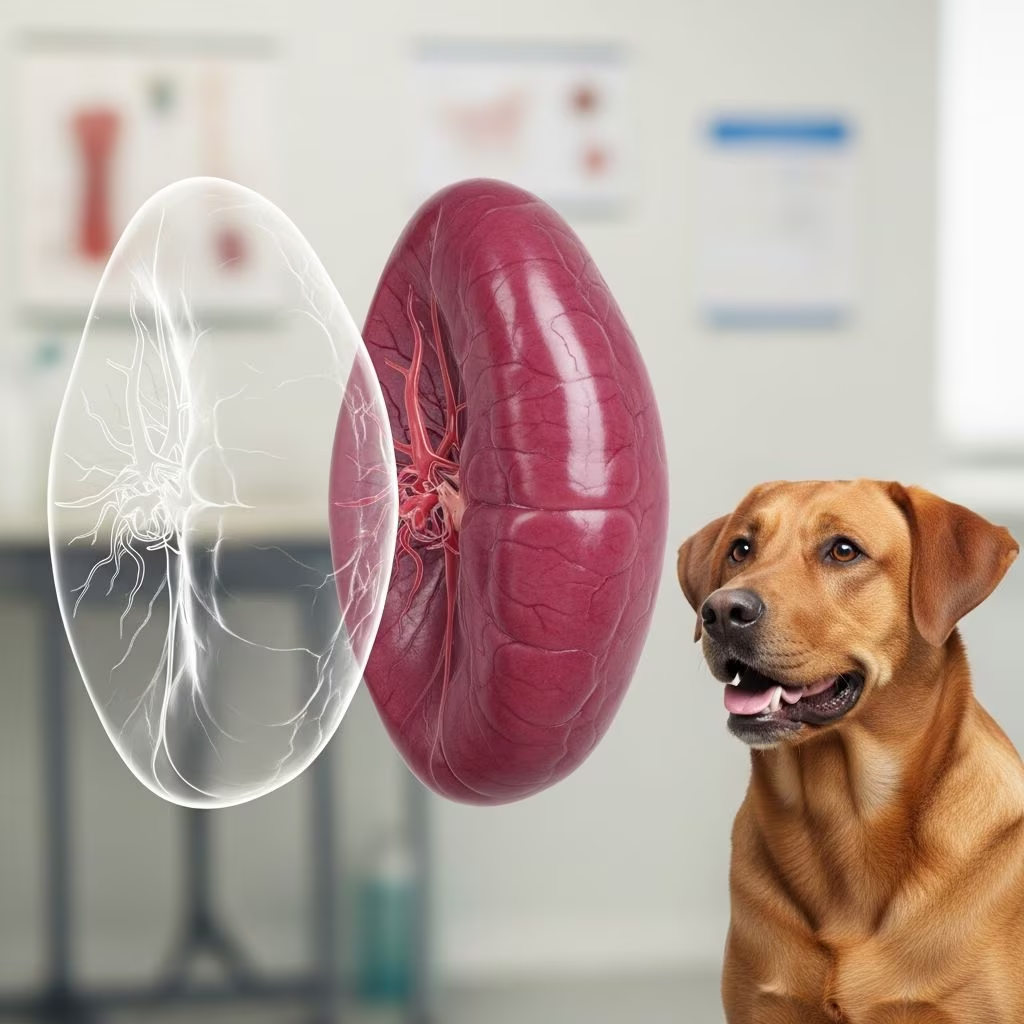
The spleen serves as a multitasking organ in dogs and cats, handling blood management, immune defense, and more, though pets can adapt well without it when necessary.
Anatomy and Placement in Canine and Feline Bodies
In dogs, the spleen appears as an elongated structure nestled in the upper left abdomen, close to the stomach, with its position varying based on the animal’s size, surrounding organ fullness, and overall health status. Blood reaches it via the splenic artery and exits through the splenic vein, both branching from vessels supplying the digestive tract. This setup makes the organ prone to bleeding risks during surgical interventions.
Cats house a similar dark red, oblong spleen near the stomach, integrated into the abdominal cavity where it interacts seamlessly with blood flow and immune tissues. Both species feature a splenic capsule with smooth muscles enabling contraction, crucial for emergency blood release during hemorrhage or shock.
The internal layout divides into red pulp for blood-related tasks and white pulp linked to lymphatic functions, rich in lymphocytes that bolster infection responses.
Core Physiological Contributions to Pet Health
Dogs rely on the spleen as a blood reservoir, storing red blood cells and platelets for rapid deployment in crises like trauma-induced loss. It contracts to pump stored blood into circulation, stabilizing oxygen delivery and clotting.
Filtration stands out as another primary duty: the spleen scans all circulating blood, discarding aged or damaged red cells, trapping bacteria, parasites, and debris. In cases of blood parasites like Babesia, it performs ‘pitting,’ stripping pathogens from cells without fully destroying them, curbing anemia spread.
For cats, the spleen produces red blood cells, stores them alongside platelets, and filters out abnormals, aiding immunity by eliminating germs and foreign proteins. Both pets benefit from its hematopoietic role, especially early in life or during high-demand periods like recovery from illness.
Immunologically, the white pulp acts like a lymph node, housing lymphocytes that mount defenses against invaders, integrating the spleen into broader lymphatic networks.
Disorders Prompting Veterinary Concern
Splenomegaly, or spleen enlargement, affects both dogs and cats across ages and breeds, often stemming from underlying issues rather than primary spleen faults. Triggers include infections, immune glitches, inflammatory gut conditions, abdominal trauma, and neoplasia.
In dogs, large or deep-chested breeds face gastric dilatation-volvulus risks, where stomach twisting impacts splenic vessels, causing congestion and swelling. Hematomas from trauma or coagulopathies, plus benign growths like hemangiomas, contribute to issues.
Cats experience splenomegaly from bacterial invasions, immune disorders, or bowel inflammation. Rupture, termed splenic hemorrhage, arises from tumors, torsion, or blunt force like vehicular impacts or fights, leading to slow or acute bleeds.
| Condition | Dogs | Cats |
|---|---|---|
| Splenomegaly Causes | Infections, anemia, drugs, immune disorders | Bacterial, immune, IBD, trauma |
| Tumor Types | Hemangiosarcoma, mast cell, lymphoma | Hemangiosarcoma, others unspecified |
| Emergency Signs | Abdominal pain, weakness, pallor | Lethargy, collapse, pale gums |
Malignant Threats: Cancer of the Spleen
Hemangiosarcoma dominates canine splenic cancers, striking middle-aged to senior large breeds, often causing sudden death via rupture. Symptoms mimic other issues: appetite loss, weight drop, vomiting, weakness, pale mucous membranes, incoordination, or seizures.
Cats face similar risks, though less documented, with progression shortening lifespans if untreated. Other malignancies like mast cell tumors, myeloma, or lymphosarcoma appear in dogs, demanding prompt diagnostics.
Diagnostic Approaches for Splenic Abnormalities
Veterinarians start with blood work: complete counts, smears for parasites or blasts, and infection screens. Imaging via radiographs reveals size and shape shifts; ultrasound pinpoints masses, enabling fine-needle aspirates for cytology or biopsy.
Exploratory laparotomy confirms diagnoses, allowing immediate splenectomy if viable. Bone marrow checks assess broader blood production impacts.
- Ultrasound-guided sampling minimizes invasiveness.
- Cultures detect hidden infections.
- Surgical pathology provides definitive answers.
Splenectomy: Procedure and Immediate Aftercare
When rupture, uncontrollable bleeding, or irreparable damage occurs, splenectomy removes the spleen. Dogs and cats survive without it, as bone marrow compensates for blood production, and liver assumes filtration duties.
Pre-op stabilizes with transfusions, fluids, oxygen, and pain control. Surgery ligates vessels carefully to avert hemorrhage, a top complication. Post-op monitoring tracks vitals, bleeding, and infection for 1-2 weeks.
Recovery timelines: cats often resume normalcy in weeks; dogs may need longer for large-breed healing. Vaccinations against encapsulated bacteria like Salmonella become crucial due to reduced immunity.
Long-Term Management Post-Spleen Removal
Pet owners adjust lifestyles: regular vet check-ups monitor blood parameters, early parasite prevention curbs infections, and diets support clotting with omega-3s or antioxidants.
Prognoses vary by underlying cause—benign masses yield excellent outcomes, while hemangiosarcoma limits survival to months despite removal. Routine exams catch metastases early.
Lifestyle tweaks include avoiding trauma risks, maintaining ideal weights to ease abdominal strain, and watching for pallor or lethargy signaling complications.
Preventive Strategies for Splenic Wellness
Annual wellness exams with abdominal palpation detect enlargements early. Parasite controls for ticks and fleas block Babesia transmission. Balanced nutrition fuels immune vigor, and prompt trauma care prevents ruptures.
Breed-specific awareness aids: German Shepherds and Goldens watch for hemangiosarcoma tendencies.
FAQs on Pet Spleens
Can dogs live normally without a spleen?
Yes, dogs adapt fully, with the liver and marrow handling former splenic tasks, though vaccination updates are advised.
What causes sudden spleen rupture in cats?
Trauma, tumors, or torsion often underlie, presenting as collapse, pale gums, and shock.
Is spleen cancer hereditary in pets?
Not directly, but breed predispositions like in large dogs suggest genetic factors alongside age and environment.
How do I spot splenic issues at home?
Look for abdominal distension, weakness, vomiting, or gum discoloration; seek immediate vet care.
Does splenectomy affect pet lifespan?
Not inherently; outcomes hinge on the reason for surgery, with benign cases yielding normal longevity.
References
- Facts About Your Dog’s Spleen | FirstVet — FirstVet. 2023 (approx.). https://firstvet.com/us/articles/anatomy-and-function-of-your-dogs-spleen
- Learning the Feline Spleen – ASPCA® Pet Health Insurance — ASPCA Pet Health Insurance. 2023 (approx.). https://www.aspcapetinsurance.com/resources/feline-spleen/
- Structure and Function of the Spleen in Dogs – PetPlace.com — PetPlace. 2023 (approx.). https://www.petplace.com/article/dogs/pet-health/structure-and-function-of-the-spleen-in-dogs
- The Spleen: Anatomy and Common Complications – VetFolio — VetFolio. 2023 (approx.). https://www.vetfolio.com/learn/article/the-spleen-anatomy-and-common-complications
- Spleen Cancer in Dogs – PetMD — PetMD. 2023 (approx.). https://www.petmd.com/dog/conditions/cancer/spleen-cancer-dogs



