

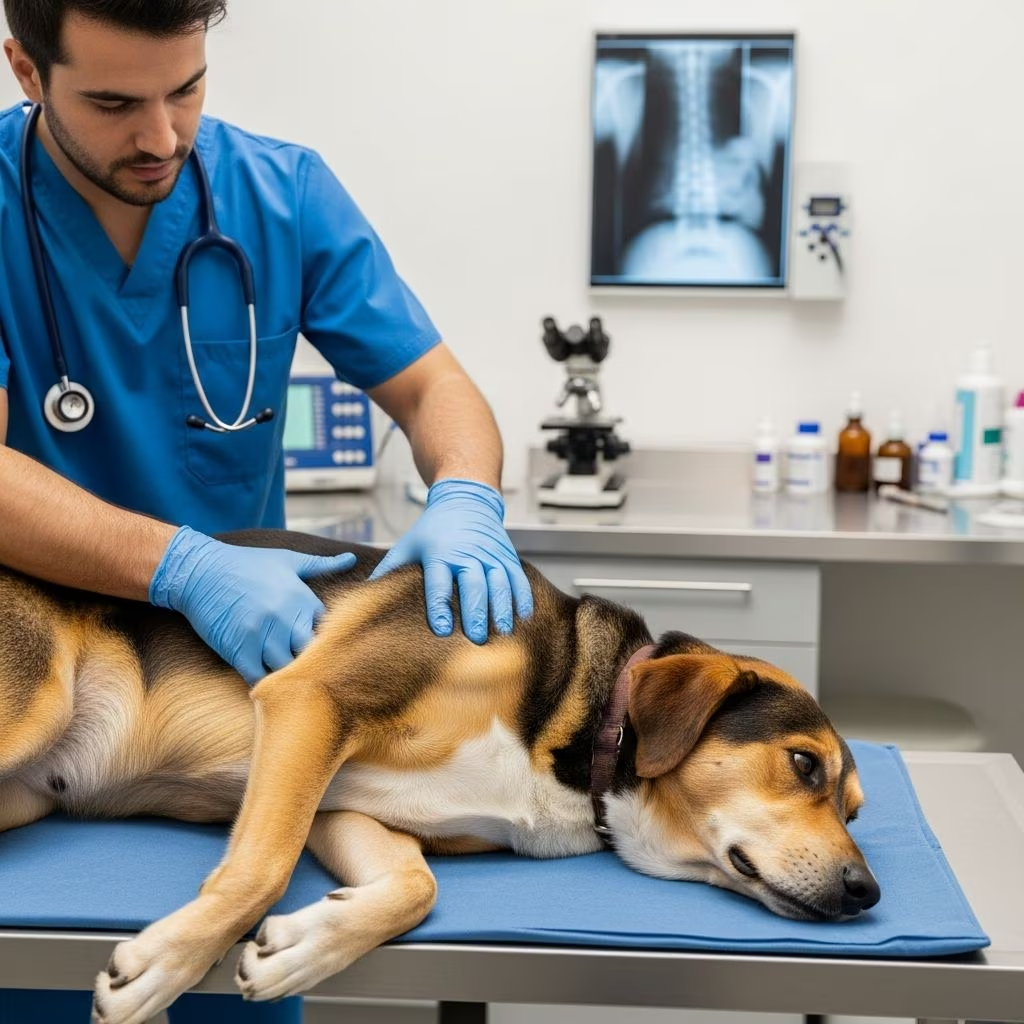
Spinal trauma represents a critical emergency in veterinary medicine, often resulting from accidents or degenerative conditions that compromise the spinal cord and surrounding structures. These injuries can lead to immediate neurological deficits, ranging from mild pain to complete paralysis, affecting pets’ quality of life profoundly. Understanding the mechanisms, rapid identification of symptoms, and timely interventions are essential for improving survival rates and functional recovery in affected animals.
Understanding the Anatomy of the Spine in Pets
The spinal column in animals serves as a protective bony canal for the spinal cord, which transmits signals between the brain and body. In dogs and cats, the cord extends variably: in dogs, it typically ends at the lumbar region, while in cats, it reaches the sacral area, making tail and pelvic injuries particularly devastating. Surrounding vertebrae, ligaments, and intervertebral discs provide stability, but they are vulnerable to high-impact forces or internal pressures.
Key components include the vertebral bodies, which absorb shock; the discs, acting as cushions; and the cord itself, encased in meninges. Disruption here—through fractures, luxations (dislocations), or extrusions—directly impacts motor function, sensation, and autonomic processes like bladder control.
Primary Causes of Spinal Injuries
Spinal trauma arises from two main categories: external mechanical forces and internal pathological events. External causes dominate in high-energy incidents, while internal ones stem from disease progression.
- Traumatic Fractures and Luxations: Common in road traffic accidents (RTAs), falls from heights (especially cats), or gunshot wounds. These often affect the thoracolumbar junction, leading to vertebral instability.
- Intervertebral Disc Disease (IVDD): Prevalent in chondrodystrophic breeds like Dachshunds. Herniation compresses the cord, mimicking trauma.
- Ischemic Myelopathy: Fibrocartilaginous embolism (FCE) blocks spinal blood vessels, causing sudden non-traumatic paresis, more frequent in large dogs.
- Other Factors: Tail-pull injuries in cats causing sacrococcygeal luxations, or aortic thromboembolism mimicking myelopathy.
In cats, RTAs frequently cause tailbase luxations due to traction, damaging the cauda equina and pudendal nerves.
Recognizing Clinical Signs of Spinal Trauma
Symptoms manifest acutely and localize based on lesion site. Upper motor neuron (UMN) signs appear caudal to thoracic lesions, while lower motor neuron (LMN) flaccidity occurs in lumbosacral areas.
| Lesion Location | Key Signs | Examples in Pets |
|---|---|---|
| Cervical | Tetraparesis, Horner syndrome, Schiff-Sherrington posture | Dogs with neck trauma show forelimb dragging |
| Thoracolumbar | Paraplegia, UMN bladder, hyperesthesia | Cats post-RTA with hindlimb paralysis |
| Lumbosacral | LMN paresis, incontinence, tail drag | Tail luxations in cats |
Common indicators include vocalizing on touch, reluctance to ambulate, limb shivering, arched back, or dragging hindquarters. Deep pain absence signals grave prognosis, with recovery under 10% medically.
- Spinal shock: Initial flaccid areflexia resolving in 24-48 hours.
- Schiff-Sherrington: Rigid forelimbs with hind paralysis.
Pathophysiology: From Primary to Secondary Damage
Initial mechanical insult (concussion, contusion, laceration) triggers secondary cascades: vascular disruption impairs perfusion, excitotoxicity from glutamate release, free radicals, and inflammation exacerbate necrosis. Hypotension worsens ischemia, emphasizing systemic stabilization.
In FCE, emboli from disc material occlude vessels, often unilaterally due to asymmetric feline spinal arteries.
Emergency Stabilization and Initial Assessment
Prioritize ABCs: Airway, Breathing, Circulation. Address hypovolemia, hypoxemia, and hypotension immediately, as they amplify secondary injury. Monitor PCV, TP, electrolytes, and blood gases.
- Immobilize spine with tape and splints during transport.
- Perform neurologic exam: gait, postural reactions, reflexes, pain perception.
- Schiff-Sherrington or spinal shock differentiation via cutaneous trunci reflex.
Diagnostic Approaches
Radiography detects 60-70% of fractures; CT/MRI excels for cord compression or subtle luxations. Myelography if advanced imaging unavailable.
- For IVDD: Contrast-enhanced MRI shows extrusion site.
- FCE: Acute onset, no trauma, lateralized signs rule out differentials.
Exclude thromboembolism via pulses, limb temperature.
Treatment Strategies: Conservative vs. Surgical
Management hinges on stability and deficits. Strict cage rest (4-6 weeks) suffices for stable patients with pain sensation.
Medical Therapy:
- Analgesics: Opioids, NSAIDs; avoid steroids post-2009 guidelines.
- Supportive: Bladder expression, slings for ambulation.
Surgical Interventions: Indicated for instability, deep pain loss, or progression. Decompression via hemilaminectomy for IVDD; fixation for fractures. Prognosis improves with surgery in deep pain-negative cases (50-70% recovery vs. 7%).
For tail luxations: Amputation if irreparable, or conservative for mild cases.
Prognosis Factors and Long-Term Outcomes
Recovery depends on injury severity, chronicity, and intervention speed. Deep pain presence predicts 80-90% ambulation; absence halves odds.
- Cats with sacrococcygeal injuries: Variable, from incontinence to full recovery.
- FCE: Often good with supportive care, gradual improvement.
- Chronic cases: Fibrosis limits full return.
Thoracolumbar fractures carry guarded prognosis if UMN; cervical better if stabilized.
Rehabilitation and Home Care
Post-acute phase: Physical therapy enhances neuroplasticity. Hydrotherapy, acupuncture, and controlled exercises rebuild strength.
- Monitor bladder: Manual expression until voluntary.
- Prevent decubital ulcers with padding.
- Nutrition: High-protein diets support repair.
Prevention Tips for Pet Owners
Mitigate risks: Leash walks, window screens for cats, breed-specific screening for IVDD. Early spay/neuter may reduce disc degeneration in predisposed dogs.
Frequently Asked Questions (FAQs)
What should I do if my dog suddenly can’t walk?
Immobilize gently, seek emergency vet care. Do not force movement.
Can cats recover from spinal fractures?
Yes, many do with prompt surgery, especially if pain sensation intact.
Is surgery always needed for IVDD?
No, mild cases respond to rest; severe require decompression.
How long does spinal shock last?
Typically 24-48 hours.
What causes sudden hindlimb weakness without trauma?
Consider FCE or thromboembolism; imaging differentiates.
References
- Acute Spinal Cord Injury in the Cat: Causes, Treatment and Prognosis — Journal of Feline Medicine and Surgery. 2024. https://pmc.ncbi.nlm.nih.gov/articles/PMC10911291/
- Trauma of the Spinal Column and Cord in Animals — Merck Veterinary Manual. 2023. https://www.merckvetmanual.com/nervous-system/diseases-of-the-spinal-column-and-cord/trauma-of-the-spinal-column-and-cord-in-animals
- Spinal Injury in Dogs — Symptoms, Diagnosis, and Treatment — Treendale Veterinary Clinic. 2024. https://www.treendalevet.com.au/blog/spinal-injury-in-dogs/
- Acute Spinal Cord Injuries — Today’s Veterinary Practice. 2023. https://todaysveterinarypractice.com/neurology/acute-spinal-cord-injuries/
- Spinal Cord Injury — BluePearl Pet Hospital. 2024. https://bluepearlvet.com/medical-library-for-dvms/spinal-cord-injury/



