

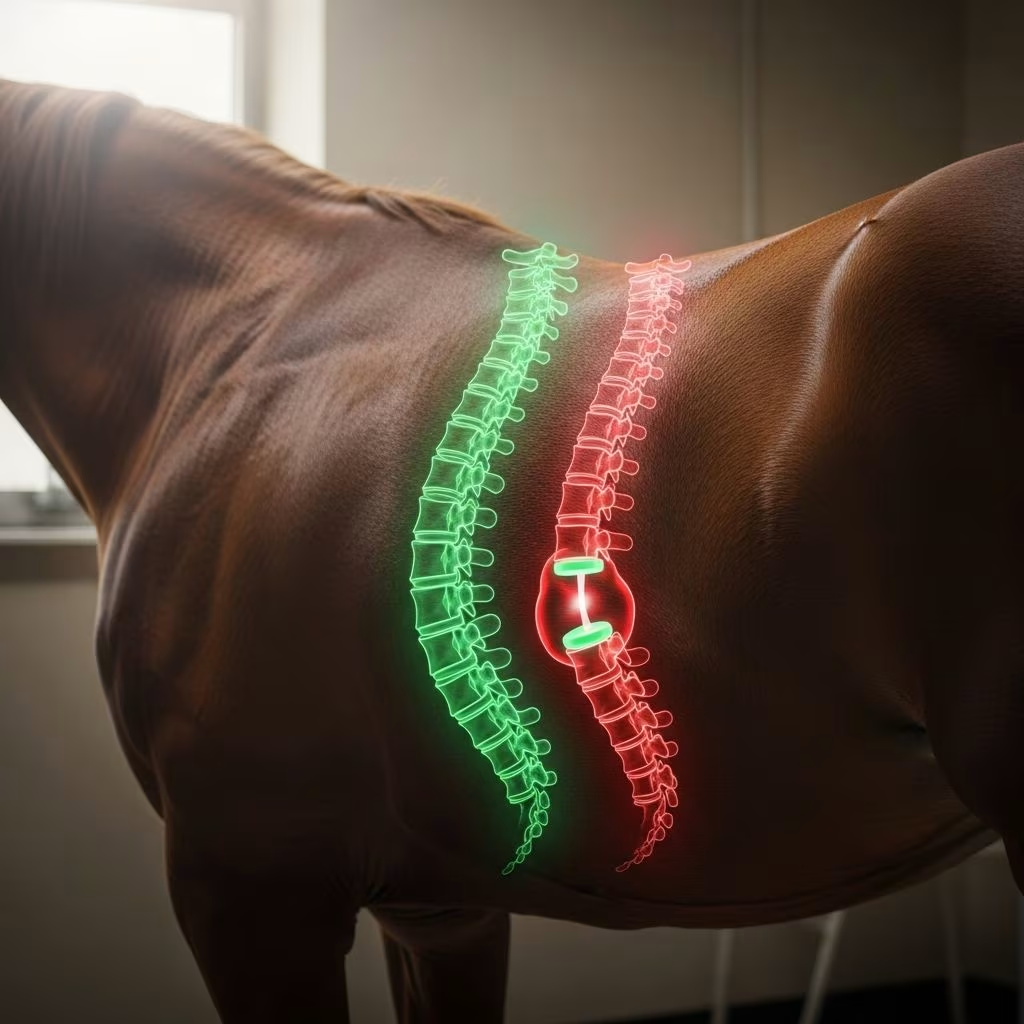
The spinal column and cord are vital for a horse’s mobility, coordination, and overall neurological function. Disorders in these areas can lead to significant challenges, ranging from subtle gait abnormalities to severe paralysis. Understanding these conditions is essential for horse owners, trainers, and veterinarians to enable early detection and intervention.
Understanding the Equine Spine Anatomy
The equine spine consists of vertebrae, intervertebral discs, ligaments, and the spinal cord encased within the vertebral canal. It supports the horse’s weight, facilitates movement, and protects the nervous tissue that transmits signals between the brain and body. Key regions include the cervical (neck), thoracic (mid-back), lumbar (lower back), and sacral areas. Disruptions such as compression, inflammation, or infection can impair nerve function, leading to ataxia (uncoordinated movement), weakness, or pain.
Common Types of Spinal Disorders
Horses can suffer from various spinal issues, each with distinct etiologies. These include developmental malformations, traumatic injuries, infectious processes, and degenerative conditions.
- Cervical Vertebral Compressive Myelopathy (CVCM or Wobbler Syndrome): This developmental disorder often affects young, rapidly growing horses, causing spinal cord compression due to malformed vertebrae or ligaments. It leads to hindlimb ataxia, stumbling, and in severe cases, tetraparesis (weakness in all limbs).
- Kissing Spines Syndrome: Characterized by close approximation or impingement of dorsal spinous processes in the thoracic spine, this condition causes back pain, resistance to flexion, and muscle spasms. It is common in performance horses.
- Traumatic Injuries: Fractures, luxations, or soft tissue damage from falls or kicks can result in acute pain, swelling, and neurological deficits.
- Infectious and Inflammatory Conditions: Bacterial, viral (e.g., equine herpesvirus-1 or EHV-1), fungal, or protozoal infections like equine protozoal myeloencephalitis (EPM) can inflame the spinal cord, causing paresis, urinary incontinence, or tailhead anesthesia.
- Other Issues: Tetanus from Clostridium tetani wounds leads to muscle rigidity and spasms, while rare fungal infections like cryptococcosis affect motor control.
Recognizing Symptoms of Spinal Problems
Early signs vary by disorder location and severity but often involve gait changes. Hindlimb involvement is common in cervical issues, while thoracic problems manifest as back pain.
| Disorder | Key Symptoms | Affected Region |
|---|---|---|
| CVCM/Wobbler | Uncoordinated gait, toe dragging, neck stiffness, falls | Cervical spine |
| Kissing Spines | Back pain on palpation, hollow back, reluctance to work | Thoracic spine |
| Trauma | Sudden lameness, muscle spasms, inability to stand | Any |
| EPM/EHV-1 | Asymmetric ataxia, muscle atrophy, urine dribbling | Spinal cord |
| Tetanus | Stiff gait, lockjaw, opisthotonos (head back arch) | Generalized |
Owners should note subtle changes like wide-based stance or circumduction (swinging limbs). Pain signs include flinching on palpation, especially over the poll, withers, or spinous processes.
Diagnostic Approaches for Equine Spinal Issues
Accurate diagnosis requires a systematic veterinary evaluation. Initial steps include a full neurological exam assessing proprioception, reflexes, and muscle tone. Advanced imaging is crucial.
- Imaging: Radiographs reveal vertebral malformations or fractures; myelography (contrast dye in spinal canal) identifies cord compression sites; CT/MRI provide detailed views.
- Laboratory Tests: Cerebrospinal fluid (CSF) analysis detects inflammation or infection; serology for EPM or EHV-1.
- Other Tools: Bone scans for stress fractures, ultrasound for soft tissues, and dynamic endoscopy for neck flexion tests in wobblers.
For kissing spines, high-definition radiographs confirm spinous process overlap.
Treatment Strategies for Spinal Disorders
Treatment is tailored to the cause, severity, and horse’s age. Conservative management is preferred initially, escalating to surgery if needed.
Medical and Supportive Care
Anti-inflammatories and Pain Relief: NSAIDs reduce swelling; corticosteroids or hyaluronic acid injections target joint inflammation in CVCM or kissing spines.
Controlled Management for Young Horses: Diet restriction (low protein/carbs) and stall rest promote proper vertebral growth in foals under 1 year.
Antimicrobials: Antibiotics for bacterial infections; acyclovir (controversial efficacy) for EHV-1; fluconazole for cryptococcosis.
Other Drugs: DMSO, diuretics for edema; muscle relaxants like methocarbamol post-surgery; bisphosphonates (e.g., tiludronate) for bone remodeling.
Advanced Therapies
- Physical Rehabilitation: Core strengthening exercises, controlled exercise improve flexibility and prevent atrophy.
- Shock Wave and Laser Therapy: Extracorporeal shock waves stimulate healing; low-level laser reduces inflammation non-invasively.
- Acupuncture and Mesotherapy: Targeted injections into skin/muscle layers alleviate pain.
- Red Light Therapy: Promotes cellular repair and pain relief in kissing spines.
Surgical Interventions
Surgery is indicated for refractory cases. For CVCM, ventral fusion stabilizes malformed vertebrae; kissing spines may require interspinous ligament desmotomy or spinous process resection.
Trauma fractures may need fixation or fusion. Success rates vary: young CVCM horses have better outcomes (up to 80% return to work if mild).
Prognosis and Long-Term Management
Prognosis depends on early intervention. Mild CVCM cases in young horses often stabilize; severe or chronic cases may limit performance. Kissing spines horses frequently return to work with multimodal therapy. Infectious cases like EPM recover in many with treatment, though residuals persist.
Long-term care includes regular vet checks, vitamin E supplementation for neuroprotection, varied exercise surfaces, and weight monitoring.
Prevention Tips for Spinal Health
No foolproof prevention exists, but strategies reduce risk:
- Maintain optimal nutrition, avoiding rapid growth in weanlings.
- Ensure proper saddle fit and rider technique to minimize back strain.
- Vaccinate against EHV-1 and control opossum access for EPM prevention.
- Promote fitness with varied terrain and core exercises.
- Prompt wound care prevents tetanus.
Frequently Asked Questions (FAQs)
What causes wobbler syndrome in horses?
Primarily developmental vertebral instability or stenosis compressing the spinal cord, especially in fast-growing young horses.
Can horses recover from kissing spines?
Yes, with treatments like shock wave therapy, surgery, and rehab, many regain full athletic function.
How do I know if my horse has a spinal problem?
Look for ataxia, back pain on touch, gait asymmetry, or reluctance to bend; consult a vet for neuro exam.
Is surgery always needed for spinal disorders?
No, medical therapy and rehab suffice for many; surgery for structural issues unresponsive to conservatives.
Can spinal issues affect a horse’s performance?
Yes, but early treatment often allows return to prior levels, though some retire.
References
- Cervical Vertebral Compressive Myelopathy (CVCM) — UC Davis Center for Equine Health. Accessed 2026. https://ceh.vetmed.ucdavis.edu/health-topics/cervical-vertebral-compressive-myelopathy-cvcm
- Equine Spinal Health: A Comprehensive Guide to Understanding Kissing Spine — Poll to Pastern. Accessed 2026. https://www.polltopastern.com/post/equine-kissing-spine-causes-symptoms-and-treatment
- Disorders of the Spine in Horses — Vetster. Accessed 2026. https://vetster.com/en/conditions/horse/disorders-of-the-spine
- Equine Wobbler Syndrome: Causes, Signs, Diagnosis & Treatment — Mad Barn. Accessed 2026. https://madbarn.com/equine-wobbler-syndrome/
- Disorders of the Spinal Column and Cord in Horses — Merck Veterinary Manual. Accessed 2026. https://www.merckvetmanual.com/horse-owners/brain-spinal-cord-and-nerve-disorders-of-horses/disorders-of-the-spinal-column-and-cord-in-horses
- Equine Cervical Pain and Dysfunction: Pathology, Diagnosis, Management — PMC (NCBI). 2021-02-28. https://pmc.ncbi.nlm.nih.gov/articles/PMC7915466/



