

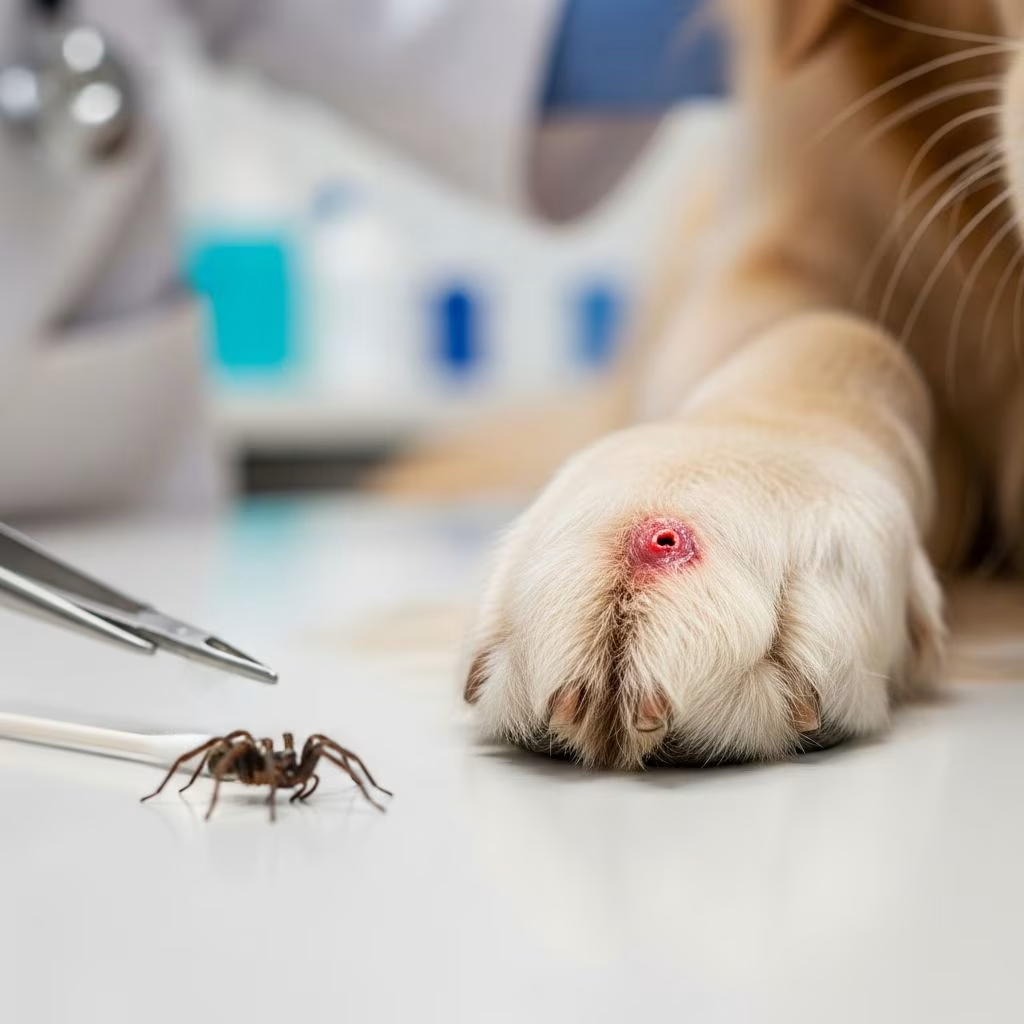
Spider Bites on Dogs and Cats: Symptoms and Treatment
Spider bites are a concern for pet owners, especially during warmer months when spiders are most active. While most spider species are harmless to pets, certain venomous spiders can cause serious complications. Understanding how to identify, treat, and prevent spider bites is essential for keeping your dog or cat safe and healthy.
Understanding Spider Bites in Pets
The majority of spider bites are relatively harmless and cause minimal discomfort to dogs and cats. However, certain species of venomous spiders, particularly the black widow and brown recluse, can deliver venom that poses significant health risks. The severity of a spider bite depends on several factors, including the type of spider, the amount of venom injected, and the pet’s individual sensitivity to the venom. Prompt veterinary care is crucial when a venomous spider bite is suspected, as timely intervention can prevent serious complications.
Types of Venomous Spiders
Two spider species pose the greatest threat to pets: the black widow spider and the brown recluse spider. Each has distinct characteristics and produces different effects when they bite.
Black Widow Spider
Black widow spiders are easily identifiable by their glossy black bodies and distinctive red hourglass marking on their abdomens. These spiders contain potent neurotoxins that affect the nervous system of pets. Black widow spiders typically inhabit dark, undisturbed areas such as sheds, garages, and wood piles. They are generally not aggressive and only bite when they feel threatened or when their eggs are threatened.
Brown Recluse Spider
Brown recluse spiders are characterized by a violin-shaped marking on their backs, earning them the alternative name “violin spider.” These spiders prefer quiet, undisturbed areas like closets, attics, and basements. Brown recluse spiders typically need to be agitated or feel threatened before they bite, and they do not actively seek out prey or pets. Their venom contains enzymes that cause tissue damage at the bite site.
Symptoms of Spider Bites in Dogs and Cats
Recognizing the signs of a spider bite is the first step in getting your pet appropriate treatment. Symptoms can range from mild local reactions to severe systemic complications, depending on the spider species and the amount of venom injected.
Local Symptoms
Local symptoms appear directly at the bite site and are often the first noticeable signs:
– Swelling and redness around the bite area- Pain or tenderness at the bite site- Itching or irritation- Hair loss around the affected area- Blistering in more severe cases- A characteristic “target” or “bull’s-eye” lesion, particularly with brown recluse bites- Bruising around the wound
Symptoms Specific to Black Widow Bites
Black widow bites initially cause moderate pain with mild redness or swelling. However, within hours, more severe systemic symptoms typically develop:
– Severe muscle pain and cramping- Tremors and muscle spasms- Difficulty breathing- Vomiting and diarrhea- Agitation and restlessness- Muscle rigidity- Rapid heart rate and elevated respiratory rate- Abdominal pain- Seizures in severe cases- Paralysis in extreme cases
Symptoms Specific to Brown Recluse Bites
Brown recluse bites often present differently from black widow bites. Initial bites may be painless or cause minimal discomfort, but distinctive characteristics develop over time:
– Red mark or blister at the bite site- White blister surrounded by redness- Progressive tissue necrosis (blackening of tissue)- Development of a “bull’s-eye” or target lesion- Limping or reluctance to put pressure on the affected area- In severe cases: bleeding, seizures, or respiratory collapse
General Systemic Symptoms
When spider venom affects more than just the local bite area, pets may experience systemic illness:
– Fever- Lethargy and weakness- Loss of appetite- Vomiting or diarrhea- Tremors or seizures- Difficulty breathing- Increased heart rate and blood pressure
When to Seek Veterinary Care
If you witness your dog or cat being bitten by a spider, or if you suspect a spider bite based on symptoms, seek immediate veterinary attention. This is especially important if:
– You identified the spider as a black widow or brown recluse- Your pet shows signs of systemic illness- The bite site shows signs of severe inflammation or tissue damage- Your pet experiences muscle tremors, difficulty breathing, or seizures- The bite site becomes infected or fails to improve- Your pet was bitten after hours and requires emergency care
Diagnosis of Spider Bites
If you see the spider that bit your pet, capturing it in a jar for identification is extremely helpful. This allows your veterinarian to quickly identify the spider species and determine appropriate treatment protocols. If you cannot safely capture the spider, photographing it from a distance is an alternative. If the spider is not identified, your veterinarian will base diagnosis on the appearance of the bite site, the pattern of symptoms, and your pet’s clinical presentation.
Treatment Options for Spider Bites
Treatment approaches vary significantly depending on the type of spider that delivered the bite. The goal of treatment is to manage pain, prevent complications, and support your pet’s recovery.
Black Widow Spider Bite Treatment
Black widow spider bites can be treated with an antivenin, which is a specific antidote to the venom. When administered intravenously (IV), the antivenin typically resolves signs of envenomation within approximately 30 minutes. However, antivenin is not readily available at most veterinary clinics and carries a risk of severe anaphylactic reactions in some dogs and cats. For this reason, antivenin is typically reserved for the most severely affected animals.
When antivenin is not used or unavailable, treatment focuses on supportive care:
– Pain medications to manage discomfort- Muscle relaxers to reduce cramping and tremors- IV fluids to maintain hydration and organ function- Anti-nausea medications- Medications to control seizures if they develop- Hospitalization for monitoring, typically lasting 2-3 days
Complete recovery from a black widow spider bite may take several weeks, particularly if antivenin was unavailable.
Brown Recluse Spider Bite Treatment
Unfortunately, no antivenin is available in the United States for brown recluse spider bites. Treatment therefore focuses on supportive care and wound management:
– Regular wound cleaning to prevent infection- Cool compresses applied to reduce swelling and inflammation- Immobilization of the affected area using bandages- Pain relief medications- Antibiotics if secondary infection develops- Early administration of Dapsone (a specific medication) if diagnosed early, as it can reduce tissue death- Surgical wound debridement (removal of dead tissue) in severe cases- Blood transfusions in cases of significant blood loss
Most brown recluse spider bites heal within 1-8 weeks. Systemic complications or death are rare, though severe cases may result in permanent scarring or require surgical intervention.
Treatment for Non-Venomous Spider Bites
For bites from common, non-venomous spiders, home care and supportive treatment are usually sufficient:
– Ice packs to reduce swelling and inflammation- Wound cleaning with soap and water- Baking soda and water paste application- Prevention of excessive licking or scratching- Antibiotics if infection develops- Pain medication if necessary
Most non-venomous bites heal within 3 weeks or less.
Prevention of Spider Bites
Preventing spider encounters is more effective than treating bites after they occur. Consider the following prevention strategies:
– Avoid allowing unsupervised access to areas where spiders commonly build webs, such as woodpiles, sheds, and dark storage areas- Regularly inspect and clean closets, basements, and attics where brown recluse spiders may hide- Seal cracks and gaps around doors and windows to prevent spider entry- Remove spider webs and egg sacs when found- Use pest control measures if spider populations are problematic in your area- Keep your yard well-maintained and remove debris where spiders may hide- When handling items stored in dark areas, wear gloves and inspect items before bringing them indoors- Teach children not to handle spiders or attempt to provoke them
Frequently Asked Questions About Spider Bites
Q: How can I tell if my pet has been bitten by a venomous spider versus a non-venomous spider?
A: Non-venomous spider bites typically cause minor local symptoms like itching, redness, and slight swelling that resolve quickly. Venomous spider bites, particularly from black widows and brown recluse spiders, cause more severe local reactions and systemic symptoms. Black widow bites lead to muscle pain and cramping, while brown recluse bites develop distinctive bull’s-eye lesions with tissue necrosis. If you’re uncertain, seek veterinary evaluation.
Q: Is there an antidote for all spider bites?
A: No. Antivenin is available for black widow spider bites but is not widely stocked by veterinary clinics and can cause allergic reactions. No antivenin exists for brown recluse spider bites in the United States. Treatment for brown recluse bites focuses on supportive care and wound management instead.
Q: How long does it take for a spider bite to heal?
A: Healing time varies depending on the spider species and severity of the bite. Non-venomous spider bites typically heal within 3 weeks or less. Brown recluse bites generally heal within 1-8 weeks. Black widow bites may take several weeks to fully recover, particularly if antivenin was not administered.
Q: Can I treat my pet’s spider bite at home?
A: For minor, non-venomous bites, home care such as ice packs, gentle cleaning, and preventing excessive licking may be sufficient. However, if there’s any possibility the spider was venomous, or if your pet shows systemic symptoms, seek immediate veterinary care. Your veterinarian must assess the bite to rule out serious complications.
Q: What should I do if I see my pet being bitten by a spider?
A: If you witness a spider bite, try to capture or photograph the spider for identification purposes while keeping yourself safe. Then immediately transport your pet to the nearest veterinary clinic for assessment and treatment. Prompt veterinary intervention is crucial for managing pain, administering fluids, antibiotics, and potentially administering antivenin if appropriate.
Q: Are some pets more susceptible to spider bite complications?
A: Individual sensitivity to spider venom varies among pets. Smaller animals may experience more severe systemic effects from the same amount of venom compared to larger animals. Puppies, kittens, senior pets, and those with compromised immune systems may be at higher risk for complications.
References
- Spider Bites — VCA Animal Hospitals. 2025. https://vcahospitals.com/know-your-pet/spider-bites
- Brown Recluse Spider Bite Poisoning (Loxoscelism) in Dogs — Vetster. 2025. https://vetster.com/en/conditions/dog/brown-recluse-spider-bite-poisoning-loxoscelism
- Black Widow Spider Bite Poisoning in Dogs — PetMD. 2025. https://www.petmd.com/black-widow-spider-bite-poisoning-dogs
- What to Do if a Spider Bites Your Dog and How to Identify Them — American Kennel Club. 2025. https://www.akc.org/expert-advice/health/spider-bite-dog/
- Untangling The Web: How To Handle Spider Bites In Pets — Texas A&M AgriLife. August 2024. https://stories.tamu.edu/news/2024/08/22/untangling-the-web-how-to-handle-spider-bites-in-pets/
- Spider Bites on Dogs – Southwest Florida Veterinary Specialists — Southwest Florida Veterinary Specialists. July 2024. https://www.swfvs.com/site/blog/2024/07/15/spider-bites-on-dogs



