

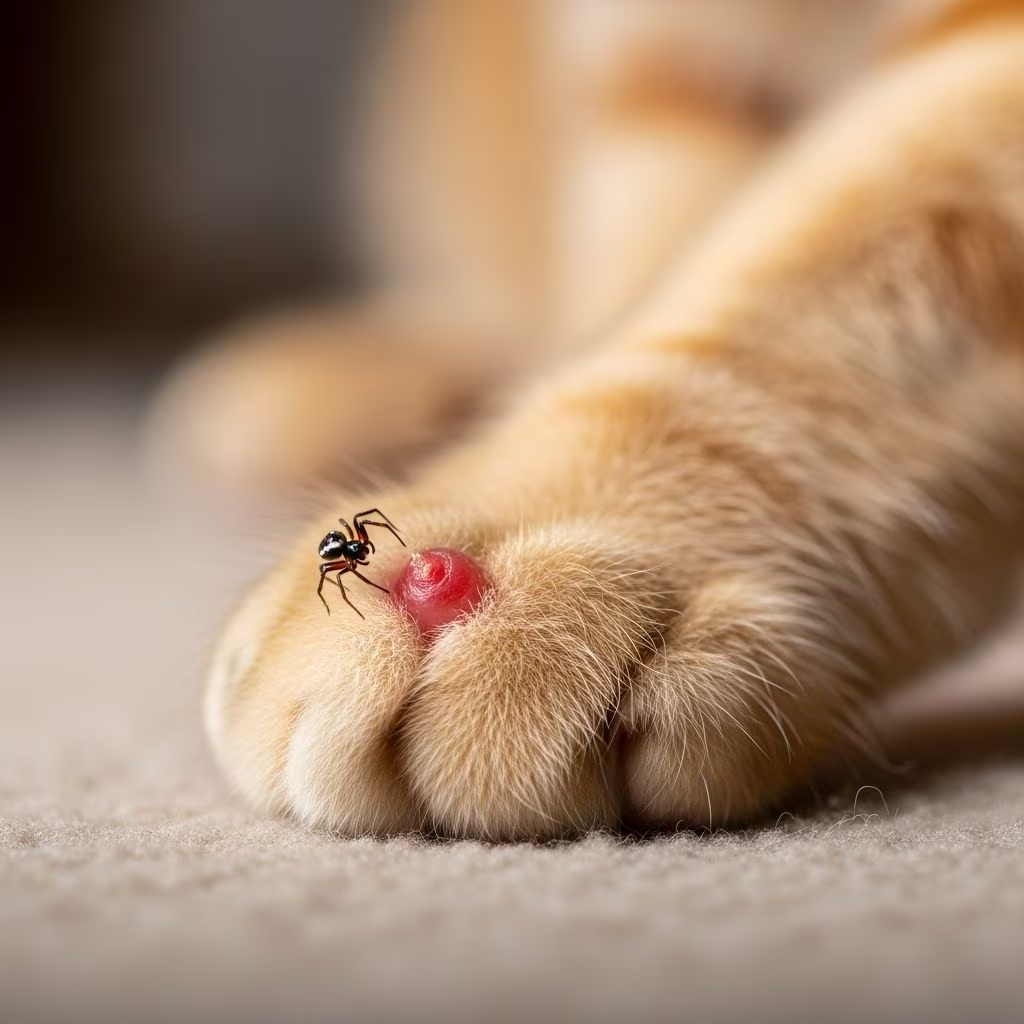
Spider bites on cats can range from mild irritations to serious medical emergencies, especially from venomous species. Quick identification and appropriate remedies are crucial to prevent complications like tissue damage or systemic illness. This guide covers symptoms, dangerous spiders, home treatments, and professional care to help your cat recover safely.
Can Spiders Bite Cats?
Yes, spiders can and do bite cats, though most bites are harmless and cause only localized reactions. Cats’ curious nature leads them to paw at or ingest spiders, increasing bite risk. Non-venomous bites typically result in minor swelling or itching that resolves quickly, but venomous spiders like the black widow or brown recluse pose greater threats due to their potent neurotoxins or necrotic venom.
Understanding bite mechanics helps: spiders inject venom through fangs when threatened. Cats may not show immediate signs, delaying detection. Indoor cats face lower risk, but basements, garages, or woodpiles harbor spiders that can hitchhike indoors.
How Do You Know If a Spider Bit Your Cat?
Recognizing a spider bite early is vital. Look for these common signs:
- Swelling and redness at the bite site, often on paws, face, or legs.
- Sores or puncture marks, sometimes with a bull’s-eye appearance.
- Intense scratching or licking at the area.
- Fever or chills, indicated by lethargy or shivering.
- Drooling, vomiting, or diarrhea in venomous cases.
- Muscle weakness, tremors, or labored breathing signaling systemic effects.
- Behavioral changes like excitability, agitation, or collapse.
Symptoms vary by spider type and cat’s health. Kittens, seniors, or immunocompromised cats react more severely. Monitor for 24-48 hours post-exposure.
What Spiders Are Dangerous to Cats?
While most spiders pose minimal threat, two species are particularly dangerous to cats in certain regions:
The Black Widow
Black widows (Latrodectus spp.) have a shiny black body with a red hourglass marking. Their neurotoxic venom causes intense pain, muscle cramping, and abdominal rigidity. Cats bitten may drool, vomit, tremble, or show respiratory distress within hours. Fatalities are rare in cats due to smaller body size requiring less venom, but prompt treatment is essential.
The Brown Recluse (Fiddleback)
Brown recluses (Loxosceles reclusa) feature a violin-shaped mark on their cephalothorax. Their venom is cytotoxic, leading to tissue necrosis. Bites start with pain, itching, and a blister forming a bull’s-eye lesion. Over days, the center blackens, and surrounding tissue dies, potentially causing deep ulcers. Systemic symptoms like fever, nausea, or hemolysis are less common in cats but possible.
| Spider Type | Venom Effect | Key Symptoms in Cats | Geographic Range |
|---|---|---|---|
| Black Widow | Neurotoxic | Muscle pain, vomiting, tremors, rigidity | Widespread in US, esp. South/West |
| Brown Recluse | Cytotoxic/Necrotic | Blister, ulcer, fever, tissue death | Midwest/South US |
What Should You Do if You Think a Spider Has Bitten Your Cat?
Act swiftly but calmly. First, isolate your cat to prevent further irritation. If the spider is visible, safely capture it for identification without risking your own bite. Clean the site gently with mild soap and water or sterile saline to remove debris.
Apply a cold compress wrapped in a towel for 10-15 minutes to reduce swelling and numb pain—never directly on skin. Monitor closely; if symptoms worsen (e.g., breathing issues, collapse), rush to an emergency vet.
Do not attempt to suck out venom or use tourniquets—these are ineffective and harmful. Avoid human medications like ibuprofen, toxic to cats.
4 Home Remedies for a Spider Bite on Your Cat
For mild bites, these vet-approved home remedies can provide relief while awaiting professional advice. Always consult your vet first, especially for venomous suspects.
1. Clean the Area
Gently wash the bite with diluted antiseptic or saline solution using a soft cloth. This prevents infection and removes venom residue. Pat dry and observe for pus or worsening redness.
2. Cold Compress
A cold pack numbs pain, constricts blood vessels to limit venom spread, and reduces swelling. Apply for 10 minutes every hour, ensuring your cat tolerates it. Use frozen peas wrapped in a towel for flexibility.
3. Elizabethan Collar (Cone)
Prevent scratching or licking, which exacerbates damage. A soft cone allows comfort while protecting the site. Recovery from mild bites takes 1-2 weeks with this barrier.
4. Monitor and Benadryl (Vet-Dosed)
If approved by your vet, diphenhydramine (Benadryl) at 1mg/lb every 8-12 hours combats itching and mild allergic reactions. Never exceed dosage; overdose causes sedation or seizures.
These remedies suit non-venomous or early mild bites. For severe cases, home care is insufficient.
Treatment for Spider Bites
Veterinary intervention is mandatory for suspected venomous bites. Diagnosis involves history, exam, bloodwork, and sometimes biopsy. Treatment is supportive:
- Cleaning and wound care: Debridement of necrotic tissue, bandages.
- Pain management: Opioids, NSAIDs, muscle relaxants like methocarbamol.
- Antihistamines and steroids: For inflammation and itching.
- IV fluids: Hydration and toxin flushing.
- Antibiotics: Prevent secondary infections.
- Black widow specifics: Antivenin if available, resolves symptoms in 30 minutes.
- Brown recluse specifics: Dapsone for necrosis, possible skin grafts; no antivenin.
Recovery timelines: Mild bites, 1 week; black widow, days to weeks; brown recluse, up to 8 weeks with ulcers. Hospitalization may be needed for severe cases.
How to Prevent Spider Bites on Cats
Prevention beats treatment. Key strategies:
- Seal cracks, use weatherstripping on doors/windows.
- Reduce clutter in garages/attics; vacuum regularly.
- Store firewood outside, away from home.
- Use pet-safe pest control; avoid toxic sprays near cats.
- Supervise outdoor time; keep indoor-only if possible.
- Shake out bedding, toys before use.
Professional pest services target spider hotspots without endangering pets.
Frequently Asked Questions (FAQs)
What does a spider bite look like on a cat?
Typically two small red punctures with swelling, redness, or a blister. Bull’s-eye lesions suggest brown recluse.
Are spider bites dangerous for cats?
Most are not, but black widow and brown recluse bites can cause severe pain, necrosis, or systemic issues requiring vet care.
How long does it take for a cat to recover from a spider bite?
Mild: 3-7 days. Venomous: 1-8 weeks, depending on treatment speed and severity.
Can I give my cat Benadryl for a spider bite?
Yes, at vet-recommended dose (1mg/lb), but only for mild reactions; call first.
Do all cats need to go to the vet for spider bites?
No, mild local symptoms may resolve with home care, but any systemic signs demand immediate veterinary attention.
References
- Identifying and Treating Bug Bites in Cats — Just Cats Clinic. 2023-05-15. https://justcatsclinic.com/identifying-and-treating-bug-bites-in-cats/
- Brown Recluse Spider Bite Poisoning in Cats — PetMD. 2024-02-10. https://www.petmd.com/cat/poisoning/brown-recluse-spider-bite-poisoning-cats
- Spider Bites — VCA Animal Hospitals. 2023-11-20. https://vcahospitals.com/know-your-pet/spider-bites
- Spider and Scorpion Bites in Animals — Merck Veterinary Manual. 2025-01-05. https://www.merckvetmanual.com/toxicology/venomous-arthropods/spider-and-scorpion-bites-in-animals
- Brown Recluse Spider Bites in Cats — Vetster. 2024-07-12. https://vetster.com/en/conditions/cat/brown-recluse-spider-bites-in-cats
- Spider Bites — VCA Animal Hospitals (supplemental). 2023-11-20. https://vcahospitals.com/know-your-pet/spider-bites



