

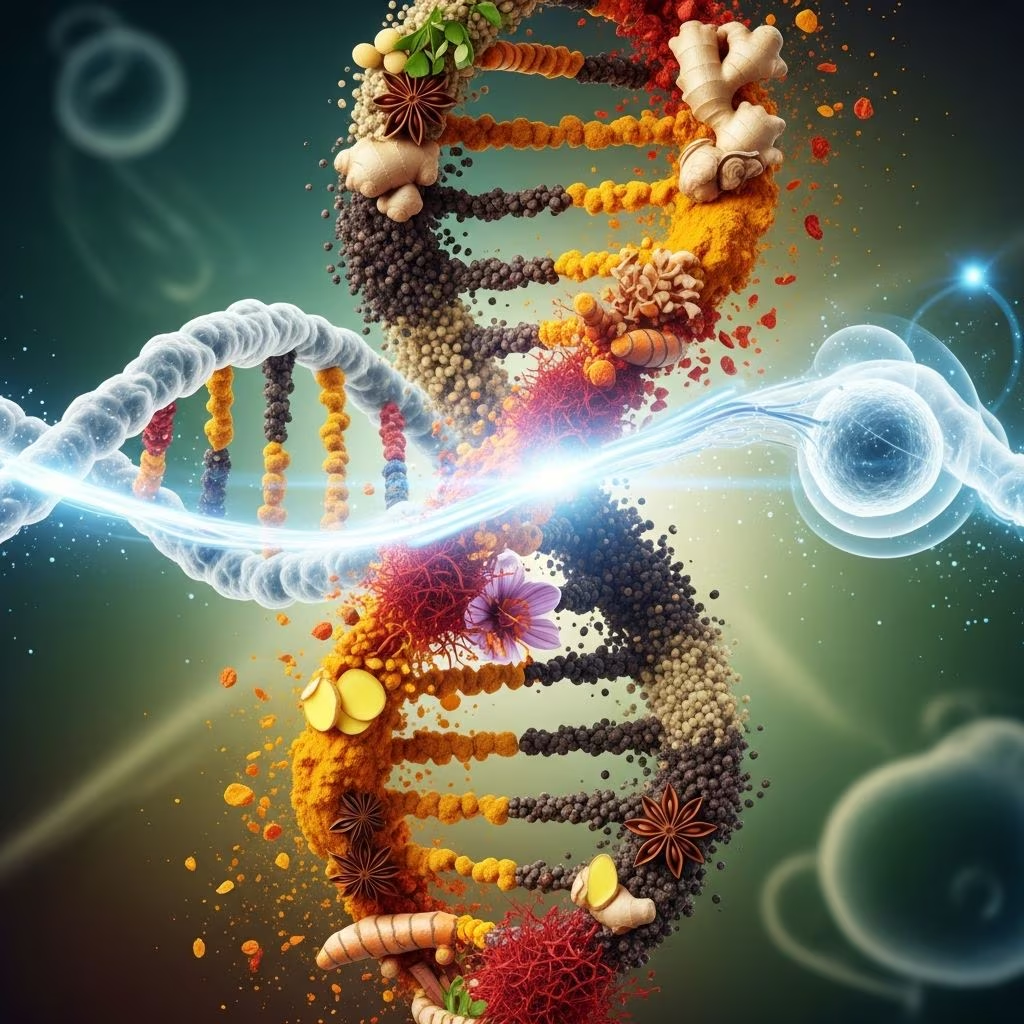
Everyday kitchen staples like turmeric, ginger, garlic, and cinnamon are emerging as powerful allies in the fight against cancer, leveraging their bioactive compounds to enhance prevention, reduce inflammation, and support advanced treatments. Recent 2026 breakthroughs in targeted therapies and immunotherapy underscore the potential of these natural agents to amplify clinical outcomes.
The Science Behind Spices and Cancer Prevention
Spices have long been valued in traditional medicine for their health-promoting properties, but modern research reveals their molecular mechanisms in thwarting cancer development. Compounds in these spices target key pathways involved in cell proliferation, apoptosis, and oxidative stress, offering a natural complement to pharmaceutical interventions.
- Turmeric’s Curcumin: This yellow pigment inhibits NF-κB signaling, a pathway often hijacked by cancer cells to evade death.
- Ginger’s Gingerol: Activates antioxidant enzymes, protecting DNA from damage that leads to mutations.
- Garlic’s Allicin: Disrupts tumor angiogenesis, starving cancers of blood supply.
Integrating these into diets may lower risk for cancers like colorectal and breast, aligning with 2026 emphases on early detection and prevention.
Enhancing Immunotherapy with Spice-Derived Compounds
As immunotherapy reshapes survival rates—with five-year rates hitting 70% for some advanced cancers—spices boost immune responses by modulating the tumor microenvironment. For instance, curcumin enhances CAR T-cell efficacy by reducing immunosuppressive signals, much like next-generation cell therapies targeting multiple antigens.
Ginger and black pepper (piperine) improve bioavailability of these compounds, synergizing with TIL and NK cell therapies tested in 2026 trials for solid tumors. This natural potentiation could make “cold” tumors more responsive to immune checkpoint inhibitors.
Targeted Therapies Amplified by Natural Anti-Inflammatories
2026 sees FDA approvals for menin inhibitors in AML (covering 40% of cases) and RAS inhibitors for pancreatic cancer, where spices play a supportive role. Curcumin mimics protein degraders like SERDs, promoting estrogen receptor breakdown in breast cancer.
| Cancer Type | Spice Compound | Synergy with 2026 Therapy |
|---|---|---|
| Pancreatic | Gingerol | RAS inhibitors (Phase III trials) |
| AML | Curcumin | Menin inhibitors |
| Breast | Piperine | SERDs (e.g., giredestrant) |
| Prostate | Garlic Sulfur | Radioligand therapy |
These interactions highlight spices as adjuncts, potentially extending survival in precision medicine eras.
Clinical Evidence from Recent Studies
Dana-Farber’s work on combination therapies mirrors spice integrations; for example, curcumin trials show reduced side effects in radiation delivery, akin to new radioligand methods for prostate cancer. AACR experts forecast personalized nutrition, where spice profiles match tumor genetics.
In pancreatic trials led by Brian Wolpin, anti-inflammatory spices could counter RAS-driven inflammation, with preclinical data supporting feasibility. VAI research on immune modulation via epigenetics further validates ginger’s role in releasing molecular brakes on T-cells.
Incorporating Spices into Cancer Diets
Practical application involves golden milk (turmeric + black pepper), ginger teas, and garlic-infused meals. Mass General predicts tumor environment targeting via diet, including microbiome reprogramming—fermented spices like kimchi enhance this.
- Start with 1 tsp turmeric daily, paired with fat for absorption.
- Use fresh ginger in smoothies for nausea relief during chemo.
- Add garlic to vegetable stir-fries for sulfur compound activation.
Consult oncologists to avoid interactions, especially with blood thinners.
Challenges and Future Directions
Bioavailability remains a hurdle, addressed by nanotechnology in 2026 vaccines and drug delivery. Ongoing trials at MD Anderson explore spice-enhanced CAR-T for rare cancers. Duke’s 2026 breakthroughs emphasize prevention via lifestyle, positioning spices centrally.
UCSF discoveries on cancer-immune interactions suggest spices could prevent immune evasion, paving ways for broader applications.
Frequently Asked Questions (FAQs)
Can spices cure cancer?
No, but they support treatments by reducing inflammation and enhancing efficacy, per 2026 immunotherapy advances.
What’s the best spice for cancer prevention?
Turmeric’s curcumin shows broadest anti-cancer effects across studies.
Are there side effects?
High doses may cause GI upset; moderate culinary use is safe for most.
How do spices work with CAR-T therapy?
They modulate the microenvironment, improving T-cell persistence as in NK and TIL evolutions.
Should cancer patients use spices daily?
Yes, under medical guidance, to complement precision therapies like RAS inhibitors.
References
- Ten Cancer-Related Breakthroughs Giving Us Hope in 2026 — Dana-Farber Cancer Institute. 2026-01. https://blog.dana-farber.org/insight/2026/01/ten-cancer-related-breakthroughs-giving-us-hope-in-2026/
- Experts Forecast Cancer Research and Treatment Advances in 2026 — American Association for Cancer Research (AACR). 2026-01-08. https://www.aacr.org/blog/2026/01/08/experts-forecast-cancer-research-and-treatment-advances-in-2026/
- Cancer in 2026: How Immunotherapy Is Reshaping the Odds — Cancer Research Institute. 2026. https://www.cancerresearch.org/blog/cancer-statistics-2026
- FDA Oncology Update January 2026: New Horizons in Precision Medicine — Targeted Oncology. 2026-01. https://www.targetedonc.com/view/fda-oncology-update-january-2026-new-horizons-in-precision-medicine
- Cancer research in 2026: What’s new? What’s next? — Van Andel Institute. 2026. https://www.vai.org/article/cancer-research-in-2026-whats-new-whats-next/
- Looking Ahead: Predictions for Cancer in 2026 — Mass General Brigham. 2026. https://www.massgeneralbrigham.org/en/about/newsroom/articles/2026-predictions-about-cancer



