

Sphynx Cats: The Sweet No-Hair, Don’t-Care Attitude
When it comes to distinctive and unforgettable feline companions, the Sphynx cat stands in a league of its own. With their striking hairless appearance, wrinkled skin, and oversized ears, Sphynx cats have become one of the most recognizable and sought-after cat breeds worldwide. But beneath their unique exterior lies a personality that is equally remarkable—a blend of playfulness, affection, and an unwavering devotion to their human companions. The “no-hair, don’t-care” attitude these cats embody isn’t just about their lack of fur; it’s a reflection of their confident, loving, and endlessly entertaining nature.
The Striking Appearance of the Sphynx Cat
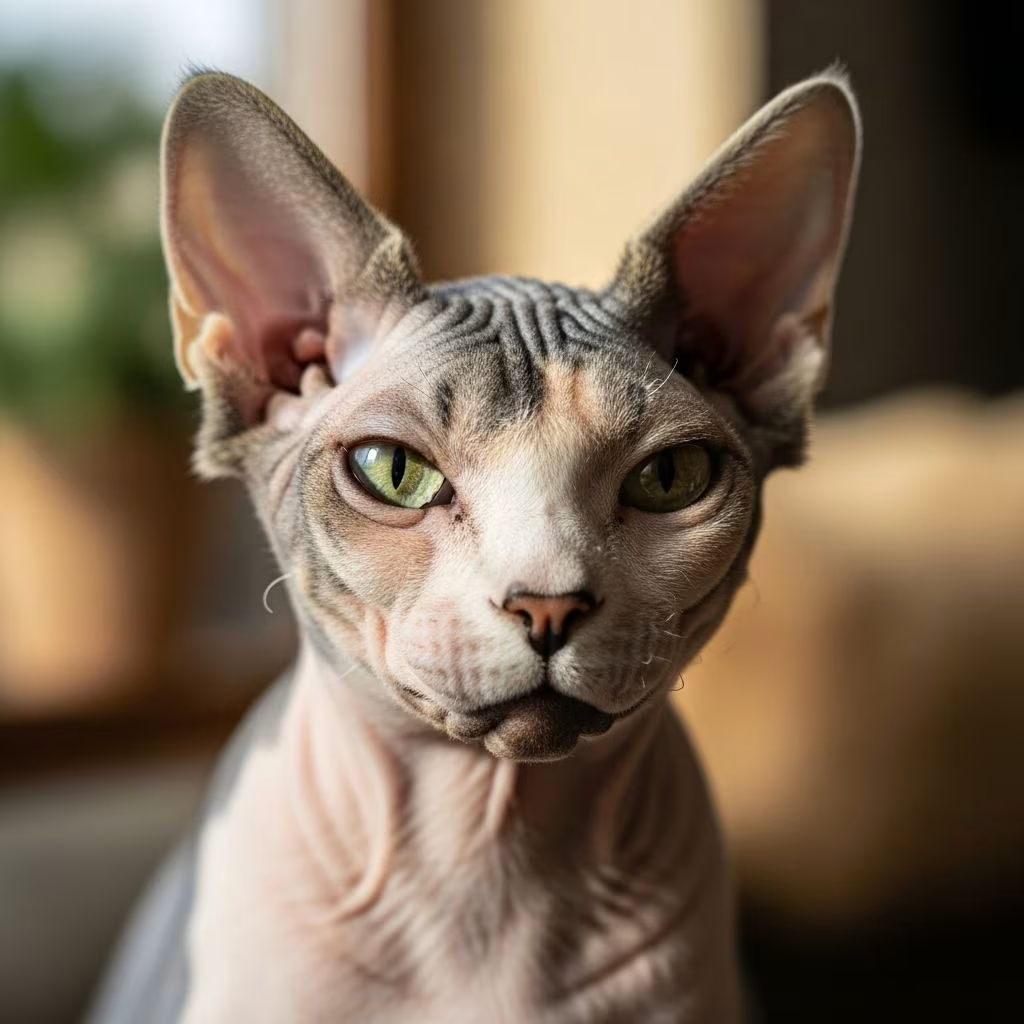
The most obvious feature that sets Sphynx cats apart from other felines is their hairless appearance. However, the degree of hairlessness varies among individual cats. Some Sphynx cats sport a very fine “peach fuzz” all over their bodies, while others have just a subtle coating of fine fuzz over their extremities, such as their nose, ears, tails, and toes. This unique characteristic resulted from a natural genetic mutation that affects hair growth and development.
Physical Features and Build
Beyond their lack of fur, Sphynx cats display a distinctly muscular and athletic build. They are medium-sized cats, typically weighing between 6 to 14 pounds, with a sturdy, well-developed frame. Their body structure is remarkably robust, built on elegant, long lines that showcase their musculature beautifully. The bones and muscles are prominently visible due to the absence of fur, creating a striking silhouette that some describe as resembling the cats of ancient Egypt—a resemblance that inspired the breed’s name.
Distinctive Facial Features
The Sphynx cat’s head is somewhat wedge-shaped or triangular, with wide-set eyes and prominent cheekbones that give these cats a distinctive and expressive appearance. Their most notable facial feature is undoubtedly their large ears. These ears are extremely large, resembling those of a bat, and are positioned with the outer base beginning at the level of the eye. The ears are broad at the base, open, and upright, often measuring more than 2 to 3 inches in length.
The eyes of a Sphynx cat are equally striking. Described as lemon-shaped, these large eyes are typically found in shades of blue, yellow, or green. Interestingly, some Sphynx cats have heterochromia—a rare trait where each eye is a different color. These expressive eyes, combined with their hairless face and prominent cheekbones, give Sphynx cats an alert and intelligent appearance that seems to convey constant curiosity.
Skin and Texture
One of the most delightful aspects of owning a Sphynx cat is their skin texture. Their skin is notably wrinkly, soft, and warm to the touch. Many owners describe the sensation as similar to touching warm peaches, suede, or chamois leather. The body feels warm and soft, with loose, wrinkly skin that forms folds across their bodies and faces. This unique texture, combined with their muscular build and expressive features, creates a tactile experience that many cat lovers find irresistibly appealing.
The Sphynx cat also typically has a large belly, often appearing as though they’ve just finished a substantial meal. Their paws are another distinctive feature, with thick paw pads that give the appearance of walking on cushions. The tail is slender, flexible, and long, maintaining proportion to body length, and tapers to a fine point in a whip-like fashion.
The Genetics Behind the Hairlessness
The hairless appearance of Sphynx cats is due to a specific genetic mutation affecting the KRT71 gene. Normally, the KRT71 gene produces strong hair that is securely anchored to the skin. However, due to the “hr” mutation present in Sphynx cats, the hair lacks a solid root or bulb, making it extremely weak and fragile. This genetic variation causes the hair to be loosely attached to the skin, resulting in it falling out easily and contributing to the breed’s nearly hairless appearance. This is a natural mutation that breeders have selectively bred for to establish the Sphynx as a recognized breed.
Personality and Temperament: The Heart of the Sphynx
While the Sphynx cat’s appearance is undoubtedly striking, it is their personality that truly captures the hearts of their owners. These cats are known for their extroverted and highly social behavior, displaying a level of energy, intelligence, curiosity, and affection that is unmatched among many other cat breeds. The personality of a Sphynx cat can best be described as the feline equivalent of a dog in many ways.
The Dog-Like Companion
Sphynx cats are frequently described as one of the more dog-like breeds of cats. They have a remarkable tendency to greet their owners at the door when they come home, much like a devoted dog would do. They are genuinely friendly when meeting strangers and seem to possess a natural sociability that makes them excellent companions for households with multiple people. This dog-like devotion extends to their willingness to follow their owners from room to room throughout the day, always eager to be involved in whatever activity is happening.
Affectionate and Attention-Seeking
Sphynx cats tend to be highly attached to their owners, often demanding large amounts of attention. They crave companionship and human interaction to such an extent that they have been termed “velcro lap cats” by feline enthusiasts. These cats love to perch on their owner’s shoulder, curl up in their lap, or simply be held and cuddled. If the attention they desire is not provided, Sphynx cats can get into trouble, as they will find ways to entertain themselves or capture their owner’s focus through mischief or persistent vocalizations.
Vocal and Communicative
Sphynx cats are notably vocal and communicative. They keep up a steady stream of chatter, communicating their needs—which usually revolve around attention or food—very clearly as they follow their owners from room to room. While not necessarily loud in a disruptive way, these cats should not be considered quiet pets. Their vocalizations are part of their charm, allowing them to express their personality and maintain a constant dialogue with their human companions.
Playful and Intelligent
Beyond their affection, Sphynx cats are highly intelligent, curious, and playful animals. They are energetic acrobatic performers who love to show off for attention. Many Sphynx cats even enjoy playing fetch, and they are capable of entertaining themselves for hours with appropriate toys and enrichment. These cats have an unexpected sense of humor that is often at odds with their somewhat dour expression, leading to entertaining moments for their owners.
Living with a Sphynx Cat: Essential Considerations
While Sphynx cats make wonderful companions, they do have specific needs and considerations that potential owners should understand before bringing one into their homes.
Indoor Living Requirements
For their own safety, Sphynx cats do best as exclusively indoor cats. Without a protective fur coat, they are vulnerable to sun damage, temperature extremes, and other outdoor hazards. They require a controlled indoor environment where their temperature and exposure to elements can be carefully managed.
High Enrichment Needs
Sphynx cats require a high level of enrichment to stay mentally and physically stimulated. This includes simulated hunting games, interactive play sessions, and engaging toys that challenge their intelligent minds. Without adequate enrichment, these curious and active cats can become bored and potentially destructive.
Grooming and Skin Care
Despite their hairless appearance, Sphynx cats still require regular grooming. Weekly grooming sessions are recommended to maintain their skin health and cleanliness. Their unique skin requires attention to ensure it remains healthy and comfortable.
Temperature Sensitivity
Without fur to provide insulation, Sphynx cats are sensitive to temperature changes. They appreciate warm environments and may need additional heating in cooler climates. Many Sphynx cat owners provide heated beds, blankets, or even sweaters to keep their cats comfortable during colder months.
Compatibility with Families and Other Pets
Sphynx cats generally get along well with children and other pets when properly socialized. They are social animals who enjoy the company of multiple household members. However, due to their need for lots of enrichment and their sometimes demanding nature, they may do better with experienced pet owners or families who can dedicate significant time and attention to them.
Health and Lifespan
Sphynx cats typically have a lifespan of 15 to 20 years, making them long-term companions for their owners. While they can be prone to certain health issues related to their unique genetics, responsible breeding and proper care can help ensure these cats live healthy, happy lives.
Is a Sphynx Cat Right for You?
The Sphynx cat is a remarkable breed that appeals to a specific type of cat lover. Those seeking an independent, low-maintenance pet should look elsewhere. However, if you’re looking for a loving, fun, and highly intelligent companion who will shower you with affection and keep you entertained with their antics, the Sphynx cat may be the perfect fit for you. These cats thrive with dedicated owners who can provide them with the attention, enrichment, and care they require. Their sweet, no-hair, don’t-care attitude combined with their deeply affectionate nature makes them truly special members of any household fortunate enough to welcome them.
Frequently Asked Questions (FAQs)
Q: Do Sphynx cats require special care compared to other cat breeds?
A: Yes, Sphynx cats have specific care needs due to their hairless nature. They require weekly grooming, temperature regulation, and protection from sun exposure. They also need high levels of enrichment and attention to keep them mentally stimulated and emotionally satisfied.
Q: Are Sphynx cats hypoallergenic?
A: Sphynx cats are considered hypoallergenic depending on allergy severity, though no cat breed is truly completely hypoallergenic. Their reduced amount of hair and dander may make them a better option for some people with cat allergies, but individual reactions can vary.
Q: How much attention do Sphynx cats need?
A: Sphynx cats are highly social and demand significant amounts of attention. They are “velcro cats” that want to be constantly involved in their owner’s activities. If left alone for extended periods without proper enrichment, they can become destructive or develop behavioral issues.
Q: Can Sphynx cats go outside?
A: Sphynx cats should be exclusively indoor cats for their own safety. Without a protective fur coat, they are vulnerable to sun damage, temperature extremes, parasites, and other outdoor hazards.
Q: What do Sphynx cats eat?
A: Sphynx cats require a balanced, high-quality diet appropriate for their age and activity level. Due to their high metabolism from maintaining body temperature, they may require more frequent meals than other cats. Consult with a veterinarian to determine the best dietary plan for your Sphynx.
Q: How long do Sphynx cats live?
A: With proper care, Sphynx cats typically live 15 to 20 years, making them long-term companions for their owners.
Q: Are Sphynx cats good with children and other pets?
A: Yes, Sphynx cats generally get along well with children and other pets when properly socialized. Their social and friendly nature makes them suitable for multi-pet households, though adult supervision with young children is recommended due to the cat’s delicate skin.
Q: Do Sphynx cats have whiskers?
A: Whiskers may be present on Sphynx cats, either whole or broken, or may be totally absent. This varies from individual to individual within the breed.
References
- Sphynx cat breed standards and genetics — The International Cat Association (TICA). Accessed 2025. https://www.tica.org
- Sphynx Cat Breed Information — Hill’s Pet Nutrition. Accessed 2025. https://www.hillspet.com
- Sphynx: Personality, Diet, Grooming, Training — Petplan UK. Accessed 2025. https://www.petplan.co.uk
- Sphynx Cat: Traits, Temperament, & Trivia — Four Paws. Accessed 2025. https://www.fourpaws.com
- What to Know About a Sphynx Cat — WebMD Pets. Accessed 2025. https://www.webmd.com/pets
- Sphynx Breed Standard — The Cat Fanciers’ Association (CFA). Accessed 2025. https://cfa.org
- Sphynx | Cat Breed Info — Royal Canin US. Accessed 2025. https://www.royalcanin.com



