

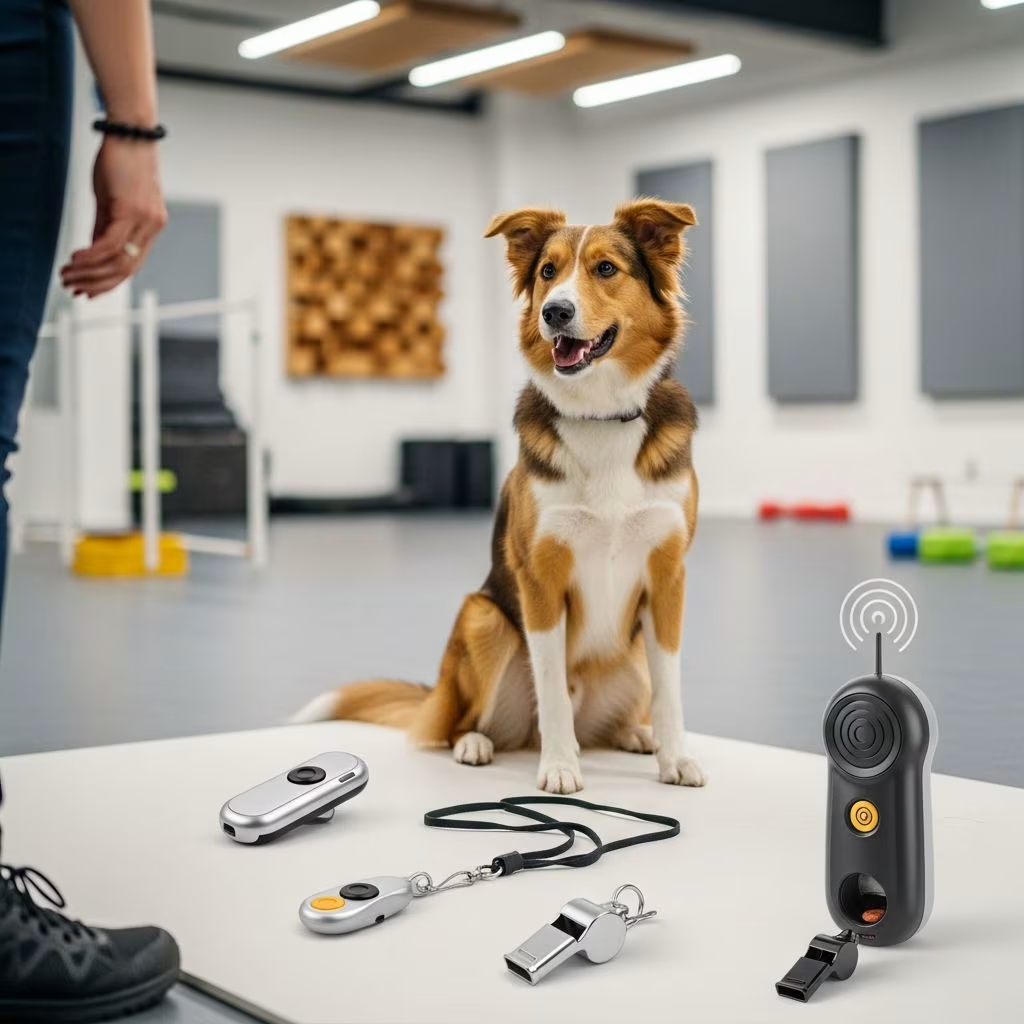
Training your dog extends far beyond basic obedience commands. It encompasses a comprehensive approach to communication that recognizes how your canine companion processes information and learns new behaviors. One of the most scientifically-supported methodologies in modern dog training involves using acoustic markers—specifically, a small mechanical device that produces a consistent clicking sound. This approach has transformed how trainers and pet parents interact with their dogs, creating pathways for learning that are both efficient and enjoyable for the animal.
Understanding Acoustic Marker Training Systems
The foundation of acoustic marker training rests on a fundamental principle: animals repeat behaviors that result in positive outcomes. Rather than focusing on what your dog does incorrectly, this methodology celebrates and reinforces the right choices your dog makes. The beauty of using a mechanical clicker lies in its consistency and precision. The sound it produces remains identical every time—sharp, distinct, and unmistakable to your dog’s auditory processing system.
When you emit the click sound, it directly engages your dog’s hindbrain and amygdala, the areas responsible for processing survival-related information and emotional responses. This neurological pathway means the click registers with exceptional clarity in your dog’s consciousness. Unlike human voices, which naturally vary in tone, inflection, and volume based on our emotional states, a clicker produces the exact same acoustic signal repeatedly. This consistency allows your dog to form an unambiguous mental connection: this sound means a reward is coming.
The Foundation: Teaching Your Dog What the Sound Means
Before you can effectively use a clicker as a training tool, your dog must first understand that this peculiar noise predicts something positive. This preliminary phase, often called “charging” or “loading” the clicker, requires approximately 10 to 20 repetitions of a simple sequence: you produce the click sound, and immediately provide a treat or reward your dog values highly.
During this critical learning phase, timing is essential. The reward should follow the click within a fraction of a second—ideally less than a second. This tight temporal relationship creates an unbreakable association in your dog’s mind. After sufficient repetitions, your dog’s brain has now learned that the click is a reliable predictor of good things. You can verify this understanding by observing whether your dog’s attention shifts toward you or toward the location where you typically deliver treats when they hear the click.
Practical Applications in Behavioral Training
Once your dog comprehends the click-reward relationship, you have several distinct approaches at your disposal for developing new behaviors and refining existing ones.
Capturing Spontaneous Behaviors
One elegant application involves recognizing and marking behaviors your dog naturally performs. When you observe your dog lying calmly on their mat instead of approaching the dinner table, this is the moment to click and reward. If your dog maintains all four paws on the floor when the doorbell rings—before any excitement takes over—that’s another perfect opportunity to mark and reinforce. This approach leverages your dog’s natural tendencies and teaches them that these spontaneous choices earn recognition and rewards.
Guiding Through Lure-Based Methods
You can use appealing rewards—such as small pieces of chicken, cheese, or favorite toys—to physically guide your dog into the desired position or behavior. As your dog follows the lure, the moment they complete the intended action, you click and immediately deliver the reward they were following. This creates a clear learning loop where your dog discovers that performing the action is how they obtain what they want.
Shaping Complex Behaviors
For more intricate behaviors that don’t occur naturally, trainers employ a technique called shaping. This involves breaking the final desired behavior into small, achievable steps. For example, teaching your dog to ring a bell by nose-nudging it might begin with simply rewarding your dog for looking at the bell. Over successive training sessions, you might then reward for moving toward it, then touching it, and finally pressing it with force. Each tiny approximation toward the final goal earns a click and reward, gradually building the complete behavior through these incremental steps.
Why This Approach Proves Superior for Learning
The precision that acoustic marking provides creates several advantages over traditional training methods. First, the clarity of the click removes ambiguity. Your dog doesn’t wonder which of their multiple simultaneous actions earned the reward. If you’re teaching “sit,” clicking the exact moment their hindquarters contact the ground tells them precisely what action resulted in the positive outcome. Compare this to verbal praise, where your dog might be uncertain whether you’re rewarding the sit itself, the duration of the sit, or their eye contact.
Second, dogs trained with this methodology develop what trainers call an “anticipatory response.” Your dog begins to actively offer behaviors, attempting to figure out what action will produce the click. Rather than passively responding to your commands, your dog becomes an engaged participant in the learning process. This shift in motivation—from external compliance to internal drive—means your dog will work harder and retain lessons more effectively.
Third, this training approach strengthens the bond between you and your dog. Traditional correction-based methods can create anxiety and distance in your relationship. Sound-based marking training reframes interactions as collaborative problem-solving. Your dog learns that working with you is enjoyable and productive. They view training sessions as games to play rather than tests to pass or situations fraught with the possibility of failure.
Structuring Effective Training Sessions
The most effective training occurs in short, focused bursts rather than lengthy marathon sessions. Research into animal learning consistently demonstrates that dogs benefit from multiple brief sessions throughout the day. A 5-10 minute training session, conducted once or twice daily, produces better results than a single 30-minute session.
Within these focused windows, intersperse training with play. Alternate between moments of concentrated work and breaks where you and your dog engage in enjoyable physical activity together. This rhythm prevents mental fatigue and maintains your dog’s enthusiasm. Your dog will anticipate training time as an opportunity for engagement and fun rather than viewing it as a chore.
The treats or rewards you use during training should be particularly valuable. Reserve high-value items—small pieces of chicken, salmon, cheese, or special training-only treats—exclusively for training purposes. This maintains their novelty and motivational power. If these same treats are available during other parts of the day, their reinforcement value diminishes during training.
Addressing Common Training Scenarios
Different situations require slightly different approaches when employing acoustic marking techniques.
For dogs who have already learned cues like “sit,” “stay,” or “lie down,” you can enhance their performance and reliability by incorporating clicker training. Give your verbal cue, and when your dog responds correctly, click and reward. This reinforces the behavior they already know and creates additional neural pathways associated with compliance.
For distracted or overstimulated dogs, this method excels because it provides clear, emotionless feedback. Anxious dogs often shut down when faced with harsh corrections or raised voices. The consistent, unemotional click coupled with positive reinforcement builds confidence from within. Your nervous dog learns they have control—through their behavior choices, they can make good things happen. This sense of agency and predictability gradually alleviates anxiety.
For senior dogs or those with hearing sensitivities, you can adapt the method. A verbal marker word like “yes” or “good” can replace the mechanical clicker, though you must maintain the same consistency and precision in timing. Some trainers employ visual markers—such as a quick hand signal or light flash—for deaf dogs. The principle remains identical: a clear, consistent signal marking the exact moment of correct behavior.
Transitioning Away From the Marker
Once your dog reliably responds to a command and consistently performs the desired behavior, you’ll gradually phase out your dependence on the clicker. This isn’t an abrupt process but rather a gradual transition. Initially, click every time your dog performs the behavior correctly. After establishing consistency, you might click on a variable schedule—rewarding every other correct response, then every third response, and so forth.
Simultaneously, introduce other forms of reinforcement. Verbal praise becomes more prominent. Physical affection like petting or play increases. Treats continue but become less frequent. Eventually, many behaviors can be maintained through occasional reinforcement and praise alone. However, the clicker remains a valuable tool you can return to whenever you want to teach new behaviors or refine existing ones.
Advanced Applications and Trick Development
Once you’ve mastered the fundamentals, clicker training becomes your gateway to teaching complex tricks and behaviors. From teaching your dog to weave between your legs, to capturing impressive tricks like bowing or spinning, the method scales beautifully. The combination of clear communication, your dog’s increased enthusiasm for learning, and the structured approach to behavior shaping allows you to develop sophisticated routines.
Trick training particularly benefits from this methodology because tricks rarely occur naturally—your dog won’t spontaneously bow or ring a bell without guidance. Shaping becomes essential, and the acoustic marker provides the precision needed to communicate your expectations clearly as you guide your dog through each tiny step toward the final behavior.
Building a Confident, Engaged Learner
Perhaps the most significant benefit of acoustic marker training extends beyond the specific behaviors you teach. Dogs trained this way develop confidence in their own decision-making. They actively engage with their environment, thinking about how to interact with you to generate clicks and rewards. This internal motivation—the desire to work and learn—persists long after individual training sessions conclude. Your dog isn’t simply complying to avoid punishment; they’re choosing to engage because learning has become rewarding in itself.
This shift in perspective transforms your relationship with your dog. Training becomes a shared language, a way you both understand each other more deeply. Your dog learns not just commands, but how to navigate the world successfully by reading your feedback and adjusting their behavior accordingly.
References
- Clicker Training for Dogs 101: Everything You Need To Know — Chewy. 2024. https://www.chewy.com/education/dog/training-and-behavior/clicker-training-for-dogs
- Mark & Reward Dog Training Using Clickers — American Kennel Club. https://www.akc.org/expert-advice/training/clicker-training-your-dog-mark-and-reward/
- Why is Clicker Training Effective? — Clicker Training. https://clickertraining.com/why-is-clicker-training-effective/
- A Guide to Clicker Training Pets — Best Friends Animal Society. https://bestfriends.org/pet-care-resources/guide-clicker-training-pets
- The Benefits of Clicker Training for Nervous Dogs — K-9 Divine. https://k-9divine.com/services/dog-training/the-benefits-of-clicker-training-for-nervous-dogs/



