
Sorghum Toxicity In Horses: Prevention, Diagnosis, Treatment
Essential insights into preventing and managing sorghum-related cyanide risks in equine health for horse owners and vets.
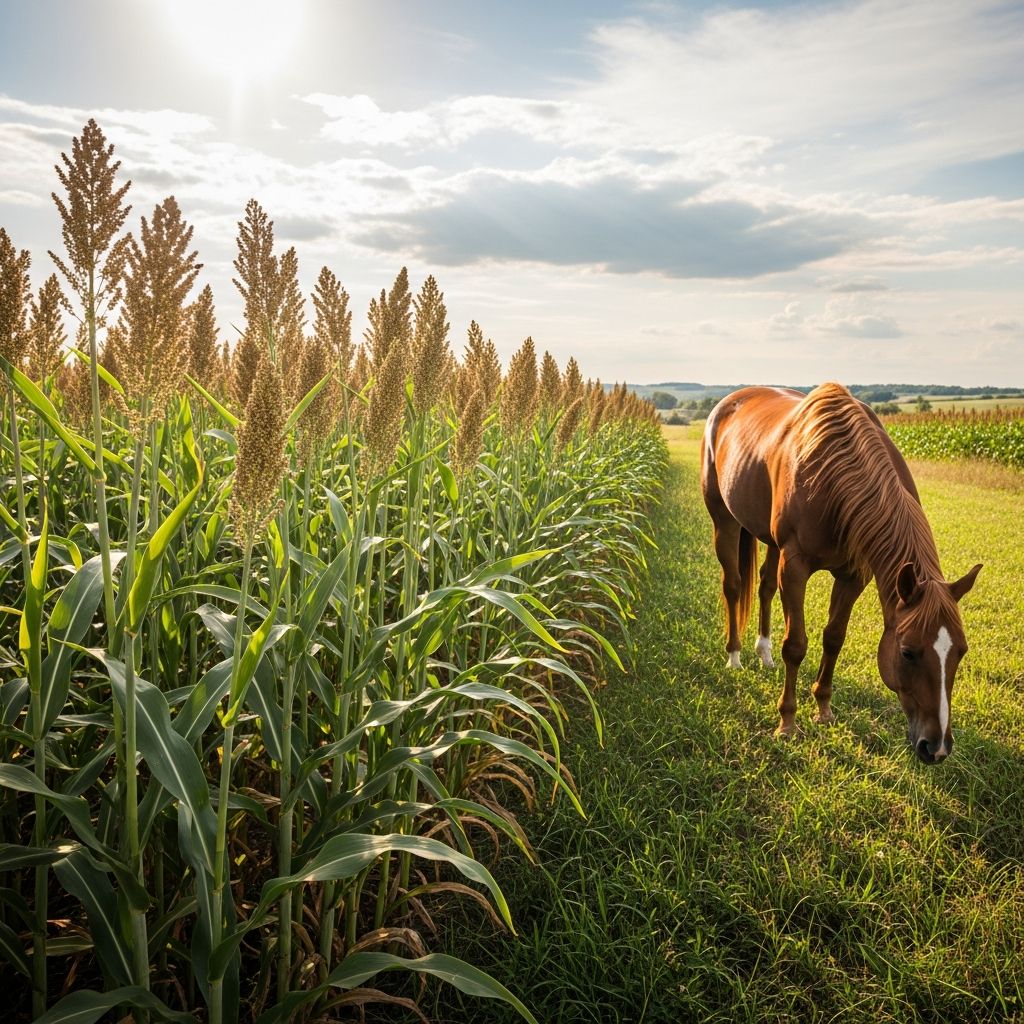
Horses grazing on sorghum-related forages face significant health threats from toxic compounds like cyanogenic glycosides, leading to acute cyanide poisoning or chronic syndromes involving neurological and urinary damage. Understanding these risks enables proactive management to protect equine populations.
Understanding the Toxic Threat from Sorghum Plants
Sorghum species, including sudangrass and johnsongrass, contain dhurrin and other cyanogenic glycosides that release hydrogen cyanide (HCN) when plant cells are damaged during digestion. This process is exacerbated in young regrowth, frost-damaged, or drought-stressed plants where toxin levels peak.
In horses, unlike ruminants, poisoning manifests differently due to their monogastric digestive system. Acute exposure delivers rapid cyanide absorption, disrupting cellular respiration by inhibiting cytochrome c oxidase, causing histotoxic hypoxia despite oxygenated blood. Chronic low-level intake accumulates metabolites like beta-cyanoalanine, triggering lathyrogenic effects on nerves and bladder function.
Acute Cyanide Poisoning: Rapid Onset Crisis
Acute intoxication strikes within 10-20 minutes of consuming high-toxin forage. Cyanide binds to mitochondrial enzymes, halting ATP production and leading to anaerobic metabolism, lactic acidosis, and organ failure.
- Respiratory distress: Labored, rapid breathing as tissues suffocate.
- Mucosal changes: Bright red gums from unutilized oxygen saturation.
- Neurological signs: Ataxia, tremors, convulsions, collapse.
- Autonomic effects: Profuse salivation, urinary incontinence, almond-like breath odor.
- Terminal events: Coma and sudden death, often within hours.
Horses may succumb without intervention, emphasizing the need for immediate veterinary response.
Chronic Exposure: The Cystitis-Ataxia Syndrome
Prolonged grazing on low-toxin sorghum over weeks to months induces sorghum cystitis ataxia syndrome (SCAS), unique to horses. Lathyrogenic nitriles damage spinal cord axons and cerebellar neurons, causing progressive hindquarter dysfunction.
Initial urinary issues precede locomotor deficits:
- Bladder atony leading to incontinence and scalding alopecia on hind legs.
- Hematuria, pollakiuria from cystitis.
- Ataxia worsening to flaccid tail and hindlimb paralysis.
Secondary pyelonephritis develops in severe cases, with fever, colic, and weight loss; many horses die from renal failure. Pregnant mares risk fetal arthrogryposis or abortion.
Risk Amplifiers and Management Pitfalls
Toxicity surges under stress: wilting, trampling, or insect damage hydrolyzes glycosides. Hybrid sudangrass poses highest danger for chronic syndrome, while seedheads are safer.
| Factor | Impact on Toxicity | Precaution |
|---|---|---|
| Plant Age | Young shoots highest HCN | Delay grazing 2-3 weeks post-regrowth |
| Weather Stress | Drought/frost elevates toxins | Avoid post-stress grazing |
| Forage Type | Hybrids riskiest for SCAS | Test hybrids before feeding |
| Horse Factors | Hungry horses gorge toxins | Provide alternative feed first |
Nitrate accumulation in over-fertilized plants adds colic and methemoglobinemia risks.
Diagnostic Approaches for Equine Vets
Diagnosis combines history of sorghum access with clinical signs. Acute cases show cherry-red blood, acidosis on blood gas.
- Clinical exam: Mucous membrane color, breath odor, neurological status.
- Lab tests: Whole blood cyanide levels (>0.5 µg/mL toxic), methemoglobin if nitrates involved.
- Forage/stomach analysis: Quantify dhurrin/HCN via spectrometry.
- Urinalysis/necropsy: For chronic cases, confirm cystitis, spinal histopathology.
Differential includes hypocalcemia, botulism, or EPM; forage testing clarifies.
Emergency Response and Therapeutic Interventions
For acute poisoning, speed is vital; mortality nears 100% post-collapse without antidotes.
Primary antidote: Sodium nitrite (IV, 10 mg/kg over 5-10 min) induces methemoglobinemia, competing for cyanide to form cyanmethemoglobin. Follow with sodium thiosulfate (30-40 mg/kg IV) for thiocyanate excretion via kidneys.
Supportive care:
- Oxygen therapy, ventilation if needed.
- IV fluids, bicarbonate for acidosis.
- Control seizures with diazepam.
Chronic SCAS lacks specifics; remove sorghum, treat infections with antibiotics (e.g., trimethoprim-sulfas), catheterize bladder, supplement sulfur to bind nitriles. Prognosis poor if ataxia present; permanent neuropathy common.
Preventive Blueprint for Horse Owners
Avoidance trumps treatment:
- Never sole-feed sorghum to horses; mix <50% hybrids.
- Hay/test forages; safe sorghum-sudan hybrids exist (low dhurrin).
- Fence off suspect pastures post-frost/drought.
- Monitor new growth; wait 21-30 days.
Sulfur supplementation (0.2-0.5% diet) may detoxify nitriles. Educate on symptoms for rapid action.
Real-World Case Insights and Statistics
Though uncommon, outbreaks cluster in sorghum-heavy regions. University extension reports confirm SCAS in sustained grazing scenarios, with <20% recovery post-ataxia. Acute deaths spike in hungry horses on fresh regrowth.
Breeding implications: teratogenic effects yield contracted foals, advising pregnant mare exclusion.
FAQs on Sorghum Risks in Equines
Q: Can all sorghum varieties poison horses?
A: Primarily cyanogenic hybrids like sudangrass; grain sorghum lower risk, but test always.
Q: How soon do symptoms appear?
A: Acute: 10-30 min; chronic: weeks-months.
Q: Is there a home antidote?
A: No—vet emergency only; antidotes are IV prescription.
Q: Safe grazing duration on sorghum?
A: Limit to days, never chronic; prefer non-sorghum forages.
Q: Treatable if hindlimb paralysis starts?
A: Rarely fully; supportive care may stabilize, but damage irreversible.
Long-Term Health Monitoring Post-Exposure
Survivors need thyroid checks for hypothyroidism (lethargy, rough coat), renal ultrasounds, neuro exams. Annual forage analysis prevents recurrence.
By integrating these strategies, horse managers mitigate sorghum’s dual acute/chronic perils, ensuring safer pastures.
References
- Sorghum Poisoning (Cyanide Toxicosis) in Horses — Vetster. 2023. https://vetster.com/en/conditions/horse/sorghum-poisoning-cyanide-toxicosis
- Sorghum & Sudan Grass Poisoning in Horses — Mad Barn. 2024. https://madbarn.com/sorghum-sudan-grass-poisoning-in-horses/
- Toxin Topic: Johnsongrass Poisoning in Horses — University of Kentucky Equine Programs. 2022-10-15. https://equine.mgcafe.uky.edu/news-story/toxin-topic-johnsongrass-poisoning-horses
- Prussic Acid Poisoning of Livestock — Alabama Cooperative Extension System (ACES). 2023. https://www.aces.edu/blog/topics/beef/prussic-acid-poisoning-of-livestock/
- Sorghum Poisoning in Horses — Merck Veterinary Manual. 2024-05-01. https://www.merckvetmanual.com/toxicology/sorghum-poisoning/sorghum-poisoning-in-horses
- Potential Poisoning of Horses Consuming Sorghum, Sudangrass — New Mexico State University. 2021. https://pubs.nmsu.edu/_b/B720/index.html
- Sorghum-sudangrass pasture poses prussic acid and nitrate poisoning risk — Michigan State University Forage. 2023-08. https://forage.msu.edu/extension/sorghum-sudangrass-pasture-poses-prussic-acid-and-nitrate-poisoning-risk/
Similar Articles








Read full bio of medha deb


