
Sorghum and Sudan Grass Toxicity in Livestock
Essential guide to recognizing, preventing, and treating cyanide poisoning from sorghum and Sudan grass in animals.
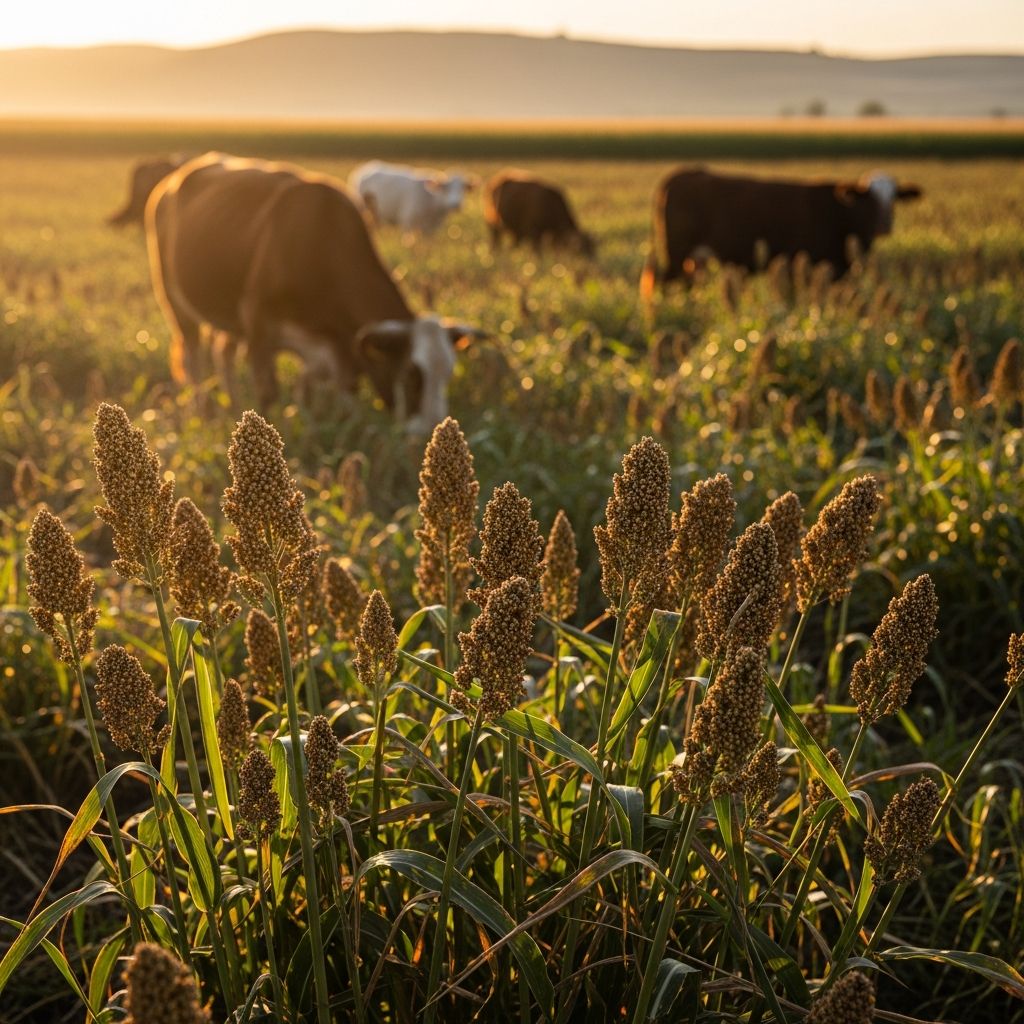
Livestock owners who use sorghum and Sudan grass as forage must understand the potential for toxicity, primarily due to cyanogenic glycosides that release hydrogen cyanide (HCN), also known as prussic acid. This poisoning manifests in two main forms: acute cyanide toxicosis, which can kill animals rapidly, and chronic exposure leading to neurological damage and urinary issues. These plants are valuable for their productivity but require careful management to avoid devastating losses.
Understanding the Toxic Compounds in Forage Grasses
Sorghum species, including hybrids like Sudan grass, contain cyanogenic glycosides such as dhurrin. When plant tissues are damaged—through frost, trampling, or digestion—these compounds break down into hydrogen cyanide via enzymes in the rumen of ruminants or the digestive tract of horses. Cyanide binds to cytochrome oxidase in mitochondria, halting cellular respiration and oxygen use, resulting in rapid tissue hypoxia despite oxygenated blood.
This mechanism explains the hallmark cherry-red blood and mucous membranes observed in affected animals, distinguishing it from nitrate poisoning, where blood appears chocolate brown.
Species Susceptibility and Common Victims
- Ruminants like cattle and sheep: Most vulnerable due to rumen fermentation accelerating cyanide release. Cattle are particularly susceptible compared to sheep.
- Horses: Primarily affected by chronic grazing on hybrid Sudan pastures, leading to sorghum cystitis rather than acute poisoning.
- Other species: Goats, pigs, and wildlife can also be impacted, though less commonly reported.
Young, stressed, or hungry animals are at higher risk, as they consume more plant material quickly.
Acute Cyanide Poisoning: Signs and Rapid Progression
Acute toxicity strikes fast, often within 10-60 minutes of ingesting high-HCN forage. Initial signs include:
- Rapid, labored breathing and gasping
- Frothing at the mouth
- Bright red mucous membranes
- Muscle tremors, staggering, and weakness
- Convulsions, collapse, and death
Animals may succumb in 5-15 minutes from large doses or linger 1-2 hours. Cherry-red blood at necropsy confirms exposure.
| Symptom | Onset Time | Severity Indicator |
|---|---|---|
| Labored breathing | 10-30 min | Early warning |
| Staggering/convulsions | 30-60 min | Critical |
| Death | 5 min to 2 hrs | Lethal |
This table summarizes progression based on field observations.
Chronic Sorghum Toxicity: Neurological and Urinary Damage
Prolonged grazing on low-level cyanide forages, especially in horses in regions like the southwestern US and Australia, causes sorghum poisoning or cystitis syndrome. Cyanide metabolites accumulate, damaging the spinal cord and peripheral nerves.
Key manifestations:
- Hindlimb incoordination and ataxia, progressing to paralysis
- Bladder inflammation (cystitis) with frequent urination, incontinence, hematuria, and scalding of hind legs
- Anal/tail paralysis
- Secondary pyelonephritis (kidney infection) with fever, colic, and weight loss
- Reproductive issues, such as deformed foals in mares
Horses may survive but with permanent deficits; euthanasia is common in severe cases.
Factors That Heighten Toxicity Risks
Not all sorghum is equally dangerous. Toxicity spikes under:
- Environmental stress: Drought, frost, wilting, or frost damage increases HCN by up to 10-fold in young leaves and regrowth.
- Plant parts: Highest concentrations in leaves, new shoots, and frost-damaged tissues; seeds and roots lower.
- Hybrids: Sorghum-Sudan crosses often riskier than pure strains.
- Management errors: Grazing immature stands, hungry livestock, or pure stands without dilution.
How Veterinarians Diagnose Forage Poisoning
Diagnosis combines history (recent access to suspect forage), clinical signs, and lab tests:
- Physical exam for red mucous membranes and rapid death pattern
- Blood gas analysis showing normal oxygen but metabolic acidosis
- Forage/stomach content testing for HCN (submit frozen)
- Urinalysis and bloodwork for chronic cases
- Necropsy with rumen analysis and almond-like odor in contents
Differentiate from nitrate toxicity via blood color and lab confirmation.
Emergency Response and Treatment Protocols
Act immediately upon suspicion:
- Remove animals from toxic forage and provide safe alternatives to dilute intake.
- Minimize handling to conserve oxygen.
- Administer antidotes: Intravenous sodium nitrate (horses) or sodium thiosulfate (ruminants, 660 mg/kg IV, followed by oral doses).
- Supportive care: Oxygen, control seizures with sedatives, fluids, and pain relief.
- For cystitis: Antibiotics, catheterization, tetanus antitoxin.
Prognosis for acute cases is poor if treatment delays; chronic cases vary, with full recovery rare in advanced neurological damage.
Prevention: Safe Management of Sorghum Forages
Sorghum remains a nutritious, drought-tolerant feed if managed properly:
- Test hay or silage for HCN levels before feeding; dilute if above safe thresholds.
- Graze after heading and delay entry post-frost or drought until HCN dissipates (wait 7-10 days).
- Mix with other forages; avoid pure stands.
- Feed hungry animals elsewhere first; supplement energy.
- Select low-cyanogenic varieties and scout for stress.
Extension services offer testing kits.
Regional Considerations and Incidence Rates
Incidents peak in sorghum-growing areas: Australia, US Southwest, Midwest. Acute poisoning is rare with good practices; chronic more common in horses on pastures. Losses are preventable with awareness.
Frequently Asked Questions (FAQs)
What does cyanide poisoning smell like in dead animals?
A bitter almond odor in rumen contents is classic, though not all detect it.
Can sorghum poisoning affect pregnant livestock?
Yes, chronic exposure in horses links to foal deformities.
How long after frost is sorghum safe to graze?
Typically 7-14 days, as HCN levels drop; test if possible.
Is sodium thiosulfate safe for all species?
Effective in ruminants; not registered for food animals in some regions like Australia—consult vets.
What’s the difference between prussic acid and nitrate poisoning?
Prussic acid causes cherry-red blood; nitrates cause brown blood. Both impair oxygen use but at different sites.
This FAQ section addresses common producer concerns for quick reference.
References
- Sorghum Poisoning (Cyanide Toxicosis) in Horses — Vetster. Accessed 2026. https://vetster.com/en/conditions/horse/sorghum-poisoning-cyanide-toxicosis
- Cyanide Poisoning — Veterinary Handbook. Accessed 2026. https://www.veterinaryhandbook.com.au/Diseases.aspx?diseasenameid=59
- Cyanide poisoning from sorghum — Business Queensland (Queensland Government). Accessed 2026. https://www.business.qld.gov.au/industries/farms-fishing-forestry/agriculture/animal/health/contamination/sorghum/cyanide
- Sorghum Poisoning (Sudan Grass Poisoning) — Merck Veterinary Manual. Accessed 2026. https://www.merckvetmanual.com/special-pet-topics/poisoning/sorghum-poisoning-sudan-grass-poisoning
- Managing the Prussic Acid Hazard in Sorghum (AY-378-W) — Purdue University Extension. 2007 (authoritative extension guide). https://www.extension.purdue.edu/extmedia/AY/AY-378-W.pdf
- Warning for Prussic Acid or Cyanide Poisoning — University of Kentucky Master Grazer. Accessed 2026. https://grazer.mgcafe.uky.edu/animal-management-tip-warning-prussic-acid-or-cyanide-poisoning
Similar Articles








Read full bio of Sneha Tete


