

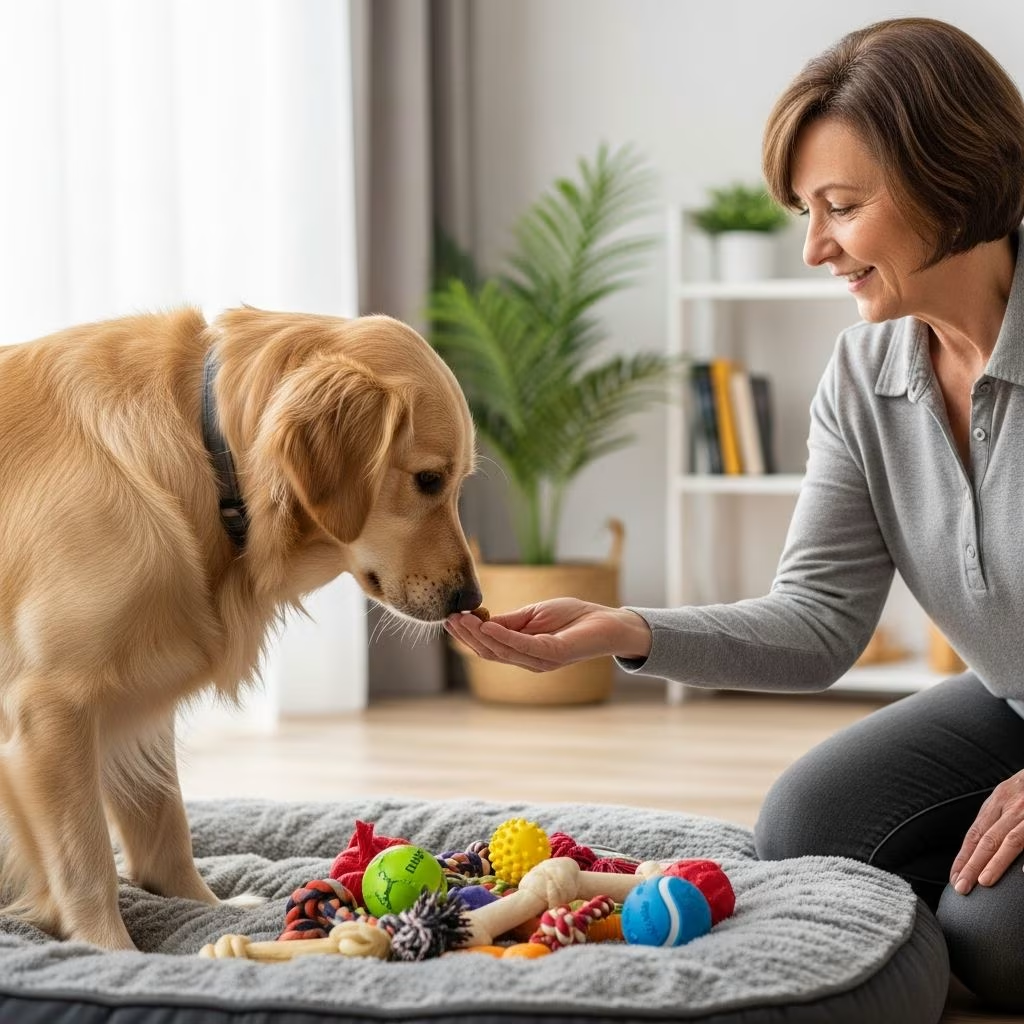
Resource guarding can be worrying, frustrating, and sometimes scary, but it is also a behavior that many dogs can improve with the right approach. This guide explains what resource guarding is, why it happens, how to recognize early warning signs, and how to manage and modify the behavior safely and humanely.
What Is Resource Guarding in Dogs?
Resource guarding is a behavior in which a dog reacts—sometimes with aggression—when they believe a valued item or space may be taken away by a person or another animal. Common guarded items include food, treats, toys, beds, resting spots, and sometimes even people or doorways.
Guarding behavior exists on a spectrum from subtle signals to serious aggression. It is rooted in a natural survival instinct: protecting food and other essentials can be advantageous for animals in the wild.
Common Signs of Resource Guarding
Dogs rarely jump straight to biting without warning. They typically give a series of signals that communicate discomfort or threat. Recognizing these signs early allows you to intervene before things escalate.
- Freezing or suddenly becoming very still near an item
- Hunching or hunkering over the item (food bowl, toy, chew)
- Staring at an approaching person or animal, sometimes with a hard or fixed gaze
- Showing the whites of the eyes (often called “whale eye”)
- Growling, snarling, or low rumbling noises
- Lip lifting or baring teeth
- Air-snapping or lunging without contact
- Barking, chasing away, or biting in severe cases
Subtle body language such as ear position (ears pinned back), lip-licking, or a stiff, tense posture can also indicate a dog is feeling threatened around their resources.
Why Dogs Resource Guard
There is rarely a single cause of resource guarding. Instead, several risk factors and past experiences often combine to produce and maintain the behavior.
Natural Survival Instincts
From an evolutionary perspective, guarding valuable items like food, shelter, or mates can help an animal survive. This means a degree of possessiveness is normal and not inherently pathological, but it can become problematic when it leads to conflict or injury in a home setting.
Anxiety, Fear, and Stress
Anxious or fearful dogs may be more prone to guarding behavior. When a dog feels unsure about their environment or feels they have little control, they may cling more tightly to the few things that make them feel safe, such as food, toys, or a favorite resting spot.
- General anxiety: Dogs with underlying anxiety may perceive others as more threatening and respond defensively.
- Fear of loss: History of having food or toys taken away can teach a dog that someone approaching means they will lose something valuable.
- Environmental stress: Changes such as new pets, guests, loud noises, or schedule disruptions can temporarily increase guarding behavior.
Past Experiences and Early Environment
Early life experiences strongly influence resource guarding risk.
- Puppies raised in crowded environments, such as poorly managed breeding facilities, may have had to compete for food in tight spaces.
- Dogs who experienced neglect, cruelty, or chronic scarcity of food or toys may learn to protect what little they have.
- Dogs who were repeatedly punished or had objects forcibly removed may associate people approaching with loss and discomfort.
Training History and Human Actions
Well-meaning but misguided training strategies can accidentally create or worsen guarding.
- Regularly taking food bowls away while a puppy eats “to show who is boss”
- Putting hands in the bowl or removing chews without exchanging for something better
- Chasing a dog when they pick up an object, turning it into a conflict game
Over time, the dog learns that humans approaching their stuff predicts loss, so they escalate their efforts to keep people away.
Other Contributing Factors
| Factor | How It Contributes |
|---|---|
| Genetics and breeding | Certain lines or individuals may be more prone to anxiety or possessive behaviors. |
| Multiple dogs in the home | Competition over food or toys can increase guarding risk and can spread between dogs. |
| Lack of socialization | Dogs not exposed to people and other animals in positive ways early in life may be more fearful and defensive. |
| Unmet needs or medical issues | Hunger, pain, or lack of exercise and enrichment can increase irritability and guarding intensity. |
Is Resource Guarding Normal or Dangerous?
Some level of guarding is normal and not automatically a behavior disorder. The key question is whether the behavior is putting people or animals at risk.
When Guarding Is a Manageable Quirk
Guarding may be manageable if:
- The dog only shows mild signs (a bit of stiffness or a low growl) and responds well when redirected
- Guarding is limited to very high-value items (like long-lasting chews) and can be avoided with management
- No one is at risk of being bitten because interactions can be controlled safely
When Guarding Becomes a Serious Problem
Guarding needs professional attention when:
- The dog has bitten or attempted to bite a person or another animal
- The behavior is escalating in frequency, intensity, or unpredictability
- Guarding spreads to many items or spaces, making daily life difficult
- There are children or vulnerable adults in the home
In these cases, it is strongly recommended to work with a qualified, reward-based behavior professional and involve your veterinarian to rule out medical factors.
How to Stay Safe Around a Resource Guarding Dog
Safety comes first. The goal is to reduce the chances that your dog feels threatened and needs to guard. At the same time, you want to prevent situations where someone could be injured.
Immediate Safety Tips
- Do not physically confront or punish a dog that is guarding. This often makes the behavior worse and more dangerous over time.
- Avoid reaching toward the item or trying to pry it out of the dog’s mouth.
- Give the dog space: walk away, calmly secure other pets and people, and wait until they are finished.
- If necessary, use barriers like baby gates or crates during meals or chew time.
- Supervise all interactions with children and never allow them to approach a dog that is eating or chewing.
What to Do if Your Dog Has Something Dangerous
If your dog grabs something unsafe (like cooked bones, medication, or small objects), avoid chasing them. Instead:
- Stay calm and avoid sudden movements or shouting.
- Use a well-practiced “trade” cue: offer a very high-value treat away from the dog’s body.
- When the dog drops the item to take the treat, safely pick up the dangerous object.
- If the situation is an emergency and you cannot safely remove the item, contact your veterinarian or emergency clinic for guidance.
Training Strategies to Reduce Resource Guarding
Effective treatment focuses on two broad goals:
- Changing the dog’s emotional response so that people approaching their resources predict good things, not loss
- Teaching alternative behaviors, such as willingly giving up items on cue
These methods rely on positive reinforcement and desensitization and counterconditioning, which have strong support in behavior science and clinical practice.
General Principles for Training
- Work below your dog’s threshold—at a level where they notice but do not feel compelled to growl or snap.
- Move in small steps and do not progress until your dog is relaxed and predictable at the current step.
- Use very high-value rewards (tiny pieces of chicken, cheese, or other special treats) reserved just for this training.
- Keep sessions short, frequent, and positive.
- Stop and seek professional help if the dog shows signs of escalating aggression.
Exercise 1: Making Approaches Predict Good Things
This exercise is often used for dogs that guard their food bowl or chew items.
- Start with your dog eating or chewing something of moderate value in a calm, controlled environment.
- From a distance at which your dog remains relaxed, walk by and toss a very high-value treat near (but not on top of) the bowl or item.
- Walk away. Repeat this many times over several sessions.
- Gradually decrease the distance over multiple sessions, always watching your dog’s body language.
- Eventually, you may be able to briefly touch the bowl or drop treats directly into it, but this should only be attempted when the dog is fully relaxed and happy about your approach.
The goal is that your dog learns: “People coming near my stuff makes my situation even better,” rather than “they will take it away.”
Exercise 2: Teaching a Reliable “Trade” Cue
A strong “trade” cue helps your dog willingly give up items in exchange for something even better.
- Begin with a low-value toy. Offer it to the dog and let them hold it.
- Present a high-value treat while saying a consistent cue (e.g., “trade” or “swap”).
- When the dog drops the toy to take the treat, mark the behavior (e.g., with a cheerful “yes!”) and let them eat.
- Give the toy back after they finish. This teaches that giving things up does not always mean permanent loss.
- Gradually practice with slightly higher-value items, always ensuring the dog remains relaxed.
Over time, the word “trade” comes to predict a better reward, rather than a conflict over possession.
When to Involve a Professional
Seek help from a veterinarian and a certified trainer or veterinary behaviorist if:
- Your dog has already bitten or severely threatened someone.
- Guarding occurs around many items or spaces, or the dog’s behavior is unpredictable.
- You feel afraid of your dog or unsure how to manage safely.
- Your dog’s behavior changes suddenly, which may indicate a medical issue.
A veterinarian can check for pain, neurological issues, or other health conditions that may contribute to irritability and aggression, and a behavior professional can create a tailored plan based on your dog’s history and environment.
Preventing Resource Guarding in Puppies and New Dogs
Prevention is usually easier than treatment. With thoughtful handling, many dogs never develop serious guarding behaviors.
Building Positive Associations Early
- Occasionally walk by while your puppy is eating and drop extra-tasty treats into the bowl, then walk away.
- Practice brief, gentle “trade” games where they learn that giving up toys or chews results in better rewards and often getting the original item back.
- Create calm, predictable mealtimes with minimal competition from other pets.
The aim is not to constantly interfere with your puppy’s meals, but to occasionally show that your presence means more, not less, of the good stuff.
Healthy Household Habits
- Teach children to leave dogs alone when they are eating, sleeping, or chewing.
- Feed dogs separately if there is any tension at mealtimes.
- Provide adequate physical exercise and mental enrichment so the dog is not overly frustrated or bored.
- Store especially high-value items (such as long-lasting chews) for supervised use only.
Living with and Managing a Guarding Dog
Many dogs with resource guarding can live safely and comfortably with careful management and ongoing training. The goal is not to eliminate every trace of guarding instinct, but to minimize risk and maximize trust.
Practical Management Strategies
- Use crates, pens, or separate rooms during meals and high-value chew time.
- Rotate toys rather than leaving all of them out, so you can better control which items are available.
- Avoid sudden surprises—let your dog know what to expect around feeding and play times.
- Respect your dog’s warnings; do not punish growls, as they are valuable communication that can prevent bites.
Adjusting Expectations
Some dogs may never become completely carefree about their possessions, especially if they have a long history of guarding or have experienced trauma. A realistic goal is often:
- Reduced intensity and frequency of guarding episodes
- Clear routines that avoid known triggers
- Improved trust between the dog and their family
Frequently Asked Questions (FAQs)
Q: Can resource guarding be cured completely?
A: Many dogs can improve dramatically, but because guarding has roots in survival and past learning, some may always retain a mild tendency. With consistent management, training, and professional guidance when needed, most families can reach a safe, workable situation.
Q: Is it my fault that my dog resource guards?
A: Resource guarding usually arises from a mix of genetics, early environment, and experiences over time. Certain training choices can unintentionally make it worse, but blame is rarely helpful. Focusing on learning, safety, and better strategies going forward is much more productive.
Q: Should I punish my dog for growling?
A: No. Growling is an important warning signal that a dog is uncomfortable. Punishing growls may stop the sound but does not remove the underlying emotion, making a sudden bite more likely in the future. Instead, increase distance, remove pressure, and later address the underlying cause with training.
Q: Is resource guarding more common in certain breeds?
A: Some lines or types of dogs, including certain working and sporting breeds, may show more possessive tendencies, but resource guarding can occur in any breed or mix. Individual temperament, socialization, and experiences often matter more than breed alone.
Q: When should I call a professional about my dog’s guarding?
A: You should seek professional help if your dog has bitten or seriously threatened anyone, if guarding is getting worse, if you feel unsafe, or if you’re unsure how to proceed. A veterinarian and qualified behavior professional can design a tailored plan and help keep everyone safe.
References
- Understanding the Causes of Dog Resource Guarding Behaviour — Animal Wellbeing Centre. 2023-05-10. https://www.animalwellbeingcentre.com/blogs/underlying-causes-of-dog-resource-guarding-behaviour
- Resource Guarding in Dogs — Small Door Veterinary. 2022-09-01. https://www.smalldoorvet.com/learning-center/behavior/resource-guarding-dogs
- Resource Guarding in Dogs: What to Do and NOT Do — Preventive Vet. 2023-04-18. https://www.preventivevet.com/dogs/resource-guarding-in-dogs
- Why is My Dog Resource Guarding? — Beyond the Dog Training. 2021-11-02. https://beyondthedogtraining.com/dog-training/why-is-my-dog-resource-guarding/
- Resource guarding in dogs — Humane World for Animals (Humane Society of the United States). 2022-07-15. https://www.humaneworld.org/en/resources/resource-guarding-dogs
- Resource Guarding in Dogs — PetMD. 2023-02-21. https://www.petmd.com/dog/behavior/resource-guarding-dogs
- Resource Guarding in Dogs — American Kennel Club (AKC). 2017-06-30. https://www.akc.org/expert-advice/training/resource-guarding-in-dogs/



