

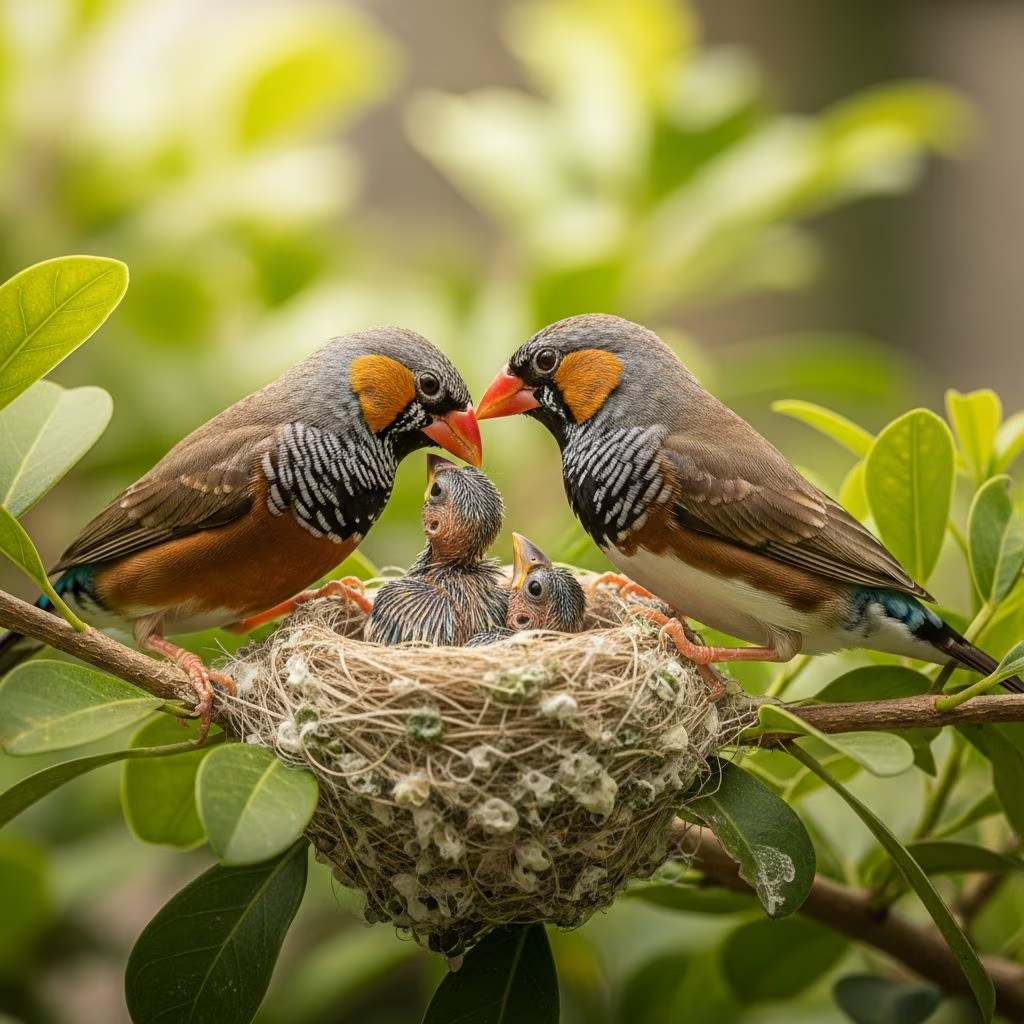
Society Finches: The Perfect Parents
Society finches have earned a well-deserved reputation as some of nature’s most dedicated and nurturing parents in the avian world. These small, colorful birds possess an almost unparalleled commitment to raising young, whether those chicks are their own offspring or adopted from other species. Their exceptional parenting abilities, combined with their gentle and social nature, make them invaluable to bird enthusiasts and breeders worldwide. Understanding the breeding behavior and parental instincts of society finches provides fascinating insights into how these birds contribute to the survival and care of various finch species.
Society Finches: Natural Parents
One of the most remarkable traits of society finches is their relentless dedication to caring for baby birds. Society finches possess an inherent drive to nurture and raise young, displaying a level of devotion that extends beyond their own offspring. Most society finches greatly adore babies and will do their best to help rear any baby bird they encounter, regardless of the species. This exceptional parenting behavior appears to be a universal trait shared by all society finches, making them uniquely suited for collaborative family structures.
The communal approach to child-rearing in society finch flocks is particularly noteworthy. Within a society finch flock, the entire group participates in raising babies, creating a supportive environment for young birds. It is not uncommon for older hatchlings to assist their parents in raising younger chicks, learning valuable parenting skills in the process. This multi-generational approach to child-rearing strengthens social bonds and ensures that chicks receive optimal care from multiple caregivers.
The exceptional parenting skills of society finches make them highly valuable for breeding programs involving rarer finch and waxbill species. When natural parents of rare bird species are unwilling or unable to feed their offspring, society finches often provide an immediate solution. A reliable nesting pair of society finches can successfully take over feeding duties, ensuring the survival of endangered or difficult-to-breed species. This role as foster parents has made society finches indispensable in avicultural conservation efforts.
Society finches demonstrate remarkable flexibility when accepting hatchlings into their nests. Remarkably, these birds will readily accept and care for chicks that vary significantly in size and appearance from their own young. Even hatchlings four times larger than same-aged society chick chicks have been successfully fed and raised by dedicated society finch parents. This extraordinary acceptance and willingness to nurture any baby bird demonstrates the strength of their parenting instincts and their fundamental drive to care for vulnerable chicks.
Society Finch Courtship And Breeding
While male and female society finches appear identical in physical appearance to the untrained eye, careful observation reveals distinct behavioral differences between the genders. Male society finches are particularly enthusiastic nest-builders who take great pride in displaying their construction prowess. Their favorite method of attracting a mate involves carrying long pieces of grass in their beak—the longer the better—to a perch near a prospective partner. This behavior serves as both a practical demonstration of building skills and a captivating courtship display.
The male’s skill, coordination, and unwavering enthusiasm during nest-building prove nearly irresistible to prospective females. Once the male has completed his carefully constructed nest, the female inspects his work with a critical eye. If the nest meets her standards, she proceeds to trim and refine it with feathers plucked from both of their breasts, adding comfort and insulation to the structure. Following this preparation, eggs typically begin to appear within just a couple of days or even less.
The female society finch lays one egg per day until her clutch reaches completion. The average clutch size ranges from four to six eggs, with these birds generally producing fairly good fertility rates. Society finches can continue breeding as long as environmental conditions and food supplies remain suitable, meaning a single pair can multiply much more quickly than many bird enthusiasts anticipate. This prolific breeding capacity makes population management an important consideration for society finch keepers.
Egg-Laying And Fledging
The incubation period for society finch eggs typically lasts 12 to 13 days, with both parents actively sharing incubation duties. This equal division of labor ensures consistent egg temperature and demonstrates the cooperative nature of society finch partnerships. After the eggs hatch, both parents continue their collaborative approach to raising the chicks, taking turns feeding and caring for their offspring.
Young society finches typically fledge—leave the nest—at approximately 20 to 25 days of age. However, their journey to independence doesn’t end at fledging. These chicks continue to receive parental feeding and care until they reach approximately six weeks of age, representing a significantly longer weaning period than most other similarly-sized bird species. This extended dependency period reflects the strong social bonds and commitment to nurturing that characterize society finch family structures.
One of the most fascinating aspects of society finch breeding behavior is their ability to manage multiple broods simultaneously. As long as reliable food supplies are available, hens typically begin laying and incubating a new clutch of eggs as soon as their previous chicks fledge, often before those chicks are fully weaned. During this period, a remarkable division of labor emerges within the family unit.
During daytime hours, the male parent assumes primary responsibility for weaning the older chicks while the hen spends most of her time incubating the new clutch. The hen briefly leaves the nest only for short periods to eat and exercise, relying on her partner to maintain proper nest temperature. However, sunset brings a dramatic shift in this arrangement. As darkness approaches, all family members—including the youngsters—pile into the nest to sleep together. At night, the entire family shares incubation duties, maintaining warmth and care for both the older chicks and the new eggs.
This family structure continues even after the new clutch hatches. Unlike most bird species that aggressively chase away older offspring to prevent interference with new chicks, many society finch pairs allow their first clutch to participate in raising their younger siblings. The older chicks carefully observe and mimic their parents’ actions, learning essential skills like feeding, caring for, and weaning their younger brothers and sisters by working directly alongside their parents. This apprenticeship system ensures that future generations are well-prepared for their own parenting responsibilities.
Companionship and Social Structure
As their name suggests, society finches are highly social birds that require companionship to thrive. These finches will pine away without the company of other birds, whether human interaction or their own kind. The psychological and physical well-being of society finches depends significantly on maintaining appropriate social connections.
For those interested in keeping society finches primarily as pets rather than for breeding purposes, same-gender pairs are recommended. However, potential breeders should be aware that one healthy and fertile pair of society finches can easily produce 20 young birds in a single year if allowed to breed continuously. This reproductive capacity requires careful management and planning.
Physical activity is essential for maintaining the health of society finches. Flying provides crucial exercise that keeps these birds fit and active. When housing multiple pairs, a large cage will provide better results than confining one or two pairs to smaller quarters. Additionally, maintaining an even number of birds in a group prevents “odd-bird-out syndrome,” a stressful condition that can negatively impact all birds in the group. Careful attention to flock composition and housing requirements ensures that captive society finches maintain optimal physical and psychological health.
Breeding Timeline and Seasonality
Society finches typically exhibit peak breeding activity during spring months, roughly from March through July in North America. However, with appropriate environmental conditions and adequate food supplies, these birds may breed year-round. Most pairs are quite easy to breed and will raise their babies readily in home environments when provided with suitable nesting facilities.
Breeding pairs should be housed in pair cages with nesting baskets for ideal breeding results, though they can also be bred in larger aviary settings. Pair cages typically yield better production and allow for more precise control of pairings, which is particularly important for breeders working to establish specific color varieties. Aviaries housing multiple breeding pairs require less daily work but often produce less consistent results.
Society finches are generally reliable breeders, though individual variation exists among pairs. Some pairs may bury eggs, throw eggs from the nest, or fail to care for chicks properly. Providing ample nutrition is critical during breeding season, with egg foods and fresh greens supplementing their regular diet. Sprouted or germinated seeds are also highly relished by breeding pairs and their growing chicks.
Frequently Asked Questions
Q: Why are society finches called “perfect parents”?
A: Society finches earn this title due to their exceptional and reliable parenting instincts. They readily accept and nurture any baby bird, demonstrate strong parental commitment, share childcare responsibilities equally between both parents, and even allow older offspring to assist in raising younger siblings.
Q: Can society finches successfully raise chicks of other finch species?
A: Yes, society finches are frequently used as foster parents for rare or difficult-to-breed finch species. They will readily accept chicks of different species and sizes, making them invaluable for breeding programs and conservation efforts involving endangered finch varieties.
Q: How often can society finches breed?
A: With appropriate food and environmental conditions, society finches can breed continuously throughout the year, though spring (March-July) is typically their peak breeding season. A single pair can produce approximately 20 chicks annually if allowed to breed without restriction.
Q: Do male society finches help care for chicks?
A: Absolutely. Male society finches actively participate in all aspects of chick-rearing, from incubation through weaning. They share nest-sitting duties, feed chicks, and participate in nighttime family sleeping arrangements even when raising multiple broods simultaneously.
Q: How long does it take for society finch chicks to become independent?
A: Chicks fledge at approximately 20-25 days old but continue receiving parental care until around six weeks of age, representing a longer weaning period than most similarly-sized bird species. This extended care period reflects their strong family bonds.
Q: What is the ideal group size for keeping society finches?
A: Society finches should be kept in pairs or small flocks of 4-6 birds. They do not do well alone and require companionship for psychological and physical health. Maintaining an even number of birds prevents stress-related “odd-bird-out syndrome.”
Q: Can older chicks help raise younger siblings?
A: Yes, this is a unique feature of society finch family dynamics. Older chicks frequently participate in raising younger siblings under parental supervision, learning essential parenting skills through direct observation and practice. This apprenticeship system strengthens family bonds and prepares young birds for future breeding.
References
- Society Finches: The Perfect Parents — Chewy Education. 2024. https://www.chewy.com/education/bird/canary-and-finch/society-finches-the-perfect-parents
- Society Finch — Susan Clubb, DVM. 2024. https://susanclubb.com/knowledge-center/bird-species-profiles/17-finches/58-society-finch
- Society Finch Breeding — Two Little Finches. 2024. https://www.twolittlefinches.com/breeding-society-finches.html
- Bengalese/Society Finch Care & Breeding — BackYard Chickens Community. 2024. https://www.backyardchickens.com/articles/bengalese-society-finch-care-breeding.77261/
- Finch Breeding Guide — Omlet US. 2024. https://www.omlet.us/guide/finches_and_canaries/finch_breeding/
- Seasonal Breeding in Exotic Finches — National Finch & Softbill Society. 2024. https://www.nfss.org/education/breeding/seasonal/



