Social Reinforcement Dog Training: Beyond Food Rewards
Discover how petting and praise can effectively train your dog alongside food rewards.
When training your dog, many owners assume that treats are the only effective reward. However, recent scientific research reveals that social interaction—including petting and verbal praise—can be powerful training tools, offering flexibility and convenience for dog owners everywhere. Understanding how to leverage both food and social rewards can help you become a more effective trainer and strengthen your bond with your canine companion.
Understanding Social Reinforcement in Dog Training
Social reinforcement refers to the use of attention, petting, and praise as rewards for desired behaviors. Unlike food-based rewards that require preparation and carrying treats, social reinforcement is always at your fingertips. A March study titled “Social interaction can function as a reinforcer for dogs: Effects of stimulus duration and session parameters,” conducted by Erica Feuerbacher, Caitlin Togher, and Jonathan Friedel, provides compelling evidence that both attention and food can act as effective reinforcers for dogs, making them more likely to perform desired behaviors in the future.
The beauty of this research is that it validates what many dog owners intuitively sense: their dogs genuinely enjoy interaction with them. The study confirms that both responses—attention and food—can function as reinforcers, giving trainers multiple evidence-based options for motivating their dogs.
How Social Interaction Functions as a Reinforcer
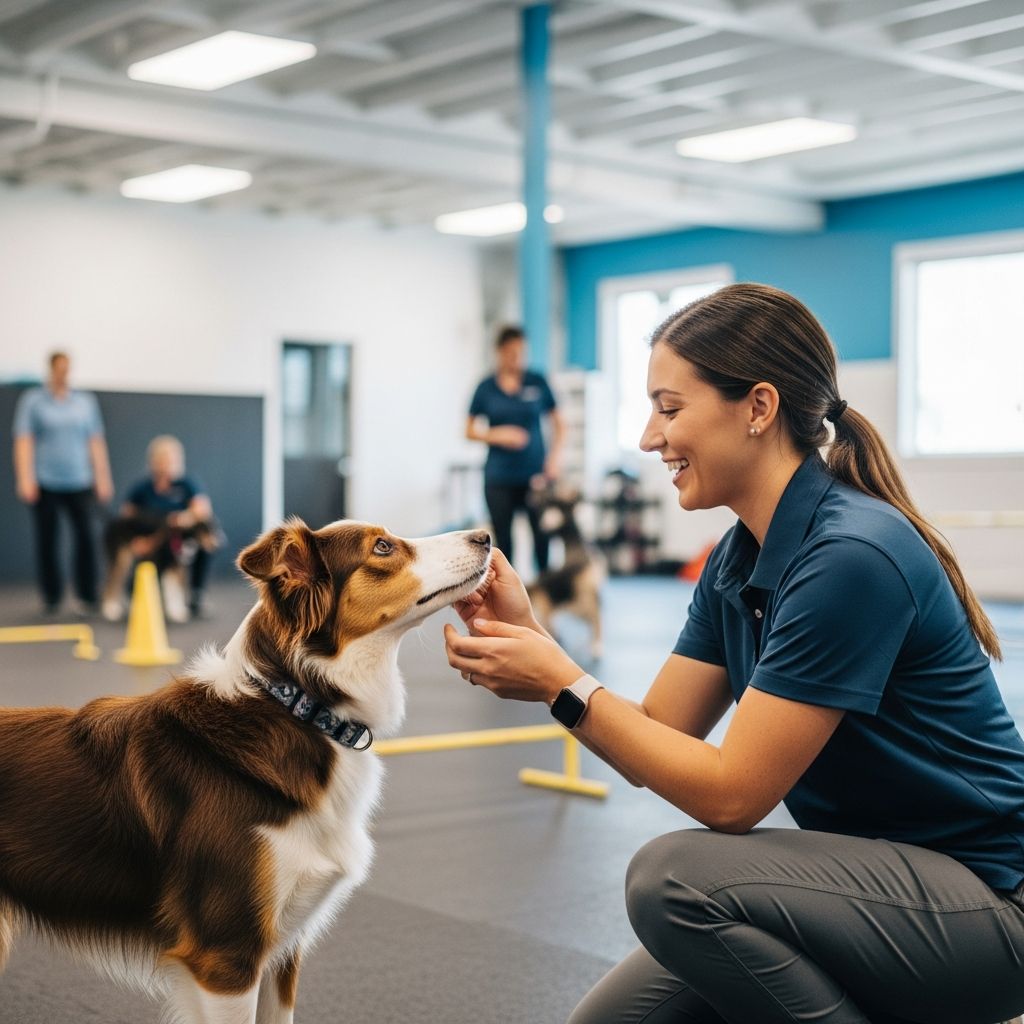
The research examining social reinforcement was carefully designed to understand how dogs respond to different types of positive feedback. The study focused on teaching dogs a specific behavior called “targeting,” or “touch,” where dogs learn to touch their owner’s hand with their muzzle.
Study Parameters and Methodology
In the experiment, dog owners held their hands at nose level for 30 seconds or until their dog touched the hand. The owner’s response varied across different training sessions, with reinforcement options including:
- Four seconds of petting and praise
- Thirty seconds of petting and praise
- A verbal marker (“yip”) followed by food
The researchers chose these specific timeframes thoughtfully. As Feuerbacher explains, the four-second duration was selected because it closely matched the time required to deliver a piece of food to a dog, making it a fair comparison between the two reinforcement methods.
Key Findings: What the Research Reveals
The study yielded several important insights about social reinforcement in dog training:
Individual Variation Matters
One of the most significant findings was the discovery of considerable individual variation among dogs. The study found that:
- Some dogs responded maximally to social interaction as a reinforcer
- Other dogs showed minimal response to social interaction alone
- Two of the three dogs tested responded to all cues in either social or food conditions
- One dog responded approximately twice as much in sessions where food was offered compared to social interaction sessions
This variation underscores an important principle: dog owners must pay close attention to their individual dogs and determine what is truly meaningful and valuable to them. For some dogs, social interaction might be an excellent training tool, while others may respond better to food or play-based rewards.
Duration of Social Interaction
Interestingly, the study did not find significant differences in training effectiveness based on the duration of social interaction. Whether dogs received four seconds or 30 seconds of petting and praise, the training outcomes were comparable. However, one dog did exhibit notably more barking after receiving four seconds of social interaction compared to 30 seconds or food-based rewards, suggesting that some dogs may prefer longer interaction periods.
Food vs. Social Reinforcement: A Comparison
While social reinforcement proved effective, the research provides clear insights about how it compares to food rewards:
| Comparison Factor | Social Interaction | Food Rewards |
|---|---|---|
| Effectiveness for Most Dogs | Good, but variable | Generally more effective |
| Preparation Required | None | Yes—must carry treats |
| Always Available | Yes | No |
| Individual Dog Variation | High | More consistent |
| Best Used When | In immediate training moments | For consistent behavior shaping |
According to the research, food remains more effective as a reinforcer for most dogs, as the authors note: “Our results suggest both durations of social interaction can function as a reinforcer, especially when delivered sporadically, but they are still not as effective as food as a reinforcer for most dogs.”
The Power of Combining Rewards
One of the most valuable practical insights from the research is that combining social interaction with food rewards creates an even more effective training approach. Rather than viewing these methods as competing strategies, trainers should see them as complementary tools that can be used together for optimal results.
This combination approach offers several advantages:
- You leverage the immediate availability of social rewards while maintaining the powerful effectiveness of food
- You reduce treat consumption while maintaining training effectiveness
- You provide varied, enriching feedback that keeps your dog engaged
- You adapt to your dog’s individual preferences and learning style
The Role of Petting vs. Vocal Praise
While the study examined petting and vocal praise combined as a social reinforcement method, additional research insights suggest these elements are not equally valuable to dogs. Petting appears to be the primary driver of social reinforcement effectiveness, rather than vocal praise alone.
Feuerbacher notes: “While we didn’t directly explore whether it was petting, or vocal praise, or both contributed to the effect we saw, our prior research suggests it was likely petting that was driving our results. We have found no effect of adding vocal praise to food delivery on the efficacy of food as a reinforcer, and in other studies, dogs preferred petting much more than vocal praise.”
This finding is practically important: while praising your dog verbally has its place in training, the physical contact of petting is what truly resonates with most dogs. This suggests that your hands-on attention and gentle touch are more valuable rewards than enthusiastic verbal praise alone.
Practical Applications for Dog Owners
When to Use Social Reinforcement
Social reinforcement works best in situations where:
- You’re training in locations where carrying treats is impractical
- You want to reinforce behavior immediately without fumbling for food
- Your dog shows a strong preference for attention and interaction
- You’re working on behaviors that don’t require intensive food motivation
- You want to reduce your dog’s overall treat intake while maintaining training effectiveness
Recognizing Your Dog’s Preferences
To determine whether your dog is motivated by social interaction, observe their behavior in response to:
- How eagerly they seek your attention and petting
- Whether they seem satisfied with praise and affection between training sessions
- How they respond compared to their reaction to food rewards
- Their overall energy and engagement when you’re simply interacting with them
Pay attention to your individual dog’s unique preferences rather than assuming all dogs respond equally to the same rewards.
Making Training Accessible Through Social Reinforcement
One often-overlooked advantage of social reinforcement is its role in making positive-reinforcement training more accessible. Many people hesitate to use positive-reinforcement methods because they feel unprepared or don’t want to carry treats everywhere. Social reinforcement removes this barrier.
Because petting and praise require no advance preparation or special equipment, social reinforcement can encourage more people to adopt science-based, positive training methods. This accessibility is particularly valuable for:
- Training in public spaces where treats might be inconvenient
- Quick reinforcement of good behavior during daily life
- Owners who prefer not to use food-based rewards
- Dogs with dietary restrictions or weight management needs
- Building training consistency throughout the day in spontaneous moments
Combining Strategies for Optimal Training Success
The most effective approach combines the benefits of both social and food-based reinforcement. Consider this layered strategy:
- Initial training: Use food rewards to establish new behaviors quickly and clearly
- Skill building: Mix food and social rewards to maintain engagement while reducing treat frequency
- Maintenance: Rely more heavily on social reinforcement for established behaviors
- Special occasions: Use occasional food rewards to keep behaviors fresh and prevent extinction
The Importance of Consistency and Timing
Regardless of whether you’re using social or food reinforcement, successful dog training requires immediate and consistent reward delivery. Your dog must understand the connection between their behavior and the reward they receive. This timing principle applies equally to petting and praise as it does to treats.
When your dog performs the desired behavior, reward them immediately—whether with a treat, enthusiastic petting, or both. This immediate feedback helps your dog understand exactly what behavior earned them the reward.
Building Your Dog’s Reinforcement Hierarchy
Every dog has preferences for what motivates them. Some dogs might have a clear hierarchy:
- Highest preference: Playing with a favorite toy
- Second preference: Specific food treats
- Third preference: Social interaction and petting
- Lower preference: General praise
Understanding your dog’s personal reward hierarchy allows you to use the most powerful motivators strategically. Save the highest-value rewards for challenging behaviors or situations requiring extra motivation, and use lower-value rewards for behaviors your dog already understands well.
Frequently Asked Questions
Q: Is social reinforcement as effective as food for all dogs?
A: No. While research shows social interaction can be an effective reinforcer, especially when delivered sporadically, food remains more effective for most dogs. However, individual dogs vary significantly in their preferences, so some dogs may respond exceptionally well to petting and praise.
Q: Can I use only social reinforcement to train my dog?
A: You can for some dogs, particularly those who are highly motivated by attention and interaction. However, combining social reinforcement with occasional food rewards typically produces better results and faster learning.
Q: Is vocal praise alone effective as a reinforcer?
A: Research suggests that petting is more valuable to dogs than vocal praise alone. While you can certainly praise your dog verbally, pairing it with physical touch (petting) significantly increases its effectiveness as a reinforcer.
Q: How do I know if my dog prefers social reinforcement?
A: Observe how your dog responds to your attention and petting compared to treats. If your dog eagerly seeks your company and seems satisfied with interaction, social reinforcement may work well for them. Testing both methods during training sessions will reveal your dog’s true preferences.
Q: Can I combine social and food reinforcement?
A: Yes, and this combination is often ideal. Research shows that combining these reinforcement types can be even more effective than using either one alone, offering flexibility and maintaining your dog’s motivation.
Q: Does the duration of petting affect training effectiveness?
A: Research found that four seconds versus 30 seconds of petting produced similar results for most dogs. What matters more is that you deliver the reinforcement immediately and consistently after the desired behavior.
References
- Social interaction can function as a reinforcer for dogs: Effects of stimulus duration and session parameters — Erica Feuerbacher, Caitlin Togher, and Jonathan Friedel. Research Publication. https://www.kinship.com/dog-behavior/social-reinforcement-training
- How to use Positive-Reinforcement to Train Your Dog — Kinship. 2024. https://www.kinship.com/dog-behavior/positive-reinforcement-dog-training
- Key principles of positive reinforcement training — Oak Barn Vets. 2024. https://www.oakbarnvets.com/pet-help-advice/puppies/576-top-tips-for-training-new-puppies-pawsitive-reinforcement
Similar Articles








Read full bio of medha deb