

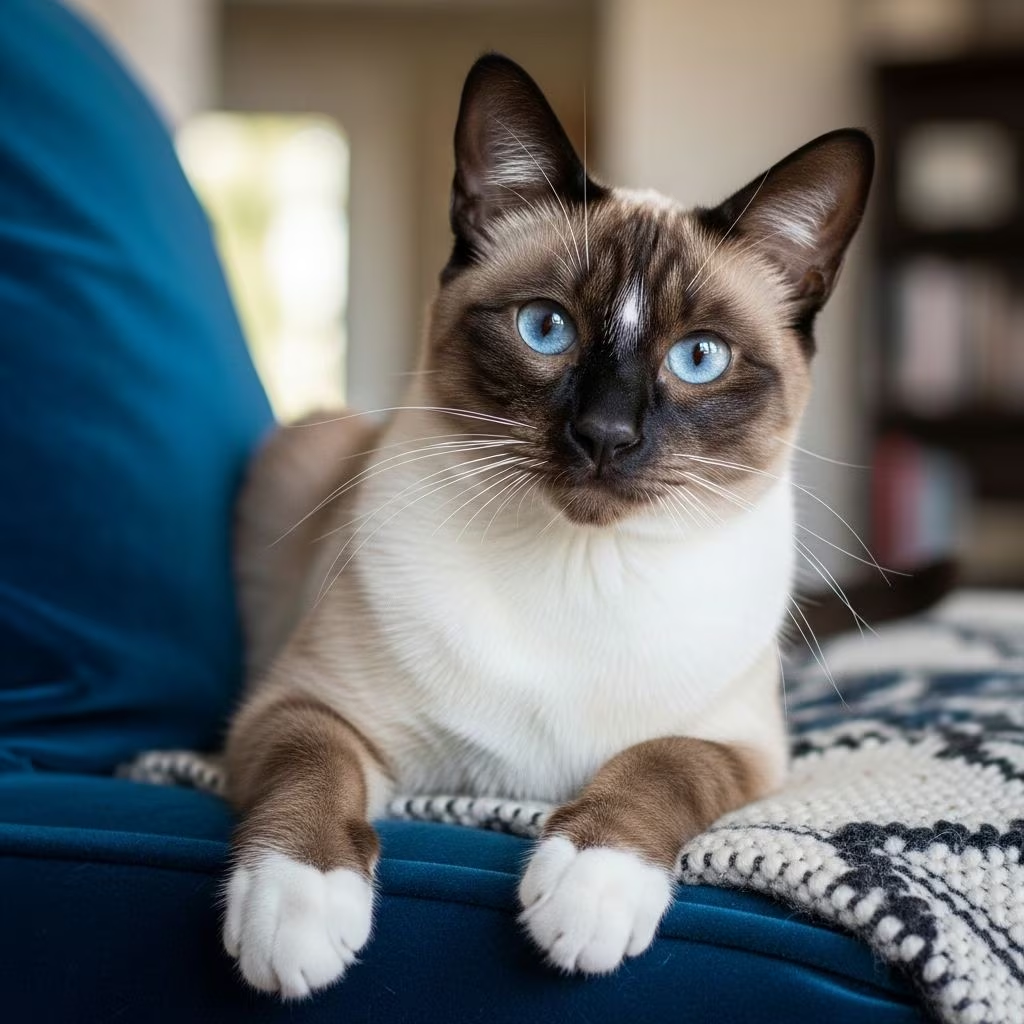
The Snowshoe cat is a rare and enchanting breed known for its striking blue eyes, white paws, and a personality that blends the sociability of Siamese cats with the sturdy build of American Shorthairs. Developed in the 1960s, this medium-sized feline captivates with its unique markings and affectionate nature, making it an ideal companion for families.
Snowshoe Cat Breed Overview
Snowshoe cats emerged from accidental crossings between Siamese queens and American Shorthair studs in the early 1960s by breeder Dorothy Hinds-Daugherty. Kittens born with unexpected white paws and an inverted “V” on their noses inspired the name “Snowshoe,” evoking images of tiny snow-covered feet. Despite challenges in breeding consistent markings, the breed gained recognition from the American Cat Fanciers’ Association (ACFA) and others like TICA and FIFe.
These cats are medium to large, with males often reaching 9-12 pounds and females 7-10 pounds, featuring a muscular yet balanced body longer than average. Kittens are born pure white, with point colors developing over weeks to years, darkening with age into seal, blue, chocolate, lilac, or other shades.
Snowshoe Cat Personality & Temperament
Snowshoes inherit the vocal, social traits of Siamese but tempered with the mellow demeanor of American Shorthairs, resulting in outgoing, intelligent, and deeply affectionate cats. They thrive on human interaction, often following owners room-to-room, perching on laps, or “helping” with tasks. Playful and confident, they enjoy interactive toys, puzzle feeders, and high perches like cat condos.
Docile and sweet-tempered, Snowshoes are excellent with children, dogs, and other pets when socialized early. However, they dislike solitude, potentially becoming vocal or destructive if left alone too long—ideal for homes where someone is present or with feline companions. Their mellow side shines in quiet cuddles, balancing high energy with devotion.
- Affectionate: Bonds strongly with family, seeking attention and touch.
- Playful: Loves games, leaps, and mental challenges.
- Social: Gets along with kids, dogs, and cats.
- Vocal: Communicates with chirps, meows, and trills like Siamese.
- Intelligent: Learns tricks and solves puzzles quickly.
Snowshoe Cat Characteristics (Physical)
Snowshoes boast a harmonious physique: medium boning, muscular build, and moderate length body without extremes, per ACFA standards. Their triangular head features high cheekbones, a firm chin, and medium-wide nose, often with a slight bump.
| Feature | Description |
|---|---|
| Size | Medium-large; males 9-12 lbs (up to 14 lbs), females 7-10 lbs; body longer than average |
| Head | Equilateral triangle shape, high cheekbones, proportionate muzzle |
| Eyes | Blue (pale to deep), walnut-shaped, slightly rounded and slanted |
| Ears | Medium to medium-large, rounded tips, wide-set |
| Legs & Paws | Medium length/boning; white mittens (front), boots (back); agile for jumping |
| Tail | Medium length, tapering |
Coat & Color
The short-to-medium, smooth coat lies flat with no undercoat, requiring minimal grooming—a weekly brush suffices. Point coloration features darker ears, mask, tail, and legs on a cream/white body, with mandatory white: inverted “V” on nose, chest patches, and paw markings (mittens/boots). Colors include seal, blue, chocolate, lilac, fawn, lynx, tortie; bicolor or tabby patterns accepted by some registries. White must contrast sharply with points.
Snowshoe Cat Health & Lifespan
With proper care, Snowshoes live 14-20 years. As a hybrid breed, they enjoy hybrid vigor but inherit potential issues from Siamese: hypertrophic cardiomyopathy (HCM), patellar luxation, and pyruvate kinase deficiency (PKD). Annual vet checks, including cardiac ultrasounds, are vital. Dental care prevents common feline gingivitis.
- Lifespan: 14-20 years with good care.
- Common Issues: HCM, luxating patella, PKD; monitor for respiratory sensitivity from Siamese lineage.
- Preventive Care: Vaccinations, flea/tick control, spay/neuter, weight management.
Snowshoe Cat Care & Grooming
Low-maintenance grooming: brush weekly to reduce shedding and distribute oils. Bathe rarely; nails trimmed biweekly, ears cleaned monthly. Provide high-quality diet for muscle maintenance—avoid obesity in their sturdy frames.
Exercise via play: wand toys, laser pointers, vertical spaces. Mental stimulation prevents boredom-induced mischief. Litter box: uncovered, clumping litter; keep clean as they are fastidious.
Nutrition Needs
Feed age-appropriate, protein-rich kibble/wet food; portion control for 200-300 daily calories. Fresh water always; puzzle feeders engage their smarts.
Pros & Cons of Owning a Snowshoe Cat
| Pros | Cons |
|---|---|
| Affectionate and family-friendly | Needs constant companionship |
| Playful and intelligent | Can be vocal/demanding |
| Low-shedding coat | Prone to Siamese health issues |
| Good with kids/pets | Requires stimulation or becomes bored |
| Adaptable to apartments | Rare/expensive (may need waiting lists) |
History of the Snowshoe Cat
In the 1960s, Kentucky breeder Dorothy Hinds-Daugherty crossed Siamese with American Shorthairs for hardier kittens. A litter produced white-pawed surprises, which she selectively bred. Early challenges: inconsistent markings led to outcrossing. By 1970s, ACFA recognized them; TICA/CFA followed. Today, rarity persists due to breeding difficulty—genes for exact white paws are elusive.
Snowshoe Cat Price & Availability
Pet-quality kittens cost $800-$1,500; show-quality $2,000-$3,500 from reputable breeders. Adoption rarer; check rescues. Avoid unverified sources to prevent health/scam risks. Breeding demands ethics: health testing mandatory.
Fun Facts About Snowshoe Cats
- Born white; points emerge in 1-3 weeks, fully developing over years.
- Named for snow-like paws and nose “V.”
- Blue eyes always, unlike some pointed breeds.
- Hybrid vigor from diverse parentage.
- Love heights; provide cat trees.
- Vocally expressive but less shrill than Siamese.
Frequently Asked Questions (FAQs)
Are Snowshoe cats good with children?
Yes, their gentle, playful nature makes them excellent family pets when supervised.
Do Snowshoe cats shed a lot?
No, their short coat sheds minimally; weekly brushing handles it.
How much exercise do Snowshoe cats need?
Daily interactive play sessions; they are athletic and curious.
Are Snowshoe cats hypoallergenic?
Not truly, but low-shedding helps allergy sufferers somewhat.
Can Snowshoe cats be left alone?
Prefer not; they are social and may vocalize if lonely.
What colors do Snowshoe cats come in?
Seal, blue, chocolate, lilac points; bicolor, tabby patterns.
References
- Snowshoe Cat: 14 Must-Know Facts About This Charming Breed — Holistapet. 2023. https://www.holistapet.com/blogs/cat-breeds/snowshoe
- The Snowshoe Cat Breed — Hill’s Pet Nutrition. 2024. https://www.hillspet.com/cat-care/cat-breeds/snowshoe
- Snowshoe Cat Breed Information & Lifestyle — Rover.com. 2023. https://www.rover.com/blog/snowshoe-cats/
- Snowshoe cat — Wikipedia (citing CFA/ACFA standards). 2024-01-15. https://en.wikipedia.org/wiki/Snowshoe_cat
- Why Snowshoe Cats Are So Special: 10 Facts You’ll Love — Feliway US. 2023. https://us.feliway.com/blogs/news/why-snowshoe-cats-are-so-special-10-facts-youll-love



