

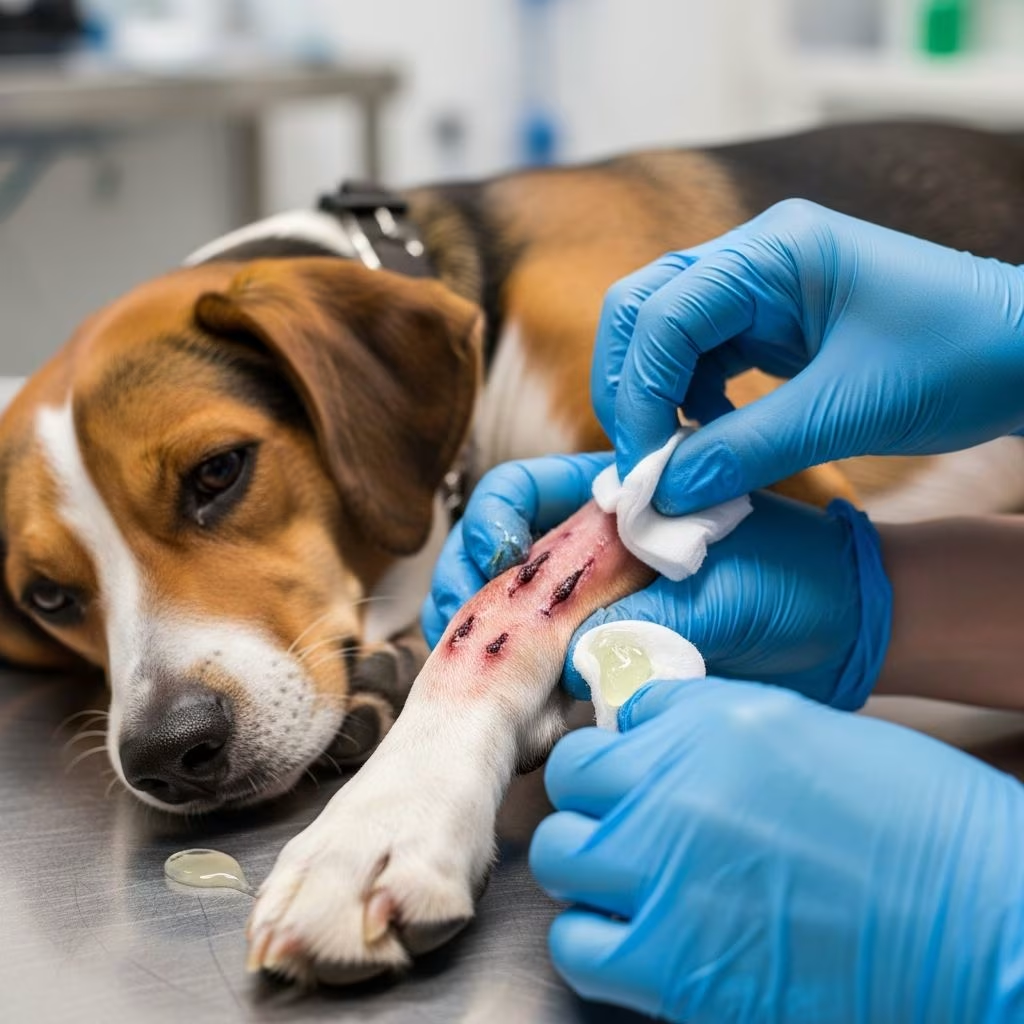
Snakebites pose a serious threat to dogs and cats, requiring swift action to counteract venom effects that can lead to organ failure, bleeding disorders, and death. Effective management hinges on rapid veterinary intervention, primarily through antivenom administration alongside supportive therapies, which can elevate survival rates to 75-91% with prompt care.
Recognizing the Danger: Signs Your Pet Has Been Bitten
Early detection of a snakebite is crucial, as symptoms can escalate quickly. Pets may exhibit puncture wounds with swelling, puncture marks without visible swelling due to rapid venom spread, progressive lethargy, vomiting, tremors, collapse, or difficulty breathing. Neurological signs like weakness or paralysis often appear in elapid envenomations, while pit viper bites cause localized tissue damage and systemic bleeding issues.
- Immediate physical indicators: Swelling, bruising, or pain at the bite site, often on the face, legs, or torso.
- Systemic responses: Rapid breathing, pale gums, weakness, or seizures signaling venom circulation.
- Species-specific clues: Pit vipers (rattlesnakes, copperheads) lead to hemotoxic effects; elapids (cobras, tigers) cause neurotoxicity.
Owners in snake-prone areas should monitor pets closely during outdoor activities, especially in warmer months when reptiles are active.
First Response: What to Do Before Reaching the Vet
Time is critical post-bite; venom effects intensify within minutes. Carry your pet to the nearest veterinary facility without delay, minimizing movement to slow venom spread. Avoid common errors like applying tourniquets, ice, or cutting the wound, which can worsen tissue damage or delay care.
| Do | Don’t |
|---|---|
| Keep pet calm and still | Cut or suck the wound |
| Remove collars/jewelry near bite | Apply tourniquet or ice |
| Rush to emergency vet | Offer food, water, or meds |
| Note snake description if safe | Wait for symptoms to worsen |
Pre-hospital stabilization focuses on preventing shock; IV fluids and monitoring begin upon arrival. For cats, which tolerate bites poorly, zero home remedies are safe—professional care is non-negotiable.
Arrival at the Clinic: Initial Stabilization Protocols
Veterinarians prioritize life-threatening issues upon presentation. An IV catheter is placed immediately for fluid access, with intubation gear ready for respiratory collapse, common in neurotoxic bites. Oxygen supports breathing, while shock boluses (10-20 mL/kg crystalloids) address hypotension.
Baseline diagnostics include:
- Complete blood count (CBC) for hemolysis and platelets.
- Chemistry panel for organ function.
- Coagulation tests (PT/PTT) to detect bleeding risks.
- Urinalysis for kidney involvement.
- PCV/TS and blood smear for echinocytes.
Venom detection kits (SVDK) confirm envenomation but aren’t always repeated post-initial dose.
Core Treatment: Administering Antivenom Effectively
Antivenom is the definitive therapy, neutralizing circulating venom by binding its proteins. For pit vipers, products like VenomVet or Rattler are FDA-approved for dogs and cats, most effective within 6 hours but beneficial later if effects persist. Multivalent antivenenes target common species like tiger or brown snakes.
Dosing guidelines:
- Standard: Dilute 1 vial 1:1 with saline, infuse over 20 minutes IV.
- Brown snake: 2 vials due to potent coagulopathy.
- Monitor for reactions; premedicate if needed, treat anaphylaxis with adrenaline (0.01 mg/kg IV/IM).
Post-antivenom, venom neutralization occurs with 4000-8000 units for many species, avoiding unnecessary repeats based solely on lab trends.
Supportive Therapies: Beyond Antivenom
Comprehensive care addresses multi-organ impacts. IV fluids at 1-2x maintenance promote diuresis and organ perfusion, with electrolytes (KCl, MgCl) as needed. Pain control uses opioids, avoiding NSAIDs due to coagulopathy risks.
Additional interventions:
- Bleeding management: Transfusions for severe anemia or coagulopathy.
- Infection prevention: Broad-spectrum antibiotics until wounds heal.
- Wound monitoring: Clean, debride if necrotic; no routine surgery.
- Respiratory support: Ventilation for paralysis.
Hospitalization lasts 24-72 hours minimum, with serial labs every 6-8 hours to track recovery.
Species Differences: Tailoring Care for Dogs vs. Cats
Dogs often suffer facial or limb bites from investigative sniffing, showing robust local swelling but better tolerance. Cats, more agile yet curious, face higher lethality (66% untreated survival vs. 33% for dogs), with subtle signs masking severity.
| Aspect | Dogs | Cats |
|---|---|---|
| Common bite sites | Face, legs | Face, paws |
| Symptom onset | Swelling dominant | Neurological rapid |
| Antivenom dose | Standard vial(s) | Same, monitor closely |
| Prognosis treated | 80-91% | 75-85% |
Both benefit from identical protocols, but cats demand vigilant airway monitoring.
Long-Term Recovery and Monitoring
Post-discharge, restrict activity for 1-2 weeks to aid healing. Watch for delayed issues like wound infections, kidney strain, or necrosis. Alkaline urine mitigates nephrotoxicity; follow-up labs ensure clotting normalization.
Some pets develop hypersensitivity to future bites, though rattlesnake vaccines may reduce severity in dogs—not a substitute for antivenom. Full recovery typically spans 7-14 days with proper care.
Prevention Strategies: Keeping Snakes at Bay
Proactive measures slash bite risks. Supervise pets outdoors, especially dawn/dusk in endemic areas. Clear yard debris, seal entry points, and use snake-proof fencing. Educate on local species; avoid hiking in brush without leash control.
- Train recall commands for instant response.
- Install snake aversive devices or bells on pets.
- Yearly vet check for at-risk animals.
FAQs on Snakebite Management
Q: How soon after a bite should antivenom be given?
A: Ideally within 6 hours for peak efficacy, but benefits persist if symptoms continue.
Q: Can I treat a snakebite at home?
A: No—home remedies delay care and harm; rush to a vet.
Q: What improves survival odds?
A: Prompt transport, antivenom, and fluids yield 75-91% success.
Q: Are all snakebites fatal?
A: No, but untreated rates drop to 33-66%; treatment transforms outcomes.
Q: Does snake type matter for treatment?
A: Antivenom choice depends on region; polyvalent covers multiples.
Regional Considerations in Snakebite Incidence
In North America, pit vipers dominate threats; Australia sees elapids like brown snakes. Tailor preparedness to locale—stock appropriate antivenoms at clinics. Owners in high-risk zones should know nearest 24/7 facilities.
Statistics underscore urgency: Delayed tiger snake care spikes dog mortality. Community education via vet resources enhances readiness.
References
- In-hospital management for pit viper envenomations dogs and cats — National Snakebite Support. 2023. https://www.nationalsnakebitesupport.org/nss-snakebite-management-education/in-hospital-management-for-pit-viper-envenomaitons-dogs-and-cats
- Treatment of Snake Envenomation in Dogs and Cats — Animal Emergency Australia. 2023. https://animalemergencyaustralia.com.au/blog/treatment-of-snake-envenomation-in-dogs-and-cats/
- Critical Care for Pets After Snake Bites — Alpine Animal Hospital. 2024. https://alpineanimal.net/critical-care-for-pets-after-snake-bites/
- Snake Bites on Dogs & Cats: The Dos & Don’ts — Partner Veterinary Emergency & Specialty. 2025-09-03. https://partnervesc.com/2025/09/03/snake-bites-on-dogs-and-cats/
- Snakebite – Special Pet Topics — Merck Veterinary Manual. 2024. https://www.merckvetmanual.com/special-pet-topics/poisoning/snakebite
- Snakebite 101 — AVS for Pets. 2023. https://www.avs4pets.com/blog/snakebite-101



