

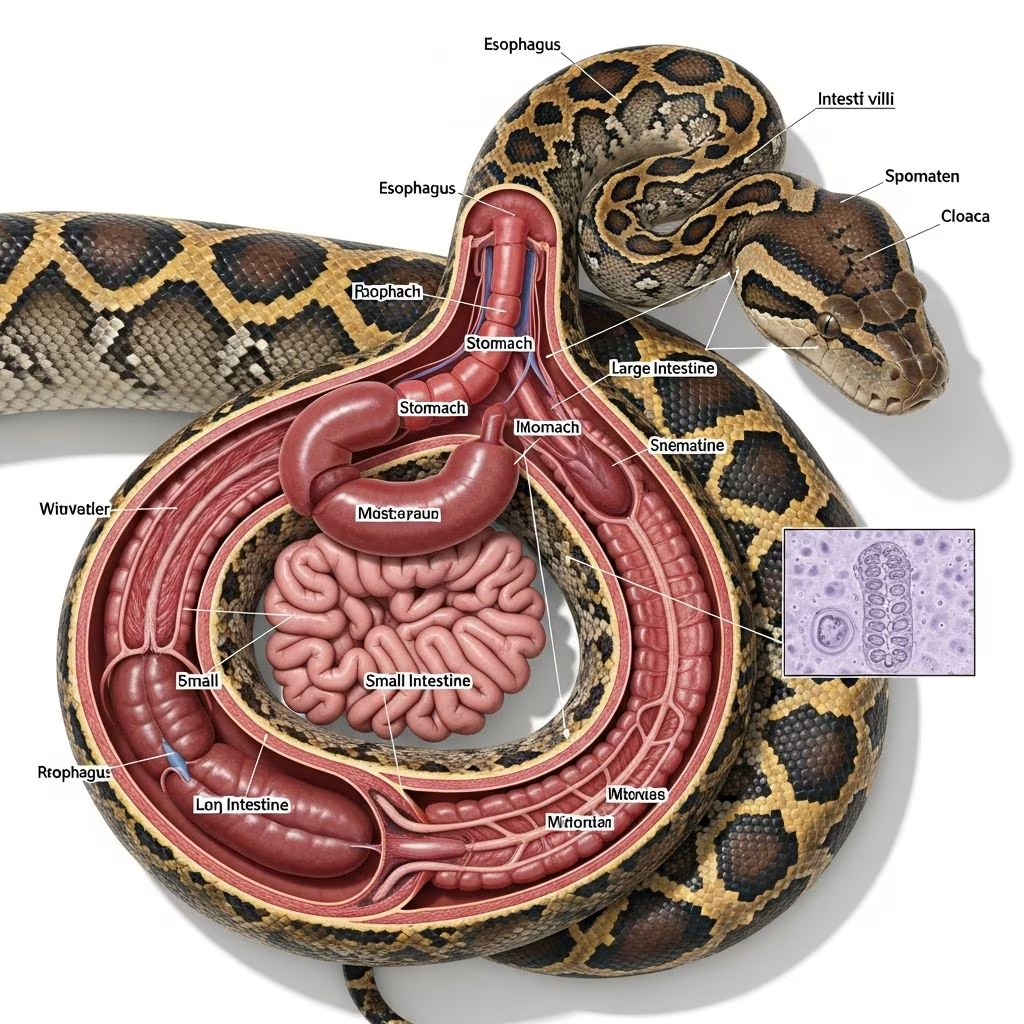
Many snake owners wonder whether their pets experience bowel movements similar to other animals. The answer is yes—snakes do defecate, but their elimination patterns are drastically different from mammals and other pets. Understanding snake digestive processes is essential for pet care, as it helps owners recognize normal behavior, identify potential health issues, and provide appropriate living conditions. The journey from consumption to waste elimination in snakes is a remarkable physiological process shaped by millions of years of evolution.
The Anatomy of Snake Digestive Pathways
The snake’s digestive tract is a continuous channel that extends nearly the entire length of the body, making it a linear and efficient system for processing prey. Unlike humans with compartmentalized digestive organs, snakes have evolved a streamlined anatomy specifically adapted for swallowing and digesting large, whole meals. This structural design reflects their predatory lifestyle and metabolic requirements.
The journey of food begins at the mouth, which contains specialized anatomical features. Snake jaws are not fused like human jaws but instead consist of two separate halves connected by a stretchy ligament that allows them to move independently. This remarkable adaptation enables snakes to unhinge their jaws and accommodate prey substantially larger than their head. Once food enters the mouth, it travels through the esophagus, a muscular tube lined with longitudinal folds that dramatically increase its stretchability.
The esophagus extends from the back of the mouth nearly halfway down the snake’s body before terminating at the stomach. Unlike the human esophagus, which relies primarily on muscular contractions called peristalsis, the snake esophagus benefits from body wall muscles that help squeeze prey downward. This dual-mechanism approach allows snakes to move enormous meals efficiently toward the digestive processing center.
The Stomach: The Primary Digestion Powerhouse
Once food reaches the stomach, the real work of breaking down prey begins. The snake’s stomach is a J-shaped organ that undergoes dramatic transformation when a meal arrives. In response to food intake, the stomach becomes highly acidic, with the pH dropping from approximately 7.5 to 1.5. This extreme acidity is far more potent than human stomach acid and serves a critical purpose: dissolving virtually everything the snake has consumed, including flesh, tendons, skin, and even bones.
The stomach secretes powerful gastric juices and digestive enzymes that attack the ingested material from all angles. One of the most notable differences between snake and mammal digestion is the duration food remains in the stomach. While humans typically complete stomach digestion within several hours, snakes can retain meals for days or even weeks. A large meal might take a python two to three weeks to fully digest, during which the snake’s entire metabolism shifts into high gear. The heart, liver, and pancreas actually enlarge to support the increased metabolic demands of processing such massive meals.
Nutrient Absorption Through the Intestinal System
After adequate stomach digestion, food passes through a tight valve called the pylorus and enters the small intestine, beginning the nutrient extraction phase. The small intestine is subdivided into three distinct regions: the duodenum, jejunum, and ileum. The duodenum, the first segment immediately following the pylorus, features thicker walls than the remaining intestinal sections and serves as the primary site where accessory organs contribute to digestion.
The liver and pancreas play supporting roles in the intestinal digestion process. The liver primarily functions in excreting nitrogenous wastes, storing nutrients, and producing bile that aids in fat digestion. The pancreas produces insulin and glycogen while also secreting digestive enzymes such as lipases, proteases, and carbohydrases into the duodenum. These enzymes continue the breakdown process and facilitate nutrient absorption across the intestinal walls.
The structure of the small intestine varies among snake species. Some snakes have essentially straight intestines from stomach to colon, while others possess loops that extend the effective length, ensuring more efficient nutrient extraction. After nutrient absorption occurs throughout the small intestine, the remaining material moves toward the large intestine, which completes the nutrient extraction process and begins preparing waste for elimination.
The Cloaca: The Multi-Purpose Waste Chamber
Unlike mammals, which separate solid waste from urine through distinct anatomical pathways, snakes utilize a single structure called the cloaca for multiple elimination functions. The cloaca is a chambered structure divided into three functional compartments: the coprodeum, urodeum, and proctodeum.
The coprodeum is the chamber that receives feces from the large intestine. This compartment stores solid waste until the snake is ready to defecate. The urodeum, the middle chamber, receives both urine and reproductive products from the urogenital ducts. Unlike mammals with a functional bladder, snakes lack a bladder entirely. Instead, the ureters from the kidneys widen just before opening into the urodeum, and this widened section acts as a temporary urine storage organ. For females, the reproductive ducts deliver eggs into the urodeum, while males deposit sperm through the same pathway.
The cloaca also plays an important water reabsorption role. Before waste is eliminated, the cloaca reabsorbs water from both fecal material and urine, concentrating waste and conserving precious body fluids. This adaptation is particularly important for snakes, especially those inhabiting arid environments where water conservation is critical for survival.
Defecation Frequency and Patterns in Snakes
One of the most distinctive aspects of snake bowel habits is the infrequency of defecation. Unlike mammals that may defecate daily or multiple times per day, snakes typically defecate only once every few weeks or even months, depending on feeding frequency and other factors. This extended interval between bowel movements reflects their slower metabolism and the extended time required to fully process large meals.
Snakes typically deposit waste from a meal all at once, meaning feces are stored near the end of the large intestine until digestion is completely finished. Some snakes may not defecate for extended periods, which is perfectly normal behavior. An owner should only become concerned if a previously regular snake suddenly changes its elimination pattern or shows signs of constipation, such as straining or loss of appetite.
Factors Influencing Digestive Timing
Several variables affect how quickly a snake processes food and eliminates waste. Temperature is among the most significant factors. Snakes are ectothermic animals that rely on external heat sources to regulate body temperature and metabolic rate. After consuming a large meal, snakes often seek warm environments or engage in basking behavior. Heat accelerates metabolism and speeds up the entire digestive process, which is why snakes maintain relatively constant body temperatures during the digestion period.
Meal size directly impacts digestion duration. A small meal might be processed within days, while a large prey item could require weeks or months. Snake species also show variations in digestive efficiency. Some species have specialized adaptations for processing specific prey types. Certain species, such as Burmese pythons, possess specialized intestinal cells that extract and process calcium from bones consumed during feeding, eventually shedding this calcium naturally.
Unique Digestive Specializations
One fascinating aspect of snake digestion involves how they handle skeletal material. Bones consumed as part of whole prey are dissolved in the stomach and intestines through the combined action of stomach acid and enzymes. However, not everything is digested completely. Hair and keratin materials are compacted into pellets that snakes eventually eliminate. These pellets represent indigestible material from consumed prey and differ from regular feces.
During feeding, snakes employ another remarkable adaptation: tracheal extension. When swallowing prey, snakes extend their trachea (windpipe) to bypass the food item blocking the throat, allowing continuous respiration throughout the swallowing process. This prevents the prey from suffocating the snake during the potentially lengthy process of ingestion.
Comparing Snake and Human Digestive Systems
| Feature | Snakes | Humans |
|---|---|---|
| Jaw Structure | Disarticulated, can separate and move independently | Fixed, fused structure |
| Esophagus Function | Stretches dramatically with longitudinal folds | Propels food with muscular contractions |
| Stomach Capacity | Inflates dramatically, extremely acidic | Limited capacity, moderate acidity |
| Digestion Duration | Days to weeks or months | Several hours |
| Intestinal Structure | Collapse when not feeding, expand after meals | Remain expanded at consistent diameter |
| Waste Elimination | Uses cloaca for all waste products | Separate systems for feces and urine |
| Urinary System | No bladder; widened ureters store urine | Functional bladder stores urine |
Health Indicators Related to Snake Elimination
Pet snake owners should monitor their animals’ bowel movements as indicators of overall health. Normal snake feces typically appear as dark, firm pellets or logs. Changes in fecal appearance, consistency, or frequency may signal underlying health concerns requiring veterinary attention. Constipation, indicated by straining or prolonged intervals without defecation beyond the individual snake’s normal pattern, may result from improper temperatures, dehydration, or intestinal blockages.
Conversely, frequent or loose stools might indicate gastrointestinal infections, parasites, or improper feeding practices. Snakes fed appropriately-sized prey relative to their body dimensions typically experience optimal digestion. Prey that is excessively large or fed too frequently can disrupt normal digestive timing and potentially cause health complications.
Frequently Asked Questions About Snake Digestion and Elimination
How often do snakes typically defecate?
Defecation frequency varies dramatically among snakes and depends primarily on feeding frequency. Snakes fed once per week might defecate weekly or biweekly, while snakes fed monthly could defecate monthly or less frequently. Adult snakes in maintenance may go weeks or months between bowel movements, especially if meals are large or infrequent.
Why do snakes sometimes regurgitate food?
Regurgitation can occur if a snake is handled too soon after feeding, if the environment is too cold to support proper digestion, or if the prey item is excessively large. Snakes should not be handled for at least 48 hours after feeding to allow proper digestion.
Can you tell a snake’s health by its feces?
Yes, fecal appearance provides valuable health information. Healthy snake feces should be dark, relatively firm, and produced at intervals consistent with the individual snake’s normal pattern. Changes in appearance, color, consistency, or frequency warrant veterinary evaluation.
Do all snakes have a cloaca?
Yes, all snakes possess a cloaca as a normal anatomical feature. This three-chambered structure serves as the universal waste elimination point for feces, urine, and reproductive products.
What temperature optimizes snake digestion?
Snakes should be provided with a temperature gradient allowing them to thermoregulate during digestion. Most snake species digest optimally within their species-specific temperature range, typically between 75-85°F (24-29°C). Warmer temperatures within species-appropriate ranges accelerate digestion.
References
- How Do Snakes Poop? — A-Z Animals. Accessed February 2026. https://a-z-animals.com/animals/snake/how-do-snakes-poop/
- Digestive System of Snakes — Murray State University. Accessed February 2026. https://campus.murraystate.edu/academic/faculty/tderting/cva_atlases/stephsnake/snakepage3.htm
- How a snake’s digestive system is different from humans — Times of India. Accessed February 2026. https://timesofindia.indiatimes.com/etimes/trending/how-a-snakes-digestive-system-is-different-from-humans/articleshow/122528067.cms
- Snake Gastrointestinal Tract Anatomy — Reptiles Magazine. Accessed February 2026. https://reptilesmagazine.com/snake-gastrointestinal-tract-anatomy/



