

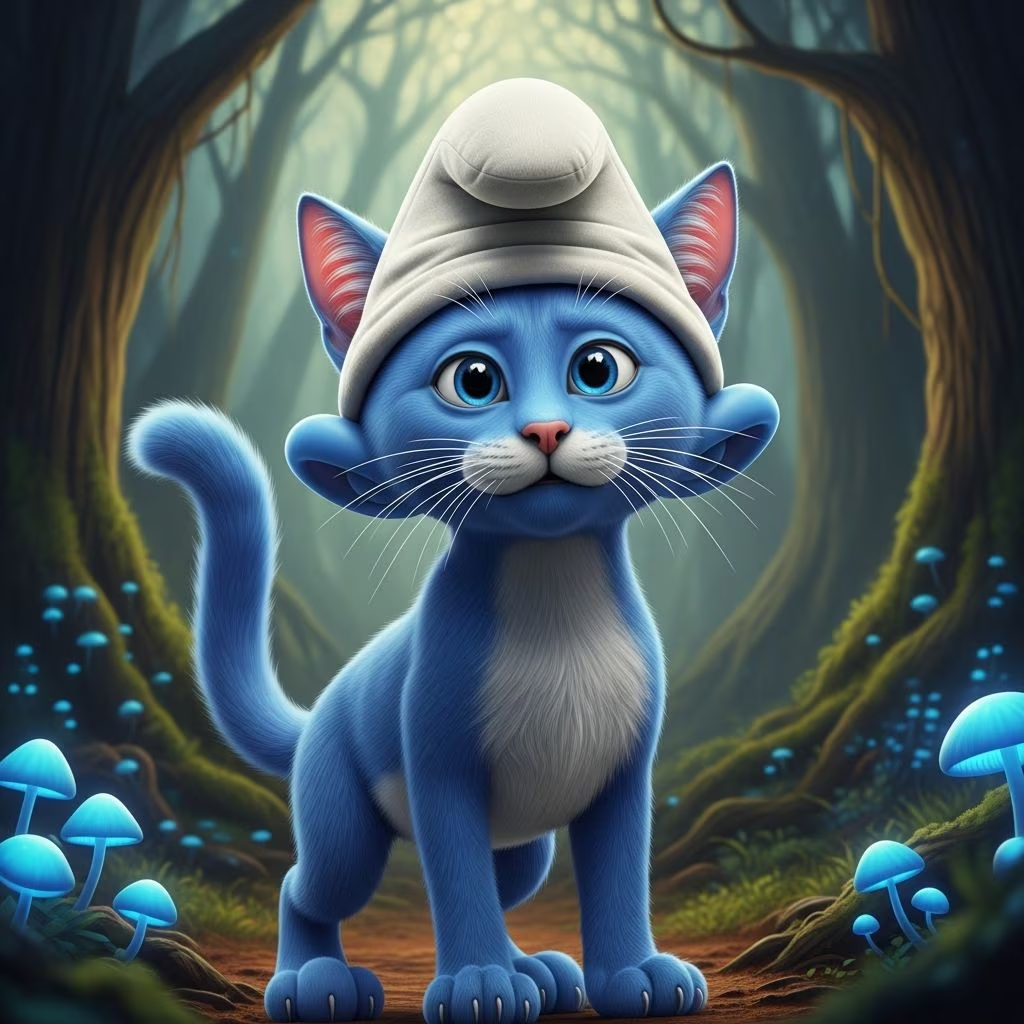
The Smurf Cat meme features a striking blue creature with feline traits lurking in a forest, blending whimsy with eeriness to spark curiosity worldwide. This image, born from digital artistry, exploded into a cultural juggernaut years after its creation, fueled by social media algorithms and collective online fascination.
The Artistic Roots of a Blue Feline Phenomenon
At the heart of the Smurf Cat story lies the creative mind of Nate Hallinan, a skilled concept artist known for crafting fantastical beasts in sci-fi and fantasy realms. In September 2011—or as some records note, refined by 2014—Hallinan unveiled his piece titled ‘Smurf Sighting.’ This artwork depicted a realistic interpretation of a Smurf, the iconic blue characters from Peyo’s beloved comic universe, but reimagined with distinctly cat-like features: pointed ears, whiskers, and a sly, predatory gaze set against a misty woodland backdrop.
Hallinan’s inspiration drew from the original Smurfs, small blue humanoids first introduced in 1958 within the Belgian comic Johan et Pirlouit. Created by Pierre Culliford, known as Peyo, these pint-sized forest dwellers spoke in a quirky language where ‘smurf’ substituted for nearly every noun and verb. Hallinan’s version transformed this playful trope into something more primal and animalistic, evoking a wild, undomesticated Smurf hybrid that blurred lines between cute cartoon and creepy cryptid.
Initially shared on platforms like DeviantArt, Instagram, and Hallinan’s personal site, the image simmered in obscurity. It wasn’t marketed as a cat—Hallinan focused on a ‘realistic Smurf’—yet viewers instinctively saw feline essence in its morphology, sparking the ‘Smurf Cat’ moniker organically. This artistic choice tapped into humanity’s love for anthropomorphic animals, a trope echoing through folklore from Egyptian cat gods to modern fursonas.
Decade of Dormancy: Why It Lay Hidden
For over a decade, Smurf Cat existed on the fringes of digital art communities. Hallinan’s portfolio brimmed with similar works—alien hybrids, mythical predators—but none ignited the same frenzy. Factors like limited algorithmic promotion on early social sites and niche appeal kept it under the radar. Meanwhile, meme culture evolved: from rage comics to Doge, then to surreal TikTok edits, priming the internet for oddities like this blue lurker.
Smurfs themselves had ebbed and flowed in popularity. Post-1980s TV heyday and 2011 live-action films, the franchise saw reboots, but by the 2010s, it was nostalgic fodder rather than trending topic. Hallinan’s piece bridged this gap, offering fresh eyes on aged IP without direct infringement, positioning it perfectly for rediscovery.
Explosive Revival: The 2023 Social Media Surge
The meme’s phoenix-like rise began in August 2023 on Russian social networks, where users paired the image with the cryptic hashtag ‘#Шайлушай’—transliterated as ‘Shailushai.’ This nonsensical chant, delivered in eerie deadpan voiceovers, amplified the image’s uncanny vibe. It quickly migrated to TikTok, synced with Alan Walker’s ‘The Spectre’ remix, its lyrics ‘We live, we love, we lie’ adding ironic depth to the blue cat’s inscrutable stare.
- Russian origins: Hashtag-driven posts amassed millions of views in days.
- TikTok takeover: Short-form videos looped the image with escalating absurdity.
- Global spread: English adaptations hit Instagram Reels, YouTube Shorts, and Reddit threads.
By late 2023, Smurf Cat infiltrated gaming worlds—Minecraft builds, Roblox avatars—and even AI art generators churned out variants. Reddit forums buzzed with ‘What is this thing?’ posts, while Twitter (now X) saw fan theories ranging from cursed forest spirit to smuggled Peyo prototype.
Decoding Virality: Psychological and Algorithmic Magic
| Factor | Description | Impact |
|---|---|---|
| Uncanny Valley Appeal | Blends familiar (Smurfs, cats) with alien (blue fur, mushroom cap) | Sparks intrigue and shares |
| Absurd Soundtrack | ‘Shailushai’ chant + electronic beats | Earworm effect boosts loops |
| Reaction Backlash | Complaints like ‘Why is this everywhere?’ fuel irony posts | Reverse psychology virality |
| Platform Algorithms | TikTok For You Page prioritizes surreal content | Exponential exposure |
Experts in meme studies attribute Smurf Cat’s success to its ‘brain rot’ quality—simple yet hypnotic, defying explanation. The meme thrived on paradox: viewers repelled yet compelled, posting to mock while amplifying reach. This mirrors classics like ‘Distracted Boyfriend’ or ‘This is Fine’ dog, where relatability meets randomness.
In Smurfs lore, cats like Azrael embody threat—Gargamel’s sly hunter stalking blue prey. Hallinan’s design flips this: the Smurf becomes the cat, subverting expectations and adding meta-humor for franchise fans.
Fan Theories and Creative Expansions
Online lore exploded with backstories. Fan animations on YouTube spun tragic tales: a Smurf cursed by Gargamel into feline form, or a hybrid kitten born in the mushroom village. One viral video narrates ‘Blue,’ a blue-furred outlier kitten shunned by peers, wandering forests until Hallinan’s ‘sighting’. Others invoke magic poofs or time-travel mishaps, nodding to Smurfs’ episodic chaos.
These narratives, while fictional, highlight meme evolution: from static image to shared mythology. Communities on Discord and Twitch host ‘Smurf Cat lore’ streams, blending art appreciation with absurdity.
Cultural Echoes: Smurfs Meet Modern Memes
Smurf Cat revitalized interest in Peyo’s universe, which spans comics, cartoons, films, and over 100 characters—from Papa Smurf to Sassette. Names varied globally: ‘Pitufos’ in Spanish, derived from Catalan folklore; ‘Schtroumpfs’ echoing invented dinner-table gibberish. The meme’s success underscores timeless appeal of blue-skinned oddballs clashing with our world.
Comparatively, it parallels ‘Skibidi Toilet’ or ‘Ohio’ memes—nonsensical yet inescapable. Yet Smurf Cat’s artistic pedigree sets it apart, crediting Hallinan amid the chaos.
Creator’s Perspective and Lasting Legacy
Nate Hallinan expressed delight at the unintended fame, noting in interviews it validated years of quiet creation. No monetization push followed; instead, it boosted his profile for commissions. Today, Smurf Cat endures in merch, NFTs (controversially), and holiday edits—proof memes outlive trends.
Its legacy? A reminder that virality favors the weird. In an oversaturated feed, one blue cat proved authenticity trumps polish.
Frequently Asked Questions
Who created the original Smurf Cat image?
Nate Hallinan, a concept artist, made it as a realistic Smurf rendition around 2011-2014.
Why is it called ‘Shailushai’?
The chant originated in Russian TikToks, a phonetic nonsense phrase enhancing the meme’s hypnotic quality.
Is Smurf Cat officially related to the Smurfs franchise?
No, it’s fan art inspired by Peyo’s Smurfs, not endorsed by creators.
How did it go viral so suddenly?
Russian social media sparked it in 2023, with TikTok algorithms and ironic backlash accelerating spread.
Are there official Smurf Cats in Smurfs stories?
Smurfs feature antagonistic cats like Azrael, but no blue Smurf-cat hybrids.
References
- The Rise and Rise of Smurf Cat — Torrance News Torch. 2023-09-01. https://torrancenewstorch.org/821/entertainment/what-the-smurf-is-that/
- The Smurfs — Wikipedia. 2024-01-15. https://en.wikipedia.org/wiki/The_Smurfs
- Where Did Smurf Cat Come From? — Catster. 2024-02-20. https://www.catster.com/lifestyle/where-did-smurf-cat-come-from/
- Cat – Smurfs Wiki — Fandom. 2023-11-10. https://smurfs.fandom.com/wiki/Cat



