

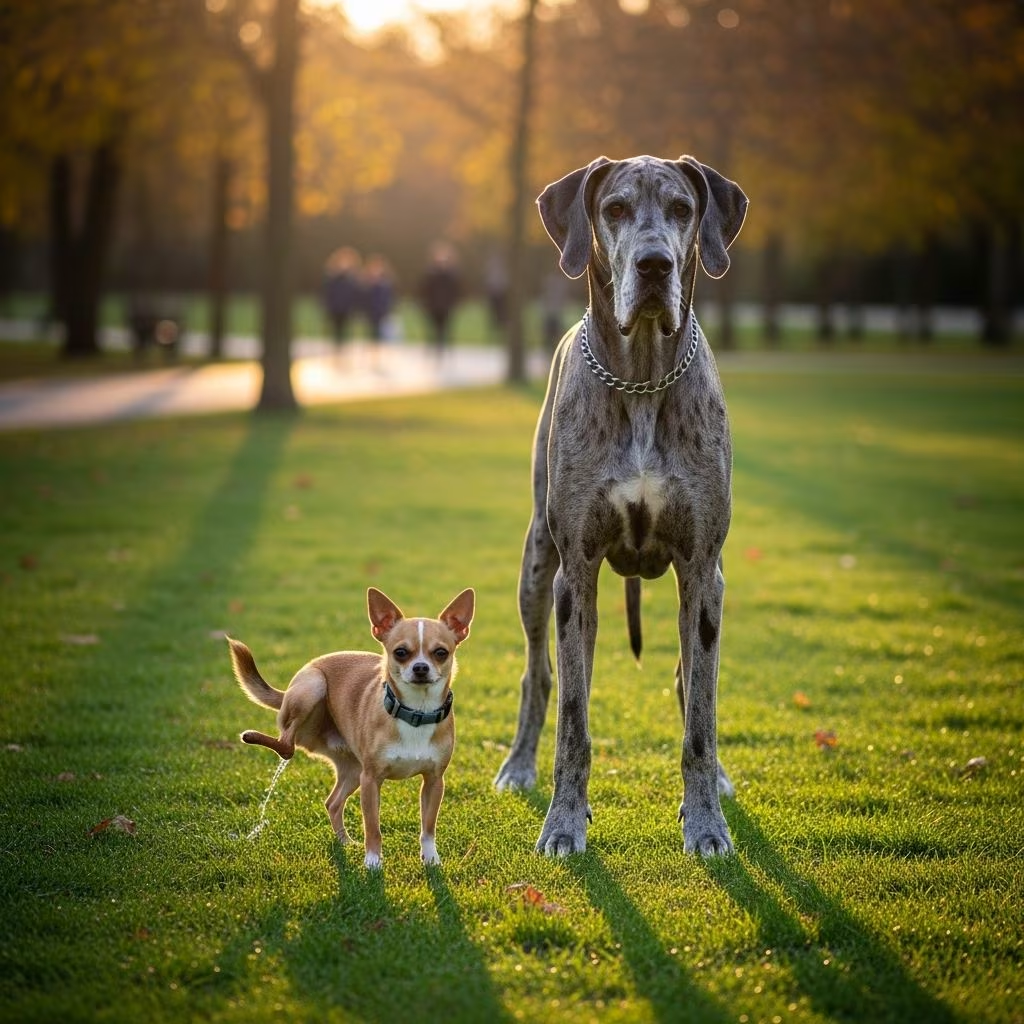
Do Small Dogs Pee More Often Than Large Dogs?
One of the most noticeable behavioral differences between small and large dog breeds is their urination frequency. If you own a small dog, you’ve likely noticed they seem to need bathroom breaks far more often than larger canine companions. This observation isn’t just anecdotal—scientific research has confirmed that small dogs do indeed pee more frequently than large dogs. Understanding the reasons behind this difference can help dog owners better manage their pet’s care routine and recognize what constitutes normal bathroom behavior for their furry friend.
The Science Behind Small Dog Urination Frequency
Recent research on shelter dogs has provided fascinating insights into canine urination patterns. Studies found compelling evidence that smaller dogs exhibit significantly higher urination frequency compared to their larger counterparts. Researchers at Cornell University filmed and analyzed the peeing patterns of multiple dogs, discovering that smaller breeds consistently visited bathroom spots more frequently throughout the day. Interestingly, males pee more often than females across all size categories, and dogs who had spent longer periods in shelters directed their urine at targets more deliberately, indicating intentional scent marking rather than merely relieving bladder pressure.
Key Factors Contributing to Increased Urination in Small Dogs
Several interconnected biological and behavioral factors explain why small dogs need more frequent bathroom breaks:
1. Smaller Bladder Capacity
The most straightforward explanation for increased urination frequency in small dogs is their reduced bladder capacity. Small dog breeds simply cannot store as much urine as larger dogs due to their smaller body size. A dog’s bladder capacity scales proportionally with body mass, meaning a five-pound Chihuahua has a considerably smaller bladder than a ninety-pound Labrador Retriever. This biological constraint means small dogs reach their bladder’s maximum capacity more quickly and therefore require more frequent bathroom breaks to avoid accidents.
2. Higher Metabolic Rate
Beyond bladder size, small dogs have faster metabolic rates relative to their body weight. Dogs with higher metabolisms process food and water more rapidly, generating waste products at a faster rate. This physiological characteristic means small dogs produce more urine relative to their body size compared to large dogs, contributing to their need for more frequent urination. Additionally, small dogs often display higher energy levels and more active behavior, further accelerating their metabolism and waste production.
3. Behavioral Scent Marking
Beyond simple biological necessity, behavioral factors significantly influence small dog urination patterns. Small dogs engage in scent marking behavior—deliberately leaving urine to communicate with other dogs—far more frequently than large dogs. Researchers theorize that smaller dogs use increased urination frequency as a competitive strategy. Unable to physically dominate larger dogs, small breeds compensate by marking their territory more aggressively through urine. This represents an adaptation where size disadvantage is offset through behavioral ingenuity and increased territorial communication.
4. Age-Related Factors
If a small dog is little because they haven’t yet reached full maturity, age becomes an additional contributing factor. Young puppies naturally need to urinate more frequently than adult dogs regardless of breed. Similarly, senior dogs often experience increased urination frequency due to declining kidney function and reduced bladder tone associated with aging. Therefore, a small puppy might require bathroom breaks every two to three hours, while an adult small dog might need breaks every four to six hours.
Understanding Normal Urination Frequency
Determining what constitutes normal urination for your small dog requires understanding general guidelines while recognizing individual variation. Adult dogs typically urinate three to five times daily. However, frequency of urination is highly individual and varies significantly from dog to dog based on multiple factors including diet, hydration status, age, health status, and behavioral tendencies.
According to veterinary standards, dogs produce approximately 2 milliliters of urine per kilogram of body weight per hour. For a 20-pound dog, this translates to approximately 18 ml of urine per hour or just under half a liter daily. Male and female dogs produce the same total volume of urine based on body weight, but males—particularly during walks—often distribute this urine across many small deposits rather than emptying their bladder completely at once. Males engaging in scent marking may squeeze out drops multiple times until their bladder is completely empty, sometimes continuing even after empty.
The Strategic Height of Small Dog Urine Marks
Research has revealed another fascinating behavioral adaptation in small dogs. Not only do they pee more frequently, but they also employ strategic positioning to make their urine marks appear higher off the ground. Smaller dogs strain to shoot their urine spray as high as possible, sometimes nearly toppling over in the process. This behavior appears to be an attempt to exaggerate their body size to other dogs, essentially “lying” about their physical stature.
The Cornell University researchers concluded that small dogs seem to “cheat” by using larger raised-leg angles to deposit higher urine marks, thereby exaggerating their size. This compensatory behavior suggests that size-disadvantaged dogs have evolved sophisticated strategies to maintain territorial claims despite their physical limitations. The increased frequency of urination from smaller dogs might also serve as an avoidance mechanism—allowing them to communicate territory remotely through urine rather than engaging in physical confrontations where they would face disadvantages.
Male vs. Female Urination Patterns
Sex differences in urination behavior are pronounced and consistent across dog sizes. While male and female dogs produce equivalent amounts of urine relative to body weight, their elimination strategies differ considerably. Males, particularly those out for walks, frequently pee smaller amounts multiple times as they practice scent marking. They lift their legs repeatedly and deliberately mark vertical targets to establish and reinforce territorial boundaries.
Female dogs, conversely, tend to squat while peeing and more often void their bladder completely at the first opportunity. While some females do engage in urine marking, this behavior is less common and typically involves less frequent repetition than their male counterparts. This biological and behavioral difference means male small dog owners may notice even more frequent outdoor bathroom requirements than female small dog owners.
Individual Variation and What’s Normal for Your Dog
It’s important to recognize that frequency of urination is highly individual, and what’s normal for one small dog may differ for another. Factors beyond size, metabolism, and age can influence urination patterns, including:
- Diet and food type
- Water intake and hydration status
- Overall health and medical conditions
- Medications being taken
- Environmental conditions and temperature
- Behavioral and personality traits
- Training and learned bathroom habits
Small dogs and puppies generally pee more frequently than larger and older dogs, but your individual small dog’s pattern may vary from breed averages. Establishing what normal looks like for your specific pet helps you recognize potential health issues requiring veterinary attention. A sudden significant increase in urination frequency or difficulty urinating warrants veterinary consultation, as these can indicate underlying health conditions such as urinary tract infections, diabetes, or other medical concerns.
Managing Small Dog Bathroom Needs
Understanding that small dogs require more frequent bathroom breaks is essential for responsible ownership. The increased urination frequency characteristic of small breeds necessitates a commitment to more frequent outdoor access. Regular potty breaks every few hours support proper house training, reduce accident risk, and contribute to your small dog’s comfort and wellbeing. For working dog owners, arranging midday dog walking services or using alternative solutions like indoor potty pads becomes particularly valuable for small breed management.
Frequently Asked Questions
Q: Why do small dogs pee more than large dogs?
A: Small dogs pee more frequently due to three primary factors: their smaller bladder capacity, which fills faster; their higher metabolism relative to body size, producing more waste; and their increased scent marking behavior as a territorial strategy.
Q: How many times per day should my small dog urinate?
A: Adult dogs typically urinate 3-5 times daily, though small dogs may urinate at the higher end of this range or more frequently. Puppies and senior small dogs may urinate even more frequently.
Q: Do male small dogs pee more than female small dogs?
A: Yes, male dogs pee more frequently than females regardless of size. Males engage in scent marking behavior and often distribute their urine across multiple deposits rather than emptying their bladder completely at once.
Q: Why do small dogs aim high when peeing?
A: Small dogs strain to deposit their urine marks as high as possible to exaggerate their body size to other dogs. This behavioral strategy compensates for their physical size disadvantage in territorial communication.
Q: When should I be concerned about frequent urination in my small dog?
A: While small dogs naturally urinate more frequently, a sudden significant increase in urination frequency or difficulty urinating warrants veterinary consultation, as these may indicate underlying health conditions.
Q: How much urine does a small dog produce daily?
A: Dogs produce approximately 2 milliliters of urine per kilogram of body weight per hour. For a 20-pound dog, this equals roughly 18 ml per hour or just under half a liter daily.
References
- Do Small Dogs Pee More Often? — Kinship. January 14, 2026. https://www.kinship.com/dog-behavior/frequency-urination-related-dog-body-size
- Duration of urination does not change with body size — National Center for Biotechnology Information (NCBI). https://pmc.ncbi.nlm.nih.gov/articles/PMC4143032/
- Your Dog Could Be Lying About Its Size When It Pees — ScienceAlert. https://www.sciencealert.com/your-dog-could-be-lying-about-size-when-peeing
- 9 Reasons Your Dog Is Peeing A Lot — Great Pet Care. https://www.greatpetcare.com/dog-health/dog-is-peeing-a-lot/
- Why Your Dog Is Urinating Too Much — Pet Bucket. https://www.petbucket23.com/blog/63227/why-your-dog-is-urinating-too-much-.html
- How Long Can Dogs Hold Their Pee? — Brilliant Pad. https://www.brilliantpad.com/blogs/news/how-long-can-dogs-hold-their-pee
- How Often Does My Older Dog Need to Pee? — The Farmer’s Dog. https://www.thefarmersdog.com/digest/how-often-does-my-older-dog-need-to-pee/



