

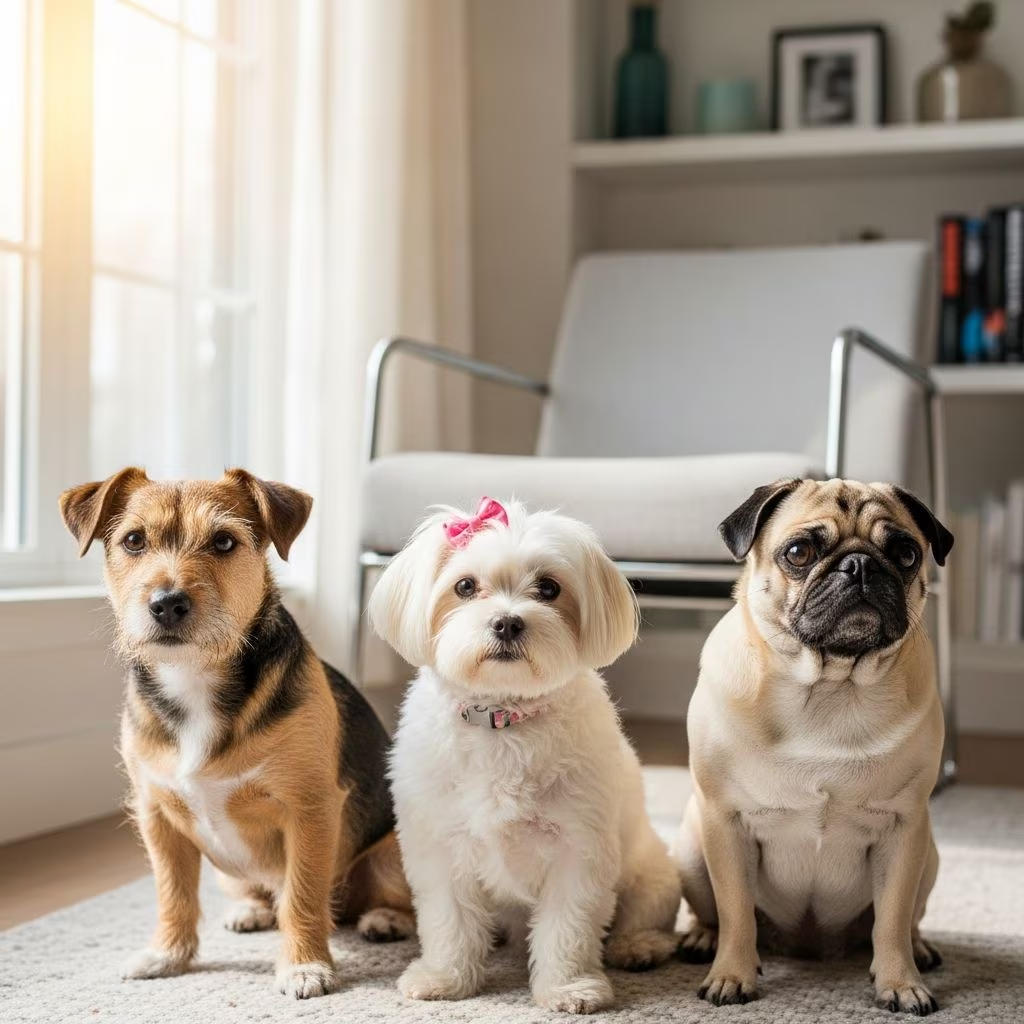
Small dog breeds have become increasingly popular among modern pet owners, particularly those living in urban environments or seeking low-maintenance companions. These diminutive dogs pack substantial personality into their compact frames, often rivaling larger breeds in terms of loyalty, intelligence, and entertainment value. Understanding the distinctions between various small breeds—including their temperamental characteristics, physical requirements, and compatibility with different household situations—is essential for prospective owners seeking to make an informed decision.
Defining Small and Toy Breed Classifications
The terminology surrounding small dogs can sometimes create confusion among potential owners. Generally, toy breeds weigh less than 12 pounds, while small breeds typically reach maximum weights around 25 pounds. This distinction matters because it affects housing requirements, exercise needs, and even training approaches. The American Kennel Club recognizes numerous breeds within the toy category, each with distinct characteristics that set them apart from their diminutive cousins.
Understanding where a breed falls within this classification system helps prospective owners anticipate potential challenges and benefits. A toy breed may require entirely different handling protocols than a small breed that approaches the 25-pound threshold, despite both being considerably smaller than medium or large-sized dogs.
Personality Profiles: From Bold to Gentle
Small dog breeds exhibit remarkable personality diversity. The Chihuahua, representing the tiniest recognized breed at just 1.5 to 3 kilograms, demonstrates outsized confidence and loyalty. These pups bond intensely with their owners and are known for their fierce protective instincts despite their diminutive stature. However, this boldness occasionally manifests as “small dog syndrome,” where inadequate socialization leads to behavioral challenges.
Conversely, breeds like the Havanese embody extroverted charm with lower vocalization levels than their terrier counterparts. These dogs thrive on attention and readily engage with children through entertaining tricks, making them exceptional family pets. The Shih Tzu represents another personality archetype—quiet, trusting, and content serving as lap companions while remaining playful when circumstances warrant engagement.
The Pomeranian strikes a middle ground, displaying cheerful, playful dispositions with distinct show-off tendencies when treated respectfully. Originally descended from sled dogs weighing around 30 pounds, selective breeding transformed Pomeranians into the fluffy, confident lap dogs admired today. Meanwhile, West Highland Terriers embody independence and headstrong determination, with distinct personalities and occasional tendency toward selectively ignoring their owners’ commands.
Intelligent and Trainable Companions
Intelligence varies considerably among small breeds, though many display remarkable cognitive capabilities. The Toy Poodle exemplifies the intelligent small breed archetype—smart, athletic, and remarkably people-oriented, making training straightforward for experienced and novice owners alike. Poodles exist in multiple size categories, with their miniature and toy variants offering flexibility for various living situations.
Papillons and Miniature Schnauzers similarly demonstrate quick learning abilities, though their independent streaks occasionally require patient, consistent training approaches. Schnauzers, possessing farm dog heritage, particularly benefit from having designated jobs or tasks, channeling their intelligence and energy productively. Yorkshire Terriers, despite their delicate appearance, display fierce and friendly demeanor alongside respectable trainability, though their luxurious coats demand significant maintenance commitment.
Training small breeds often proves easier than larger counterparts, particularly regarding housebreaking and basic obedience. Their size facilitates management during training phases, and most respond enthusiastically to positive reinforcement and consistency.
Coat Types and Hypoallergenic Considerations
Small breed coat characteristics range dramatically, from silky to wiry, and significantly impact suitability for households with allergy concerns. Maltese dogs sport white, silky coats considered hypoallergenic alongside their lively, playful temperaments. Poodles similarly feature non-shedding, hypoallergenic coats in all size variations, making them excellent choices for allergy-prone families.
The Cairn Terrier, despite its wiry double coat composition, sheds minimally and carries hypoallergenic classification despite its feisty personality and occasional incompatibility with other pets or young children. Lhasa Apsos maintain beautiful, long silky coats that are low-shedding and hypoallergenic, though their suspicious nature toward strangers and disproportionately loud barks contrast their small physical size.
Conversely, Miniature Pinschers possess short, smooth coats requiring minimal maintenance but unfortunately don’t qualify as hypoallergenic. Beagles and Cocker Spaniels display smooth, dense double coats protecting them from environmental elements but don’t offer hypoallergenic benefits. Lakeland Terriers feature thick, bushy, wiry outer coats combined with soft undercoats, resulting in considerable grooming demands but minimal shedding.
Energy Levels and Exercise Requirements
Contrary to assumptions that small breeds require minimal exercise, energy levels vary substantially. Jack Russell Terriers earned their “pocket rocket” reputation through seemingly boundless energy and enthusiasm for vigorous play and exercise. These compact dogs demand consistent, engaging physical activity to prevent destructive behavioral patterns.
Chihuahuas maintain moderate to high energy levels despite their tiny frames, requiring regular activity and mental stimulation. Pomeranians similarly display consistent energy and playfulness, always ready for engagement. Australian Terriers prove strong-willed, devoted, and smart—requiring confident ownership and appropriate exercise outlets.
Conversely, breeds like the Shih Tzu and Maltese accommodate more sedentary lifestyles, though all dogs benefit from regular physical activity and mental enrichment regardless of size. Alaskan Klee Kai, descended from Siberian Huskies, demonstrate independent and determined spirits requiring substantial engagement, despite their small to moderate size classification.
Suitability for Urban Living and Apartments
Small breeds generally excel in apartment environments and urban settings where space constraints challenge larger dogs. Chihuahuas prove excellent for apartments but require protection from larger dogs and cold weather exposure, given their minimal body mass and vulnerability to temperature fluctuations. Their devoted, sometimes fierce loyalty makes them excellent watchdogs despite their diminutive stature.
Yorkshire Terriers remain city dweller favorites thanks to their compact size and relatively low exercise requirements compared to their boundless personalities. Shih Tzus transition seamlessly between apartment life and larger homes, content as lap companions in limited spaces or playful family members in more spacious settings.
Beagles demonstrate remarkable adaptability, thriving equally in urban and countryside environments while maintaining consistent cheerfulness and sociability. However, their pack hunting heritage means they require secure fencing and consistent recall training, as their scent-tracking instincts occasionally override other commands.
Social Compatibility and Family Integration
Social compatibility represents a crucial consideration for households with children, other pets, or active social calendars. The Cocker Spaniel, while technically classifiable as a small-to-medium breed, displays exceptional gentleness and strong desire to please, making training straightforward and family integration seamless. Their playful nature and affectionate temperament create ideal conditions for households prioritizing child-friendly companions.
Poodles make excellent family dogs, while Havanese excel with children and readily entertain them with entertaining behaviors. Conversely, Brussels Griffons exhibit “Velcro dog” personalities, preferring constant proximity to their owners while remaining equally happy exercising or relaxing.
Some breeds display more reserved social tendencies. Lhasa Apsos can be suspicious of strangers despite their friendly nature with owners, while Cairn Terriers occasionally display feistiness incompatible with other dogs or young children requiring careful socialization. Toy breeds generally bond intensely with owners but sometimes demonstrate aloofness toward unfamiliar individuals or other pets.
Health Considerations and Longevity
Small breeds frequently enjoy extended lifespans compared to larger counterparts. Chihuahuas aren’t prone to many hereditary diseases, making them among the longest-living dog breeds. Yorkshire Terriers similarly demonstrate impressive longevity, with many living well into their teens.
However, specific health concerns affect particular breeds. Prospective owners should research breed-specific vulnerabilities and ensure their chosen companion comes from responsible breeders conducting appropriate health screenings. Smaller breeds’ reduced joint stress compared to giant breeds often translates to longer, healthier lives when maintained with appropriate nutrition and preventive care.
Specialized Breeds with Unique Characteristics
Biewer Terriers represent relatively new breed additions, descended from Yorkshire Terriers but carrying a rare piebald gene resulting in distinctive white fur with colored patches. These small, family-oriented dogs make ideal lap companions while maintaining their Yorkie heritage of intelligence and spirited personality.
Miniature Pinschers earned the title “king of toy breeds” despite their modest stature, packing bold personalities requiring substantial physical activity and mental engagement. These German toy breeds sport short coats requiring minimal maintenance, appealing to owners prioritizing grooming convenience.
Alaskan Klee Kai represent rare, relatively recent breed development stemming from a single small Siberian Husky in the 1970s. These talkative, independent dogs exist in three size variations—Toy, Miniature, and Standard—while maintaining husky characteristics in compact packages.
Comparative Breed Characteristics Overview
| Breed | Weight Range | Temperament Profile | Coat Type | Best Suited For |
|---|---|---|---|---|
| Chihuahua | 1.5-3 kg | Confident, loyal, sometimes feisty | Smooth or long-haired | Devoted owners, apartment living |
| Pomeranian | 3-7 lbs | Cheerful, playful, show-off tendency | Double-coated, fluffy | Families, social environments |
| Shih Tzu | 8-11 lbs | Quiet, trusting, affectionate | Long, silky, flowing | Lap dog seekers, patient groomers |
| Poodle (Toy/Mini) | Varies | Intelligent, athletic, people-oriented | Curly, non-shedding | Allergy-prone families, active owners |
| Havanese | 7-13 lbs | Extroverted, entertaining, less vocal | Long, silky | Families with children, attention-seekers |
| Yorkshire Terrier | 7 lbs | Feisty, fierce, friendly | Long, silky, high-maintenance | City dwellers, experienced owners |
Essential Considerations Before Adoption
Prospective small breed owners should evaluate their lifestyle, living situation, time commitment, and financial resources before making adoption decisions. Small dogs require appropriate socialization regardless of size, preventing behavioral issues and ensuring balanced temperament development. Training consistency, regardless of breed, establishes healthy boundaries and prevents problematic habits.
Financial considerations extend beyond adoption fees to include veterinary care, quality nutrition, grooming requirements, and emergency medical expenses. Insurance options exist specifically for small breeds, protecting against unexpected health challenges that could otherwise create financial hardship.
Frequently Asked Questions
Are all small dog breeds suitable for apartments?
Generally yes, though some breeds require more exercise than others. Energy level, barking tendency, and individual temperament matter more than breed size. Jack Russell Terriers, despite their small stature, require considerable exercise, while Shih Tzus adapt readily to limited space.
Do small breeds live longer than large dogs?
Typically, yes. Small breeds frequently live 12-18+ years, compared to larger dogs often averaging 8-12 years. Chihuahuas, Yorkshire Terriers, and other small breeds rank among the longest-living dog categories.
Which small breeds are best with children?
Havanese, Cocker Spaniels, Poodles, and Beagles demonstrate particular affinity for children. However, individual temperament and proper socialization matter significantly more than breed classification alone.
What grooming demands do small breeds have?
Grooming requirements vary dramatically. Short-coated breeds like Miniature Pinschers require minimal maintenance, while Shih Tzus, Maltese, and Yorkshire Terriers demand regular professional grooming or committed home care routines.
Are small dog breeds good for first-time owners?
Yes, many small breeds suit first-time owners. Poodles, Havanese, and Cocker Spaniels prove particularly forgiving. However, some breeds like Chihuahuas and Dachshunds require experienced, confident ownership to prevent behavioral challenges.
References
- Small Dog Breeds Guide: Personality, Care, and Urban Living — Wag. Retrieved January 29, 2026. https://www.wagbar.com/small-dog-breeds-guide-personality-care-and-urban-living
- Small Dog Breeds: Health & Traits Guide — Muenster Pet. Retrieved January 29, 2026. https://muensterpet.com/blogs/blog/top-health-and-personality-traits-of-6-popular-small-dog-breeds
- 20 Of the Best Small Dogs That Make Perfect Pets — PEDIGREE UK. Retrieved January 29, 2026. https://www.uk.pedigree.com/dog-advice/getting-a-dog/best-small-dogs
- Your Guide to Small Dog Breeds — MY DOG. Retrieved January 29, 2026. https://www.mydog.com.au/article/your-guide-to-small-dog-breeds
- 25 Small Dog Breeds To Fit Any Lifestyle — PetMD. Retrieved January 29, 2026. https://www.petmd.com/dog/general-health/small-dog-breeds
- Small Dog Breeds: Characteristics and Care Tips — Wisdom Panel. Retrieved January 29, 2026. https://www.wisdompanel.com/en-us/blog/dog-toy-breeds
- Most Popular Small Dog Breeds that Won’t Make You Sneeze — NomNomNow. Retrieved January 29, 2026. https://www.nomnomnow.com/learn/article/most-popular-small-dog-breeds-that-wont-make-you-sneeze
- Toy Dog Breeds: Sizes, Personality & Behaviour — Purina UK. Retrieved January 29, 2026. https://www.purina.co.uk/find-a-pet/articles/dog-types/breed-groups/toy-dog-breeds
- Smallest Dog Breeds — American Kennel Club. Retrieved January 29, 2026. https://www.akc.org/dog-breeds/smallest-dog-breeds/
- Toy Group – Dog Breeds — American Kennel Club. Retrieved January 29, 2026. https://www.akc.org/dog-breeds/toy/



