

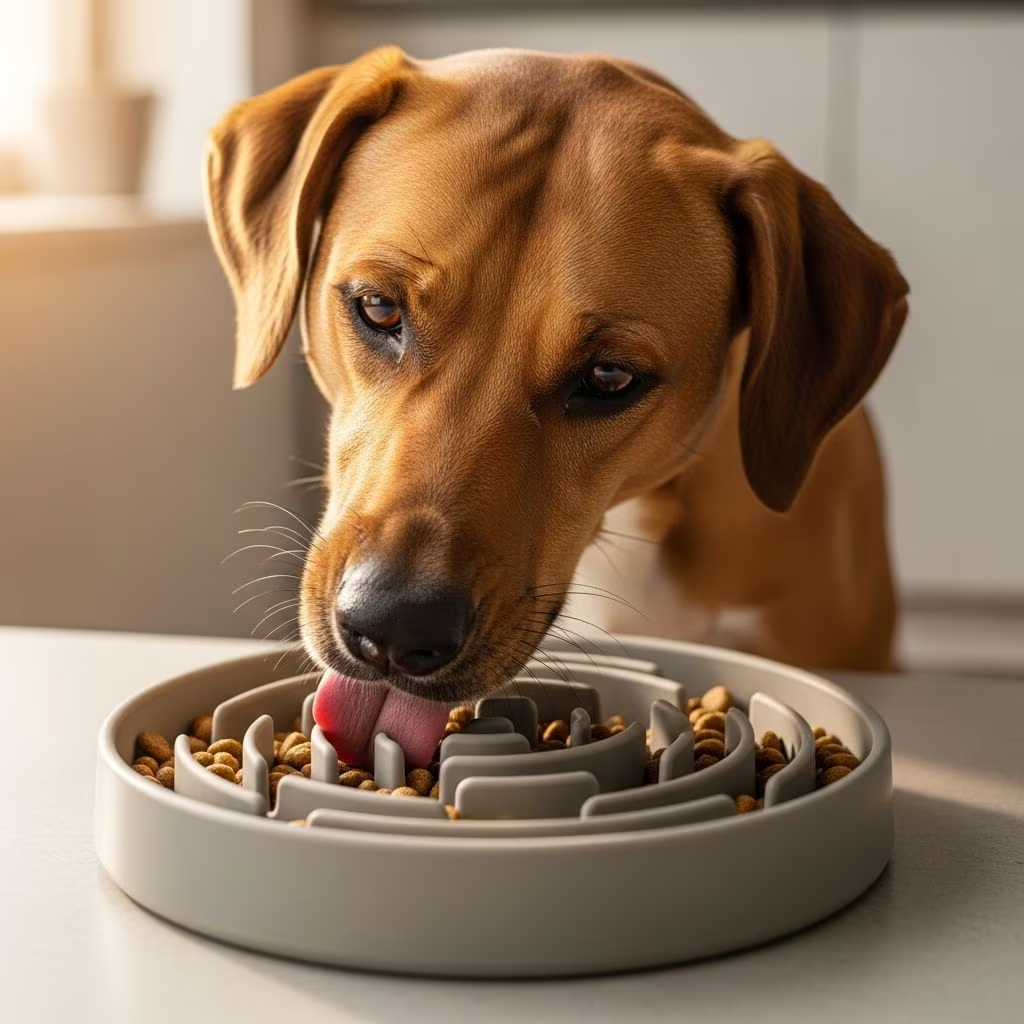
Rapid eating in dogs stems from evolutionary instincts, past experiences, or health factors, posing risks like choking and gastric dilatation-volvulus (GDV), commonly known as bloat. Implementing targeted strategies can encourage slower consumption, improving digestion and reducing behavioral issues.
Unpacking the Reasons Behind Rapid Canine Consumption
Dogs often inhale their food due to deeply ingrained survival mechanisms. In ancestral environments, quick eating protected meals from competitors, a trait persisting in modern pets, particularly in homes with multiple animals where perceived rivalry triggers haste.
Past hardships, such as food scarcity in strays or rescues, condition dogs to bolt meals fearing future deprivation. This learned response creates a cycle of anxiety-driven gobbling, even in secure settings.
Environmental stressors or emotional unease during feedings amplify the problem. A chaotic mealtime atmosphere or inconsistent routines can heighten insecurity, prompting dogs to eat frantically as a stress outlet.
- Evolutionary drive: Wolf heritage demands swift intake to evade theft.
- Learned habits: Shelter dogs retain scarcity fears.
- Household dynamics: Multi-dog setups foster competition.
Health Complications from Hasty Meals
Beyond discomfort, fast eating invites serious threats. Swallowing air alongside food (aerophagia) distends the stomach, elevating GDV risk—a potentially fatal twist where the organ rotates, trapping contents and inducing shock. Large breeds over 100 pounds face heightened vulnerability, but any speedy eater is susceptible.
Choking or regurgitation occurs when insufficient chewing allows large chunks to lodge in airways or overwhelm the esophagus. Vomiting, diarrhea, and gas follow from poor breakdown and excess air.
Nutritional shortfalls exacerbate issues; subpar diets fail to satisfy, driving quicker paces despite full bowls. Conditions like diabetes, hyperthyroidism, or parasites spike hunger, masking as voracity.
| Risk | Description | At-Risk Groups |
|---|---|---|
| GDV/Bloat | Stomach expansion and torsion from air gulp | Large breeds, deep-chested dogs |
| Choking | Food blocks airway due to no chewing | All fast eaters |
| Digestive Upset | Vomiting, gas from aerophagia | Puppies, anxious dogs |
Behavioral Fallout of Mealtime Madness
Speedy eaters frequently exhibit guarding tendencies, growling or snapping if disturbed, rooted in resource protection instincts. This escalates to broader impulsivity, like hyperactivity or poor training response, as rushed rituals reinforce haste elsewhere.
Anxiety manifests post-meal as pacing or restlessness, signaling sustained stress hormone elevation akin to fight-or-flight activation. Boredom or insufficient stimulation channels energy into frenzied feeding, perpetuating a vicious loop.
Practical Solutions to Moderate Eating Pace
Introduce puzzle feeders or bowls with raised barriers, forcing deliberate bites and extending meals by minutes. Scatter kibble across floors or use treat-dispensing toys to mimic foraging, curbing instinctual rushes.
Hand-feeding portions builds patience and strengthens bonds; deliver small handfuls only on calm cues. Divide daily rations into 3-4 smaller servings to diminish hunger urgency.
Transition to fresh, nutrient-dense meals satisfying quicker, reducing perceived need for speed. Wet food or soaked kibble slows intake naturally via texture.
- Assess environment: Feed separately to eliminate rivalry.
- Select tools: Maze bowls outperform flat ones by 3-5x in slowdown efficacy.
- Monitor progress: Time meals initially, aiming for 10-15 minute durations.
- Consult vet: Rule out medical hunger drivers via exams or bloodwork.
Advanced Techniques for Stubborn Cases
For persistent speed demons, employ muffin tin tricks: Place kibble in cups, requiring nose work to access. Frozen toppers like yogurt-kibble mixes prolong engagement.
Behavioral training via positive reinforcement rewards slow chewers with praise or extras. Consistency across handlers prevents confusion.
Address root anxiety through enrichment: Daily walks, interactive play, or calming aids like pheromone diffusers complement feeding fixes.
Nutrition’s Role in Curbing Voracity
High-fiber formulas promote fullness, stretching satiety signals. Proteins from quality sources (e.g., meat over fillers) match metabolic needs, averting chronic hunger.
Avoid overfeeding; calculate portions by weight, activity, age. Gradual diet shifts prevent gastric revolt.
FAQs: Tackling Common Fast-Eating Concerns
Why does my dog inhale food like it’s their last meal?
Typically instinct, competition, or history of scarcity; observe context for clues.
Can fast eating trigger aggression?
Yes, via guarding amplified by stress; separation and slowing mitigate this.
Is bloat only a large-dog problem?
Primarily, but any gulper risks it; symptoms demand emergency care.
How effective are slow bowls?
Highly; they increase chew time, slashing air intake and risks.
Should I free-feed a speedy eater?
No; scheduled meals control portions and pace better.
Long-Term Monitoring and Prevention
Track weight, stool quality, energy post-intervention. Annual vet checks screen for appetite anomalies. Early detection averts escalation.
Integrate slowing into holistic care: Balanced exercise curbs boredom-driven habits, fostering serene routines.
References
- The Link Between Fast Eating and Behavioral Issues in Dogs — The Puzzle Feeder. 2023. https://thepuzzlefeeder.com/blogs/news/the-link-between-fast-eating-and-behavioral-issues-in-dogs
- Why Do Dogs Eat Their Food So Fast? Understanding Fast Eating Behavior in Dogs — Houndsy. 2023. https://www.houndsy.com/blogs/modern-tails/why-do-dogs-eat-their-food-so-fast-understanding-fast-eating-behavior-in-dogs
- Is your dog eating too fast? Find out how to fix it! — Pets Nutritionist. 2023. https://petsnutritionist.com/dog-eating-too-fast/
- Why Do Dogs Eat So Fast? — Purina US. 2023. https://www.purina.com/articles/dog/feeding/guides/why-do-dogs-eat-so-fast
- Controlling Your Pet’s Eating Behavior — PetMD. 2023. https://www.petmd.com/dog/nutrition/evr_multi_controlling_pets_eating_behavior
- Why Does My Dog Eat Their Food Too Fast? — Bella+Duke. 2023. https://www.bellaandduke.com/dogs/expert-advice/dog-behaviour/dog-eating-food-so-fast/
- How to stop your dog from eating its food too fast — Lovet. 2023. https://www.lovet.com/blog/slow-down-dog-eating/



