

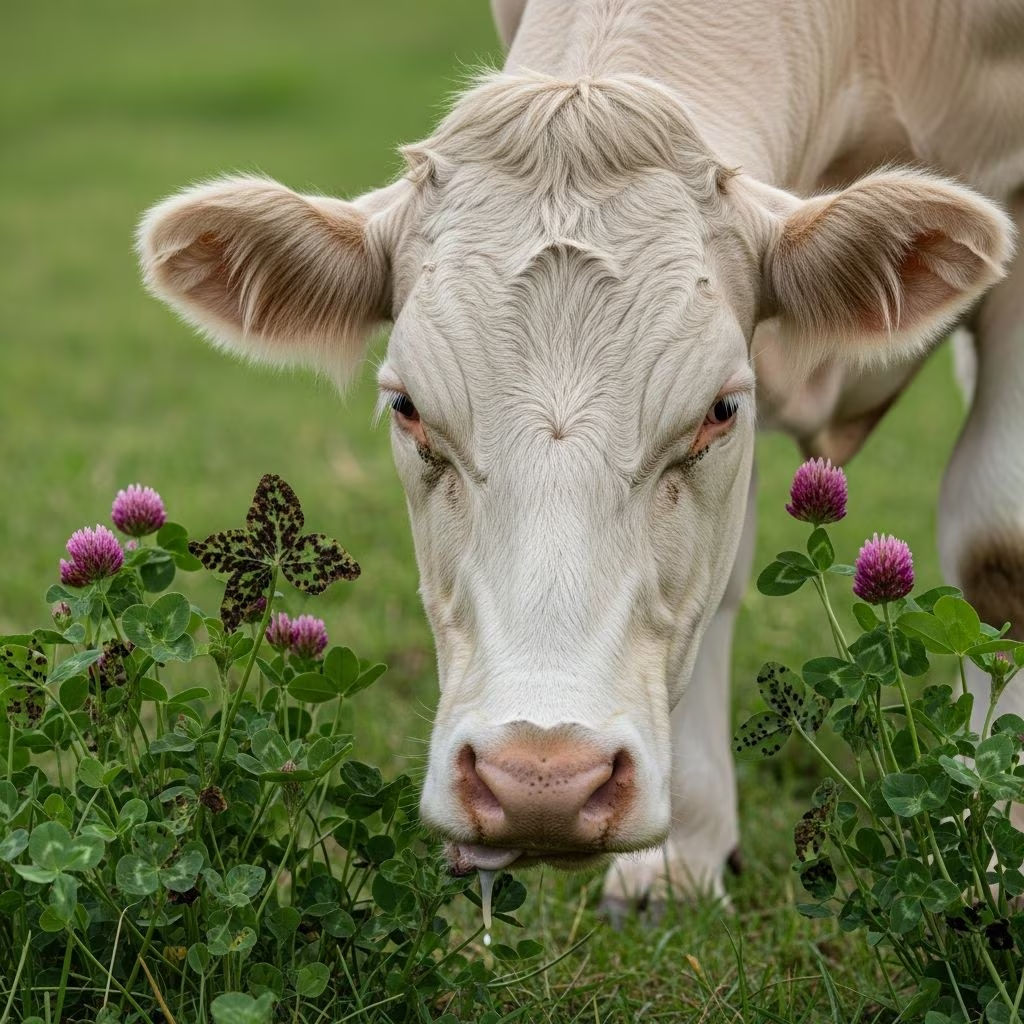
Slaframine poisoning, widely recognized as the slobbers syndrome, represents a common mycotoxic condition in farm animals, particularly horses and cattle. This disorder arises from the consumption of forages contaminated with a specific fungal toxin, leading to distinctive physiological responses. While rarely fatal, it disrupts normal feeding behaviors and productivity, making early recognition essential for livestock managers.
The Origin of the Toxin: Fungal Contamination in Forages
The culprit behind slaframine poisoning is the fungus Rhizoctonia leguminicola, which thrives in humid, cool environments on legume crops like red clover. This pathogen produces black patch lesions on stems and leaves, visible as darkened areas on infected plants. The toxin, slaframine—an indolizidine alkaloid—persists even in dried hay or silage, retaining its potency during storage.
Conditions favoring fungal growth include prolonged wet weather during late summer or fall, common in regions with temperate climates. Legumes such as clover, alfalfa, and lespedeza serve as primary hosts, with contamination levels varying based on spore density and plant maturity. Concentrations as low as 1.5 parts per million can trigger symptoms in sensitive animals, escalating to 50-100 ppm in severe outbreaks.
Mechanism of Action: How Slaframine Affects the Body
Once ingested, slaframine undergoes liver metabolism to form 6-ketoimine, its active metabolite. This compound mimics acetylcholine, overstimulating muscarinic receptors in the parasympathetic nervous system. The result is heightened activity in exocrine glands, causing uncontrolled secretion of saliva, tears, and gastrointestinal fluids.
In horses, the most susceptible species, this parasympathetic surge leads to the hallmark slobbers effect. Cattle exhibit similar responses but often with added bloat due to rumen fermentation disruptions. Prolonged exposure may induce dehydration, electrolyte imbalances, or secondary issues like reduced milk yield in dairy herds.
Clinical Manifestations Across Species
Symptoms emerge rapidly, typically 1-6 hours post-ingestion, allowing for quick association with recent feed changes. Here’s a breakdown of common signs:
- Excessive salivation: Profuse drooling, often soaking the chest and forelegs, with constant tongue protrusion and chewing motions.
- Lacrimation: Watery eyes and nasal discharge from irritated mucous membranes.
- Gastrointestinal effects: Loose stools, mild colic, and increased defecation frequency.
- Urinary changes: Frequent, dilute urination due to glandular overstimulation.
- Behavioral shifts: Feed aversion, weight loss, joint stiffness, and occasional respiratory distress from aspiration.
Horses display the most dramatic salivation, while cattle may bloat and refuse hay. Sheep, goats, and swine show milder versions, with poultry and companion animals rarely affected unless experimentally dosed. Morbidity reaches high levels in exposed groups, but mortality remains under 1%, confined to extreme cases involving suffocation or chronic dehydration.
Species-Specific Vulnerabilities and Impacts
| Species | Primary Symptoms | Sensitivity Level | Production Impact |
|---|---|---|---|
| Horses | Slobbers, lacrimation, diarrhea | High | Feed refusal, colic |
| Cattle | Salivation, bloat, urination | Moderate | Milk drop, rumen issues |
| Sheep/Goats | Mild drooling, loose stool | Low | Minimal |
| Swine/Poultry | Occasional salivation | Very Low | Negligible |
This table highlights variations, underscoring why horses demand vigilant monitoring during legume hay feeding seasons.
Diagnostic Approaches: Confirming the Condition
Diagnosis hinges on clinical history, visible forage lesions, and symptom resolution post-feed removal. Veterinarians perform physical exams to exclude differentials like rabies, dental abscesses, or strangles.
For definitive proof, submit hay samples to labs for slaframine quantification via chromatography or fungal culture. Black patch identification on plants supports presumptive cases, with recovery within 24-48 hours confirming exposure. Related toxin swainsonine, from the same fungus, may contribute to locoism but is secondary in acute slobbers.
Management and Treatment Strategies
The cornerstone of treatment is source removal: discard suspect hay or relocate animals from contaminated pastures. Symptoms abate within 12-48 hours, full appetite returns in up to 4 days. Supportive care includes:
- Unlimited fresh water to counter dehydration.
- Electrolyte solutions for severe cases.
- Atropine administration (vet-prescribed) to block muscarinic effects, dosed cautiously to avoid alkalosis.
Monitor for complications like choke or aspiration pneumonia. No specific antidote exists, emphasizing prevention.
Prevention Tactics for Farmers and Horse Owners
Proactive measures reduce outbreak risks:
- Harvest legumes during dry spells to limit fungal sporulation.
- Inspect hay for black patches before feeding; test high-risk batches.
- Dilute contaminated forages with grain or non-legume hay.
- Rotate pastures and use fungicides judiciously, though costly.
- Maintain herd records to track recurrent exposures.
In endemic areas, early autumn cutting minimizes toxin buildup. Educating staff on slobbers signs ensures swift intervention.
Long-Term Effects and Prognosis
Most animals recover fully without sequelae, resuming normal production. Rare chronic cases link to swainsonine-induced lysosomal storage, causing neurological deficits, but slaframine alone rarely persists. Dairy impacts reverse quickly, though monitoring lactation is advised. Prognosis excels with prompt action, underlining the reversible nature of this toxidrome.
Research Insights and Emerging Knowledge
Ongoing studies refine toxin detection and varietal resistance in clovers. Genetic mapping of R. leguminicola promises targeted controls. Recent analyses confirm slaframine stability in baled forages, urging storage vigilance. Peer-reviewed data stress multispecies susceptibility, broadening advisory scopes.
Frequently Asked Questions (FAQs)
What triggers slobbers in my horses?
Ingestion of clover hay infected with Rhizoctonia leguminicola producing slaframine.
Is slobbers fatal?
Rarely; most cases self-resolve after feed change.
How do I test for slaframine?
Send forage to a vet lab for toxin assay or fungal ID.
Can atropine harm my animal?
Yes, overuse risks alkalosis; vet supervision required.
How to prevent future outbreaks?
Avoid moldy legumes, inspect regularly, harvest dry.
This FAQ addresses common concerns, aiding quick reference for at-risk owners.
References
- Slaframine Toxicosis or “Slobbers” in Cattle and Horses — University of Kentucky. 1980-01-01. https://uknowledge.uky.edu/cgi/viewcontent.cgi?article=1111&context=anr_reports
- Slaframine Toxicosis in Animals — Merck Veterinary Manual. 2023-01-01. https://www.merckvetmanual.com/toxicology/mycotoxicoses/slaframine-toxicosis-in-animals
- Toxin Topic: Slaframine Intoxication — The Horse. 2019-01-01. https://thehorse.com/154750/toxin-topic-slaframine-intoxication/
- Slaframine Toxicosis in Horses — Vetster. 2023-01-01. https://vetster.com/en/conditions/horse/slaframine-toxicosis
- Slobbers in Horses: Slaframine Poisoning Signs, Causes & … — Mad Barn. 2023-01-01. https://madbarn.com/slobbers-in-horses/
- Vet’s 2025 Guide to Equine Slobbers (Slaframine Poisoning) — Ask A Vet. 2025-01-01. https://askavet.com/blogs/news/vet-s-2025-guide-to-equine-slobbers-slaframine-poisoning-by-dr-duncan-houston



