
Slaframine Poisoning In Livestock: Causes And Quick Remedies
Understanding the causes, symptoms, and management of slaframine toxicosis in horses, cattle, and other large animals from fungal-contaminated forages.
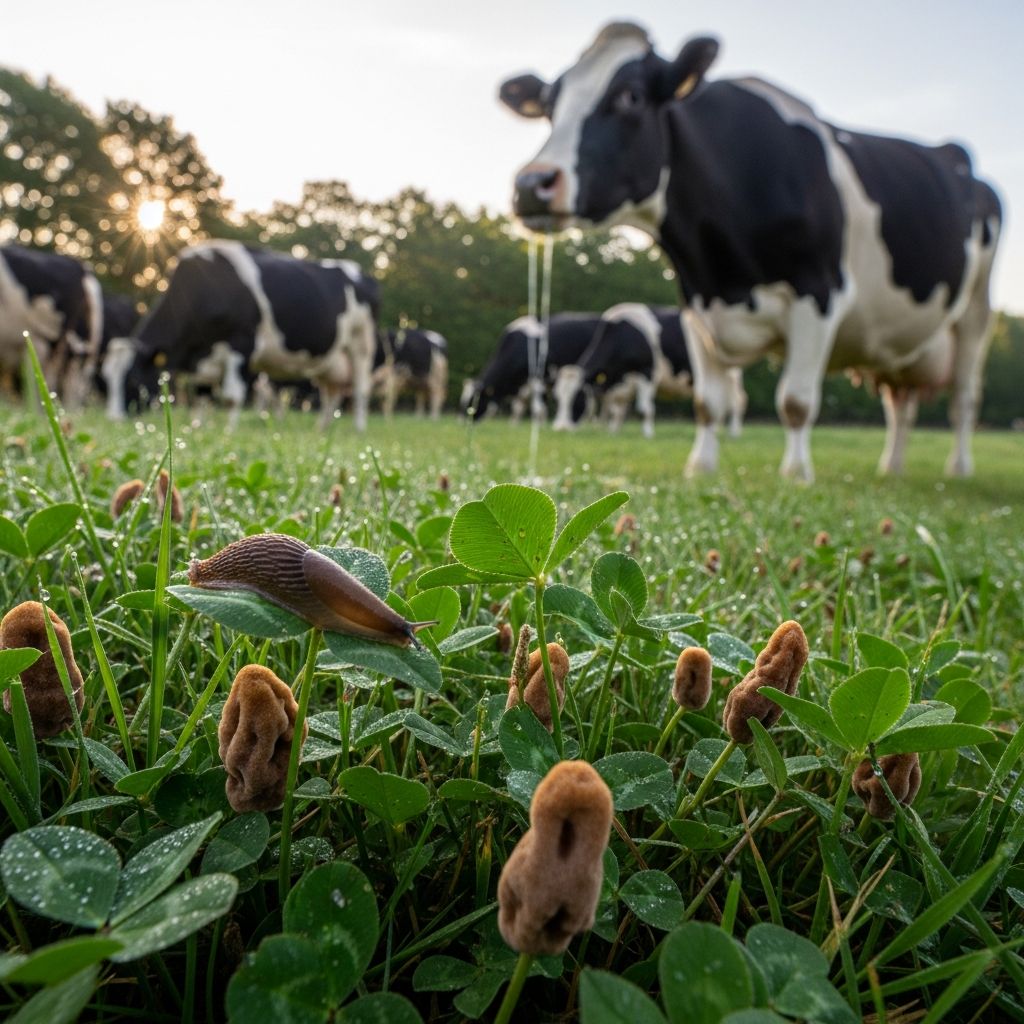
Slaframine poisoning, often called “slobbers syndrome,” affects large animals like horses and cattle when they consume forages contaminated with a specific fungal toxin. This condition triggers pronounced physiological responses, primarily excessive saliva production, but can extend to other symptoms if exposure persists. Farmers and veterinarians encounter it seasonally, especially in humid climates where the culprit fungus thrives on legumes.
The Science Behind Slaframine Toxicosis
At the core of this issue is slaframine, an indolizidine alkaloid produced by the fungus Rhizoctonia leguminicola. This pathogen commonly infects red clover, alfalfa, and other legumes during wet weather, forming visible “black patches” on stems and leaves. Once ingested, slaframine metabolizes in the animal’s liver into an active form that mimics acetylcholine, overstimulating muscarinic receptors in the parasympathetic nervous system. This leads to hyperactivity of exocrine glands, explaining the flood of saliva, tears, and other secretions.
The toxin’s stability allows it to persist in hay, silage, and pasture, posing risks even in stored feed. Concentrations as low as 1.5 ppm can induce symptoms in sensitive animals, escalating to 50-100 ppm in severe outbreaks. Horses show particular vulnerability, but cattle, sheep, goats, and even swine exhibit similar reactions.
Recognizing Clinical Manifestations
Symptoms emerge rapidly, typically 1-6 hours post-ingestion, making early detection crucial. The hallmark is profuse salivation—animals may drool liters per hour, soaking their chests and forelimbs. This “slobbers” appearance gives the syndrome its colloquial name.
- Primary signs: Excessive drooling, constant tongue lolling, and lip smacking.
- Secondary effects: Lacrimation (tearing), frequent urination, mild diarrhea, and bloat from gastrointestinal hyperactivity.
- Behavioral changes: Feed refusal, discomfort while eating, stiff gait, or mild colic.
In cattle, reduced milk yield often accompanies dehydration from fluid losses. Horses might display muzzle irritation or reluctance to graze. While morbidity rates soar during outbreaks—sometimes affecting entire herds—mortality remains rare unless suffocation from saliva pooling or prolonged exposure intervenes.
Susceptible Species and Risk Factors
| Species | Sensitivity Level | Common Symptoms | Notes |
|---|---|---|---|
| Horses | High | Drooling, tearing, urination | Outbreaks in legume pastures |
| Cattle | Moderate | Salivation, diarrhea, milk drop | Hay/silage contamination |
| Sheep/Goats | Moderate | Salivation, bloat | Less frequently reported |
| Swine/Poultry | Low | Mild salivation | Rare clinical cases |
Horses top the sensitivity list, with cases documented globally, including Brazil. Risk amplifies in late summer or fall when humidity fosters fungal growth. Poorly cured hay exacerbates persistence, as drying fails to degrade the alkaloid.
Diagnostic Approaches
Veterinarians rely on a triad for diagnosis: characteristic signs, exposure history to suspect forages, and rapid improvement post-removal. Physical exams rule out differentials like choke, dental issues, or rabies—crucial, as slobbers mimics these emergencies.
Definitive confirmation involves feed analysis: fungal culture for R. leguminicola or chemical assays for slaframine/swainsonine (a related toxin linked to chronic issues). Plant lesions—dark, fuzzy patches—provide visual clues. Labs like university extensions offer testing, though it’s not always routine due to cost and quick resolution.
Management and Therapeutic Interventions
The cornerstone of treatment is straightforward: eliminate contaminated feed immediately. Clean hay or pasture restores normalcy within 24-48 hours, up to 4 days in stubborn cases. Supportive care includes:
- Unlimited fresh water to combat dehydration.
- Electrolyte supplementation if losses are heavy.
- Soft, non-legume feeds to ease ingestion.
For severe salivation, veterinarians may administer atropine, an anticholinergic that blocks muscarinic receptors. Dosed carefully (e.g., 0.02-0.04 mg/kg IV or IM), it curbs drooling but risks alkalosis or gut stasis if overused. No specific antidote exists, but prognosis excels—over 95% full recovery sans sequelae.
Prevention Strategies for Producers
Proactive measures minimize outbreaks:
- Forage selection: Limit clover/alfalfa in hay mixes; opt for grasses.
- Harvest timing: Mow during dry spells to curb fungal sporulation.
- Storage practices: Ensure rapid, thorough drying of hay; monitor silage pH.
- Scouting: Inspect pastures for black patches; rotate grazing.
- Fungicides: Rarely economical but viable for high-value legumes.
Water access remains paramount, buffering minor exposures. Educating herdsmen on slobbers signs enables swift action, averting welfare hits.
Long-Term Implications and Related Toxins
Acute slobbers seldom scars, but chronic low-level intake raises flags. Swainsonine, co-produced by the fungus, induces lysosomal storage disease—weight loss, ataxia—from prolonged grazing. Though unproven in salivary syndrome, monitoring chronic cases warrants toxin panels.
Outbreaks strain productivity: dropped feed intake slashes gains; milk dips hurt dairies. Rarely, dehydration sparks abortion or emphysema-induced death in extremis.
Frequently Asked Questions (FAQs)
What triggers slobbers in my horses?
Fungal growth on wet legumes produces slaframine, ingested via hay or pasture.
Is slobbers fatal?
No, typically self-limiting; deaths are exceptional from complications.
How soon do symptoms start?
1-6 hours after eating tainted forage.
Can I treat it at home?
Remove bad feed and provide water; call a vet for atropine needs.
How to test my hay?
Send samples to vet labs for fungal/toxin analysis.
Does it affect other animals?
Yes, but horses and cattle most impacted.
Key Takeaways for Livestock Owners
- Monitor legume forages closely in humid seasons.
- Act fast on drooling—swap feed for quick fix.
- Consult vets to exclude serious mimics.
- Prioritize prevention through smart management.
This syndrome underscores forage quality’s role in animal health. Vigilance ensures herds thrive sans toxic surprises.
References
- Slaframine Toxicosis or “Slobbers” in Cattle and Horses — University of Kentucky. 1980. https://uknowledge.uky.edu/cgi/viewcontent.cgi?article=1111&context=anr_reports
- Slaframine Toxicosis in Horses – Causes, Treatment — Vetster. Accessed 2026. https://vetster.com/en/conditions/horse/slaframine-toxicosis
- Slaframine Toxicosis in Animals — MSD Veterinary Manual. Accessed 2026. https://www.msdvetmanual.com/toxicology/mycotoxicoses/slaframine-toxicosis-in-animals
- Slobbers in Horses: Slaframine Poisoning Signs, Causes & Treatment — Mad Barn. Accessed 2026. https://madbarn.com/slobbers-in-horses/
- Vet’s 2025 Guide to Equine Slobbers (Slaframine Poisoning) — Ask A Vet. 2025. https://askavet.com/blogs/news/vet-s-2025-guide-to-equine-slobbers-slaframine-poisoning-by-dr-duncan-houston
- Slaframine toxicosis in Brazilian horses causing excessive salivation — BEVA. 2011-07-01. https://beva.onlinelibrary.wiley.com/doi/10.1111/j.2042-3292.2011.00275.x
Similar Articles








Read full bio of medha deb


