

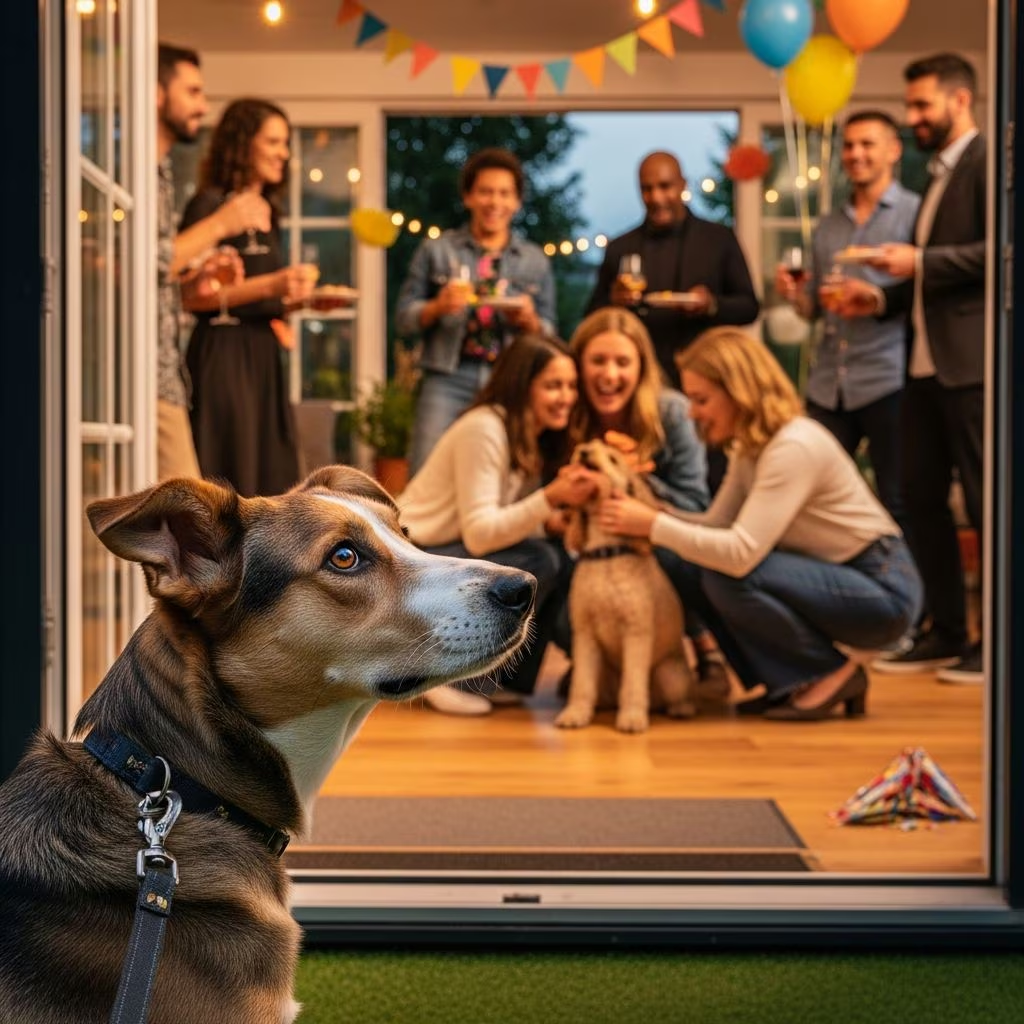
Large social events like holidays, weddings, or family reunions often seem ideal for including pets, but they frequently lead to canine distress and potential hazards. Dogs thrive in predictable routines, and crowded, noisy environments disrupt this balance, causing anxiety or reactive behaviors.
Why Crowds Overwhelm Canines
Dogs perceive sudden influxes of strangers as threats due to their pack-oriented instincts. Unfamiliar faces, loud laughter, and erratic movements trigger stress responses, especially in animals over 50 pounds or those with excitability issues. Research shows about 30% of dogs display anxiety symptoms in such settings, including panting and pacing.
Smaller or more confident dogs may cope briefly, but prolonged exposure exhausts their tolerance. Timid breeds or rescues face amplified challenges, interpreting crowds as predatory signals.
- Noise from conversations and music heightens arousal.
- Food temptations lead to begging or scavenging.
- Physical bumping risks scratches or bites.
Recognizing Stress Signals in Your Dog
Early detection prevents escalation. Monitor these common indicators during gatherings:
| Sign | Description | Action |
|---|---|---|
| Excessive Panting | Rapid breathing even in cool areas | Remove to quiet space |
| Pacing or Shaking | Restless circling or trembling | Provide comfort item |
| Tail Tucking | Low or hidden tail position | Shorten interactions |
| Yawning/Lip Licking | Frequent, non-sleepy yawns | Observe body language |
| Hiding/Clinging | Seeking owner or corners | Allow retreat |
These cues, noted in veterinary studies, signal discomfort before aggression. Dilated pupils or pulled-back ears further confirm unease.
Pre-Event Preparation Strategies
Proactive steps build resilience. Maintain daily schedules for feeding, walks, and play to anchor familiarity.
- Exercise Boost: Add 30-60 minutes of walks or fetch sessions beforehand to expend energy.
- Training Refresh: Practice sit, stay, and recall in distracting simulations like busy parks.
- Socialization Tune-Up: Arrange controlled meetups with calm strangers days prior.
- Safe Zone Setup: Designate a crate or room with toys, water, and bedding away from action.
Mental workouts, such as puzzle toys, enhance adaptability more than physical alone.
Managing Introductions if Including Your Dog
Opt for leashed, one-at-a-time greetings outside the home. Reward calm orientations with treats to foster positive links.
- Keep leash short to block jumping.
- Limit sniffs to 4-6 seconds, then cue “leave it.”
- Instruct guests: no bending, pointing, or rapid commands.
Hand treats to cooperative visitors only. Post-greeting, retreat indoors managed on leash for 10-15 minutes of low-key mingling.
Guest Communication Essentials
Pre-event messages set expectations. Email protocols 1-2 days ahead:
Avoid direct eye contact or reaching over the dog’s head. Let them approach first. Share any allergies or fears with me beforehand.
This respects non-dog lovers and clarifies boundaries, reducing mishaps.
During the Event: Monitoring and Breaks
Constant vigilance is key. Scan for stress every 10 minutes. Provide frequent retreats to decompress, mimicking human needs.
In hectic scenarios—alcohol, dancing, kids—confine to a quiet area. Post-dinner walks offer controlled guest mingling in yards, minimizing chaos.
The Case for Exclusion: Top Reasons to Leave Dogs Home
Often, absence proves wisest. Consider these factors:
- Risk of Injury: Slips on leashes or knocked drinks pose dangers.
- Behavioral Setbacks: Overstimulation reinforces poor habits like jumping.
- Guest Safety: Fearful reactions from visitors can provoke defensiveness.
- Health Hazards: Fatty scraps cause pancreatitis; toxic decorations lurk.
- Long-Term Calm: Home solitude preserves sanity amid repeated events.
Studies affirm dogs expanded social needs include humans, but quality trumps quantity—prefer intimate bonds over masses.
Alternatives to Full Participation
Board with trusted sitters or daycare for social outlets. Home-alone with cameras allows check-ins. Post-event, extra affection rebuilds routines.
| Option | Pros | Cons |
|---|---|---|
| Professional Boarding | Structured play, trained staff | Separation anxiety risk |
| Neighbor Sitter | Familiar face, home comfort | Limited supervision |
| Self-Contained Crate | Zero exposure, easy access | Potential boredom |
Post-Gathering Recovery
Resume normalcy immediately. Extended walks clear residual tension. Watch for lingering anxiety like appetite loss, addressing with vet if persistent.
Frequently Asked Questions
Can all dogs handle parties?
No, especially anxious or large breeds struggle most.
What if my dog loves people?
Enthusiasm often flips to overwhelm; monitor closely.
How long for stress signs to fade?
Usually 24-48 hours with routine restoration.
Are puppies okay at events?
Limited exposure aids socialization, but avoid overload.
What about calm, trained dogs?
Even they benefit from breaks in prolonged crowds.
Building Long-Term Resilience
Regular exposure to mild distractions—parks, markets—prepares better than sporadic blasts. Positive reinforcement cements calm responses. Group training or daycare fosters cooperation skills akin to pack dynamics.
Ultimately, prioritize welfare: a rested dog post-event bonds stronger than a frazzled one amid festivities.
References
- Party Protocols for Big Challenging Dogs — Dog Star Daily. Accessed 2026. https://www.dogstardaily.com/blogs/party-protocols-big-challenging-dogs
- A Guide to Introducing Your Dog to Large Holiday Family Gatherings — Puptown Spaw. Accessed 2026. https://www.puptownspaw.com/blogs/pet-health-plus-with-nevetica/a-guide-to-introducing-your-dog-to-large-holiday-family-gatherings
- Preparing Your Dog for a House Full of Guests — Dog Training Now. 2016-06. https://dogtrainingnow.com/2016/06/preparing-dog-house-full-guests-dog-training-now/
- How to Keep Your Pet Calm During Social Gatherings — PetMD. 2022-12-13. https://www.petmd.com/dog/behavior/how-to-keep-pets-safe-during-holiday-gatherings
- Helping Dogs Manage Big Crowds — Dog Trainer College. Accessed 2026. https://dogtrainercollege.us/helping-dogs-manage-big-crowds/
- Daycare: Managing Large Groups of Dogs — K9 Turbo Training. Accessed 2026. https://k9turbotraining.com/daycare-managing-large-groups-of-dogs/
- Social Interactions — Purdue University Canine Welfare Science. Accessed 2026. https://caninewelfare.centers.purdue.edu/behavior/social-interactions/



