

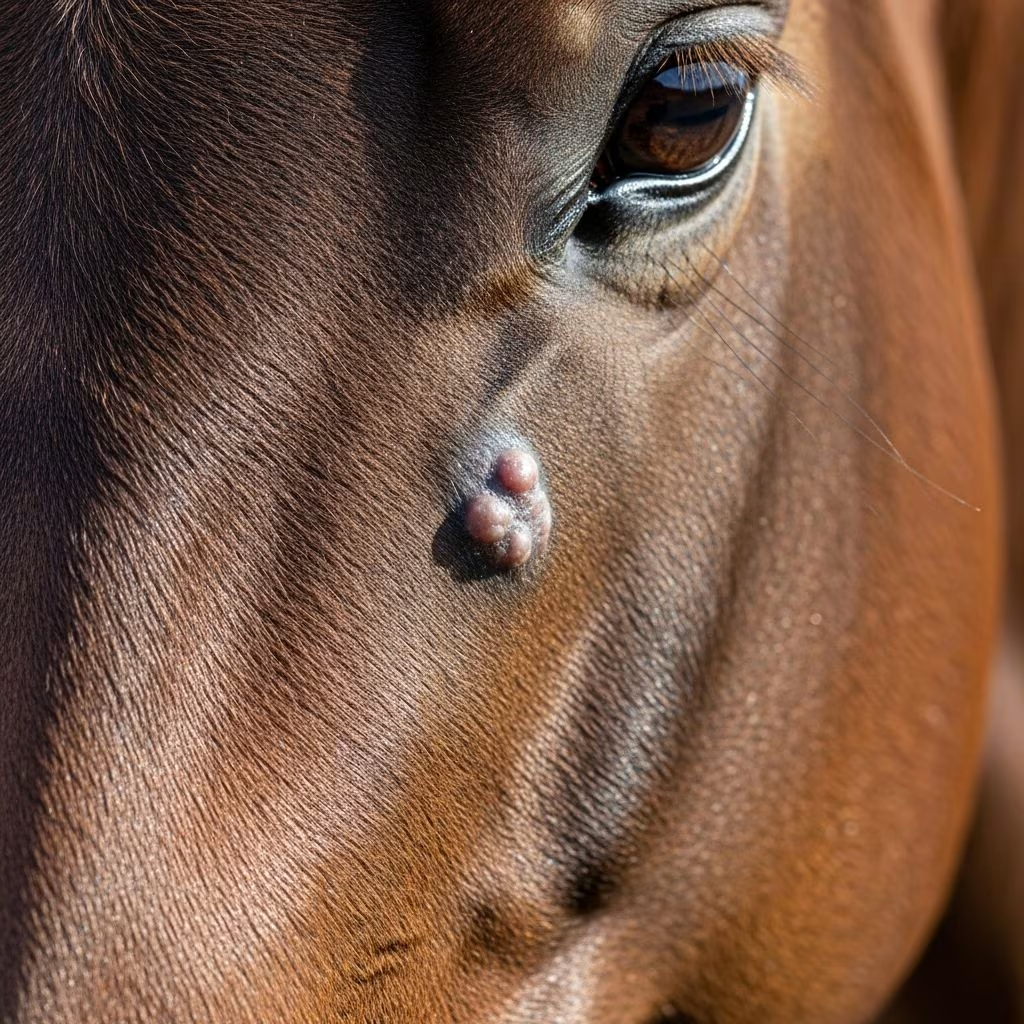
Horses can develop various skin tumors, with sarcoids, melanomas, and squamous cell carcinomas being the most prevalent. These growths range from benign to malignant, requiring prompt veterinary attention to prevent complications and ensure animal welfare.
Recognizing Abnormal Skin Growths in Horses
Early detection of skin abnormalities is crucial for horses, as tumors often start subtly. Owners should routinely inspect their animals for changes such as hairless patches, firm lumps, wart-like protrusions, or persistent sores that fail to heal. These signs warrant immediate professional evaluation to differentiate tumors from infections or injuries.
- Hairless, scaly areas: Often circular and may thicken over time.
- Firm nodules: Can be smooth or shiny, appearing under haired or bare skin.
- Ulcerated masses: Fleshy growths that bleed easily or emit odors.
- Non-healing wounds: Lesions that persist despite standard care.
Regular grooming and full-body checks, especially in high-risk areas like the face, legs, and underbelly, help catch issues early. Gray horses, older animals, and those with light pigmentation face higher risks for certain tumors.
Sarcoids: The Most Frequent Equine Skin Neoplasm
Sarcoids represent over half of all equine skin tumors and are locally invasive, though not metastatic. They arise from fibroblast cells and are linked to bovine papillomavirus, often triggered by wounds or insect bites. Common sites include the head, limbs, groin, and sheath.
Sarcoids manifest in six primary forms, each with distinct features:
| Type | Description | Common Locations |
|---|---|---|
| Occult | Flat, hairless patches with scaly, thickened skin; subtle early stage. | Face, neck, inner thighs. |
| Verrucose | Wart-like, rough-surfaced lesions, sometimes ringed by occult areas. | Body trunk, legs. |
| Nodular | Solid, shiny lumps beneath skin that may ulcerate if irritated. | Eyelids, groin. |
| Fibroblastic | Rapidly growing, ulcerated, stalk-like masses post-injury. | Anywhere, especially wounds. |
| Mixed | Combination of above types in one area. | Variable. |
| Malignant | Aggressive, invasive form with deep ulceration. | Advanced sites. |
Treatment varies by type and location. Surgical excision risks recurrence, while cryotherapy, laser ablation, or immunotherapy like BCG vaccine offer alternatives. Radiation and topical chemotherapy show promise but require specialized facilities.
Melanomas: A Concern for Gray Horses
Melanomas originate from pigment cells and predominantly affect gray horses, with 80% developing them by age 15. They appear as dark, round lumps under the tail, around genitals, or on the lips and eyelids. Initially benign, they can become malignant, metastasizing to internal organs.
- Dermal melanomas: Small, isolated black nodules.
- Dermal melanomatosis: Clustered, merging into larger masses.
Diagnosis involves biopsy to assess malignancy. Surgical removal is viable for accessible sites, but perianal melanomas often recur. Emerging therapies include cimetidine (an immune modulator), intralesional cisplatin, or tyrosine kinase inhibitors. Prevention focuses on monitoring high-risk breeds like Arabians and Lipizzaners.
Squamous Cell Carcinoma: UV-Related Skin Cancer
This aggressive cancer targets non-pigmented skin, thriving in sun-exposed areas like eyelids, nose, penis, and vulva. Light-skinned horses, particularly Appaloosas and Paints, are susceptible due to UV radiation and possible papillomavirus involvement.
Tumors present as cauliflower-like growths, ulcers with necrotic tissue, or foul-discharging sores. Progression can impair vision or urination if untreated. Treatment combines surgery, cryotherapy, hyperthermia, or photodynamic therapy. Five-year survival exceeds 50% with early intervention.
Other Notable Skin Conditions Mimicking Tumors
Equine Papillomas (Warts)
Viral-induced benign growths common in young horses on lips, ears, and legs. They regress spontaneously but can be removed if problematic. Vaccination research is ongoing.
Eosinophilic Granulomas
Non-cancerous, insect-bite reactions forming raised nodules in saddle or neck areas during warmer months. They ulcerate but respond to corticosteroids or allergy management.
Habronemiasis (Summer Sores)
Caused by stomach worm larvae deposited by flies, creating granulomatous, oozing lesions on legs, sheath, or eyes. Deworming and fly control prevent recurrence.
Lymphosarcoma (Cutaneous Form)
Rare skin manifestation with subcutaneous nodules. Generalized cases affect multiple organs, showing weight loss or edema. Chemotherapy offers palliation.
Diagnostic Approaches for Equine Skin Masses
Veterinarians employ fine-needle aspiration, biopsies, and histopathology for confirmation. Imaging like ultrasound aids deeper assessment. Virus testing identifies papillomavirus links in sarcoids and carcinomas.
Challenges include sarcoid biopsy risks, as trauma can worsen growths. Differential diagnoses cover granulomas, habronemiasis, and rare schwannomas or mast cell tumors.
Treatment Options and Prognoses
Management tailors to tumor type:
- Surgery: Best for small, accessible lesions; recurrence common in sarcoids.
- Chemotherapy: Topical 5-fluorouracil or intralesional cisplatin.
- Immunotherapy: BCG for sarcoids stimulates rejection.
- Radiation/Cryotherapy: Precise for eye-area carcinomas.
- Watchful Waiting: For slow-growing melanomas.
Prognoses vary: excellent for warts, guarded for invasive sarcoids (50-70% recurrence), fair for early SCC, poor for metastatic melanomas.
Prevention Strategies for Horse Owners
Minimize risks through:
- UV protection: Shade, fly masks, pigmentation-enhancing supplements.
- Wound care: Clean injuries promptly to deter sarcoids.
- Parasite control: Regular deworming curbs habronemiasis.
- Fly management: Repellents and manure removal.
- Monitoring: Monthly skin exams, especially for grays over 10.
Breeding considerations exclude heavily affected lines.
Frequently Asked Questions (FAQs)
Are all horse skin lumps cancerous?
No, many are benign like warts or granulomas, but biopsy confirms.
Can sarcoids spread to other horses?
Indirectly via contaminated tack; quarantine and disinfect.
What is the best treatment for eyelid squamous cell carcinoma?
Surgery or cryotherapy preserves function effectively.
Do melanomas always become malignant?
Not initially, but monitor for size increase or ulceration.
How do I differentiate sarcoids from ringworm?
Ringworm is contagious and itchy; sarcoids persist without fungal response.
Long-Term Management and Owner Vigilance
Post-treatment follow-ups are essential, as recurrences demand ongoing surveillance. Nutritional support with antioxidants may bolster immunity. Collaborate with equine oncologists for complex cases. By staying proactive, owners can maintain their horses’ quality of life despite these common dermal challenges.
References
- Understanding Equine Skin Tumors: A Veterinarian’s Advice — Texas A&M University College of Veterinary Medicine & Biomedical Sciences. 2023. https://vetmed.tamu.edu/news/pet-talk/understanding-equine-skin-tumors/
- Skin Tumours in Horses — Tamworth Equine Veterinary Services. Accessed 2026. https://www.tevs.com.au/skin-tumours
- 16 Common Skin Diseases in Horses: Identification & Treatment — Mad Barn. 2023. https://madbarn.ca/skin-diseases-in-horses/
- Cancer in Horses — Park City Equine Center. Accessed 2026. https://www.parkcityequinecenter.com/horse-vet-blog/cancer-in-horses
- Skin Conditions – Understanding Sarcoid Tumors — Novick DVM. Accessed 2026. https://www.novickdvm.com/articles-all/skin-conditions-understanding-sarcoid-tumors
- How to Detect and Treat Horse Skin Conditions — Florida Equine Veterinary Associates. 2023-11-15. https://www.fevaocala.com/site/blog/2023/11/15/detect-treat-horse-skin-conditions
- Skin Cancers — Genesee Valley Equine Clinic. Accessed 2026. https://gvequine.com/articles/skin-cancers/



